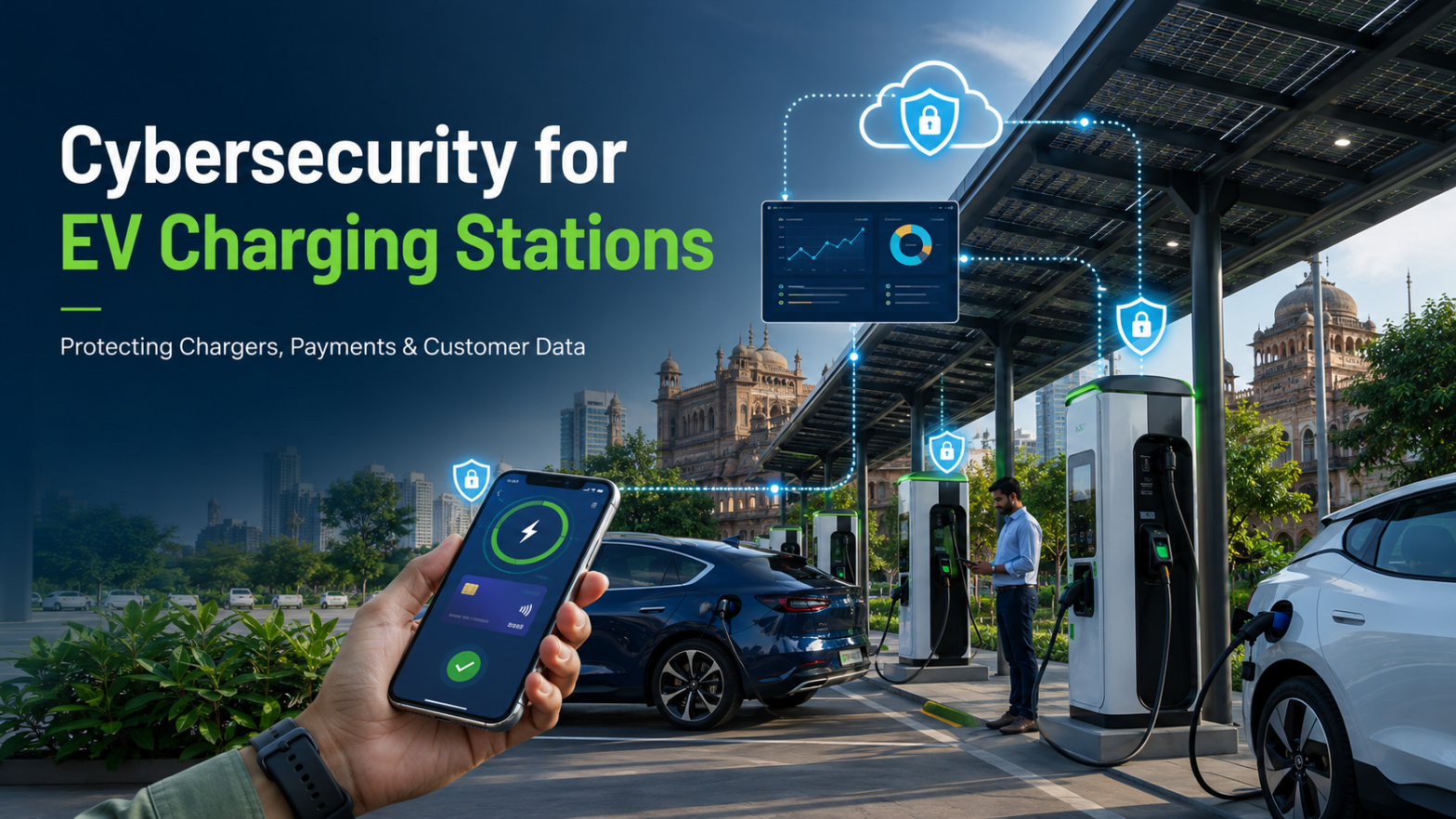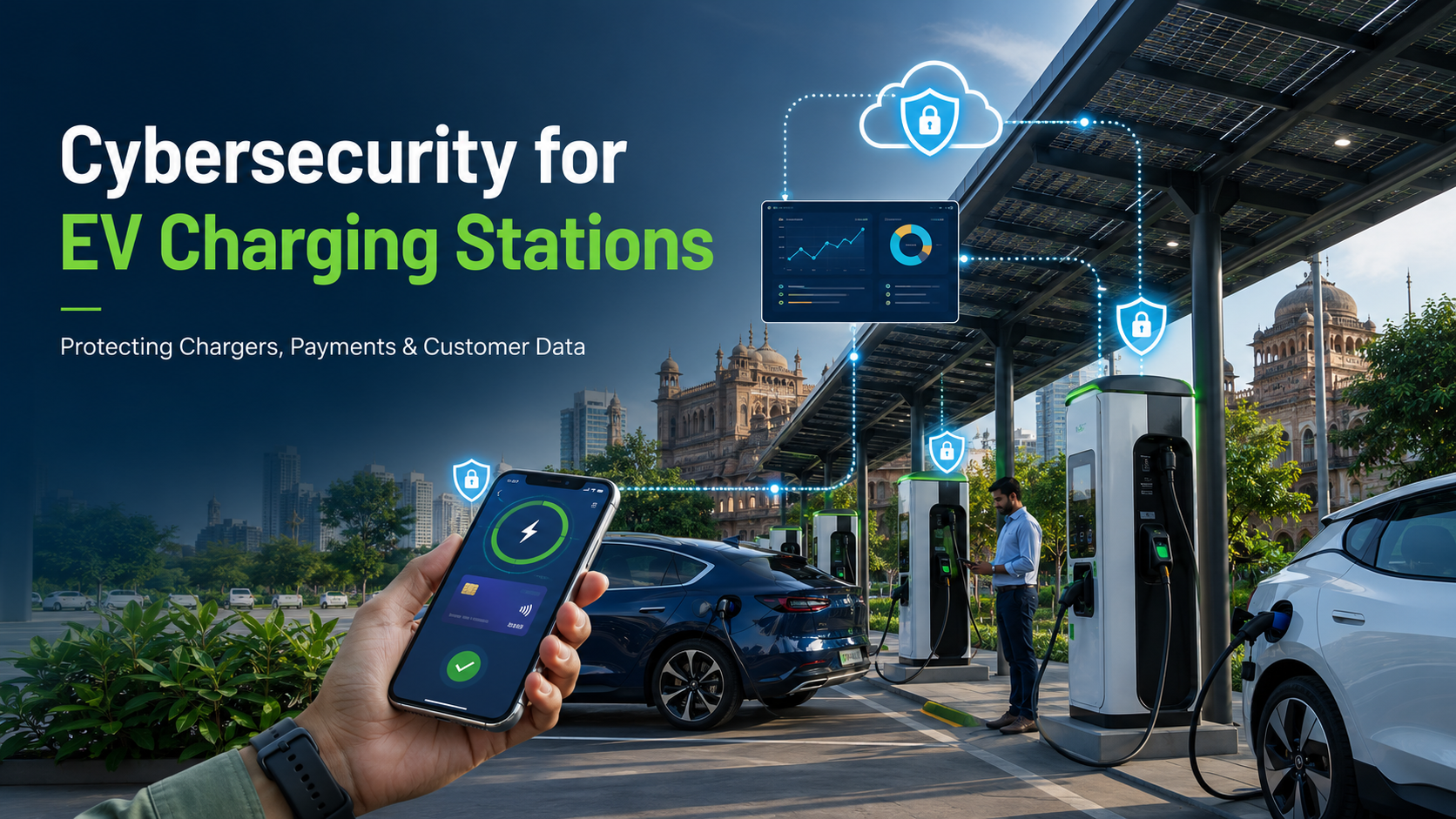
Modern electric vehicle charging stations are no longer simple electrical outlets. Public chargers are connected to cloud platforms, payment systems, mobile applications, electricity meters, building networks and remote maintenance services.
This connectivity makes EV charging more convenient and efficient. It allows operators to monitor chargers, process payments, change tariffs, diagnose faults, manage users and distribute electricity remotely.
However, every connected system also creates potential cybersecurity risks.
An insecure charger or management platform could result in service disruption, fraudulent payments, unauthorised access, customer data exposure or interference with charging operations.
Cybersecurity must therefore be considered during the planning, procurement, installation and operation of an EV charging station. It should not be added only after a security incident occurs.
The Ministry of Power’s EV Charging Infrastructure Guidelines recommend open communication protocols such as OCPP, OCPI, UEI and OpenADR, while requiring these protocols to comply with applicable cybersecurity provisions.
This guide explains the main cybersecurity risks affecting EV charging stations and the practical steps operators can take to protect chargers, payment systems, customer information and connected infrastructure.
Why EV Charging Stations Need Cybersecurity
A networked EV charging station may connect several physical and digital systems.
These can include:
- EV charging equipment
- Charger Management System
- Mobile application
- Customer account platform
- Digital payment gateway
- QR-code payment system
- Cloud hosting environment
- Electricity meter
- Energy Management System
- Solar energy system
- Battery Energy Storage System
- Building Management System
- Utility or distribution company
- Third-party roaming platform
- Remote maintenance provider
Each connection helps the charging station perform a useful function. However, it can also become a route through which an unauthorised person attempts to access the system.
The National Institute of Standards and Technology divides the connected fast-charging ecosystem into four broad domains:
- Electric vehicles
- Charging infrastructure
- Cloud and third-party operations
- Utility and building networks
This shows that EV charging cybersecurity extends beyond the charger itself. Operators must also consider the software, communication systems and organisations connected to the charging equipment.
What Is EV Charging Station Cybersecurity?
EV charging station cybersecurity is the combination of policies, technologies and operating procedures used to protect charging infrastructure from digital attacks, unauthorised access and data loss.
A complete cybersecurity programme should protect:
Charger Availability
Customers should be able to start and complete charging sessions without unnecessary disruption.
Charging Integrity
The station should deliver the correct amount of energy at the approved power level and tariff.
Customer Information
Names, phone numbers, account information, charging history, location details and payment-related information should be protected from unauthorised access.
Payment Transactions
Customers should be directed to legitimate payment systems, and transaction information should not be manipulated.
Management Platforms
Only authorised staff members and systems should be able to change tariffs, restart chargers, issue refunds or modify station settings.
Connected Electrical Systems
Charging networks should be separated from critical building, battery-storage and utility systems wherever possible.
Operational Records
Charging sessions, system events, software changes and security alerts should be recorded accurately and retained according to applicable requirements.
How a Connected EV Charging Station Works
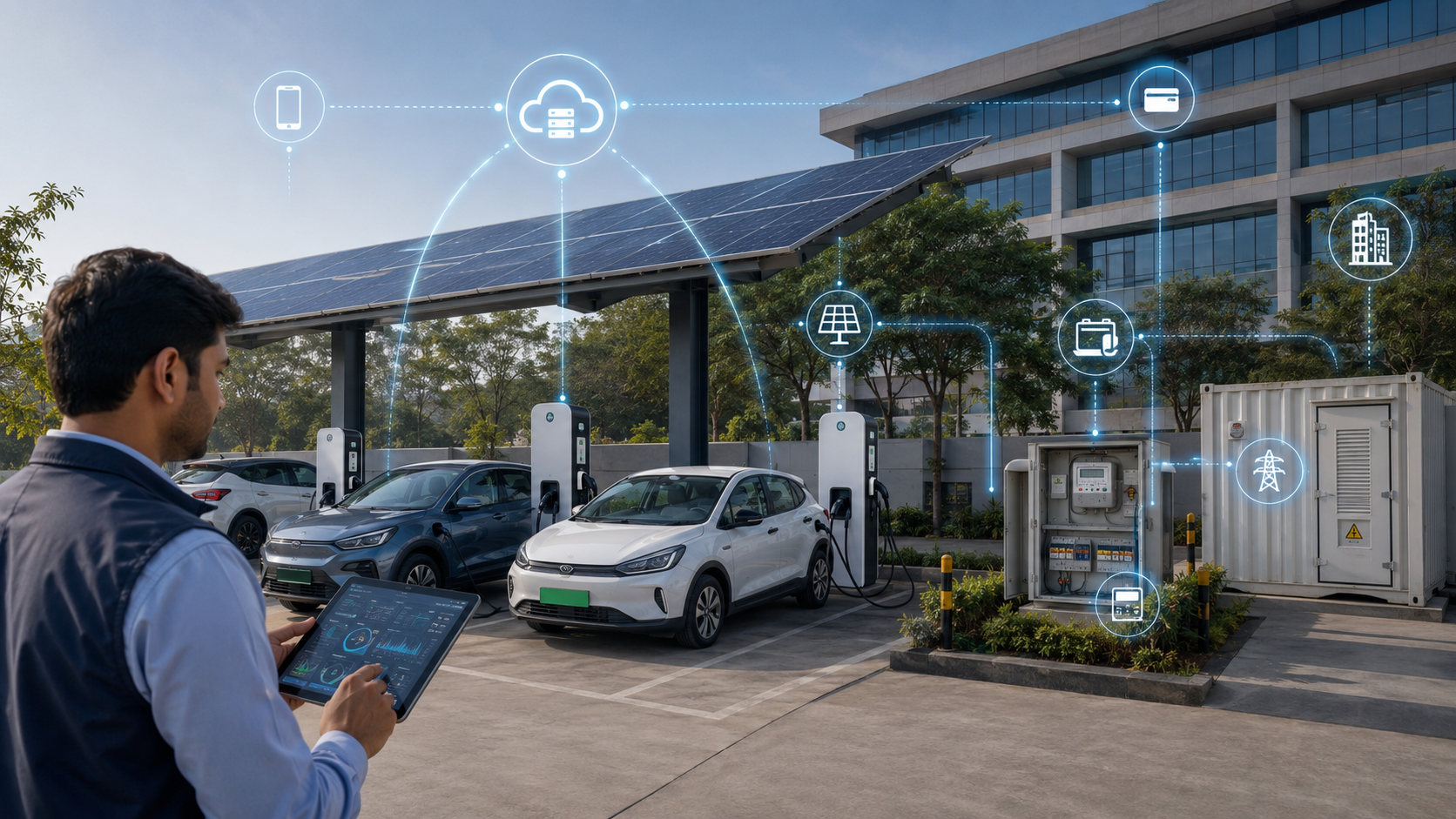
A customer normally interacts with several systems during one charging session.
The process may include the following steps:
- The customer locates a charger through a mobile application or map.
- The vehicle is connected to the charger.
- The customer scans a QR code, uses an RFID card or starts the session through an application.
- The charger communicates with the Charger Management System.
- The platform verifies the user and payment method.
- Charging begins after authorisation.
- The charger reports energy consumption and operational status.
- Payment is calculated after the charging session.
- The customer receives a transaction record or invoice.
- Charging data may be stored for reporting and customer support.
A cybersecurity weakness at any stage can affect the complete charging experience.
Common Cybersecurity Risks for EV Charging Stations
1. Unauthorised Charger Access
An attacker may attempt to access the charger’s administrative interface or remote management functions.
This can happen when a charger uses:
- Default usernames and passwords
- Weak administrator credentials
- Shared passwords
- Exposed service ports
- Insecure remote-access tools
- Outdated software
- Poorly configured network services
Unauthorised access could allow someone to change settings, stop charging sessions or interfere with station operations.
Every charger should have unique credentials, and default passwords should be changed before the station becomes operational.
2. Insecure Communication Between Chargers and the Management Platform
Networked chargers communicate with a central Charger Management System.
This communication may carry information about:
- Charger status
- Charging-session authorisation
- Energy delivered
- Customer identification
- Tariffs
- Remote commands
- Software updates
- Fault information
When communication is not properly encrypted and authenticated, there is a risk that information could be intercepted or altered.
OCPP is widely used for communication between charging stations and management systems. The Open Charge Alliance states that OCPP 2.0.1 and OCPP 2.1 provide more advanced functionality for secure and future-ready charging infrastructure.
The organisation also published the fourth edition of its OCPP 1.6 Security Whitepaper in February 2026 to help implement security enhancements with existing OCPP 1.6 deployments.
Using OCPP does not automatically make a charger secure. The operator must confirm which security profiles, certificate controls and encrypted communication methods have actually been implemented.
3. Weak or Compromised Administrator Accounts
The Charger Management System may allow authorised users to:
- Start and stop chargers
- Change charging prices
- Create customer accounts
- Issue refunds
- View transactions
- Install software
- Change power limits
- Access operational reports
A compromised administrator account could therefore affect an entire charging network.
Common account risks include:
- Reused passwords
- Shared accounts
- Missing multi-factor authentication
- Excessive permissions
- Accounts belonging to former employees
- Unmonitored vendor accounts
- Passwords stored in documents or messaging applications
Access should be based on job responsibilities, and every staff member should use an individual account.
4. Malicious or Unverified Software Updates
EV chargers require software and firmware updates to fix errors, add functionality and address vulnerabilities.
An insecure update process can create serious risks.
Operators should ensure that:
- Updates come from an authorised source
- Firmware is digitally signed
- The charger verifies the update before installation
- Failed updates can be safely reversed
- Update activity is recorded
- Only authorised staff can approve updates
- Emergency security patches can be deployed quickly
Software should never be installed from an unknown USB device, unofficial link or unverified email attachment.
5. Cloud Platform Attacks
Many charging networks depend on cloud-hosted management platforms.
A cloud-platform incident could potentially affect multiple charging stations simultaneously.
Possible risks include:
- Stolen cloud credentials
- Misconfigured storage
- Insecure APIs
- Excessive administrator permissions
- Unprotected backups
- Software vulnerabilities
- Denial-of-service attacks
- Third-party integration failures
The cloud provider, charging software company and Charge Point Operator must clearly understand which organisation is responsible for each security function.
6. Mobile Application and API Vulnerabilities
Customers may use a mobile application to:
- Create an account
- Save payment methods
- Locate chargers
- Start sessions
- Reserve charging slots
- Review charging history
- Download invoices
The application normally communicates with the charging platform through Application Programming Interfaces, or APIs.
Poorly protected APIs can expose customer information or allow unauthorised transactions.
The application and APIs should use:
- Secure authentication
- Encrypted communication
- Session expiry
- Rate limiting
- Authorisation checks
- Secure password-reset procedures
- Appropriate error messages
- Regular security testing
Sensitive information should not be stored unnecessarily on the user’s device.
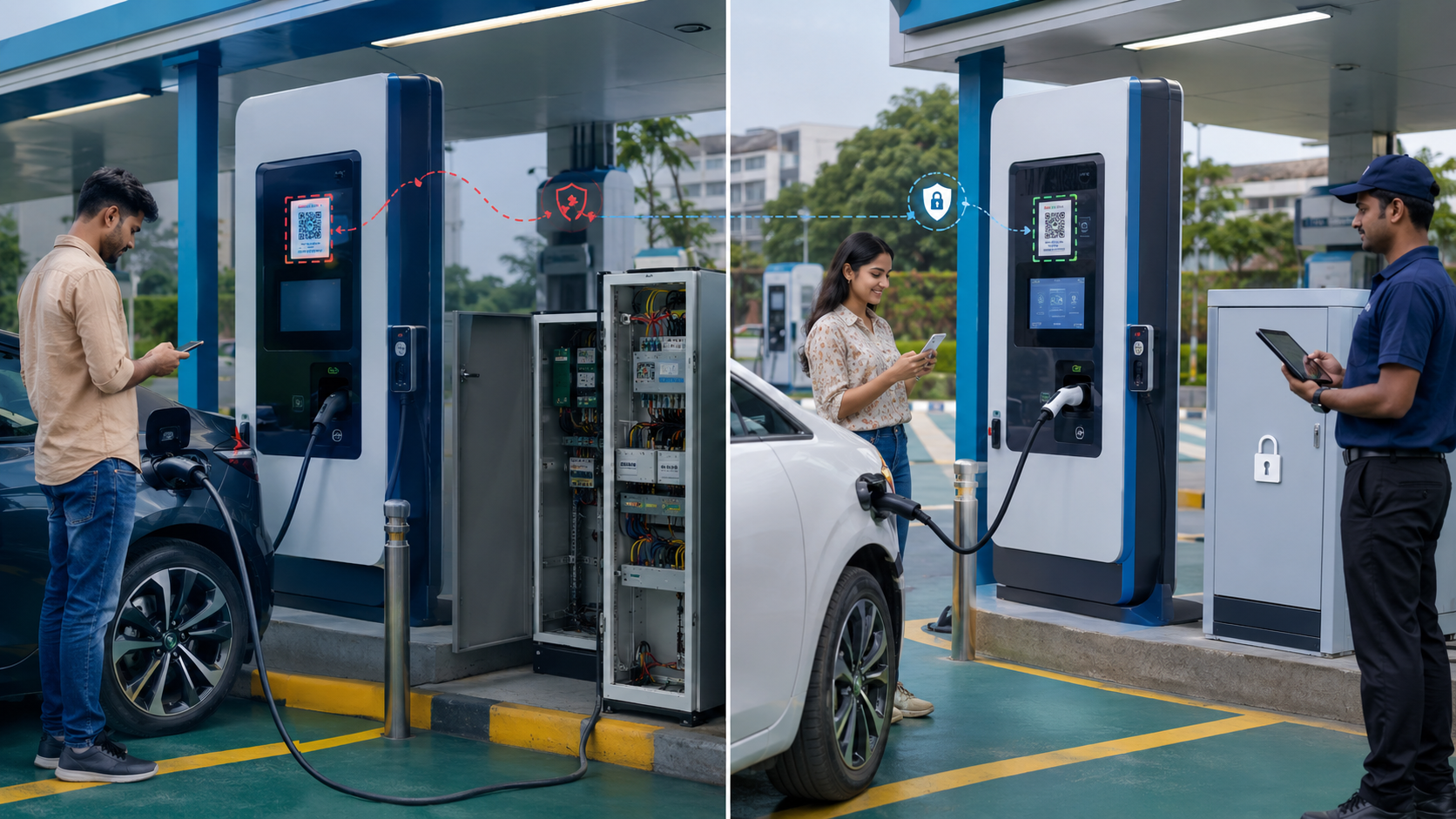
7. QR-Code Payment Fraud
QR codes provide a convenient way to start and pay for charging sessions. However, a criminal may attempt to place a fraudulent QR-code sticker over the original station code.
The replacement code may send the customer to:
- A fake payment page
- A fraudulent mobile application
- A website collecting account credentials
- An unauthorised payment address
Charging station operators can reduce this risk by using:
- Tamper-evident QR-code labels
- Regular physical inspections
- Station identification inside the official application
- Clear payment confirmation
- Dynamic or session-specific QR codes where practical
- Customer warnings against unknown payment links
- A support number for reporting suspicious stickers
The charger identification displayed in the application should match the physical charging point before payment is completed.
8. Payment-System Compromise
Charging stations may accept:
- UPI
- Credit cards
- Debit cards
- RFID accounts
- Mobile wallets
- Prepaid charging balances
- Fleet accounts
The charging platform should avoid storing complete payment credentials unless it is necessary and appropriately protected.
Operators should use reputable payment providers and separate the payment environment from charger-control systems.
A payment problem should not provide direct access to:
- Charger firmware
- Electrical power settings
- Battery storage controls
- Building networks
- Management administrator accounts
Payment records should also be reconciled with charging-session data so that unusual differences can be investigated.
9. Customer Account Takeover
A criminal may attempt to gain access to a customer account using a stolen or reused password.
The account could then be used to:
- Start unauthorised charging sessions
- Use a saved balance
- View charging history
- Access invoices
- Change contact details
- Request fraudulent refunds
Operators should support:
- Strong passwords
- Multi-factor authentication where appropriate
- Login alerts
- Device or session management
- Rate limits on repeated login attempts
- Secure password recovery
- Detection of unusual account activity
Customers should never be asked to share passwords or one-time verification codes with charging station staff.
10. Denial-of-Service Attacks
A denial-of-service attack attempts to make a system unavailable by overwhelming it with traffic or requests.
An attack could affect:
- Mobile applications
- Payment pages
- Charger Management Systems
- Remote authorisation services
- Customer support portals
- Station availability information
The charging station should have a safe operating strategy for temporary loss of cloud connectivity.
Depending on the business model, this may include:
- Limited offline authorisation
- Locally stored authorised users
- Safe continuation of active sessions
- Automatic reconnection
- Clear customer instructions
- Manual support procedures
Offline functionality must be designed carefully so that it does not allow unlimited unauthorised charging.
11. Data Privacy Risks
EV charging systems can generate information about:
- Customer identity
- Vehicle or RFID identifier
- Charging location
- Date and time
- Energy consumption
- Payment activity
- Charging frequency
- Travel patterns
Combining location, time and account information may reveal sensitive details about a customer’s routine.
Operators should collect only the information required for:
- Charging authorisation
- Payment
- Customer service
- Legal compliance
- Network operation
- Business reporting
Data should not be retained indefinitely without a clear purpose.
12. Third-Party and Supply-Chain Risk
A charging station may depend on several vendors, including:
- Charger manufacturer
- Charging software provider
- Cloud provider
- Payment gateway
- Telecommunications provider
- Maintenance company
- Remote support provider
- Roaming network
- Mobile application developer
A security weakness at one vendor can affect the complete charging operation.
Vendor contracts should define:
- Security responsibilities
- Software-update obligations
- Vulnerability reporting
- Incident-notification timelines
- Data ownership
- Data location
- Backup responsibilities
- Access termination
- End-of-support dates
- Security-audit rights
13. Physical Tampering
Charging stations are often located in publicly accessible areas.
An individual may attempt to interfere with:
- QR-code labels
- Network cables
- Communication equipment
- Equipment cabinets
- USB or service ports
- Payment terminals
- Emergency controls
- Charger displays
Physical security measures may include:
- Locked equipment cabinets
- Tamper-evident seals
- Security cameras
- Adequate lighting
- Vehicle-impact barriers
- Restricted maintenance ports
- Routine inspections
- Alerts when cabinets are opened
Physical and digital security should be planned together.
What Could Happen After a Cybersecurity Incident?
A cybersecurity incident does not always result in control of the electricity grid. The impact depends on the affected system and the way the charging network has been designed.
Possible consequences include:
Charging Station Outage
Customers may be unable to start charging sessions or locate available chargers.
Incorrect Charging Prices
An unauthorised person may attempt to change tariffs or discount settings.
Fraudulent Transactions
Customers may be redirected to fake payment pages or charged incorrectly.
Customer Data Exposure
Account details, charging history or contact information may become accessible to unauthorised parties.
Operational Disruption
Staff may lose access to remote monitoring, refunds, fault management or reporting systems.
Damage to Customer Trust
Repeated service or payment incidents can discourage customers from using the charging network.
Increased Maintenance Costs
Chargers may require inspection, software restoration or replacement of compromised equipment.
Risk to Connected Networks
A poorly segmented charging network may provide a route towards other building or business systems.
Proper network separation can significantly limit the effect of a compromised charger.
A Cybersecurity Framework for EV Charging Operators
Charging station operators can organise their cybersecurity programme around six functions:
- Govern
- Identify
- Protect
- Detect
- Respond
- Recover
These are the six core functions of the NIST Cybersecurity Framework 2.0. Together, they provide a structured way to manage cybersecurity risks throughout the life of an organisation and its systems.
1. Govern
Governance establishes who is responsible for cybersecurity and how decisions will be made.
Charging station operators should:
- Assign a cybersecurity owner
- Create an information-security policy
- Define acceptable use of systems
- Establish vendor-security requirements
- Set access-approval procedures
- Maintain an incident-reporting process
- Review legal and contractual obligations
- Include cybersecurity in business-risk reviews
- Allocate a security budget
- Obtain management approval for major risks
Cybersecurity should not be treated only as the responsibility of the information technology team. Operations, finance, customer service, engineering and senior management also have important roles.
2. Identify
An operator cannot protect systems that it does not know exist.
The first step is to create an accurate asset inventory.
The inventory should include:
- Every charger
- Charger model and serial number
- Firmware version
- Charger IP address
- SIM card or network connection
- Charger Management System
- Cloud platform
- Mobile application
- Payment gateway
- APIs
- Electricity meters
- Energy Management System
- Battery storage controls
- Solar inverter
- Network switches and routers
- Staff laptops and mobile devices
- Vendor remote-access accounts
The operator should also map how information moves between these systems.
3. Protect
Protection controls reduce the likelihood and impact of an attack.
Important protection measures are explained below.
Use Network Segmentation
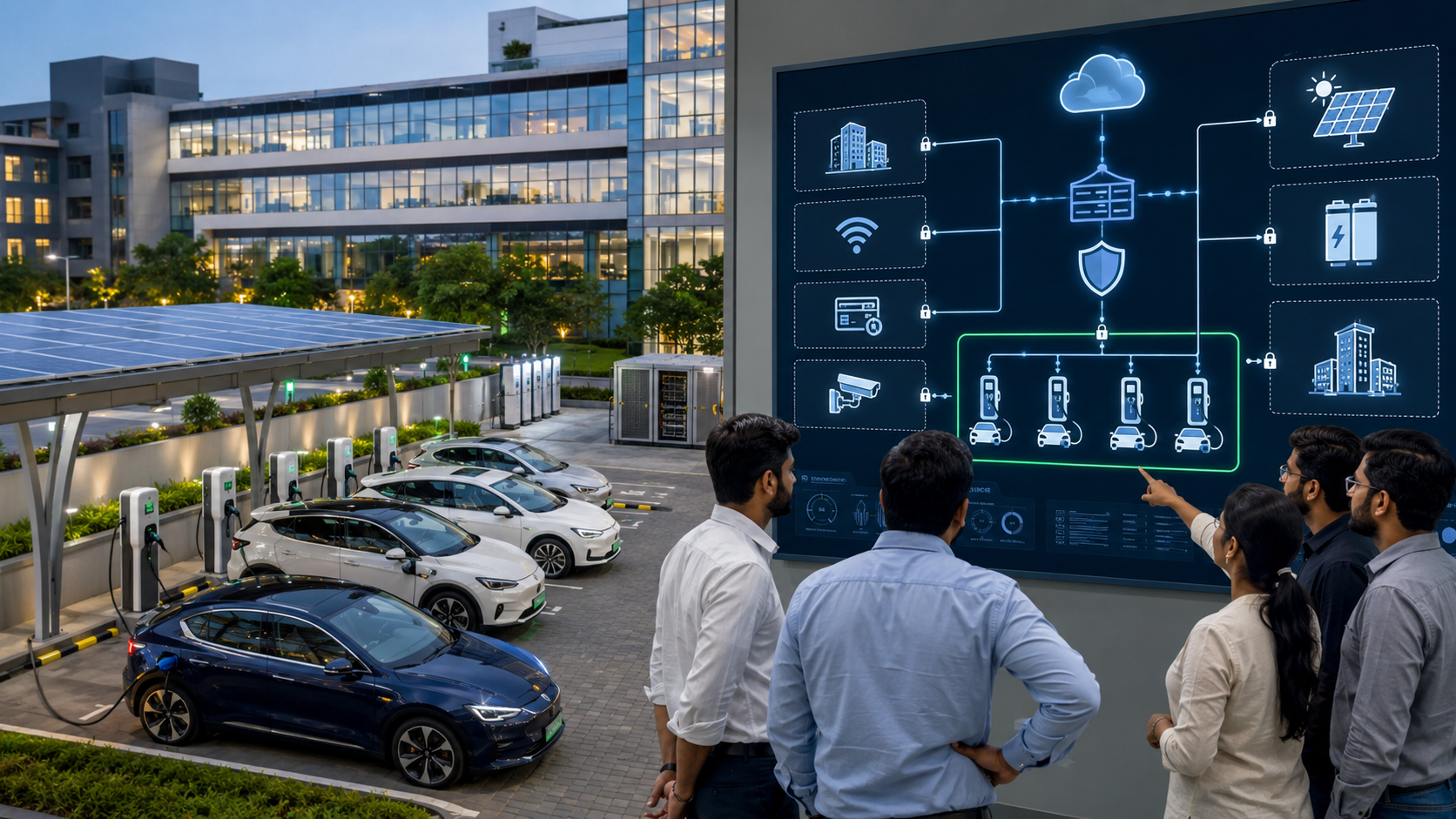
The EV charging network should be separated from other business systems.
Separate network zones may be created for:
- EV chargers
- Charger Management System
- Payment environment
- Corporate office systems
- Public Wi-Fi
- CCTV
- Building Management System
- Battery storage
- Solar equipment
- Utility communication
A customer using public Wi-Fi should not be able to communicate directly with EV chargers or the station’s management system.
Firewalls should allow only the connections required for charging operations.
Secure OCPP Communication
OCPP communication should be encrypted and authenticated.
Operators should confirm:
- The supported OCPP version
- The implemented security profile
- Use of TLS encryption
- Charger and server certificate management
- Certificate expiry procedures
- Certificate revocation
- Unique charger identities
- Protection against unauthorised backend connections
- Security-update support
The Open Charge Alliance’s certification material for OCPP 1.6 security recognises TLS-based profiles, including configurations that use client-side certificates.
Older chargers that do not support suitable security should be evaluated for an upgrade, secure gateway or planned replacement.
Change All Default Credentials
Before commissioning a charger:
- Change default passwords
- Remove unnecessary accounts
- Disable unused services
- Restrict administrative access
- Record the configuration securely
- Verify that every charger has unique credentials
The same administrator password should not be used across an entire charging network.
Use Multi-Factor Authentication
Multi-factor authentication should be enabled for sensitive systems, including:
- Charger Management System administrators
- Cloud-platform administrators
- Payment accounts
- Remote maintenance portals
- Domain and email administration
- Software-development platforms
A stolen password alone should not provide full control of the charging network.
Apply Least-Privilege Access
Staff and vendors should receive only the access required for their work.
For example:
- Customer support may view sessions and issue approved refunds.
- Maintenance staff may restart chargers and review faults.
- Finance staff may view transactions.
- Only authorised administrators may change tariffs or install firmware.
Access should be reviewed regularly and removed immediately when a staff member or vendor no longer requires it.
Secure Remote Maintenance
Remote maintenance is useful because it allows technicians to diagnose chargers without visiting the site.
However, remote access should be protected through:
- Approved remote-access tools
- Multi-factor authentication
- Time-limited access
- Individual vendor accounts
- Session logging
- Access approval
- Network restrictions
- Automatic account expiry
Permanent shared vendor passwords should be avoided.
Keep Software Updated
The operator should maintain an update schedule for:
- Charger firmware
- Charger Management System
- Mobile application
- Cloud servers
- Network equipment
- Payment software
- Operating systems
- Security tools
Security updates should be tested before large-scale deployment where practical.
The operator should also know when each charger model will stop receiving updates.
Use Secure Boot and Signed Firmware
Where supported, chargers should verify that their firmware is authentic before it is installed or executed.
Procurement teams should ask vendors whether the equipment supports:
- Secure boot
- Digitally signed firmware
- Update verification
- Protected firmware storage
- Rollback prevention
- Safe recovery after a failed update
Encrypt Sensitive Information
Sensitive information should be encrypted:
- During transmission
- In databases
- In backups
- On administrator devices
- During communication with third parties
Encryption keys should be protected separately from the information they secure.
Secure APIs
APIs connecting chargers, applications, payment platforms and roaming networks should use:
- Strong authentication
- Authorisation checks
- Encrypted communication
- Request validation
- Rate limiting
- Activity logging
- Secure error handling
- Regular security testing
An authenticated user should not be able to access another customer’s account by changing an identifier inside an application request.
Protect Payment Systems
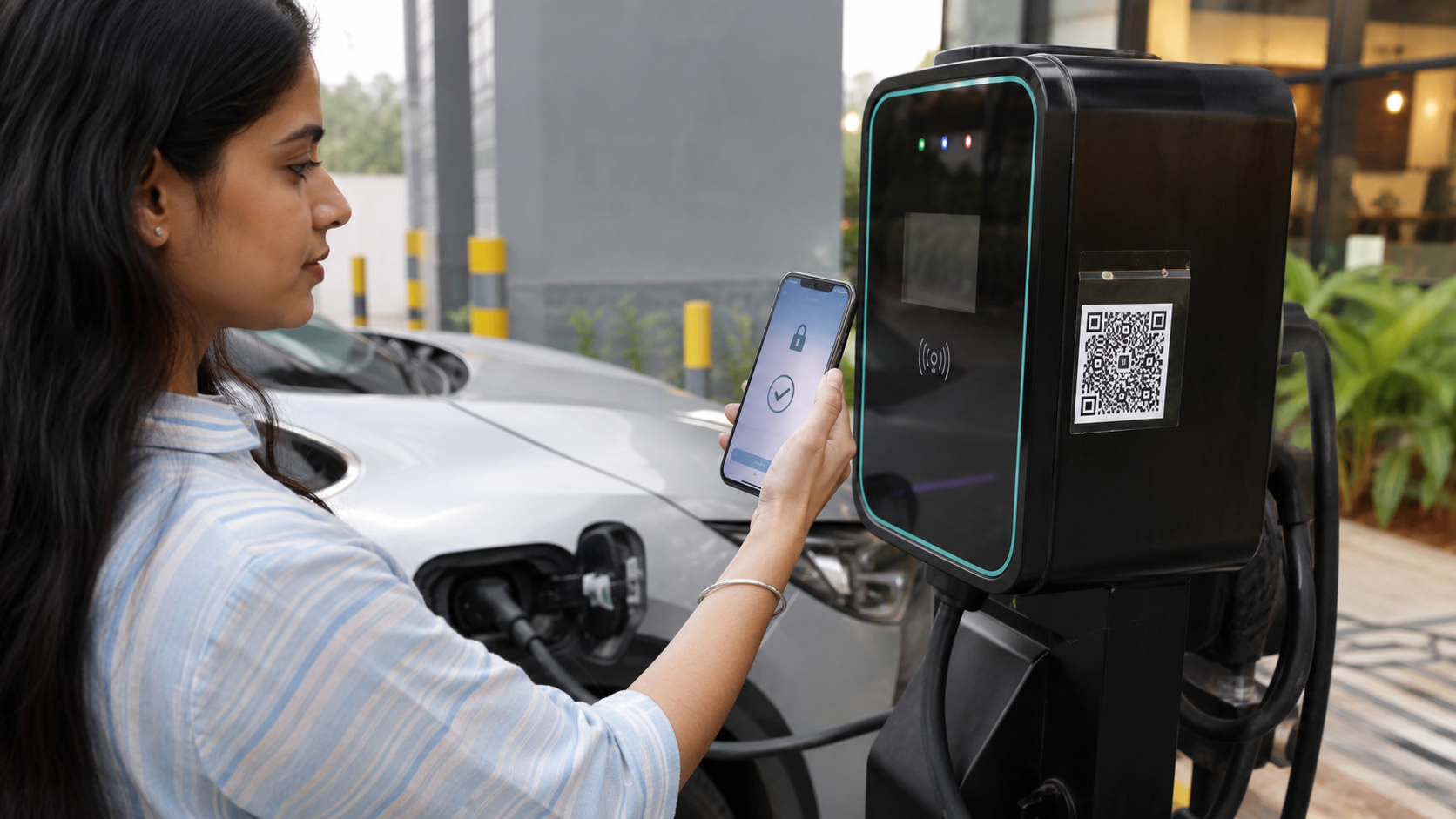
Payment security measures should include:
- Reputable payment gateway
- Secure payment redirection
- Minimal storage of payment information
- Transaction monitoring
- Refund controls
- Staff approval limits
- Daily payment reconciliation
- Tamper checks for QR codes
- Separate payment and charger-control networks
Charging station staff should not ask customers to send money to a personal account or share confidential banking information.
Protect Customer Data
Operators should:
- Collect only required data
- Explain why the information is collected
- Limit employee access
- Define retention periods
- Delete information securely
- Protect exports and reports
- Review third-party data sharing
- Maintain secure backups
- Respond to customer data requests appropriately
Charging history should not be made visible publicly or shared with unrelated businesses without a legitimate purpose.
Maintain Secure Backups
Backups should cover:
- Charger configurations
- Customer account data
- Transaction records
- Management-platform settings
- Certificates and key information
- Software configurations
- Incident records
Backups should be protected from the same incident affecting the main system.
Restoration should be tested rather than assumed to work.
Protect the Physical Site
Operators should inspect:
- QR-code stickers
- Charger cabinets
- Payment terminals
- Service ports
- Communication boxes
- Network cables
- Safety controls
- CCTV equipment
Any unexplained sticker, cable or device should be investigated.
4. Detect
Security controls cannot prevent every incident. Operators must also detect unusual activity quickly.
Monitoring should cover:
- Repeated failed logins
- Administrator access from unusual locations
- Unexpected tariff changes
- Unapproved firmware updates
- Chargers connecting to an unknown server
- Abnormal restart frequency
- Unusual charging-session volume
- Large numbers of failed payments
- Unexpected network traffic
- Disabled security tools
- Changes to user permissions
- Battery or energy-management commands outside approved limits
Alerts should be prioritised according to risk. Staff should not receive so many low-value alerts that important events are ignored.
Centralise Logs
Logs may be collected from:
- Chargers
- Charger Management System
- Cloud environment
- Mobile application
- Payment gateway
- Firewalls
- Routers
- Administrator accounts
- Remote maintenance tools
- Energy Management System
Indian body corporates and other entities covered by the CERT-In Directions must report specified cyber incidents within six hours of noticing them and retain ICT-system logs securely for a rolling period of 180 days within Indian jurisdiction. Applicability and implementation should be confirmed according to the organisation’s legal and operational structure.
Accurate time synchronisation is also important so that events from different systems can be compared during an investigation.
5. Respond
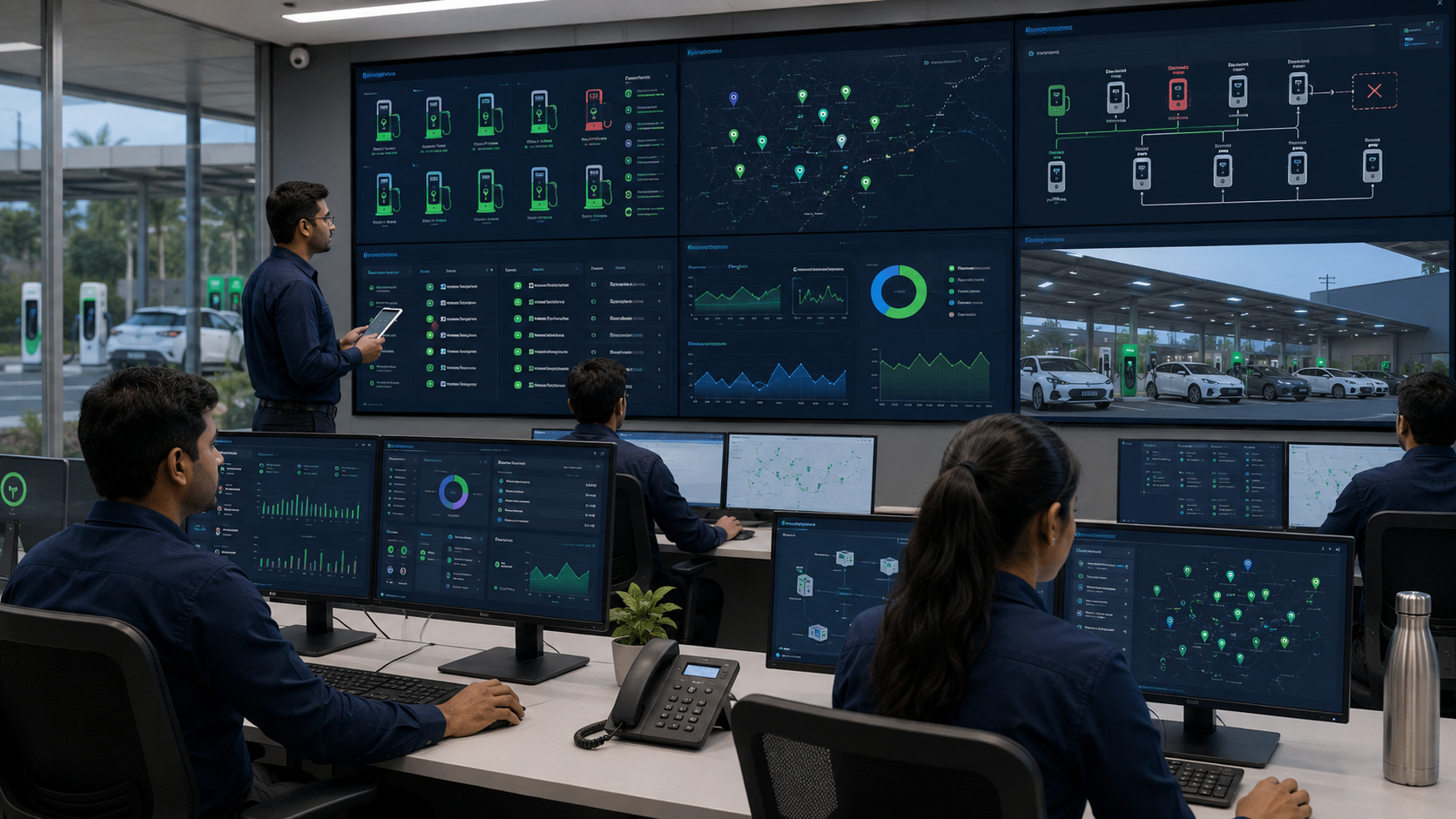
Every charging operator should have a written cybersecurity incident-response plan.
The plan should define:
- Who receives the initial alert
- Who can disconnect a charger
- Who communicates with vendors
- Who communicates with customers
- Who reports incidents to authorities
- How evidence will be preserved
- How payment fraud will be handled
- How affected accounts will be secured
- How operations will continue safely
Possible response actions may include:
- Isolating an affected charger
- Blocking a compromised administrator account
- Revoking certificates
- Stopping unauthorised payment links
- Disabling remote access
- Preserving logs
- Contacting the charger manufacturer
- Resetting customer sessions
- Informing affected users
- Reporting the incident when required
Employees should know whom to contact outside normal working hours.
6. Recover
Recovery means restoring charging operations safely after an incident.
Recovery activities may include:
- Reinstalling trusted firmware
- Restoring secure configurations
- Replacing compromised credentials
- Issuing new certificates
- Restoring customer and transaction data
- Testing chargers before public use
- Monitoring the restored environment
- Processing refunds
- Communicating with customers
- Reviewing the cause of the incident
Chargers should be returned to service gradually when the incident affected a large network.
A post-incident review should identify:
- What happened
- How the incident was detected
- Which controls failed
- What worked correctly
- How long recovery took
- What should be changed
Current Indian Cybersecurity Considerations
The Ministry of Power’s EV Charging Infrastructure Guidelines require communication protocols used by public charging operators to comply with applicable cybersecurity provisions. The same guidelines encourage open protocols and data sharing while restricting national-database APIs to non-confidential information.
The Central Electricity Authority continues to list its Cyber Security in Power Sector Guidelines, 2021. A newer Cyber Security in Power Sector regulation remained listed in the CEA draft-regulations archive as of July 2026. Charging operators should therefore confirm which power-sector, CERT-In, contractual and data-protection requirements apply to their specific project.
Compliance should be reviewed with qualified legal and cybersecurity professionals rather than relying only on a charger vendor’s general statement.
Cybersecurity Requirements to Check Before Buying an EV Charger
Before selecting charging equipment, the buyer should ask the vendor the following questions.
Charger Security
- Does every charger support unique credentials?
- Can default passwords be changed?
- Is administrative access restricted?
- Does the charger support encrypted communication?
- Does it support certificate-based authentication?
- Does it support secure boot?
- Are firmware updates digitally signed?
- Can unused ports and services be disabled?
- Does the charger record security events?
- Does it detect physical tampering?
OCPP Security
- Which OCPP version is supported?
- Which OCPP security profile is implemented?
- Has the OCPP implementation been independently certified?
- Does the charger support TLS?
- Can certificates be installed remotely?
- How are expired certificates replaced?
- Can the charger connect only to an approved backend?
- Is remote firmware management supported securely?
Software Support
- How frequently are security updates released?
- What is the guaranteed support period?
- How quickly are critical vulnerabilities fixed?
- Can updates be tested before deployment?
- Is rollback available after a failed update?
- What happens after the product reaches end of support?
Vulnerability Management
- Does the vendor have a vulnerability-disclosure policy?
- Is there a security contact?
- Does the vendor provide security advisories?
- Are penetration-test reports available?
- Is a software bill of materials available?
- Are third-party software components monitored?
Cloud Platform
- Where is customer and operational data hosted?
- Is data encrypted?
- Is multi-factor authentication available?
- Are administrator actions logged?
- Are backups encrypted and tested?
- Can access be restricted by role?
- How quickly will the operator be notified about a breach?
Vendor Remote Access
- Does the vendor have permanent remote access?
- Can remote access be disabled?
- Is access approved for every session?
- Are vendor sessions logged?
- Are shared accounts used?
- Is multi-factor authentication required?
- Is access automatically removed after the contract ends?
Cybersecurity for Different EV Charging Locations
Public Charging Stations
Public stations need strong protection because they serve many unknown users and are physically accessible throughout the day.
Important controls include:
- Tamper-resistant QR codes
- Network segmentation
- Secure payments
- Customer-support process
- Physical inspection
- CCTV where appropriate
- Remote monitoring
- Charger availability alerts
- Secure administrator accounts
Highway Charging Hubs
A highway hub may depend heavily on cloud connectivity and digital payments.
The operator should prepare for:
- Mobile-network interruption
- High customer volume
- Remote technical support
- Multiple charger vendors
- Battery-storage integration
- Customer queues
- Offline operating procedures
A communication failure should not create unsafe charging conditions.
Fleet Charging Depots
Fleet depots may contain:
- Vehicle schedules
- Driver information
- Route data
- Battery status
- Charging priorities
- Energy forecasts
Access to fleet data should be limited to authorised staff.
The charger network should also be separated from warehouse, logistics and corporate systems.
Offices and Commercial Properties
Workplace charging systems may connect to employee accounts, access cards and building networks.
The charging network should not provide a route into:
- Employee records
- Corporate email
- Finance systems
- Building-access systems
- Internal file servers
Public, visitor and employee charging accounts should have appropriate access controls.
Residential Societies
Residential charging platforms may store:
- Resident details
- Apartment numbers
- Vehicle identifiers
- Energy consumption
- Billing information
Management committees should ensure that installers do not use shared administrator passwords or leave the charger network accessible through an unsecured router.
Hotels and Shopping Malls
Charging systems at hotels and malls should be separated from:
- Guest Wi-Fi
- Point-of-sale systems
- Room management systems
- Retailer networks
- Building automation
- CCTV networks
A compromise of public Wi-Fi should not affect EV charging or payment operations.
Cybersecurity Mistakes Charging Operators Should Avoid
Using the Same Password Across Every Charger
One compromised password could provide access to the complete network.
Connecting Chargers Directly to the Corporate Network
Chargers should be placed in a controlled and separated network segment.
Ignoring Security Until After Installation
Some security capabilities cannot be added easily when the charger hardware does not support them.
Keeping Former Employees’ Accounts Active
Access should be removed immediately when a person changes role or leaves the organisation.
Allowing Permanent Vendor Access
Remote vendor access should be controlled, monitored and time-limited.
Installing Unverified Firmware
Only authorised and validated software should be installed.
Ignoring QR-Code Tampering
QR labels should be inspected regularly, particularly at unattended public stations.
Collecting Excessive Customer Data
Additional data creates additional responsibility and risk.
Failing to Test Backups
A backup that cannot be restored has little operational value.
Having No Incident Plan
Staff should not attempt to decide responsibilities for the first time during an active cyber incident.
Assuming OCPP Automatically Provides Complete Security
Security depends on the version, configuration, certificates, backend and operating procedures.
Using Unsupported Chargers
Equipment that no longer receives security updates may become increasingly difficult to protect.
Practical Cybersecurity Checklist
| Security Area | Recommended Action |
|---|---|
| Asset management | Maintain an inventory of chargers, software, accounts and network equipment |
| Passwords | Change defaults and use unique credentials |
| Administrator access | Enable multi-factor authentication |
| User permissions | Apply least-privilege access |
| Network | Separate chargers from corporate systems and public Wi-Fi |
| OCPP | Use encrypted and authenticated communication |
| Certificates | Monitor expiry and maintain replacement procedures |
| Firmware | Install only verified and signed updates |
| Remote access | Use controlled, logged and time-limited access |
| Payment | Use a trusted payment gateway and secure QR-code process |
| Customer data | Collect only necessary information |
| APIs | Use authentication, authorisation, encryption and rate limits |
| Monitoring | Centralise logs and configure meaningful alerts |
| Backups | Encrypt backups and test restoration |
| Physical security | Lock cabinets and inspect QR codes and service ports |
| Vendors | Define patching, breach-notification and support obligations |
| Incident response | Maintain a documented response plan |
| Staff training | Train employees to recognise phishing and suspicious requests |
| Recovery | Maintain trusted configurations and recovery procedures |
| Review | Conduct regular security assessments and audits |
Cybersecurity Tips for EV Charging Customers
EV drivers also have an important role in charging security.
Customers should:
- Use the official charging application
- Download applications only from trusted stores
- Verify the charger number before starting a session
- Inspect QR-code stickers for signs of tampering
- Avoid unknown payment links
- Never share account passwords or verification codes
- Use a strong and unique password
- Review charging receipts
- Report unexpected payments immediately
- Contact the official support number displayed by the operator
- Keep the mobile application updated
- Log out of unused devices
A customer should stop the payment process when the website, account name or requested amount appears suspicious.
How Much Should an Operator Budget for Cybersecurity?
Cybersecurity should be included in the total cost of the charging project.
Possible cost areas include:
- Secure charger hardware
- Network firewall and segmentation
- OCPP certificates
- Cloud security
- Multi-factor authentication
- Security monitoring
- Software updates
- Vulnerability assessments
- Penetration testing
- Staff training
- Backup systems
- Incident-response support
- Vendor security reviews
- Physical tamper protection
The correct budget depends on:
- Number of chargers
- Number of locations
- Charger power
- Public or private access
- Payment methods
- Customer data collected
- Cloud architecture
- Fleet or commercial integrations
- Connected battery and solar systems
A small private charging installation will not require the same security programme as a national public charging network. However, every connected charger should still have basic protection.
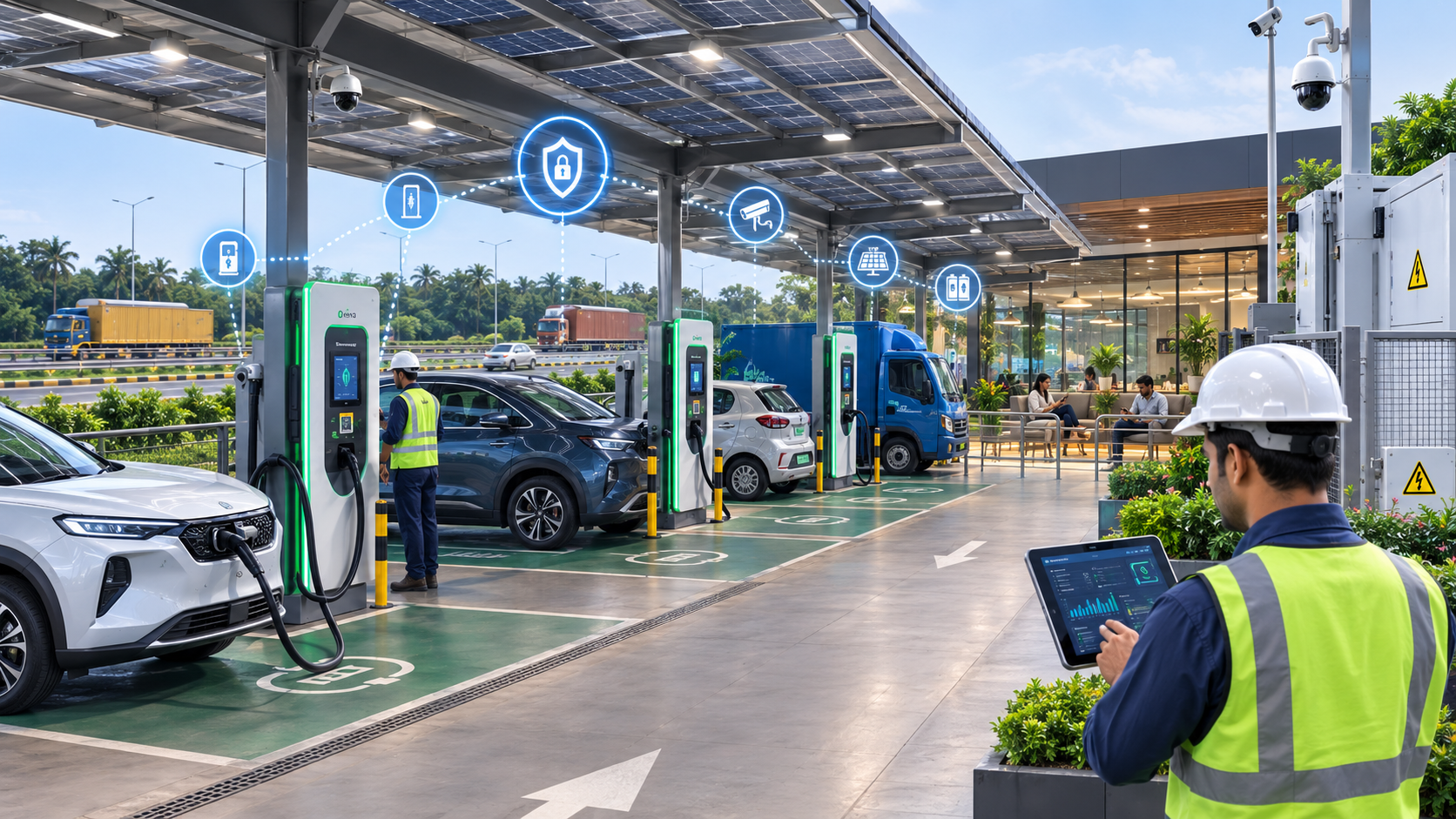
Conclusion
EV charging stations combine electrical equipment, software, cloud platforms, payment systems and customer information. Protecting only the physical charger is therefore not enough.
Effective EV charging station cybersecurity requires a complete approach covering chargers, communication protocols, administrator accounts, mobile applications, payments, customer data, vendors and connected electrical systems.
Charging station operators should:
- Plan security before purchasing chargers
- Select equipment with secure communication and update capabilities
- Segment charger networks
- Protect administrator accounts
- Monitor systems continuously
- Inspect payment QR codes
- Limit customer data collection
- Manage vendor access
- Maintain an incident-response plan
- Test recovery procedures
Cybersecurity is not a one-time installation task. It requires regular updates, monitoring, training and review throughout the life of the charging station.
Planning a connected EV charging station? Contact Earthtron EV to evaluate charger specifications, management-platform requirements and secure infrastructure considerations for your location.