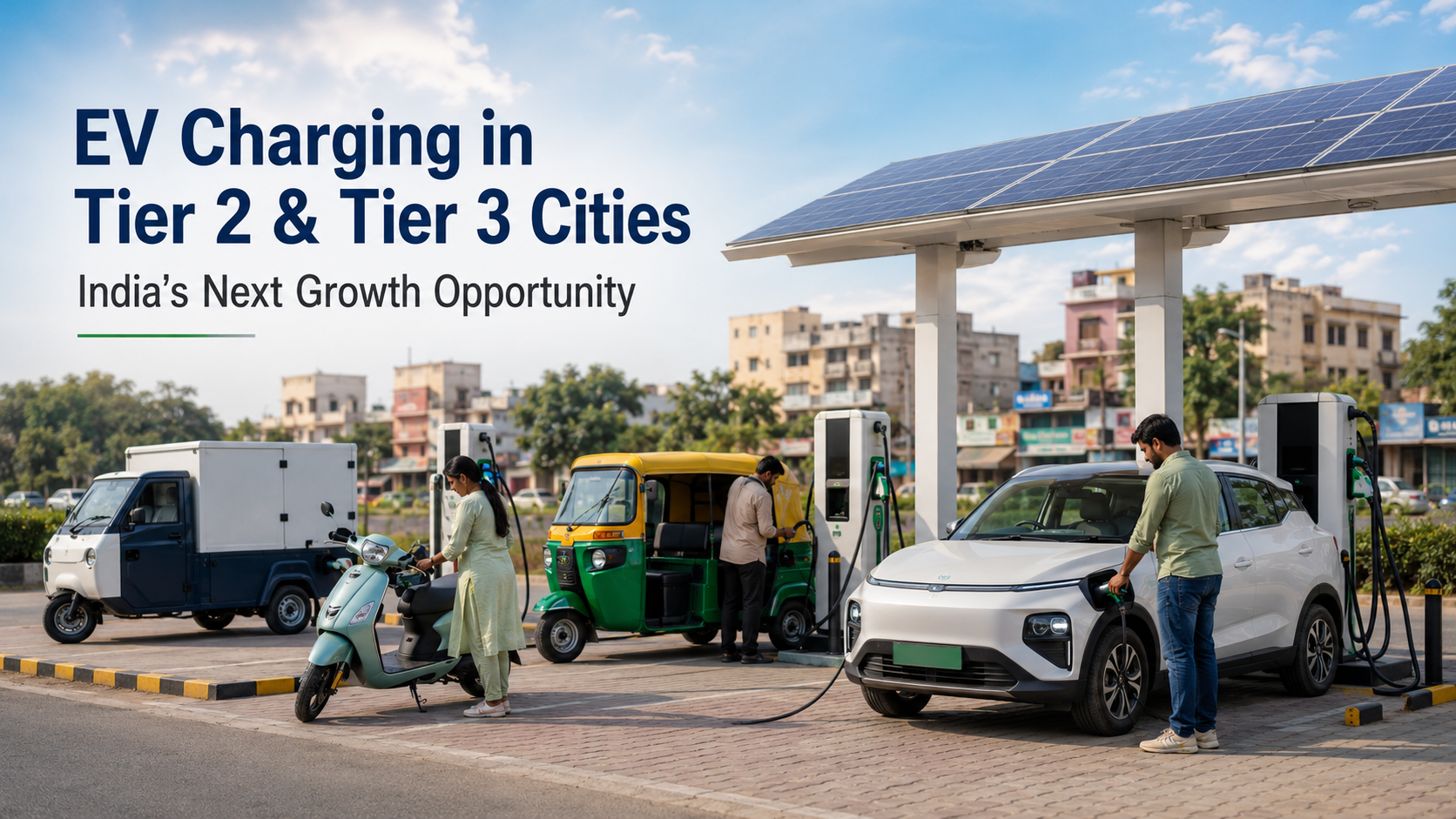
India’s electric mobility transition is gradually expanding beyond major metropolitan markets.
Cities such as Bengaluru, Delhi, Mumbai, Hyderabad and Chennai remain important centres for electric vehicle adoption. However, the next phase of charging infrastructure development may increasingly come from regional cities, industrial centres, tourism destinations, satellite towns and district headquarters.
The International Energy Agency estimated that India had approximately 88,000 public charging points in 2025, representing growth of around 15% from the previous year. In May 2026, the Ministry of Heavy Industries stated that proposals worth ₹503.86 crore had been approved for the installation of 4,874 chargers across several states and Central Public Sector Enterprises.
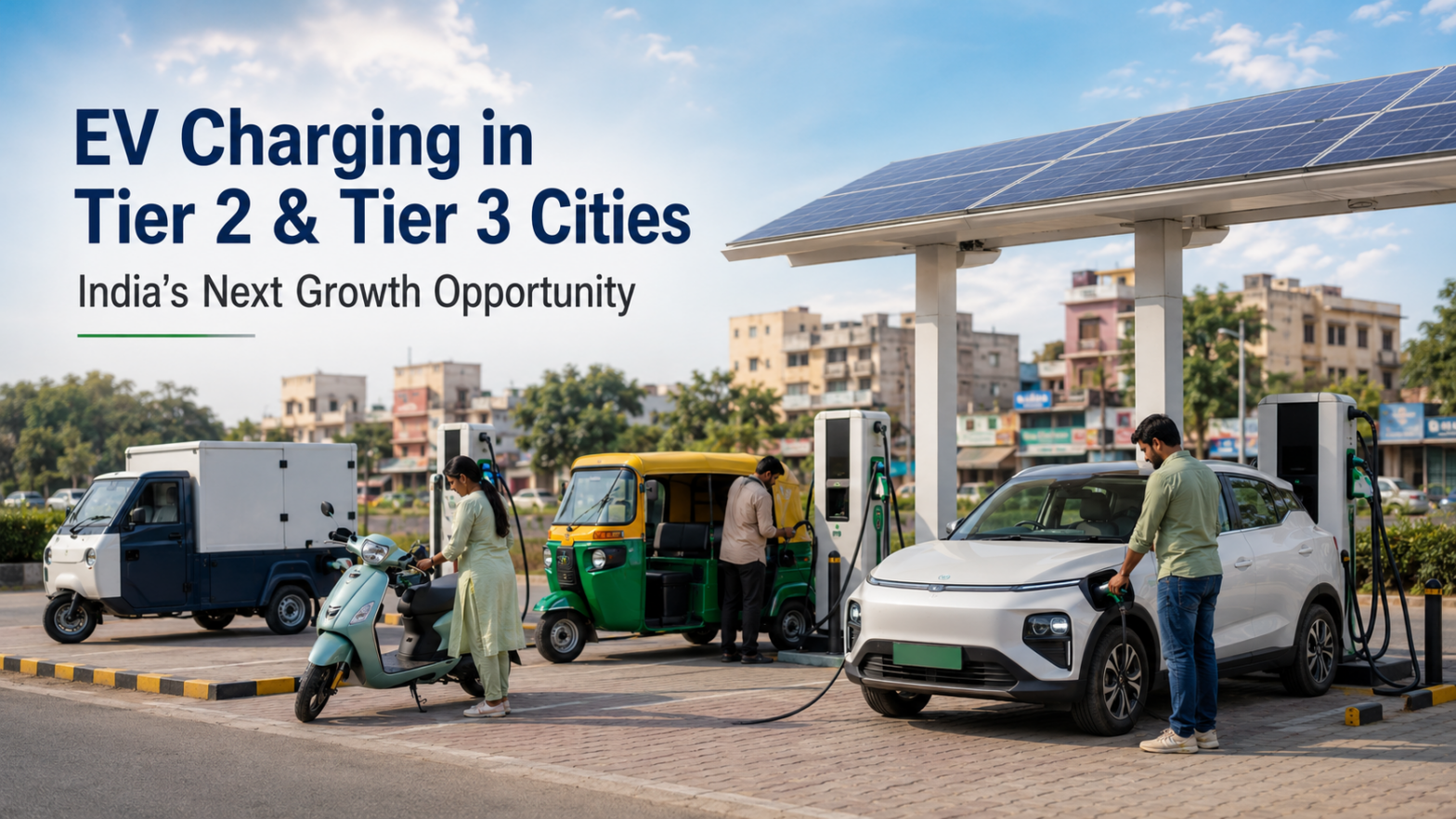
This expansion creates an opportunity to build charging networks in locations where electric two-wheelers, electric three-wheelers, passenger cars, buses and commercial fleets are becoming more visible but public charging availability remains limited.
Tier 2 and Tier 3 cities can offer several advantages for charging infrastructure businesses:
- Lower land and rental costs than major metros
- Growing electric two-wheeler and three-wheeler usage
- Increasing intercity EV travel
- Less competition from established charging networks
- Expansion of electric delivery fleets
- Demand from hotels, hospitals, malls and commercial properties
- Opportunities around bus terminals and highways
- Potential partnerships with municipal and public-sector organisations
However, a charging model that works in a metro city cannot simply be copied into a smaller urban market.
The vehicle mix, customer behaviour, parking duration, electricity availability and expected charging frequency may be very different.
A successful regional charging station must be designed around actual local demand rather than installing the highest-capacity charger available.
What Do Tier 2 and Tier 3 Cities Mean in This Blog?
Different government departments, financial institutions and private organisations may classify Indian cities differently.
For this blog, Tier 2 and Tier 3 cities broadly refer to growing regional urban markets outside India’s largest metropolitan centres.
These may include:
- State capitals outside the largest metros
- District headquarters
- Industrial towns
- Tourism cities
- Education centres
- Satellite towns
- Municipal corporations
- Regional transport hubs
- Cities connecting agricultural and commercial districts
The business opportunity in each city should be assessed individually.
A tourism city may require hotel and highway charging, while an industrial town may require fleet, employee and commercial vehicle charging.
Why Smaller Cities Need EV Charging Infrastructure
Electric vehicle adoption does not depend only on large cities.
Electric two-wheelers, electric three-wheelers and electric commercial vehicles can be particularly practical in smaller urban markets because many daily journeys are relatively predictable.
Typical use cases may include:
- Daily office travel
- Local delivery operations
- Passenger auto-rickshaw services
- School and college travel
- Last-mile logistics
- Local taxi operations
- Municipal vehicles
- Intercity passenger travel
- Tourism transport
Many EV owners can charge at home or at a fleet depot. However, public and semi-public charging infrastructure is still important for:
- Drivers without dedicated parking
- Commercial vehicles operating for long hours
- Intercity travellers
- Emergency charging
- Apartment residents
- Visitors to the city
- Taxi and delivery fleets
- Customers requiring faster charging
Charging availability can also improve customer confidence.
A driver may not use a public charger every day, but knowing that a reliable charger is available can make electric vehicle ownership more practical.
Government Planning Supports Wider Charging Coverage
India’s Ministry of Power charging guidelines set an objective of having at least one public charging station within a 1 km × 1 km urban grid by FY 2030, where notified by the respective state governments.
The guidelines also recommend chargers every 20 kilometres on both sides of highways, expressways and major roads. They direct states and urban authorities to plan land, transformers, feeders and other supporting infrastructure even where central or state subsidies are unavailable.
The PM E-DRIVE operational guidelines prioritise million-plus cities, Smart Cities, satellite towns, state capitals and National Clean Air Programme cities. They also allow eligible entities to propose charging stations in other cities based on local requirements such as EV penetration.
This creates room for regional cities to build charging infrastructure based on demonstrated local demand rather than waiting to become major metropolitan markets.
How EV Charging Demand Differs in Smaller Cities

Charging demand in a Tier 2 or Tier 3 city may not resemble demand in a metro.
Understanding these differences is important before selecting a location or charger.
Greater Importance of Two-Wheelers and Three-Wheelers
Electric scooters, motorcycles, passenger three-wheelers and cargo three-wheelers may form a significant part of the local EV market.
These vehicles generally require less energy than passenger cars and may not need large 120 kW or 240 kW DC chargers.
Suitable infrastructure may include:
- Light-EV DC chargers
- Low-power AC charging points
- Battery charging stations
- Battery swapping
- Fleet depot charging
- Dedicated three-wheeler charging areas
A charging station designed only for premium electric cars may miss the largest local customer segment.
Longer Parking Duration
Customers at smaller-city destinations may remain parked for longer periods.
Examples include:
- Hospitals
- Hotels
- Educational institutions
- Government offices
- Shopping centres
- Railway stations
- Bus terminals
Longer parking duration can make moderate-power charging practical.
A vehicle parked for three hours may not need an expensive ultra-fast charger.
Lower Initial Charger Utilisation
A new public charging station may receive fewer sessions during its first months of operation.
The station should therefore avoid excessive initial investment.
A phased approach can begin with:
- One or two DC chargers
- Several AC charging points
- Space and electrical provision for future expansion
- Networked charger management
- Clearly marked charging bays
Additional chargers can be installed when actual utilisation justifies the investment.
Greater Intercity Dependence
Regional cities often serve as stopping points between larger cities, district centres, industrial areas and tourism destinations.
A charger located near an intercity highway may serve:
- Local EV owners
- Visiting drivers
- Electric taxis
- Delivery vehicles
- Intercity passenger cars
- Commercial fleets
This can create stronger demand than a charger located inside a low-traffic residential area.
More Sensitivity to Charging Price
Customers may compare public charging costs with home charging and fuel expenses.
A station with a high service charge may struggle when customers can charge at home or at a nearby lower-cost location.
Operators must balance:
- Electricity cost
- Land cost
- Maintenance
- Software charges
- Payment fees
- Charger recovery
- Customer affordability
Best Locations for EV Charging Stations in Tier 2 and Tier 3 Cities
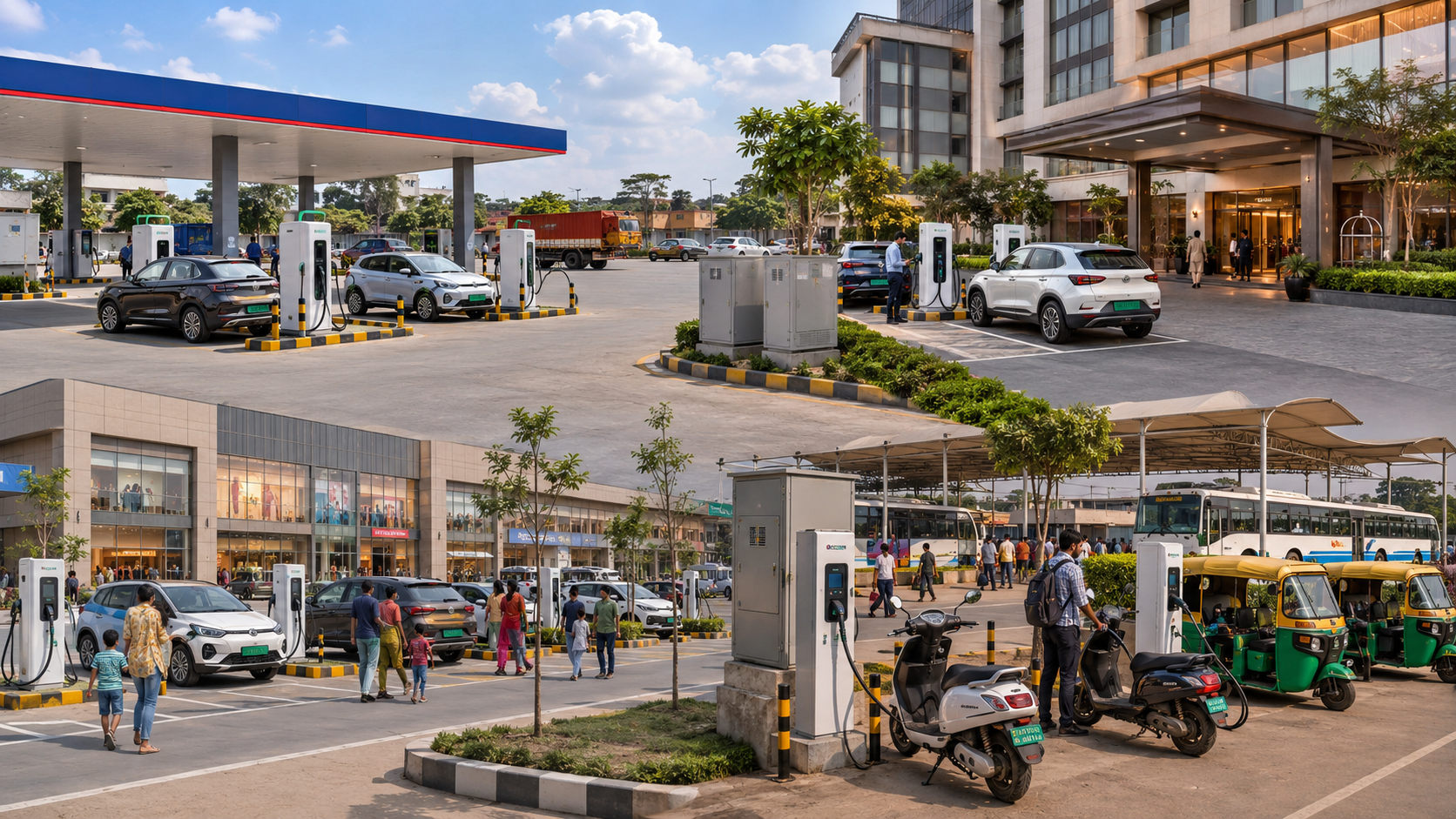
The success of a charging station depends heavily on its location.
The best site is not always the property with the lowest rent. It is the location where enough compatible vehicles remain long enough to complete useful charging sessions.
1. Fuel Stations
Fuel stations can be suitable because they already offer:
- Roadside visibility
- Vehicle entry and exit
- Staff presence
- Lighting
- Security
- Customer familiarity
- Existing commercial facilities
They may be particularly useful along highways and city entry points.
The site must still have sufficient parking space and electrical capacity. EV charging bays should not interfere with fuel dispensing or normal vehicle movement.
2. Hotels and Resorts
Hotels can serve both local and intercity customers.
Guests may remain parked for:
- Several hours
- Overnight stays
- Events
- Conferences
- Weddings
- Restaurant visits
This allows the property to offer AC charging, moderate DC charging or a combination of both.
A hotel near a highway, tourist destination or business district may attract EV travellers searching for a reliable charging stop.
3. Shopping Malls and Commercial Centres
Shopping centres can provide destination charging while customers:
- Shop
- Eat
- Watch a movie
- Attend an event
- Use entertainment facilities
The charging station can increase customer convenience and encourage longer visits.
The property should study vehicle traffic and parking duration before selecting charger capacity.
4. Hospitals
Hospitals operate for long hours and receive patients, staff, doctors and visitors.
Vehicles may remain parked for several hours, making moderate-power charging useful.
The site should ensure that charging bays do not block:
- Ambulance movement
- Emergency access
- Patient drop-off areas
- Accessible parking
- Fire routes
5. Railway Stations and Bus Terminals
Transport hubs can serve:
- Passengers
- Taxi fleets
- Auto-rickshaws
- Delivery vehicles
- Intercity travellers
- Public transport operators
These locations may support a mixed charging model for two-wheelers, three-wheelers, passenger cars and fleets.
The charging bays should be separated from congested passenger pickup and drop-off areas.
6. Municipal Parking Areas
Municipal parking can provide central locations and public access.
Potential advantages include:
- Existing parking use
- Central city location
- Public ownership
- High visibility
- Potential municipal partnerships
The Ministry of Power guidelines permit public land to be offered through a revenue-sharing model. For private entities, public land may be allotted through competitive bidding with a suggested floor price linked to electricity used for charging.
7. Government Offices
Government complexes can provide charging for:
- Official vehicles
- Employees
- Visitors
- Public users
Where public access is allowed, these sites may contribute to citywide charging coverage.
Adequate security, operating hours and public entry conditions must be considered.
8. Colleges and Educational Institutions
Students, employees and visitors may remain parked for several hours.
Educational institutions may be suitable for:
- Electric two-wheeler charging
- Staff-car charging
- Electric bus charging
- Solar carport integration
A lower-power charging system may serve more vehicles without creating a large peak load.
9. Industrial Areas
Industrial clusters may require charging for:
- Employee vehicles
- Delivery vans
- Cargo three-wheelers
- Company fleets
- Electric buses
- Logistics vehicles
Fleet contracts can provide more predictable charging demand than relying only on occasional public users.
10. Highway Restaurants and Wayside Facilities
Restaurants, food courts and rest stops can combine charging with customer amenities.
A driver may spend 30 to 60 minutes at the property, which can support DC fast charging.
Important facilities may include:
- Washrooms
- Food and beverages
- Seating
- Lighting
- Security
- 24-hour access where practical
11. Tourist Attractions
Tourism cities may attract EV drivers from metropolitan areas.
Charging may be installed near:
- Heritage sites
- Resorts
- Hill destinations
- Religious centres
- Wildlife tourism areas
- Beaches
- Convention facilities
The operator should consider seasonal demand before investing in a large charging hub.
12. Apartment Communities
Residents without personal charging connections may require community charging.
The installation can include:
- Resident authentication
- Individual energy metering
- Overnight scheduling
- Dynamic load management
- Guest charging
- Monthly billing
Community charging should be planned separately from unrestricted public charging.
How to Select the Correct Charger Mix
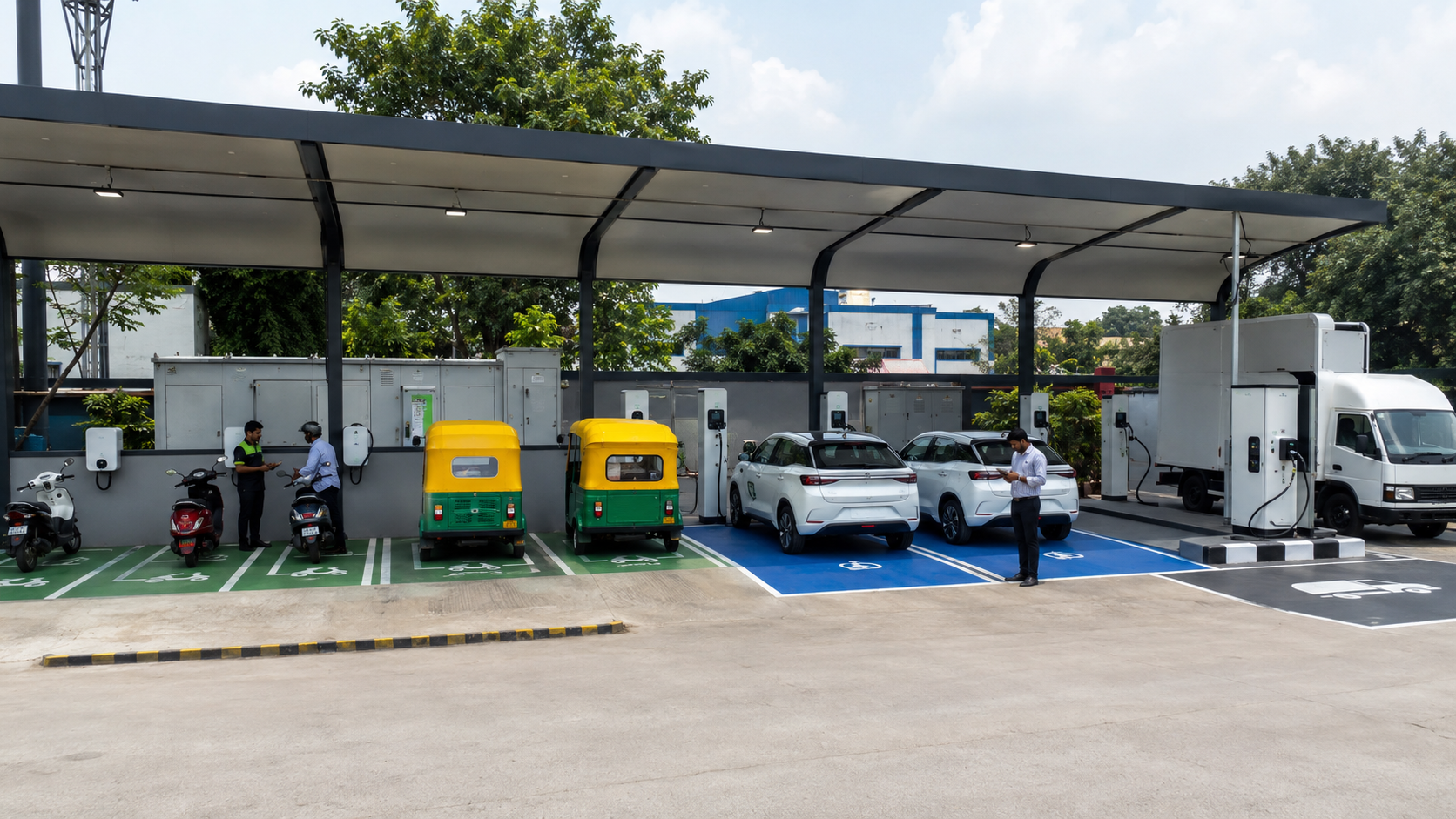
A smaller city may require a combination of charger types rather than one high-power charger.
Light-EV Charging
Suitable for:
- Electric scooters
- Electric motorcycles
- Passenger three-wheelers
- Cargo three-wheelers
Possible locations include:
- Markets
- Railway stations
- Delivery hubs
- Auto-rickshaw stands
- Municipal parking
- Fleet depots
Charging connectors must match the vehicles expected at the location.
AC Charging
AC charging can be suitable where vehicles remain parked for several hours.
Typical locations include:
- Hotels
- Offices
- Hospitals
- Colleges
- Apartment communities
- Shopping centres
Advantages may include:
- Lower equipment cost
- Lower electricity demand
- Easier expansion
- Suitability for destination charging
However, the vehicle’s onboard charger determines the maximum AC power it can accept.
Moderate DC Charging
A 30 kW to 60 kW DC charger may be practical for many regional-city locations.
It can provide faster charging than AC equipment without requiring the infrastructure of a large ultra-fast station.
Potential locations include:
- City centres
- Hotels
- Malls
- Hospitals
- Taxi hubs
- Highway restaurants
High-Power DC Charging
A charger of 120 kW or more may be suitable when:
- The location serves intercity traffic
- Vehicles have short parking durations
- Compatible EVs are common
- Commercial fleets require faster turnaround
- The site has adequate electricity capacity
- Charging utilisation is expected to be high
High-power chargers should not be installed only for promotional value.
A 120 kW charger used by vehicles that accept 30 kW will not produce its intended operational benefit.
Battery Swapping
Battery swapping may be suitable for:
- Commercial two-wheelers
- Passenger three-wheelers
- Cargo three-wheelers
- High-utilisation delivery fleets
Its success depends on:
- Standardised compatible batteries
- Sufficient vehicle volume
- Battery inventory
- Charging and safety systems
- Operator partnerships
A swapping station should not be installed before confirming that enough local vehicles use the supported battery platform.
Suggested Charger Mix for Different Locations
| Location | Possible Charging Mix |
|---|---|
| Hotel | AC chargers with one moderate DC charger |
| Shopping mall | Multiple AC chargers and one or two DC chargers |
| Highway restaurant | Moderate or high-power DC chargers |
| Hospital | AC chargers with selected DC charging |
| Apartment society | Networked AC chargers |
| Delivery hub | Light-EV charging, swapping or moderate DC charging |
| Railway station | Light-EV, three-wheeler and passenger-car charging |
| Industrial area | AC employee charging and fleet DC charging |
| Tourist destination | AC destination charging and one reliable DC charger |
| Fuel station | DC fast charging with future expansion capacity |
The final configuration should be based on a detailed site study.
A Practical Site-Selection Framework
Charging station investors can evaluate potential locations using a structured scoring system.
Daily Vehicle Traffic
Measure how many vehicles pass or enter the property.
Separate the count into:
- Two-wheelers
- Three-wheelers
- Passenger cars
- Taxis
- Delivery vehicles
- Buses
- Trucks
General traffic alone is not enough. The number of compatible EVs matters more.
EV Population
Estimate the number of electric vehicles within:
- Three kilometres
- Five kilometres
- Ten kilometres
- The surrounding district
Useful sources may include:
- Local dealers
- Fleet operators
- Vehicle registration data
- Delivery companies
- Taxi associations
- Housing societies
- Existing charger usage
Parking Duration
Measure how long vehicles normally remain at the location.
Longer parking duration can support lower charging power.
Shorter visits may require faster charging.
Electricity Availability
Confirm:
- Existing sanctioned load
- Transformer capacity
- Voltage level
- Spare electrical capacity
- Distance from the power source
- Cost of increasing the load
- DISCOM connection timeline
The Ministry of Power guidelines require State Nodal Agencies to coordinate with distribution companies and state electricity regulators to facilitate connections for public, workplace, community and bus-depot charging stations.
Site Accessibility
The station should provide:
- Safe entry
- Safe exit
- Visible access
- Suitable turning space
- Clear charging bays
- Night-time lighting
- Customer security
- Mobile network connectivity
A station located on the opposite side of a divided highway may fail to serve half of the available traffic.
Nearby Amenities
Charging customers value:
- Washrooms
- Food
- Seating
- Shops
- Wi-Fi
- Shade
- Security
Amenities become particularly important when charging takes 30 minutes or longer.
Nearby Competition
Identify:
- Existing chargers
- Charger capacities
- Vehicle compatibility
- Pricing
- Operating hours
- Customer reviews
- Charger uptime
The absence of competitors may represent an opportunity, but it may also indicate low local demand.
Visibility and Digital Discovery
The station should be easy to locate through:
- Charging applications
- Map platforms
- Highway signs
- Property signage
- Local search
- Fleet-management systems
A charger that is not listed accurately online may remain unused even at a strong physical location.
Business Models for Smaller-City Charging Stations
Owner-Operated Charging Station
The property owner purchases and operates the charger.
The owner is responsible for:
- Equipment
- Electricity connection
- Software
- Payments
- Maintenance
- Customer support
- Marketing
This model provides greater control but requires more operational involvement.
Charge Point Operator Partnership
A Charge Point Operator may install and operate chargers at another organisation’s property.
The landowner may receive:
- Fixed rent
- Revenue share
- Per-unit payment
- Customer traffic
- Complimentary charging benefits
The agreement should clearly define:
- Equipment ownership
- Electricity payment
- Maintenance
- Revenue sharing
- Contract duration
- Data ownership
- Exit conditions
Franchise Model
A local entrepreneur may operate under an established charging brand or network.
Potential support may include:
- Charger selection
- Software platform
- Customer application
- Payment processing
- Technical support
- Branding
- Remote monitoring
The investor should verify all revenue claims rather than assuming guaranteed profitability.
Fleet Contract Model
A station may secure charging demand from:
- Taxi operators
- Delivery fleets
- Employee transport
- Electric auto-rickshaws
- Municipal fleets
- School vehicles
Fleet contracts can provide predictable utilisation.
The operator may offer:
- Reserved charging windows
- Monthly billing
- Volume pricing
- Dedicated charging bays
- Priority support
Destination-Charging Model
A hotel, mall, hospital or restaurant installs charging primarily to attract or retain customers.
Revenue may come from:
- Charging fees
- Parking
- Food and retail purchases
- Hotel bookings
- Increased customer dwell time
The charger does not need to be treated as an independent business when it supports the property’s main service.
Municipal Partnership Model
A city authority may provide:
- Parking space
- Public land
- Permissions
- Visibility
- Integration with city planning
A private operator may provide:
- Chargers
- Software
- Operations
- Maintenance
- Customer support
The procurement and revenue-sharing structure should follow applicable government procedures.
Cluster-Based Charging Network
Instead of installing one large station, an operator may create several smaller locations across the city.
For example:
- One charger near the railway station
- One at a hospital
- One at a shopping centre
- One on the city’s highway exit
- One at a hotel
A distributed network can improve coverage while reducing dependence on a single site.
Understanding Charging Station Costs
The complete cost of a charging project can include:
- EV charger
- Electricity connection
- Transformer
- Electrical panels
- Cables
- Switchgear
- Earthing
- Civil work
- Parking development
- Charger software
- Payment integration
- Internet connectivity
- Signage
- Fire and safety systems
- Annual maintenance
- Insurance
- Land or rental cost
The charger price alone does not represent the complete project cost.
Start Small and Expand Using Data
A regional-city project should often begin in phases.
Phase 1
Install:
- Essential electrical infrastructure
- One or two networked chargers
- Smart metering
- Charger Management System
- Space for expansion
Phase 2
Expand after measuring:
- Daily sessions
- Customer waiting time
- Charger utilisation
- Failed sessions
- Vehicle types
- Electricity consumption
- Peak demand
Phase 3
Add:
- More chargers
- Higher charging power
- Solar energy
- Battery storage
- Fleet charging
- Customer amenities
This approach can reduce the risk of investing in unused equipment.
Illustrative Charging Station Revenue Example
Consider a station with the following assumptions:
- Average 20 charging sessions per day
- Average 18 kWh delivered per session
- Total daily energy delivered of 360 kWh
- Average operator margin of ₹4 per kWh after electricity and applicable operating costs
The illustrative daily contribution would be:
360 kWh × ₹4 = ₹1,440 per day
The illustrative monthly contribution for 30 days would be:
₹1,440 × 30 = ₹43,200
This amount is not the station’s final profit.
The operator must still account for:
- Land cost
- Staff expenses
- Software fees
- Maintenance
- Payment charges
- Insurance
- Finance cost
- Charger depreciation
- Taxes
- Downtime
The financial model should use realistic utilisation rather than assuming every charger will operate continuously.
Electricity Tariff and Charging Fees
The Ministry of Power’s 2024 guidelines state that the electricity supply tariff for EV charging stations should be a single-part tariff not exceeding the Average Cost of Supply until 31 March 2028.
They prescribe 0.7 times the Average Cost of Supply during solar hours from 9:00 AM to 4:00 PM and 1.3 times during non-solar hours. Actual implementation and billing should be confirmed with the relevant state regulator and distribution company.
The guidelines also provide ceiling service charges, excluding GST and land cost, for public and community charging stations:
| Charging Type | Solar Hours | Non-Solar Hours |
|---|---|---|
| AC slow charging | ₹3 per unit | ₹4 per unit |
| DC fast charging | ₹11 per unit | ₹13 per unit |
These ceilings are subject to review, and operators should verify the latest applicable rules before setting prices.
Grid Planning for Regional Charging Stations
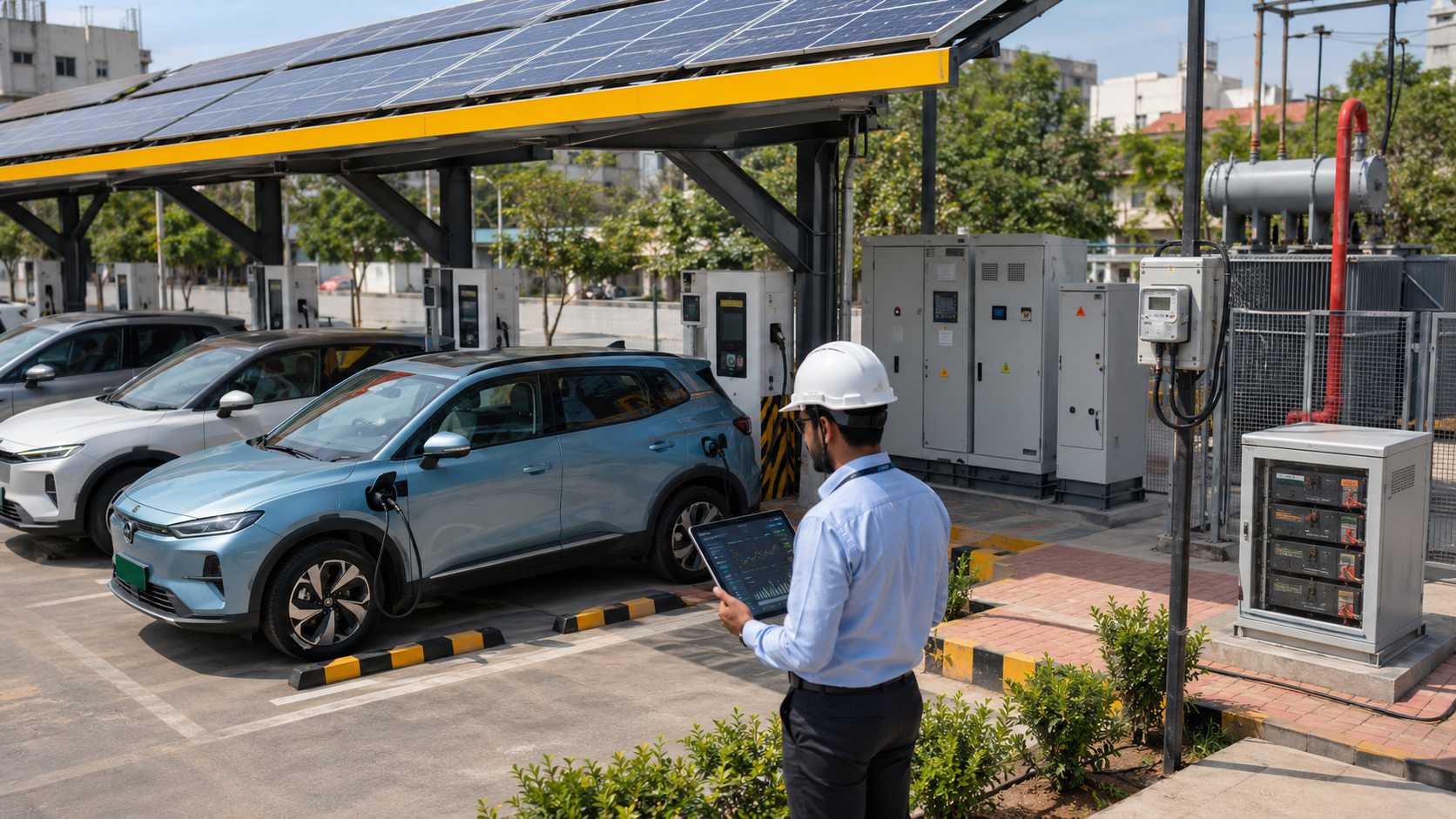
A charging station should undergo an electrical feasibility assessment before equipment is purchased.
The assessment should evaluate:
- Existing load
- Maximum recorded demand
- Transformer rating
- Cable capacity
- Panel capacity
- Charger efficiency
- Future expansion
- Safety margin
- Harmonic performance
- Earthing requirements
Low-Tension vs High-Tension Connection
A smaller charging station may operate through a low-tension connection.
A large multi-charger hub may require:
- High-tension connection
- Dedicated transformer
- High-tension panels
- Protection relays
- Larger electrical rooms
The connection type should be determined by the distribution company and qualified electrical professionals.
Dynamic Load Management
Dynamic load management allows the station to distribute available power among multiple chargers.
For example, a site may have:
- Four 60 kW chargers
- Combined charger rating of 240 kW
- Charging-site limit of 150 kW
The system can distribute the 150 kW according to:
- Number of connected vehicles
- Vehicle charging capability
- Customer priority
- Battery state of charge
This may allow the site to install more charging points without operating all of them at maximum power simultaneously.
Solar Energy Integration
Regional cities may offer suitable rooftops and parking areas for solar panels.
Solar energy can support:
- Daytime charging
- Lighting
- Charger auxiliary systems
- Building electricity demand
- Battery storage
A solar canopy can also provide shade for vehicles and customers.
However, solar electricity will vary according to:
- Time of day
- Weather
- Season
- Available area
- Panel orientation
Solar should normally operate alongside the grid rather than being treated as an unlimited charging source.
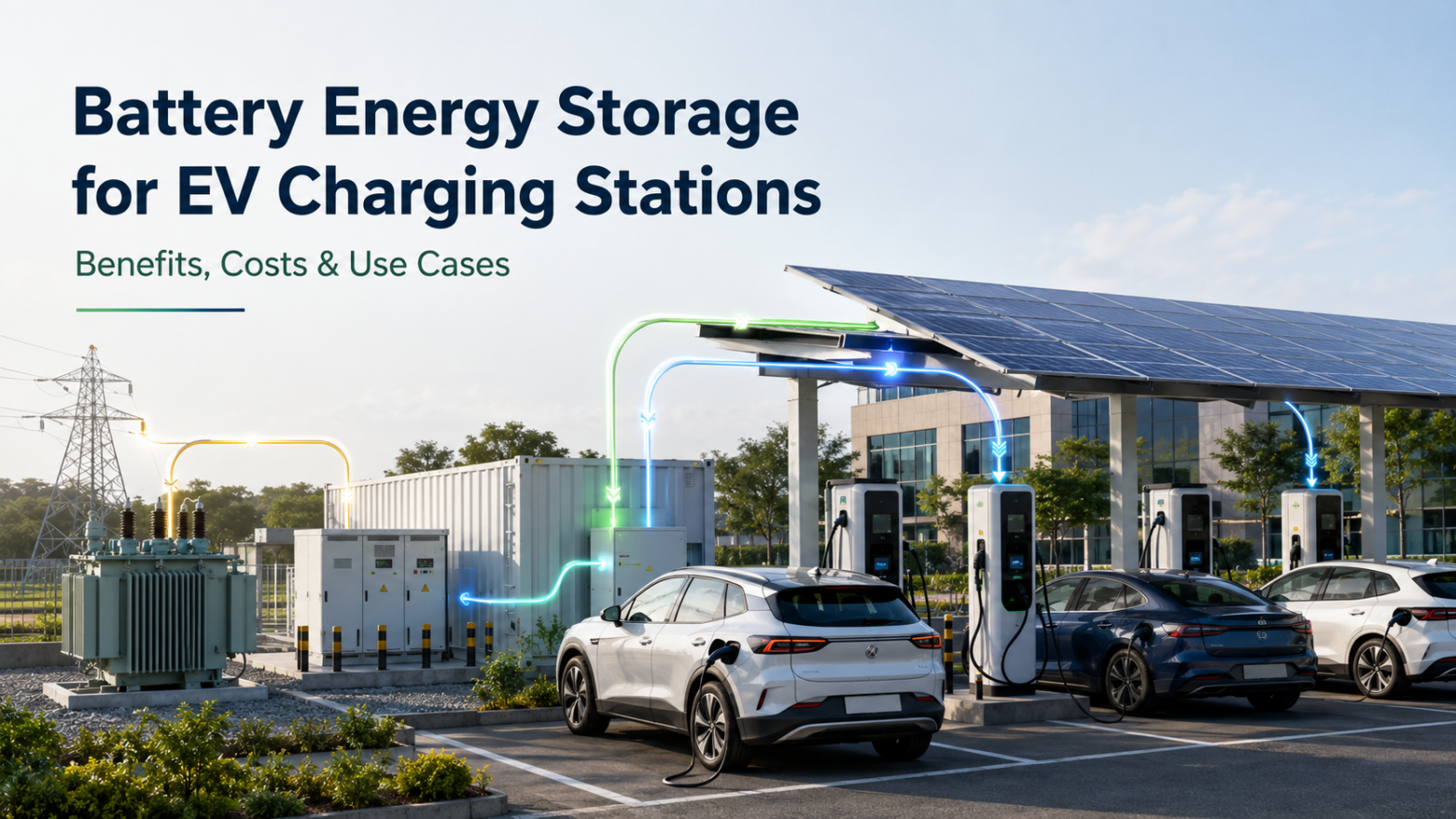
Battery Energy Storage
Battery storage may be useful where:
- Grid capacity is limited
- Fast charging demand occurs in short peaks
- Solar energy needs to be stored
- Grid upgrades are expensive
- Charging resilience is important
A BESS should be added only after comparing its complete life-cycle cost with:
- Grid upgrades
- Dynamic load management
- Lower charger capacity
- Scheduled fleet charging
Digital Operations for Smaller-City Charging Stations
A charging station should be digitally visible and easy to use.
Useful features include:
- Charger location
- Real-time availability
- Connector type
- Charging power
- Pricing
- Operating hours
- Digital payments
- Session status
- Customer support
- Digital invoice
PM E-DRIVE’s operational framework includes the development of a National Unified Hub and mobile application intended to support charger discovery, real-time status, booking and digital payments.
Payment Options
Customers may expect:
- UPI
- QR-code payment
- Mobile application
- RFID card
- Credit or debit card
- Fleet billing
The station should avoid forcing every occasional customer to create a complicated account before charging.
Payment QR codes should be inspected regularly to identify tampering or fraudulent stickers.
Remote Monitoring
Regional charging stations may not have a technician permanently available.
Remote monitoring can help operators:
- Detect charger faults
- Restart equipment
- Monitor sessions
- Review payments
- Track energy use
- Identify network problems
- Schedule maintenance
Local service support is still important because remote software cannot repair damaged cables, connectors or electrical equipment.
Building a Local EV Charging Ecosystem

A successful charging station should develop relationships with local stakeholders.
Potential partners include:
- EV dealerships
- Hotels
- Fleet operators
- Taxi associations
- Auto-rickshaw operators
- Delivery companies
- Housing societies
- Municipal bodies
- DISCOMs
- Shopping centres
- Hospitals
- Educational institutions
EV Dealership Partnerships
Dealers can:
- Inform buyers about the station
- Include charging guidance during vehicle delivery
- Direct customers without home charging
- Organise demonstration events
- Provide information about popular vehicle models
The charging operator can use dealership information to understand local connector and power requirements.
Fleet Partnerships
Commercial fleets can improve charger utilisation during periods when public demand is low.
For example:
- Public customers use the station during the day
- Delivery fleets charge during late evening
- Taxis use reserved early-morning slots
This can create more balanced asset utilisation.
Local Government Coordination
Municipal authorities and urban development bodies can assist with:
- Land identification
- Parking planning
- Signage
- Transport-hub integration
- City charging maps
- Public fleet electrification
The Ministry of Power framework assigns states and urban authorities a planning role for charging density, land and electricity infrastructure.
Steps to Launch a Charging Station in a Tier 2 or Tier 3 City
Step 1: Study the Local EV Market
Identify:
- Number of EVs
- Main vehicle categories
- Leading EV models
- Fleet operators
- Existing chargers
- Future vehicle launches
Step 2: Select the Target Customer
Decide whether the station will primarily serve:
- Two-wheelers
- Three-wheelers
- Passenger cars
- Taxis
- Delivery fleets
- Buses
- Intercity travellers
A station designed for everyone may become poorly suited to every segment.
Step 3: Shortlist Locations
Evaluate multiple locations using:
- EV traffic
- Parking duration
- Electrical capacity
- Accessibility
- Amenities
- Rent
- Competition
- Expansion potential
Step 4: Conduct Electrical Feasibility
Ask qualified professionals to inspect:
- Transformer
- Sanctioned load
- Electrical panels
- Cable route
- Earthing
- Safety requirements
Step 5: Select the Charger Mix
Choose chargers based on:
- Vehicle compatibility
- Parking duration
- Required charging speed
- Expected sessions
- Grid capacity
- Budget
Step 6: Prepare the Financial Model
Include:
- Complete installation cost
- Electricity cost
- Rent
- Maintenance
- Software
- Payment fees
- Staff cost
- Insurance
- Financing
- Expected utilisation
Prepare conservative, moderate and high-demand scenarios.
Step 7: Obtain Permissions and Connection
Coordinate with:
- Property owner
- DISCOM
- Local authority
- Electrical inspector
- Fire authority where required
- Charger network provider
Step 8: Install Networked Chargers
Confirm support for:
- Remote monitoring
- Digital payments
- Energy metering
- Fault alerts
- Charger management
- Software updates
Step 9: Test the Complete Customer Journey
Test:
- Vehicle compatibility
- Charger start
- Payment
- Session completion
- Invoice
- Emergency stop
- Network failure
- Customer support
Step 10: Launch Local Marketing
Promote the station through:
- Map listings
- Charging applications
- EV dealerships
- Fleet operators
- Hotels
- Local business directories
- Highway signage
- Social media
Step 11: Monitor Performance
Review operating data every month.
Add chargers only when actual demand supports expansion.
Key Performance Indicators
Charging station operators should monitor:
- Charging sessions per day
- Energy delivered per day
- Charger utilisation
- Successful session rate
- Charger uptime
- Revenue per charger
- Electricity cost per session
- Average session duration
- Customer waiting time
- Repeat customer rate
- Peak electricity demand
- Maintenance response time
Common Mistakes to Avoid
Installing an Ultra-Fast Charger Without Demand
A high-power charger may remain underused when most local vehicles accept much lower power.
Choosing the Cheapest Location
Low rent cannot compensate for poor visibility, difficult access or low vehicle traffic.
Ignoring Electric Two-Wheelers and Three-Wheelers
A passenger-car-only strategy may miss a major part of the regional EV market.
Installing Too Many Chargers Initially
Unused chargers increase capital and maintenance costs.
Underestimating the Electricity Connection
Transformer and upstream electrical costs may exceed expectations.
Depending Only on Occasional Public Customers
Fleet, hotel and commercial partnerships can create more predictable utilisation.
Ignoring Maintenance Support
A charger remaining unavailable for several days can damage customer trust.
Selecting a Closed Software Platform
The operator should understand whether chargers can be managed through alternative compatible platforms.
Failing to List the Station Online
Customers cannot use a charger they cannot find.
Ignoring Customer Amenities
A clean, safe waiting area can make a regional station more attractive.
Promising Guaranteed Returns
Charging-station profitability depends on demand, costs, uptime and competition.
Is a Tier 2 or Tier 3 City Charging Station Profitable?
A regional charging station can become commercially viable when it has:
- Suitable location
- Correct charger mix
- Controlled installation cost
- Reliable electricity
- High charger uptime
- Fleet or property partnerships
- Transparent pricing
- Strong digital visibility
- Expansion based on real usage
Profitability may take time because EV adoption and charger utilisation develop gradually.
The station should be treated as long-term infrastructure rather than a guaranteed short-term return.
The strongest projects may combine public charging with another business activity such as:
- Hotel
- Restaurant
- Shopping centre
- Parking
- Fuel station
- Fleet depot
- Vehicle dealership
India’s Next Charging Growth Opportunity
Tier 2 and Tier 3 cities can become important links between metropolitan charging networks and wider regional mobility.
They can support:
- Local EV ownership
- Commercial fleets
- Electric public transport
- Highway travel
- Tourism
- Delivery operations
- Cleaner urban mobility
The Ministry of Heavy Industries’ May 2026 update showed that approved PM E-DRIVE proposals already included states such as Rajasthan, Andhra Pradesh, Uttar Pradesh, Gujarat, Kerala, Telangana, Karnataka and Tamil Nadu, in addition to public-sector fuel companies. This wider state-level deployment can help charging expansion move beyond a small number of metropolitan markets.
However, sustainable expansion will depend on selecting appropriate sites and installing infrastructure that matches local vehicle demand.
Conclusion
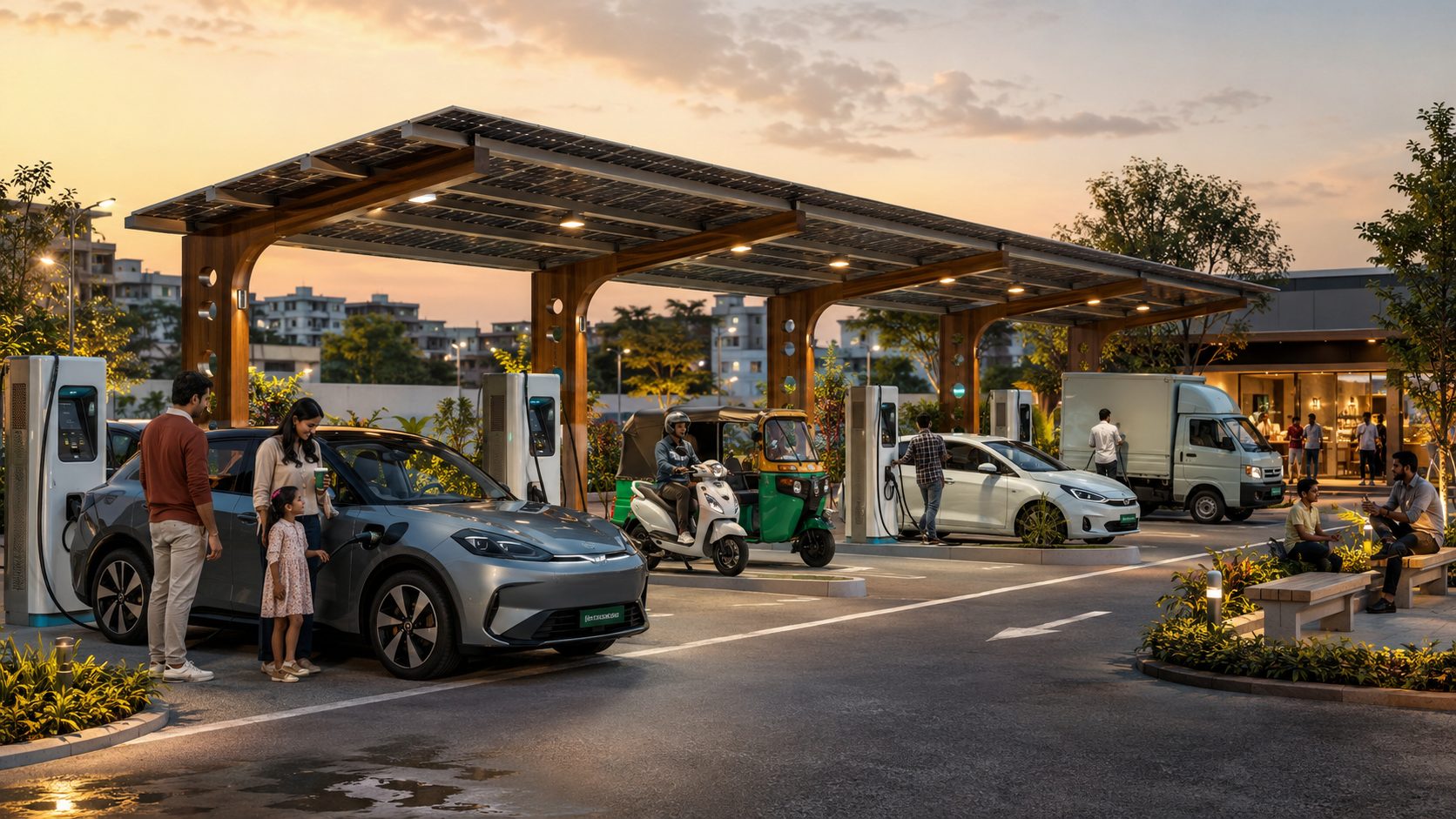
EV charging infrastructure in Tier 2 and Tier 3 cities represents an important growth opportunity for India’s electric mobility ecosystem.
Smaller cities can support charging demand from electric two-wheelers, three-wheelers, passenger cars, delivery fleets, buses and intercity travellers.
A successful regional charging project should:
- Study the local EV population
- Select a high-quality location
- Match charger power with vehicle demand
- Control electrical infrastructure costs
- Begin with a scalable installation
- Build fleet and property partnerships
- Maintain strong charger uptime
- Provide simple digital payments
- Expand based on actual utilisation
The best strategy is not to copy a metropolitan charging hub. It is to build a reliable, affordable and locally relevant charging network.
Planning an EV charging station in a Tier 2 or Tier 3 city? Contact Earthtron EV to evaluate your location, electrical capacity, charger mix and scalable charging infrastructure requirements.