Electric vehicles are becoming more common in India, and with this growth, the demand for EV charging stations is also increasing. For anyone planning to invest in an EV charging station business, one important question is: should you install AC chargers or DC chargers?
Both AC and DC chargers are useful, but they are made for different charging needs. AC chargers are generally suitable for slow and long-duration charging, while DC chargers are better for fast charging and public charging locations. Choosing the right charger depends on the location, user type, charging time, vehicle category, and business goal.
India’s EV charging ecosystem is also moving towards safer, reliable, accessible, and affordable charging infrastructure through government guidelines and standards. The e-AMRIT portal mentions that EV charger specifications in India vary across Level 1, Level 2, and Level 3 charging stations, including AC and DC charger types.
What Is an AC EV Charger?
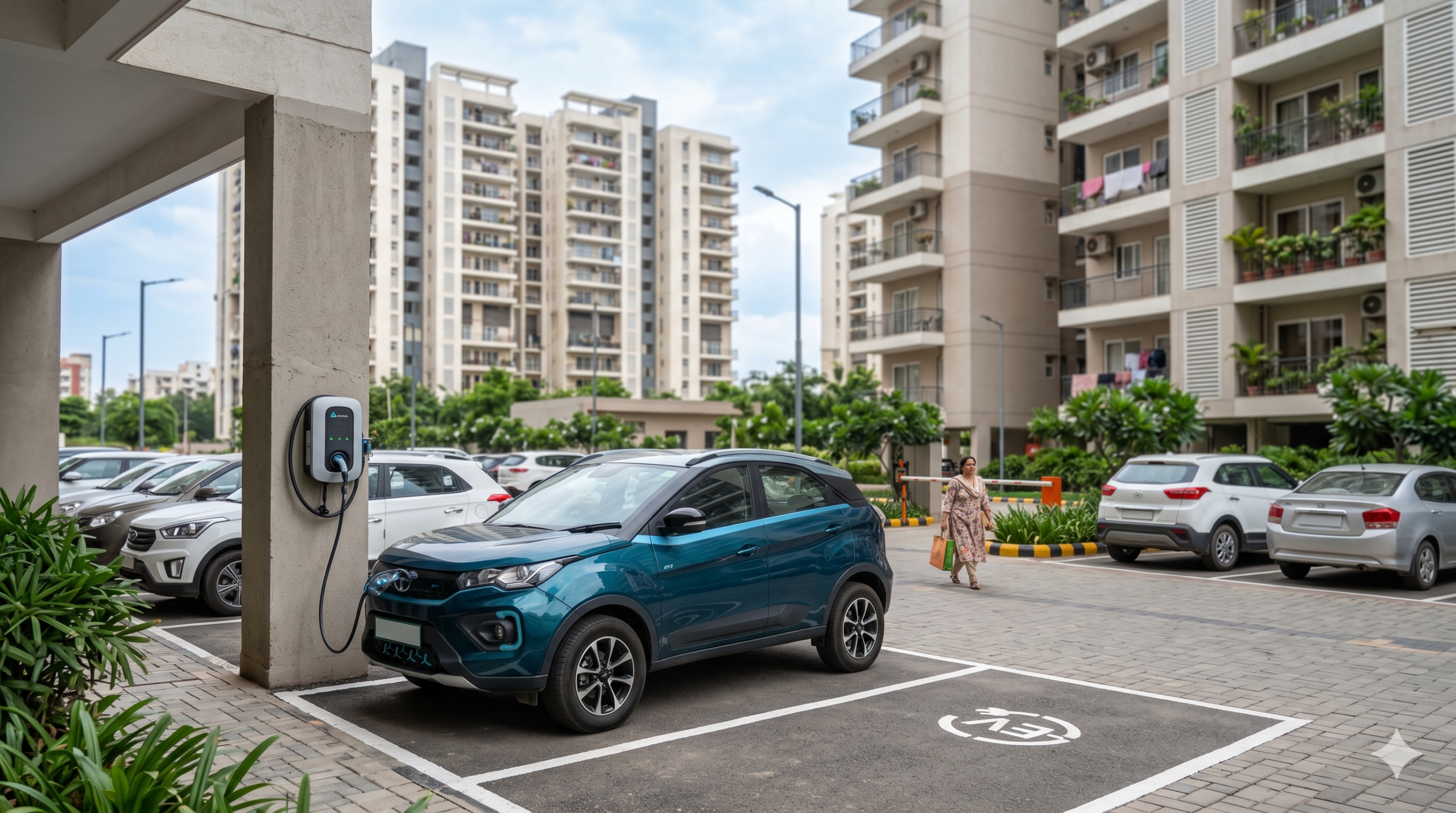
AC stands for Alternating Current. In AC charging, electricity is supplied to the vehicle in AC form. The vehicle’s onboard charger then converts this AC power into DC power to charge the battery.
AC charging is usually slower than DC charging. However, it is practical for places where vehicles remain parked for a longer time. This makes AC chargers useful for homes, residential societies, offices, hotels, malls, restaurants, and long-duration parking areas.
AC chargers are commonly used when users do not need very fast charging. For example, an employee can plug in the car in the morning and let it charge while working. Similarly, a resident can charge an EV overnight at home or in an apartment parking area.
What Is a DC EV Charger?
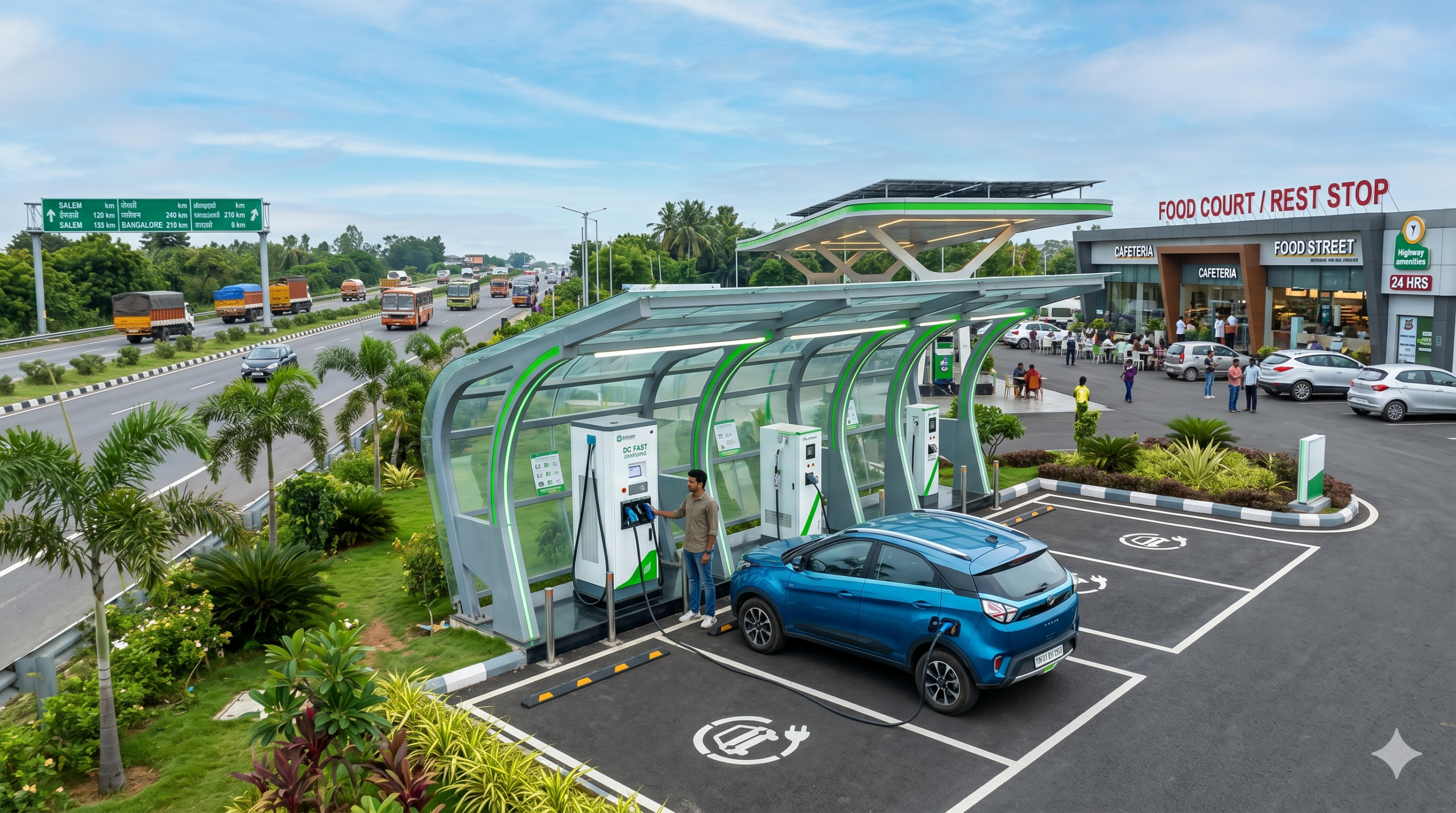
DC stands for Direct Current. In DC charging, the charger directly supplies DC power to the EV battery. This reduces the dependency on the vehicle’s onboard charger and makes charging much faster.
DC chargers are mainly used for public charging stations, highway charging points, fleet charging hubs, taxi charging areas, and commercial EV charging locations. These chargers are suitable where users want to charge quickly and continue their journey.
For example, a person travelling on a highway cannot wait for several hours to charge an EV. In such cases, a DC fast charger is more suitable because it can provide faster charging compared to regular AC charging.
Main Difference Between AC and DC Chargers
The main difference between AC and DC chargers is charging speed and use case.
AC chargers are slower but more suitable for long parking duration. DC chargers are faster and more suitable for public charging locations where users need quick charging.
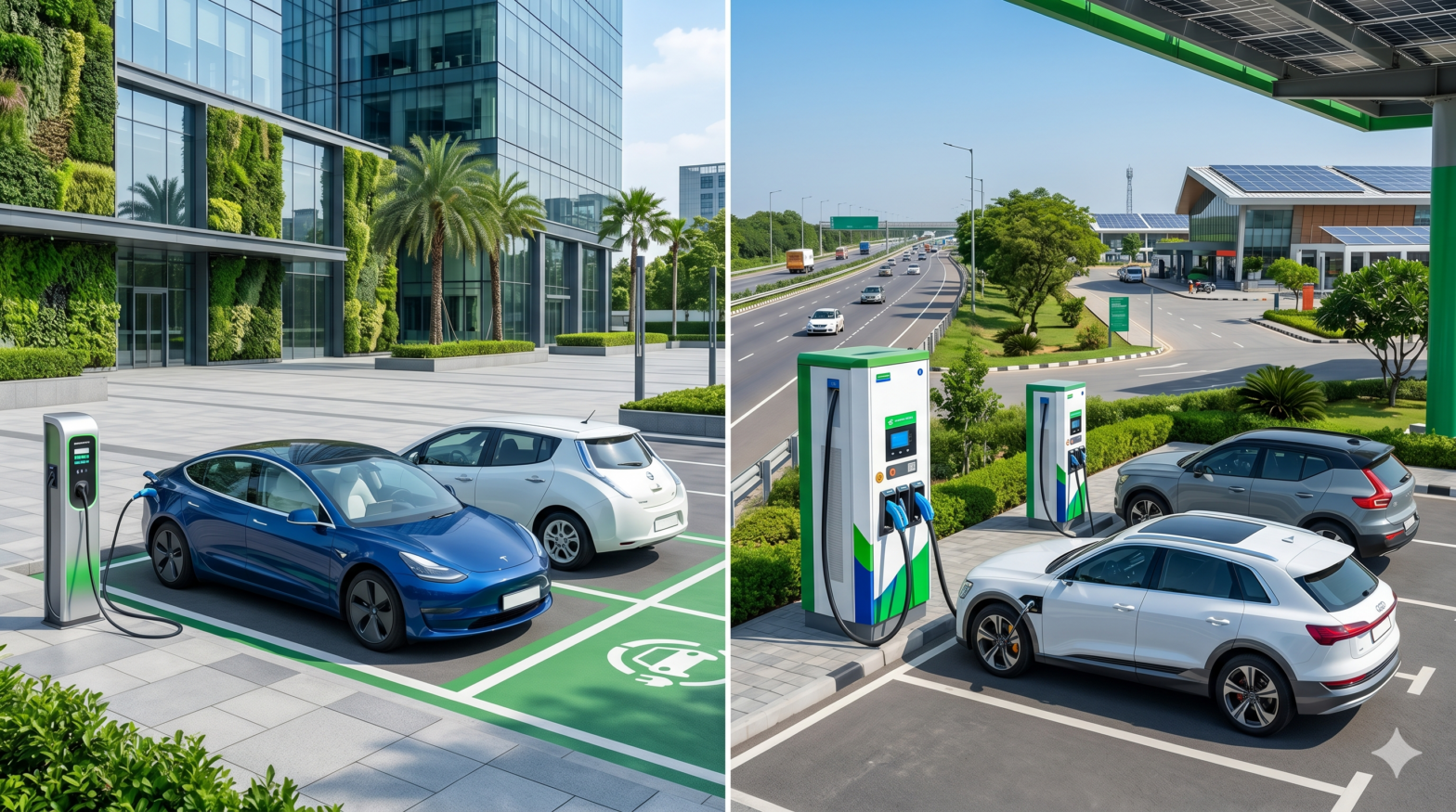
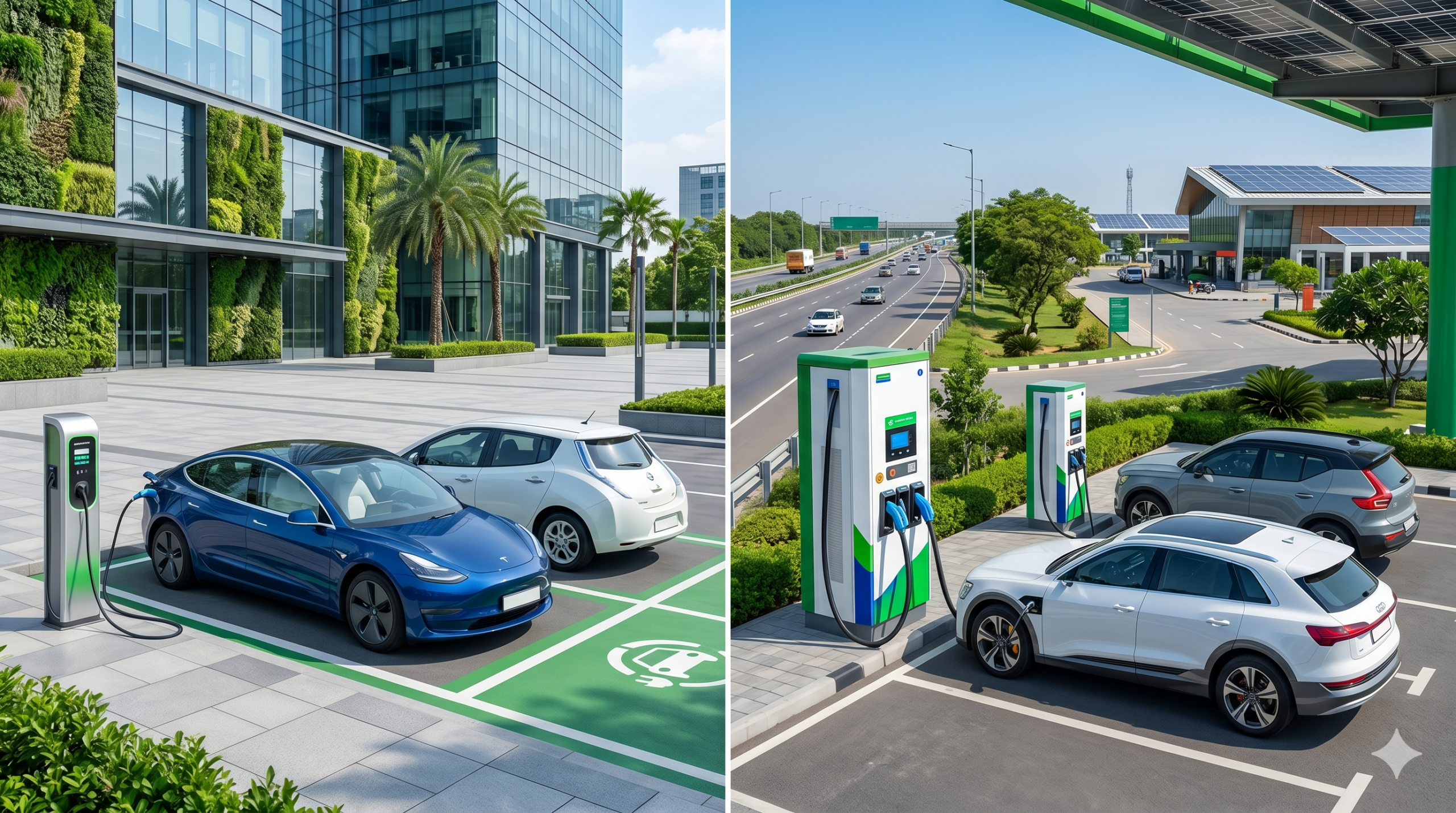
AC chargers are generally better for residential societies, offices, hotels, and malls where vehicles stay parked for a longer time. DC chargers are better for highways, fleet operators, public charging stations, and high-traffic commercial locations.
AC Chargers for Homes and Residential Societies
AC chargers are a practical choice for homes and residential societies. Most EV owners prefer charging their vehicles overnight because the vehicle remains parked for several hours.
In apartment complexes and gated societies, AC chargers can provide daily charging convenience to residents. They are useful for people who do not want to depend on public charging stations for regular charging needs.
Residential EV charging may not always need very high charging speed. Regular access, safety, parking convenience, and proper electricity support are more important in this case.
AC Chargers for Offices and Commercial Buildings
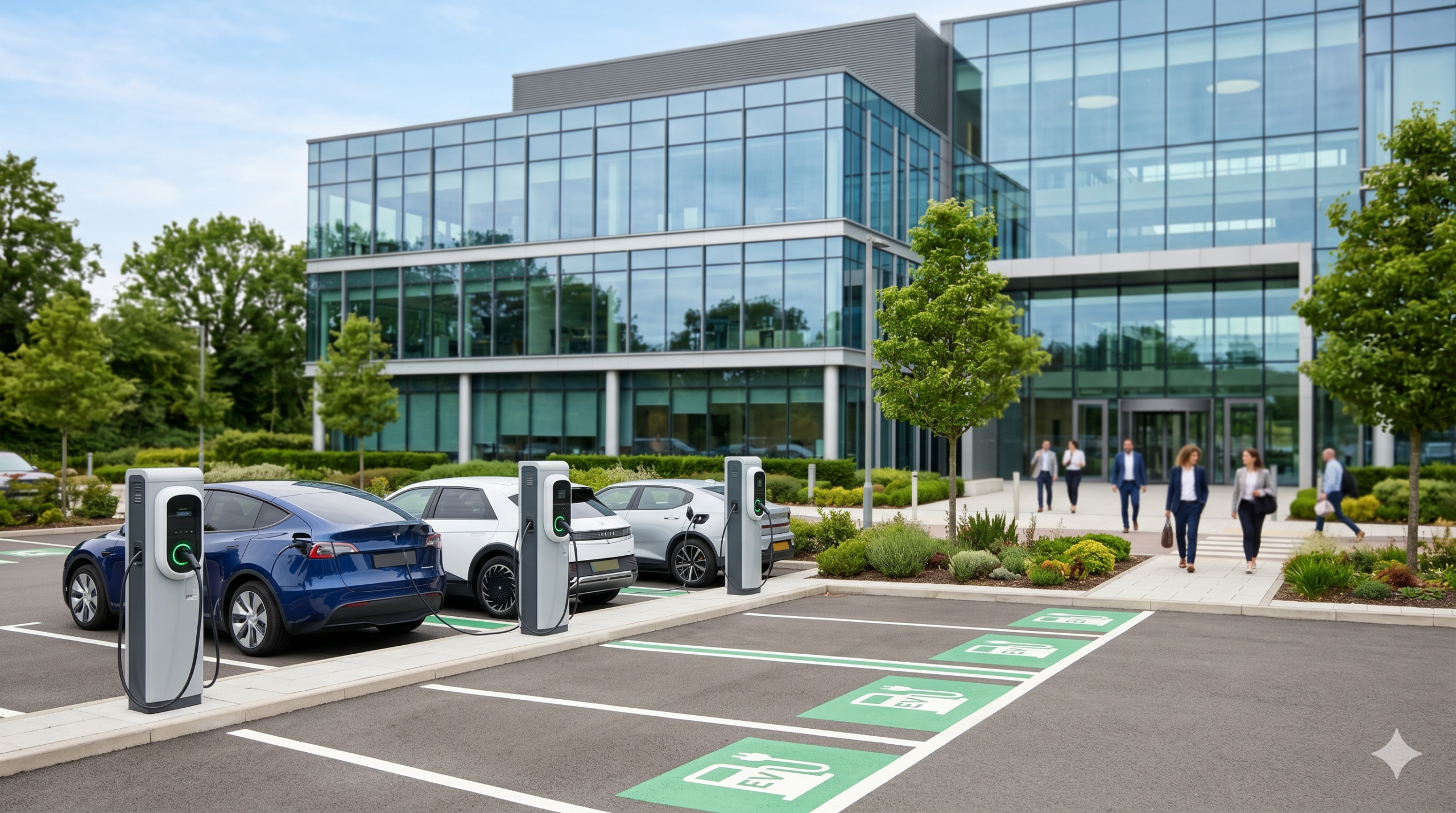
Office spaces and commercial buildings are also suitable for AC chargers. Employees usually park their vehicles for 6 to 9 hours during the working day. This gives enough time for slow or moderate charging.
Installing AC chargers in office parking areas can improve employee convenience and make the property more future-ready. It can also support companies that want to promote clean mobility and sustainable workplace facilities.
For office locations, AC charging can be cost-effective and practical because users do not need immediate charging.
AC Chargers for Hotels, Restaurants, and Malls
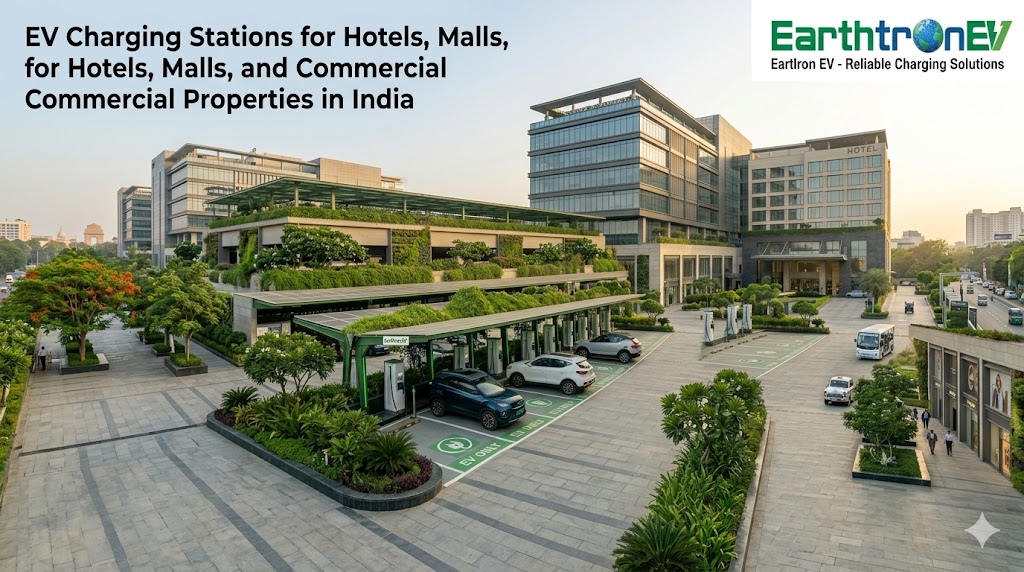
Hotels, restaurants, and malls can also use AC chargers effectively. Visitors usually spend a good amount of time at these locations. A customer can charge the EV while shopping, eating, attending an event, or staying at a hotel.
For hotels, AC charging can be especially useful because guests can charge their vehicles overnight. For malls and restaurants, AC chargers can improve customer experience and encourage EV owners to choose that location.
However, if the location has high traffic and users expect quick charging, a combination of AC and DC chargers may work better.
DC Chargers for Highways and Intercity Travel
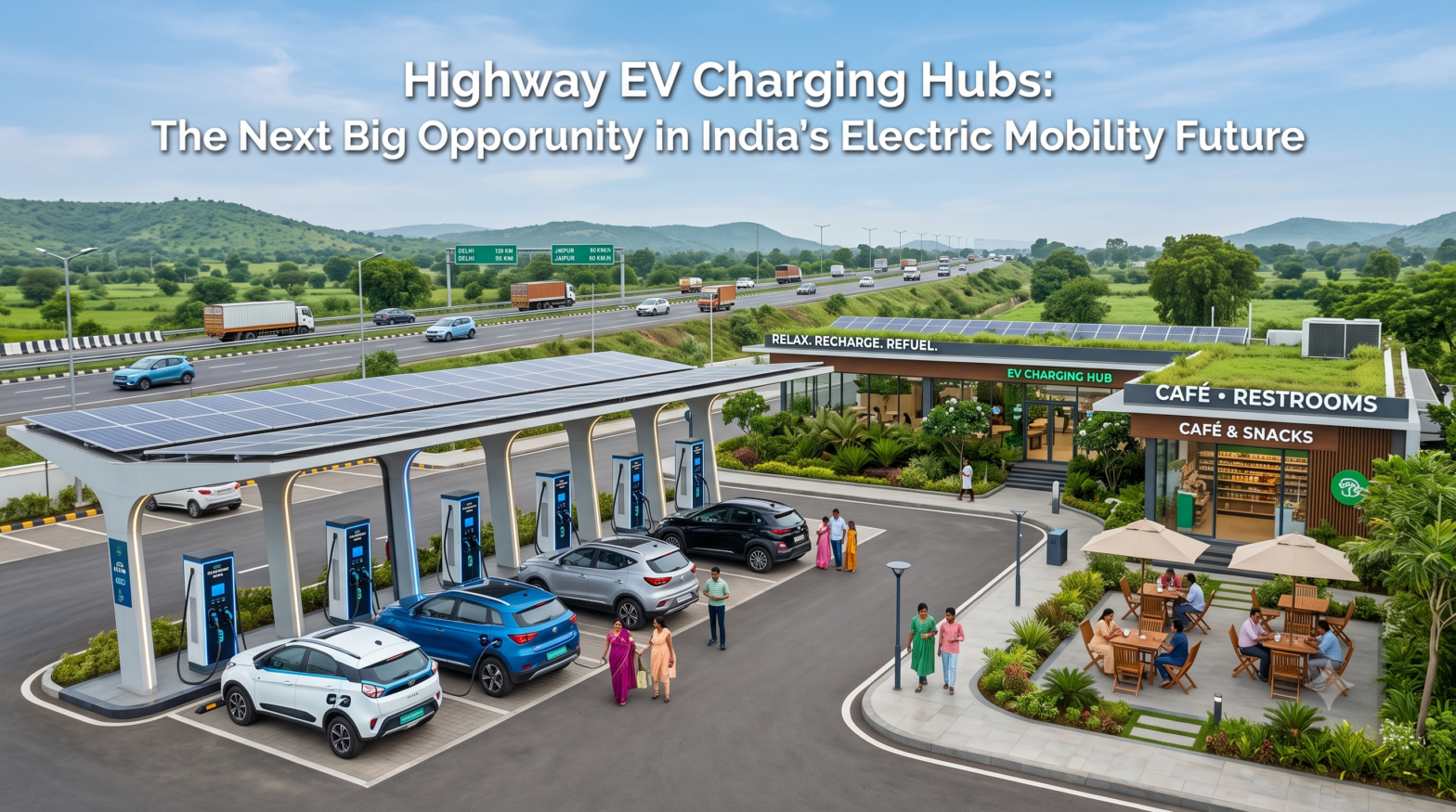
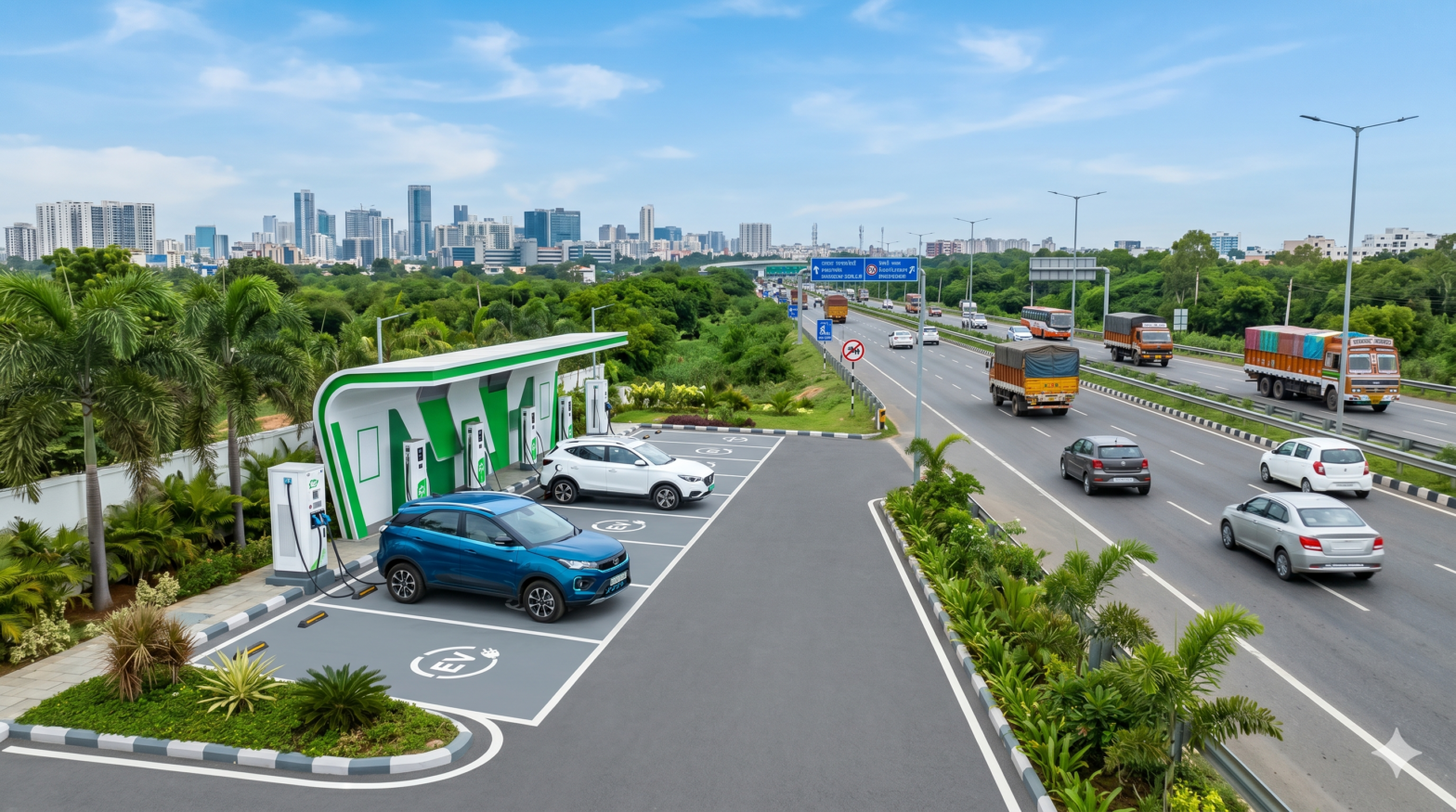
Highways are one of the best locations for DC fast chargers. EV users travelling between cities need quick and reliable charging support. They usually stop for a short break and expect the vehicle to charge quickly.
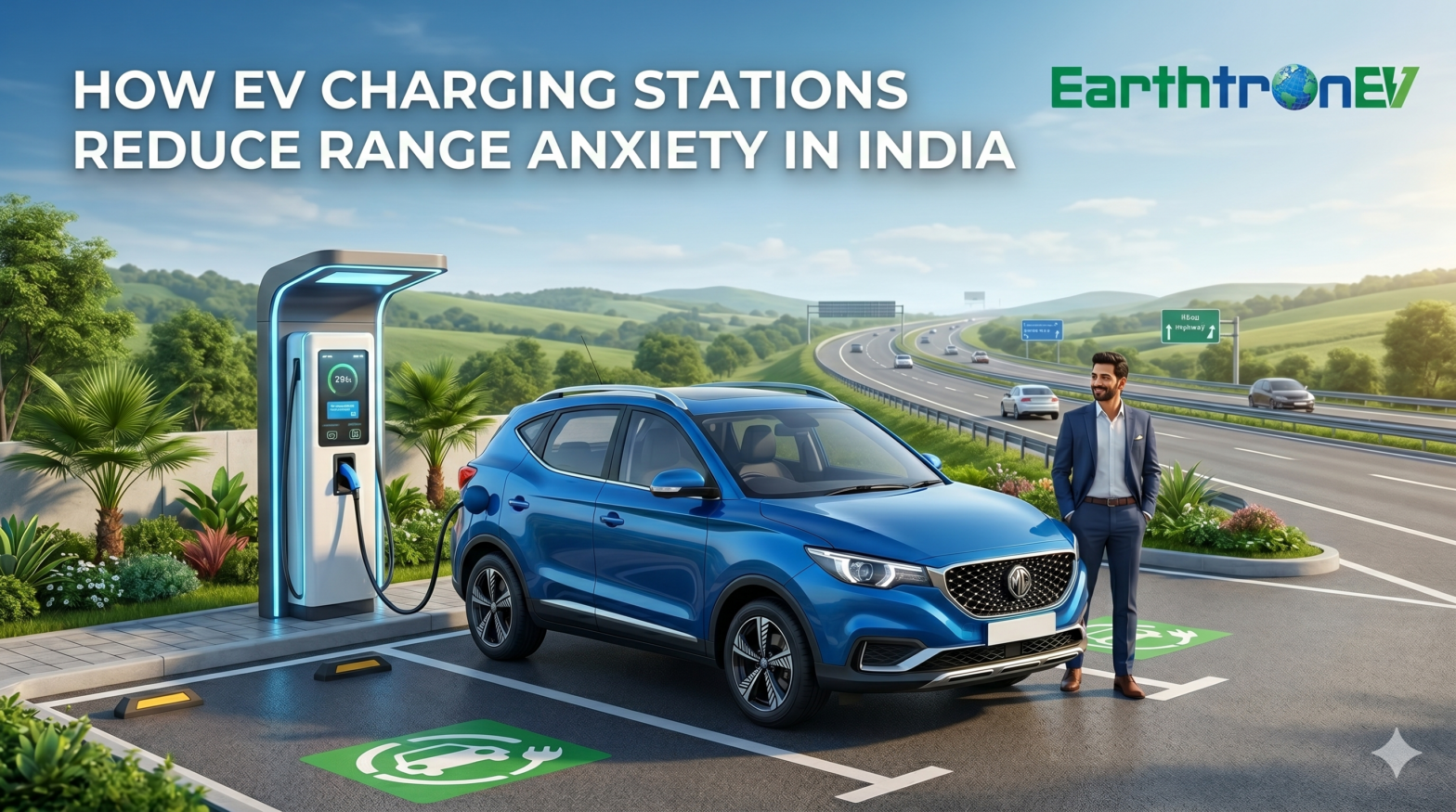
DC chargers on highways can reduce range anxiety and make long-distance EV travel more practical. Earthtron EV also focuses on connecting Indian cities by electrifying highways and supporting range-anxiety-free intercity travel for EV owners.
Highway charging locations are suitable near petrol pumps, food courts, dhabas, restaurants, hotels, motels, toll areas, and rest stops.
DC Chargers for Fleet, Taxi, and Delivery Vehicles
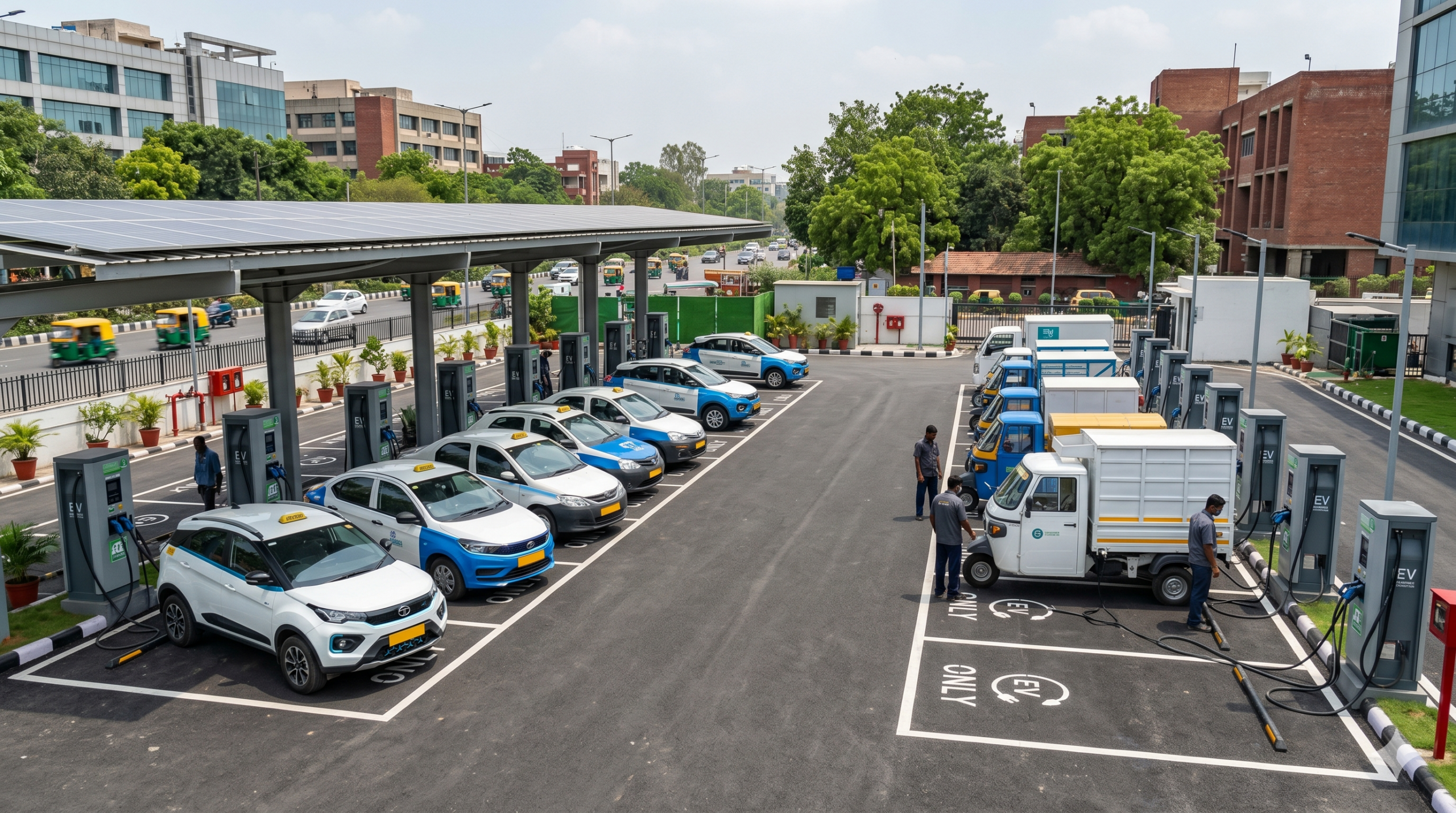
Fleet operators need faster charging because their vehicles run throughout the day. Electric taxis, delivery vehicles, logistics vans, and company vehicles cannot stay parked for long hours.
For fleet businesses, vehicle downtime directly affects operations. A DC charger can help vehicles return to the road faster. This makes DC charging useful for taxi stands, airport routes, railway station areas, delivery hubs, logistics parks, and commercial vehicle parking zones.
Fleet charging locations can also create regular demand because these vehicles need charging again and again during daily operations.
DC Chargers for Public Charging Stations
Public charging stations usually need faster charging because users come from different locations and want a quick charging experience. DC chargers are suitable for such places because they can serve users who are travelling, working, shopping, or passing through the area.
Public charging locations should also offer easy entry and exit, safe parking, proper electricity load, visibility from the road, and nearby waiting facilities.
The e-AMRIT portal also highlights that public EV charging stations should support reliable and accessible charging infrastructure, and India’s guidelines aim to support faster EV adoption through safe and affordable charging infrastructure.
Which Charger Is Better for EV Charging Station Business?
There is no single answer for every location. The best charger depends on where the charging station is installed and who will use it.
If the location is a residential society, office, hotel, or mall where users park for a long time, AC chargers can be a good choice. If the location is a highway, fleet hub, public charging station, or busy commercial route, DC chargers are usually better.
For many commercial locations, a mixed setup can also work well. AC chargers can serve users who stay for longer hours, while DC chargers can serve users who need fast charging.
Cost and Usage Consideration
AC chargers are generally more suitable for locations where charging speed is not the main priority. They can be practical for regular, long-duration parking spaces.
DC chargers are more suitable for businesses that want to serve more users in less time. They are useful for locations where fast charging demand is high. However, DC charging setup may need stronger electrical infrastructure and better planning.
Before selecting the charger type, investors should check the location, expected user demand, power availability, parking space, charger compatibility, and long-term EV growth in that area.
Common Mistakes While Choosing EV Chargers
One common mistake is choosing the charger only by looking at charging speed. Fast charging is useful, but it is not required everywhere.
Another mistake is installing slow chargers at locations where users need quick charging. For example, only AC chargers on a busy highway may not give users the experience they expect.
Similarly, installing a high-capacity DC charger in a low-demand residential area may not be the best use of investment. Charger selection should always match user behaviour and location type.
Conclusion
AC and DC chargers both have an important role in India’s EV charging ecosystem. AC chargers are best for long-duration parking locations such as homes, residential societies, offices, malls, hotels, and restaurants. DC chargers are better for highways, public charging stations, fleet hubs, taxi zones, and high-traffic commercial locations.
For an EV charging station business, the right decision is not simply choosing the fastest charger. The right decision is choosing the charger that matches the location, user need, parking time, and business model.
With proper charger selection and location planning, an EV charging station can provide better user convenience and become a future-ready business opportunity in India’s growing electric mobility market.