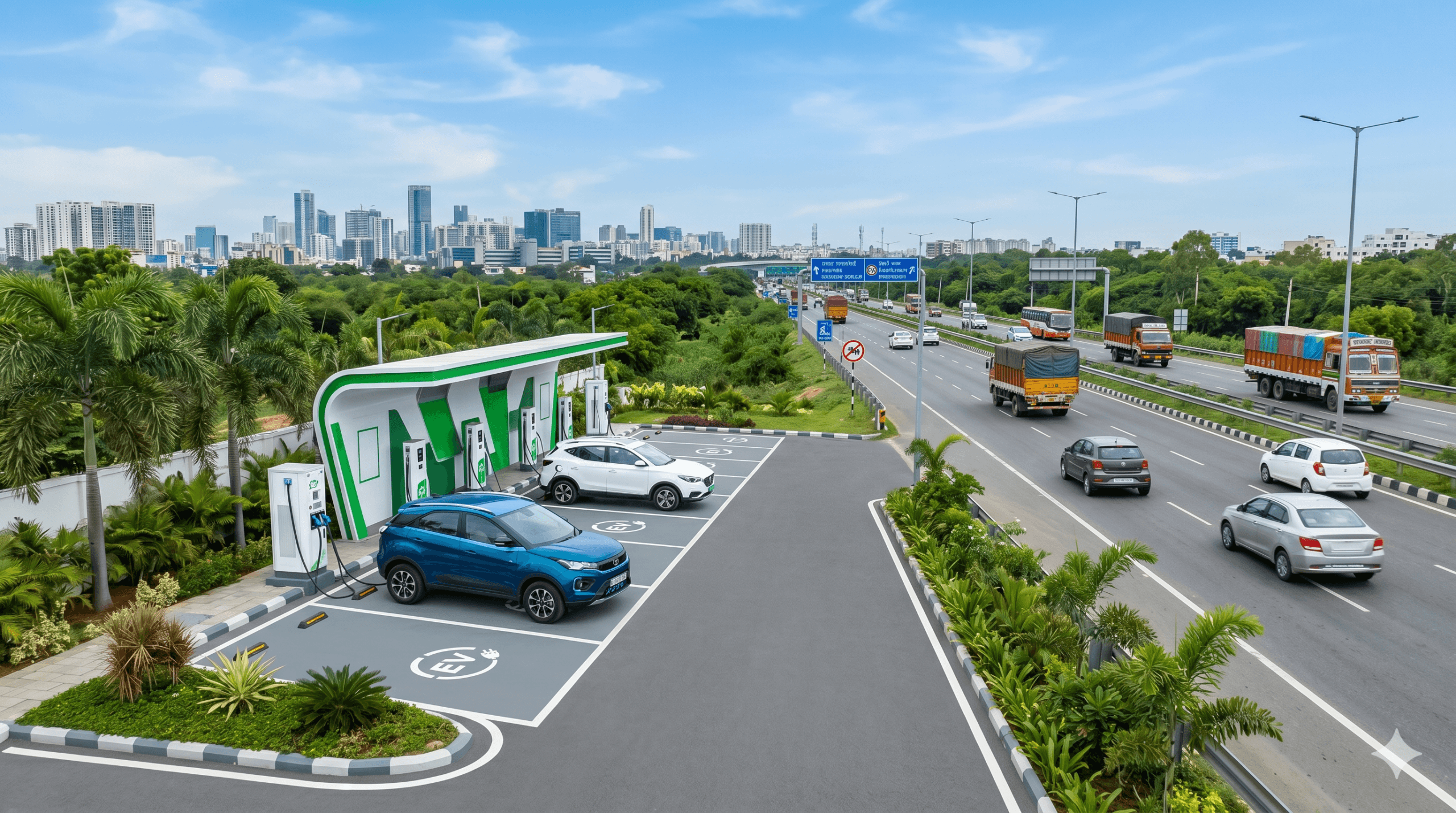
India’s electric vehicle market is growing fast, and the need for reliable EV charging stations is increasing across cities, highways, commercial areas, fleet hubs, and residential spaces. For anyone planning to start an EV charging station business or invest in an EV charging franchise, choosing the right location is one of the most important decisions.
A good location can improve visibility, accessibility, charger utilization, and customer convenience. On the other hand, even a well-equipped charging station may struggle if it is installed in a low-demand location, has difficult entry and exit, or does not have enough electrical capacity.
The best location for an EV charging station investment therefore depends on more than available land or rental cost. Investors should consider EV traffic, vehicle dwell time, charger type, power availability, nearby competition, accessibility, and the type of users expected at the site.
Why Location Matters in an EV Charging Business
An EV charging station is not just about installing chargers. It is about placing charging infrastructure where EV users genuinely need it.
EV owners may need charging while travelling between cities, working at an office, shopping at a mall, staying at a hotel, operating a commercial fleet, or parking their vehicle overnight.
The right location can help improve charger utilization and make charging more convenient for users. For investors, location can also influence the type of charger required, electrical infrastructure cost, potential charging demand, and overall commercial viability of the station.
This is why location assessment should come before selecting charger capacity or finalizing an EV charging station investment.
Investors considering a franchise model can also read our guide on EV charging station franchise opportunities in India.
Highways and Intercity Routes
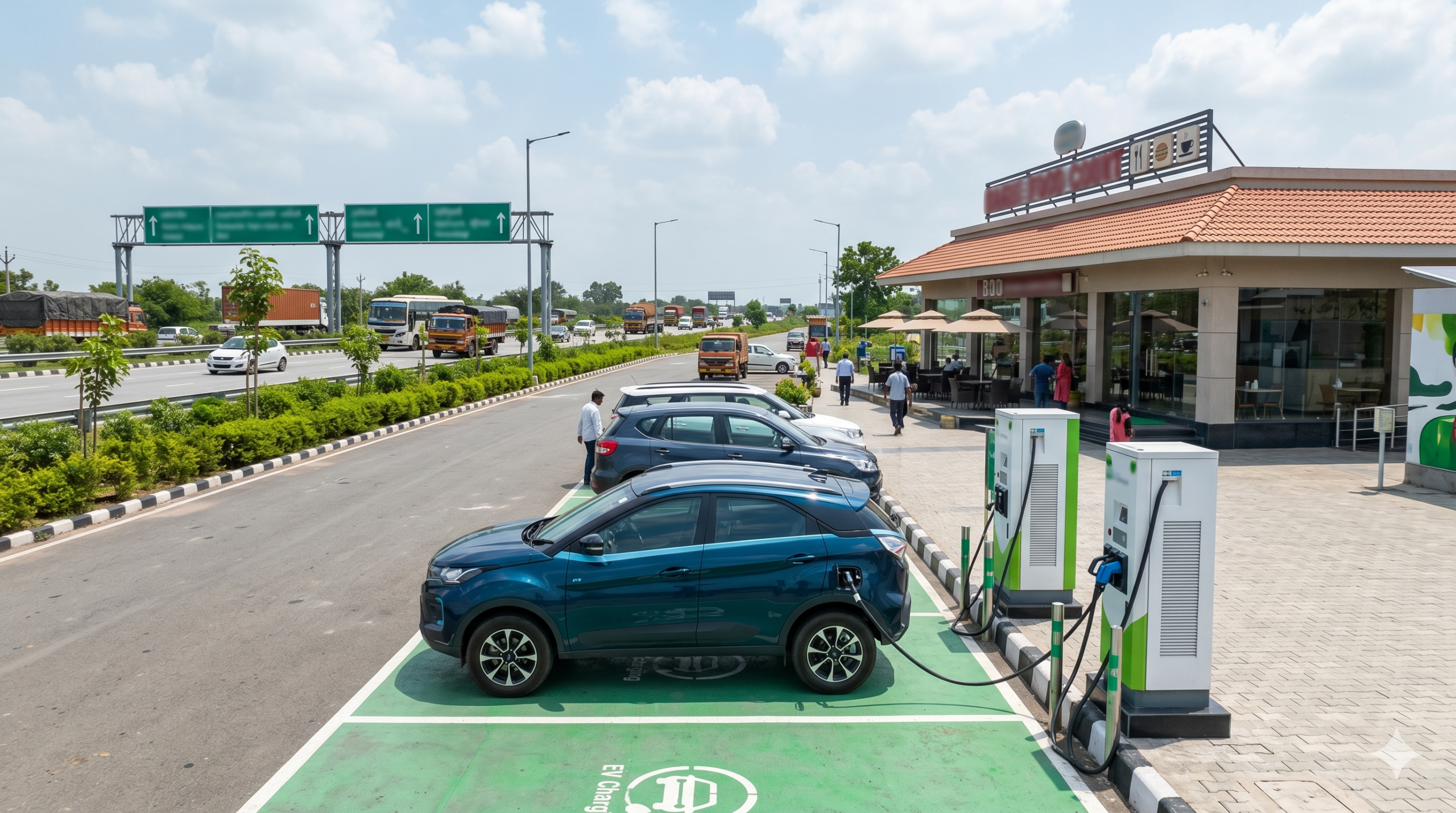
Highways are among the most important locations for EV charging stations in India. EV users travelling from one city to another need reliable charging points during their journey, particularly on routes where charging alternatives may be limited.
Highway charging stations can work well near petrol pumps, food courts, dhabas, restaurants, toll plazas, hotels, motels, and rest stops. These locations are useful because travellers naturally stop for food, tea, rest, or refreshments while their vehicle charges.
Popular intercity routes, business corridors, tourist routes, and highways connecting major cities can also offer charging demand as EV adoption increases.
What Makes a Highway Location Suitable?
- Strong intercity vehicle movement
- Easy entry and exit from the highway
- Good road visibility and signage opportunities
- Sufficient electrical capacity for fast charging
- Safe parking and vehicle circulation
- Nearby food, washrooms, seating, or other amenities
- Reasonable distance from existing competing charging stations
Highway charging often requires faster charging because users want to continue their journey without waiting for several hours. For this reason, DC fast charging is generally more relevant to highway sites than slower residential charging solutions.
However, a busy road does not automatically make a strong charging location. Investors should evaluate actual EV movement, competing chargers, stopping behaviour, power availability, and accessibility before selecting a highway site.
Commercial Hubs and Office Areas
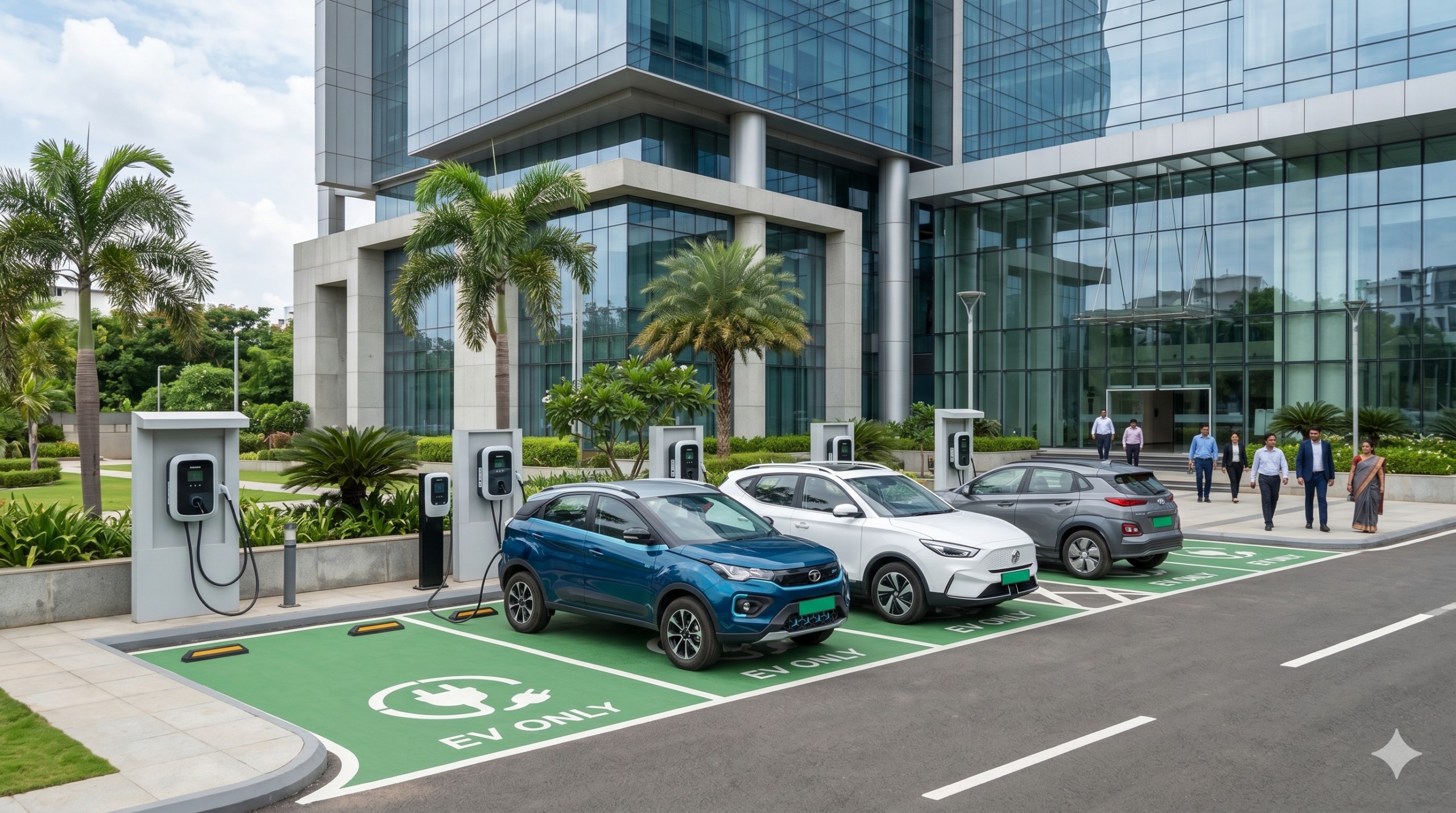
Commercial hubs and office areas can be suitable locations for EV charging stations because vehicles often remain parked for several hours. Employees, visitors, clients, and business owners can charge their EVs while they work or attend meetings.
Corporate parks, IT parks, business centres, co-working spaces, industrial areas, and office parking zones can all support EV charging infrastructure.
Unlike highway users, office users may not always require immediate fast charging because their vehicles remain parked for longer periods. Depending on expected demand and parking duration, AC charging or a combination of AC and DC charging may be considered.
Why Commercial Locations Can Work
- Regular weekday vehicle movement
- Longer parking duration
- Employees and visitors provide repeat demand
- Existing parking infrastructure may already be available
- Charging can become an additional facility offered by the property
For commercial buildings, EV charging can also improve convenience for employees and visitors while helping the property prepare for increasing EV adoption.
Shopping Malls and Retail Centres
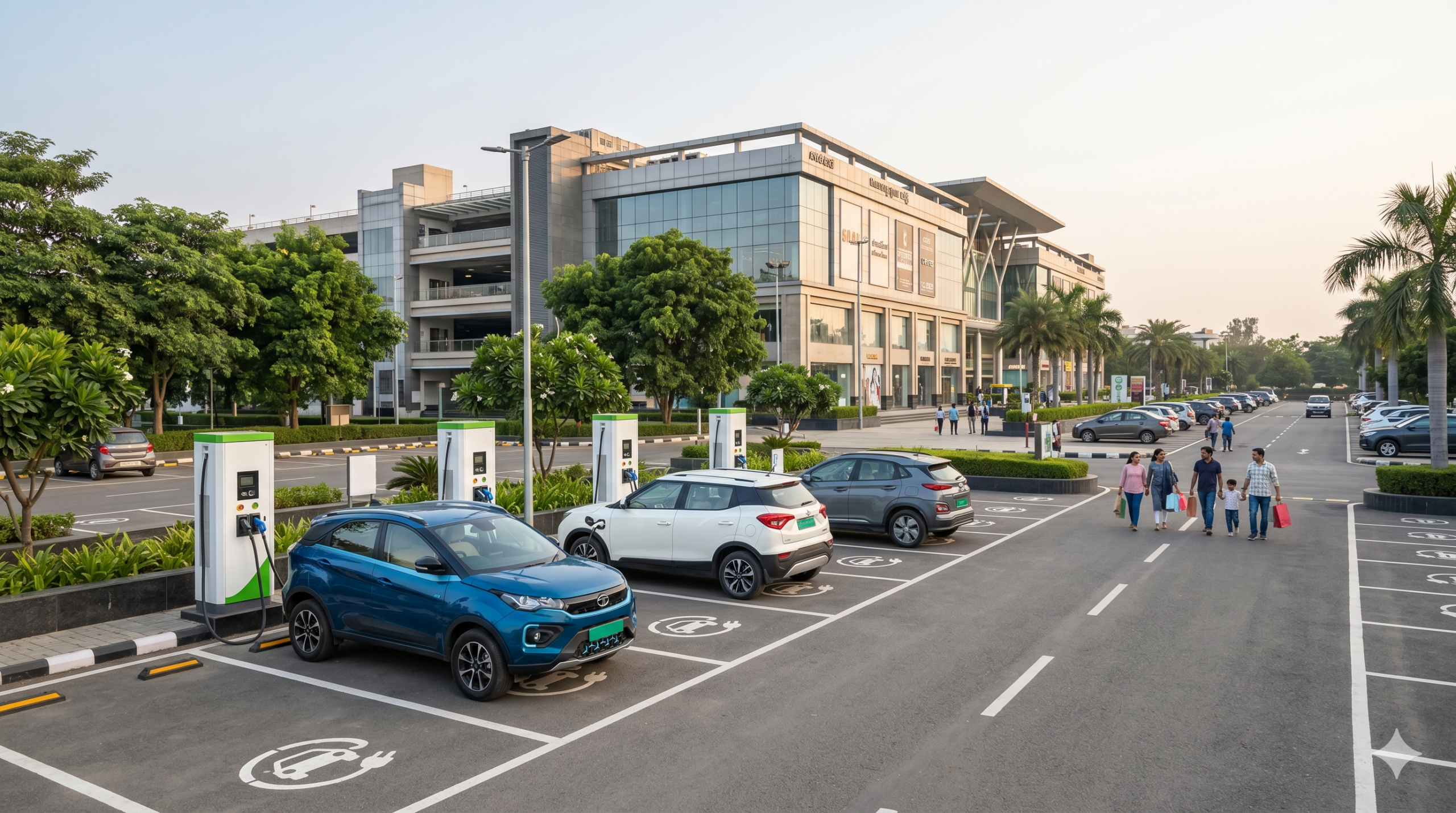
Shopping malls and retail centres are practical EV charging locations because customers usually spend meaningful time at the property. EV owners can charge while shopping, watching a movie, eating at a restaurant, or spending time with family.
Malls, supermarkets, multiplexes, restaurants, cafes, retail parks, and large commercial parking areas can all support charging infrastructure.
The advantage of these locations is the natural relationship between parking duration and charging time. Instead of making a separate stop specifically for charging, the customer can charge the vehicle while completing another activity.
Important Factors for Mall and Retail Charging
- Daily customer footfall
- Average parking duration
- Visibility of charging bays
- Easy access from entry and exit points
- Availability of dedicated EV parking spaces
- Electrical load capacity
- Existing nearby charging competition
For mall and retail operators, EV charging can also function as a value-added facility that improves the overall customer experience.
Hotels, Resorts, and Tourist Destinations
Hotels, resorts, and tourist destinations are becoming increasingly relevant for EV charging infrastructure. EV owners travelling for holidays, business trips, weekend breaks, pilgrimages, or intercity journeys may prefer destinations where charging is available during their stay.
Hotels and resorts can provide EV charging as an additional guest facility. Because vehicles may remain parked for several hours or overnight, these properties can support destination charging without requiring every user to depend on high-speed public charging.
Tourist parking areas, hill station routes, pilgrimage destinations, banquet venues, highway hotels, resorts, and destination properties can therefore be worth evaluating.
The right charger type should be selected according to typical guest parking duration, expected charging demand, and available electrical infrastructure.
Residential Societies and Apartment Complexes
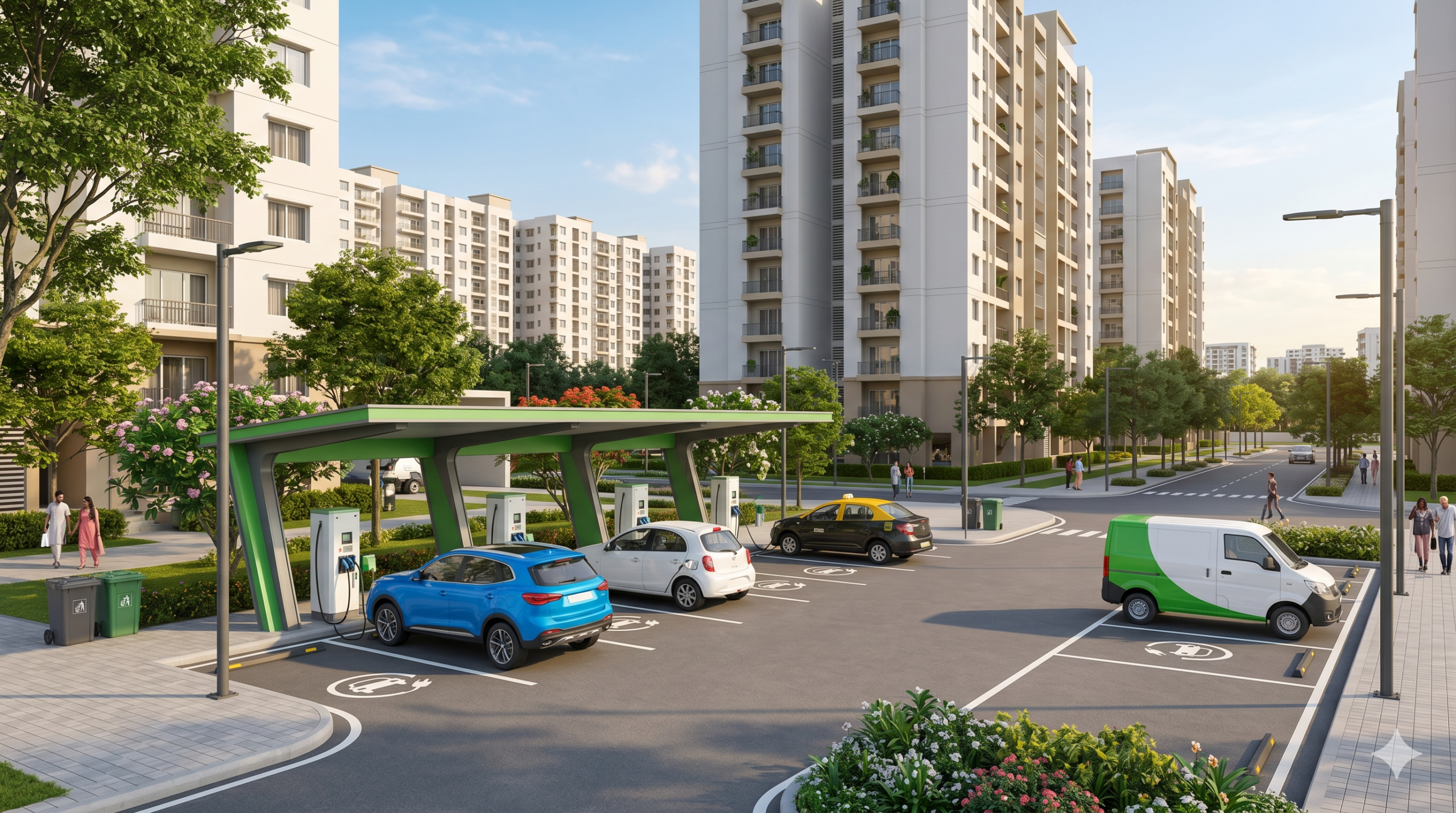
As electric vehicle ownership increases, residential charging demand is also expected to grow. Many EV owners prefer charging their vehicles close to home, particularly when vehicles remain parked overnight.
Gated societies, apartment complexes, premium residential communities, townships, and mixed-use residential developments can be suitable for EV charging infrastructure.
Residential charging usually serves a different use case from highway charging. Instead of fast turnaround for travellers, residential users generally have longer dwell times and may charge regularly at the same location.
What to Check at a Residential Location
- Number of existing and potential EV owners
- Availability of dedicated parking
- Electrical load and distribution capacity
- Resident access and parking rules
- Charging requirement during evening and night hours
- Space for future charger expansion
Residential locations may not receive the same level of public traffic as highways or busy commercial sites, but they can create recurring local charging demand, especially where residents do not have access to dedicated private chargers.
Fleet, Taxi, and Delivery Zones
Fleet charging is another important EV charging opportunity. Electric taxis, delivery vehicles, logistics vans, employee transportation fleets, and commercial vehicles may require regular and planned charging to continue daily operations.
Taxi parking areas, airport routes, railway station areas, delivery hubs, logistics parks, cab operator zones, warehouses, and commercial vehicle parking areas can all be potential fleet-charging locations.
Fleet charging differs from general public charging because demand may be linked to predictable operating schedules. Charger capacity, the number of charging points, vehicle turnaround time, and operating hours should therefore be planned around the fleet’s actual requirements.
For a deeper understanding of this use case, read our guide on EV charging stations for logistics and fleet operators.
Petrol Pumps and Existing Fuel Stations
Petrol pumps are natural locations to consider for EV charging because drivers already associate these sites with vehicle refuelling and roadside stops.
Many fuel stations also have useful characteristics such as road visibility, established entry and exit points, parking space, staff presence, lighting, and regular vehicle movement.
EV charging at petrol pumps can work in both city and highway locations, particularly where drivers can safely park while using a fast charger.
However, before installing EV chargers at a fuel station, it is important to evaluate electrical load, safety requirements, charger placement, vehicle circulation, parking availability, and waiting space.
Public Parking and City Hotspots
Public parking areas in busy city locations can also support EV charging because vehicles are already stationary while owners complete other activities.
Municipal parking areas, market parking zones, metro station parking, railway station parking, airport parking, public transport hubs, and busy city centres can all be evaluated for EV charging infrastructure.
These locations may be especially useful in areas where residents or commuters do not have convenient access to private home charging.
When evaluating a public parking location, investors should consider parking duration, daily vehicle turnover, operating hours, security, charger accessibility, and existing charging infrastructure nearby.
Highway vs City vs Residential EV Charging Locations
Highway, city, and residential locations serve different EV charging behaviours. Investors should therefore avoid selecting a site only on the basis of available space or low rental cost.
The right location should match the type of EV user, expected parking duration, charger capacity, traffic pattern, and local charging demand.
| Factor | Highway Locations | City Locations | Residential Locations |
|---|---|---|---|
| Primary users | Intercity travellers, taxis and commercial vehicles | Commuters, shoppers, employees and visitors | Residents and local EV owners |
| Typical charging need | Faster charging during journeys | Destination and opportunity charging | Regular or overnight charging |
| Common charger fit | Primarily DC fast charging | AC or DC depending on location and dwell time | Primarily AC or lower-power destination charging |
| Usage pattern | Travel-driven and route-dependent | Regular daily activity | Recurring local demand |
| Typical vehicle dwell time | Shorter | Medium to long | Usually long |
| Power requirement | Generally higher for fast charging | Depends on charger mix and traffic | Usually lower than high-capacity highway charging |
| Important site factors | Road access, visibility, amenities, EV traffic and power availability | Footfall, parking duration, accessibility and competition | Parking availability, electrical load and resident EV demand |
| Main investment risk | Selecting a route with insufficient charging demand or difficult access | High competition or insufficient parking availability | Limited demand if local EV ownership is still low |
| Most suitable when | There is strong intercity EV movement and adequate power infrastructure | The property has regular vehicle traffic and meaningful dwell time | There is concentrated EV ownership and long-duration parking |
Which Location Type Is Right for an EV Charging Station Investment?
There is no single location type that will be suitable for every EV charging station investment. The decision should be based on actual demand and site economics rather than simply choosing between highway, city, or residential categories.
Choose a Highway Location When:
- The route has meaningful intercity EV movement
- Drivers have limited charging alternatives nearby
- The location is easy to enter and exit
- Sufficient power is available for fast charging
- Food, washrooms, cafes, hotels, or waiting facilities are nearby
Choose a City Location When:
- The property receives regular daily vehicle traffic
- Vehicles remain parked long enough to charge
- The site is close to offices, malls, hotels, markets, or transport hubs
- Dedicated parking can be provided
- Charging competition in the immediate area is manageable
Choose a Residential Location When:
- There is a growing concentration of EV owners nearby
- Residents have limited access to personal charging
- Vehicles remain parked for long periods
- Parking and electrical infrastructure can support shared charging
- The site has potential to expand as local EV adoption grows
The best investment location should therefore be selected using actual EV demand, expected charger utilization, electrical capacity, accessibility, parking behaviour, nearby competition, and future demand potential.
How to Evaluate an EV Charging Station Location Before Investing
Before committing to a charging location, investors should conduct a structured site assessment. The following factors are especially important.
1. EV Demand and Vehicle Movement
General road traffic alone is not enough. A location may receive thousands of vehicles every day but still have limited EV charging demand.
Investors should examine the type of vehicles using the area, nearby residential and commercial activity, fleet movement, existing EV ownership, and the likelihood of future EV adoption.
2. Accessibility and Entry/Exit
A charging station should be easy for drivers to reach without unnecessary detours or difficult manoeuvres.
The site should allow vehicles to enter, park, connect to the charger, and exit safely without creating congestion.
3. Electrical Load Capacity
Power availability is one of the most important technical factors when evaluating a location.
High-capacity DC fast chargers can require significantly more electrical infrastructure than slower AC chargers. Investors should determine whether the existing connection is sufficient or whether additional sanctioned load, cabling, transformer work, or other electrical upgrades may be required.
For a detailed cost breakdown, see our guide on EV charging franchise cost in India.
4. Parking and Vehicle Dwell Time
The charger should match how long vehicles normally remain at the location.
A highway traveller may prefer faster charging because the driver wants to continue the journey quickly. An office employee, hotel guest, or resident may have several hours available for charging.
Matching charger type to dwell time can help create a more practical charging experience and avoid unnecessary infrastructure costs.
5. Existing Charging Competition
Investors should check existing charging stations around the proposed location.
Important questions include:
- How many chargers already operate nearby?
- What type and capacity of chargers are available?
- Are those charging stations easily accessible?
- Are there underserved areas or routes nearby?
- Could additional EV adoption support more charging capacity?
Competition does not automatically make a location unsuitable, but it should be considered when estimating potential utilization.
6. Visibility and Signage
Good visibility is particularly important for highway and public charging stations. Drivers should be able to identify the charging location easily from the road or through navigation platforms.
Proper signage can also help users locate the charger after entering a large property such as a mall, hotel, business park, or parking complex.
7. Safety and Security
EV charging stations may operate during early mornings, evenings, or overnight periods. The location should therefore have adequate lighting, safe parking, surveillance where required, and appropriate electrical and fire-safety arrangements.
8. Nearby Amenities
Charging requires drivers to spend time at a location. Amenities can therefore improve the overall charging experience.
Useful nearby facilities may include:
- Restaurants and cafes
- Washrooms
- Shops
- Hotels
- Waiting or seating areas
- Convenience stores
Amenities are particularly relevant for highway and fast-charging locations where drivers may wait while their vehicle charges.
9. Future Expansion Potential
Investors should not evaluate only current charging demand. The location should also be assessed for potential future expansion.
If EV adoption increases, the site may eventually require additional charging points or higher-capacity equipment. Sufficient parking, electrical infrastructure, and available space can make future expansion easier.
Location and Charger Capacity Should Be Planned Together
Choosing the site and choosing the charger should not be treated as separate decisions.
A location with short vehicle dwell time may require faster charging, while a location where vehicles remain parked for several hours may be able to use lower-power charging more efficiently.
Similarly, installing a high-capacity charger at a location with limited demand does not automatically improve the commercial performance of the site.
Before investing, the expected number of users, charging behaviour, vehicle type, electrical capacity, and future growth should all be considered together.
Important Points Before Finalizing a Location
Before finalizing an EV charging station location, investors should confirm the following:
- Is there sufficient EV demand around the location?
- Can vehicles easily enter and exit?
- Is there enough parking space for charging vehicles?
- Does the site have sufficient electrical capacity?
- Will additional electrical infrastructure be required?
- How long do vehicles normally remain at the location?
- Which charger type is most appropriate?
- How many competing charging stations operate nearby?
- Is the site safe and accessible during operating hours?
- Are food, washrooms, shops, or waiting facilities available nearby?
- Can the charging station be expanded in the future?
A location that performs well across these factors is generally more valuable than a site selected only because land or rent is inexpensive.
Common EV Charging Location Mistakes to Avoid
Choosing a Site Only Because the Rent Is Low
A low-cost property is not automatically a good charging-station location. If EV traffic is low or access is difficult, lower rent may not compensate for poor utilization.
Ignoring Electrical Infrastructure
A location may appear attractive commercially but require significant electrical upgrades before the planned charger can operate.
Power availability should therefore be investigated before the site is finalized.
Looking at General Traffic Instead of EV Demand
High vehicle traffic does not necessarily mean high EV charging demand. Investors should identify whether the location is actually used by EV owners, taxis, fleets, commuters, travellers, or residents who may need charging.
Installing the Wrong Charger Type
Charger capacity should match how customers use the location. Installing only slow charging at a highway stop or unnecessarily installing very high-capacity equipment at a low-demand long-dwell location may create a poor fit between infrastructure and user behaviour.
Ignoring Nearby Competition
Existing charging stations should be studied before making an investment. Investors should understand what charger types already exist nearby and whether the proposed station offers a practical advantage in location, accessibility, capacity, or convenience.
Ignoring the User Experience
Drivers need more than electricity. Poor lighting, unsafe parking, difficult entry and exit, lack of signage, or no waiting facilities can reduce the convenience of an otherwise well-located charging station.
Related Reading
- Highway EV Charging Hubs: The Next Big Opportunity in India’s Electric Mobility Future
- EV Charging Franchise Opportunities in Tier 2 and Tier 3 Indian Cities
- EV Charging Station Setup Requirements in India
- EV Charging Station Business in India (2026): Costs, Revenue and Profitability
Learn more about EarthtronEV charging locations.
Frequently Asked Questions
What is the best location for an EV charging station in India?
There is no single best location for every charging station. Highways, commercial areas, offices, malls, hotels, residential societies, fleet hubs, petrol pumps, and public parking locations can all work when there is sufficient EV demand, easy access, adequate power, and suitable parking.
Is a highway or city location better for an EV charging station?
Highway and city locations serve different charging needs. Highway sites are generally more focused on travellers who need faster charging during a journey, while city locations can benefit from vehicles parked at offices, malls, hotels, and commercial areas for longer periods.
Are residential EV charging stations a good option?
Residential charging can be useful where there is concentrated EV ownership and vehicles remain parked for long periods. Demand is usually generated by residents rather than passing public traffic, so local EV ownership and parking availability should be evaluated carefully.
What should I check before investing in an EV charging station location?
Check EV demand, vehicle traffic type, entry and exit, parking availability, electrical load capacity, charger requirements, nearby charging competition, safety, visibility, amenities, and future expansion potential.
Does a busy road automatically make a good EV charging location?
No. General traffic alone does not guarantee charging demand. The site should have meaningful EV movement, convenient access, suitable power infrastructure, and a reason for EV drivers to stop and charge.
Should I choose the location or charger capacity first?
They should be planned together. The correct charger capacity depends on expected vehicle type, charging demand, parking duration, available electrical load, and how customers are likely to use the location.
Conclusion
Choosing the right location is one of the most important steps in planning an EV charging station investment in India.
Highways can support intercity and fast-charging demand, city locations can benefit from regular traffic and destination parking, while residential areas can serve recurring charging needs from local EV owners.
Commercial hubs, malls, hotels, fleet locations, petrol pumps, public parking areas, and tourist destinations can also become suitable charging locations when demand and infrastructure are evaluated properly.
The best EV charging station location is therefore not simply the site with the highest traffic or lowest rent. It should combine actual EV charging demand, easy accessibility, sufficient parking, appropriate electrical capacity, suitable charger technology, safety, visibility, nearby amenities, and future expansion potential.
For investors considering an EV charging franchise, location assessment should be completed before finalizing the charging configuration and total investment. You can learn more about the EarthtronEV EV charging station franchise model and review the EV charging franchise investment and cost breakdown before proceeding.