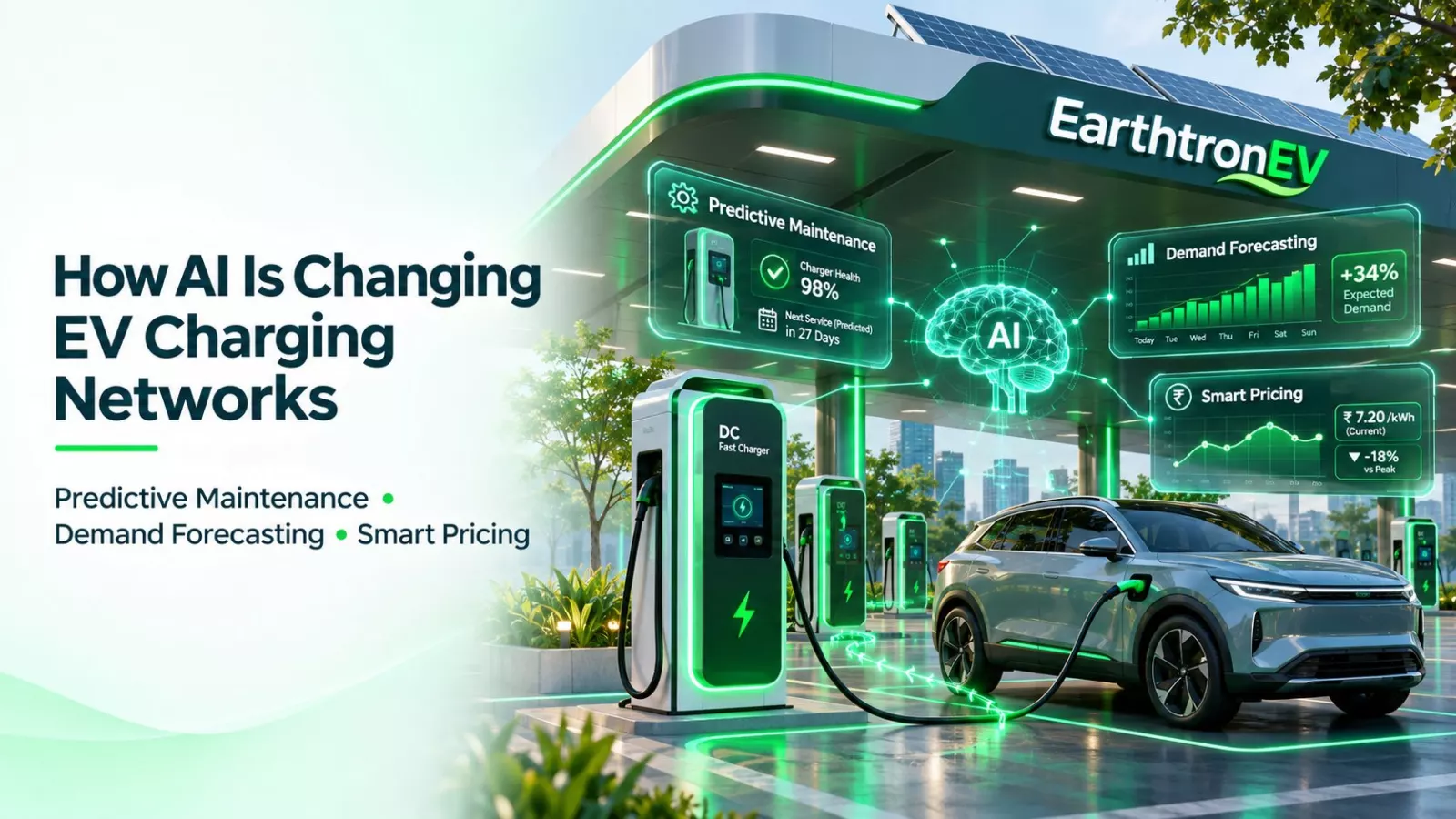
Quick Answer: Artificial intelligence is transforming EV charging networks by helping operators predict equipment failures, forecast charging demand, optimize electricity consumption and develop more intelligent pricing strategies. Rather than relying entirely on manual monitoring and reactive maintenance, AI-enabled systems can interpret charger telemetry and historical activity to help improve reliability and efficiency.
Why Artificial Intelligence Matters for EV Charging Networks
India’s electric vehicle ecosystem needs charging infrastructure that is not only accessible but also dependable and commercially sustainable. Operators must ensure chargers remain available, power is used efficiently, and drivers can access charging when needed. Conventional management depends on scheduled maintenance, equipment alerts and historical reports. Machine learning can add more proactive forecasts and operational insights.
AI can analyze charger performance, charging sessions, energy usage and external conditions. Its usefulness depends on the quality of data, equipment connectivity, suitable operating rules and human oversight.
Predictive Maintenance: Identifying Charger Problems Earlier
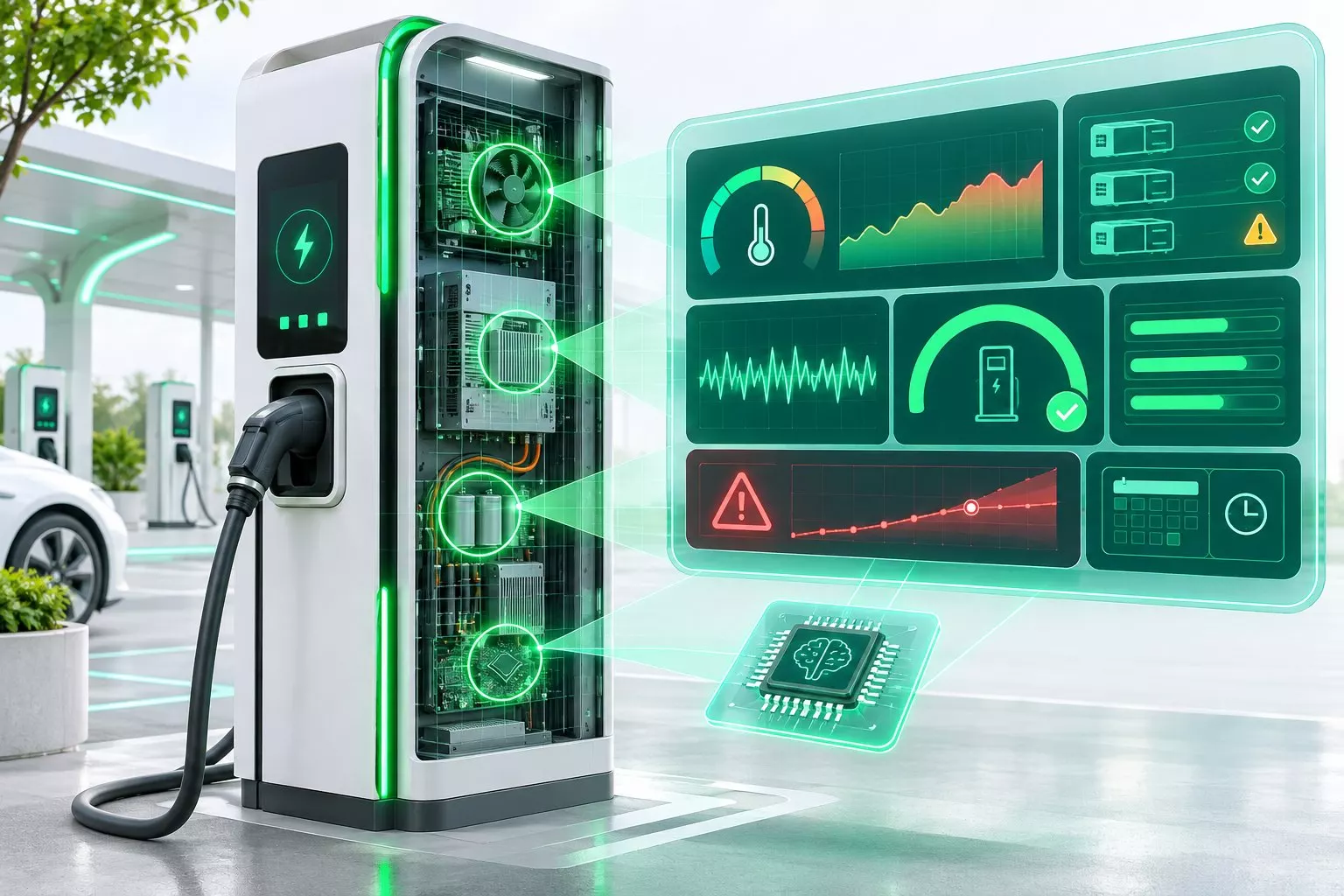
EV charging stations contain power modules, cooling systems, connectors, communication equipment and control units. These components can experience overheating, electrical variations and wear. Reactive maintenance responds after faults occur, while preventive maintenance follows a fixed inspection schedule. Predictive maintenance analyzes equipment condition to identify early warning signs.
How AI-Based Predictive Maintenance Works
Machine-learning systems may analyze temperature, voltage and current trends, charging session interruptions, error codes, communication failures, connector usage and power delivery efficiency. For example, repeated temperature anomalies could prompt an inspection of cooling hardware before an extended shutdown occurs. Recurring unsuccessful sessions may likewise signal connector or software problems.
- Improved charger availability through earlier fault detection.
- More targeted maintenance scheduling and service visits.
- Better driver experience through fewer unexpected out-of-service chargers.
- Potentially lower repair costs where small faults are addressed before escalation.
Predictions are not guarantees: equipment histories, sensors and regular technician checks remain essential.
AI-Powered Demand Forecasting: Predicting When and Where Drivers Charge
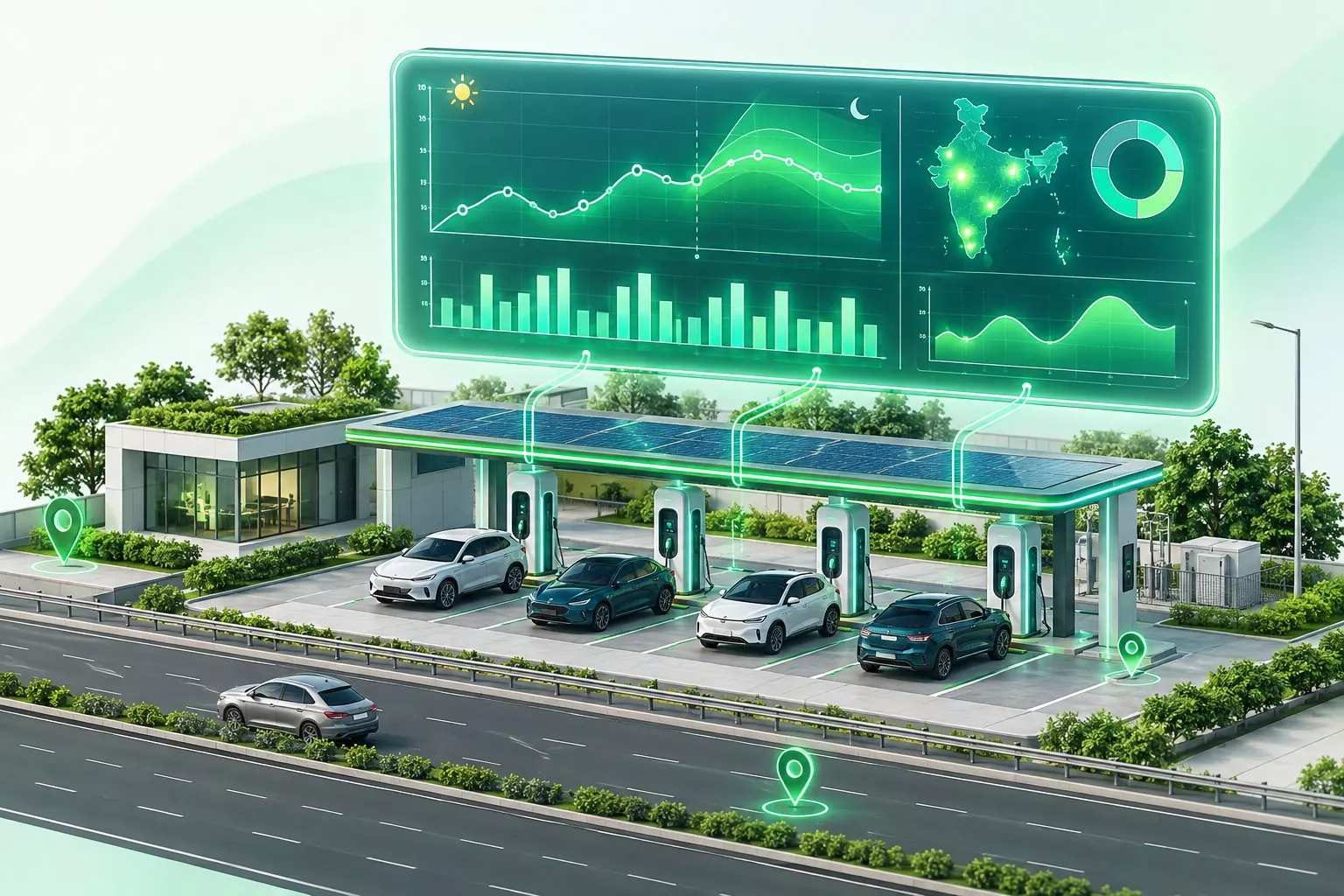
Charging demand varies with traffic, location, working patterns, weekends and seasonal travel. Office-area chargers may see different peaks from highway rest stops or commercial fleets. AI models can help estimate future charging sessions and energy requirements using historical utilization and external signals.
What Demand Models Analyze
- Past charging sessions, hourly utilization and energy delivered.
- Local EV activity, nearby stations and road traffic.
- Weekends, public holidays, weather and seasonal travel.
- Fleet arrival patterns and available grid capacity.
A station along the Delhi–Chandigarh corridor, for example, may see increased activity before a long weekend. A model trained on relevant historical demand could flag the likely increase so operators plan capacity and customer communications. The estimate must still be checked against actual station conditions.
Demand forecasting also informs location selection, capacity expansion, expected waiting times and investment assessments. For a new site without a useful operating history, site surveys and comparable-station analysis remain important.
Smart Pricing: Using AI to Support Charging Tariffs
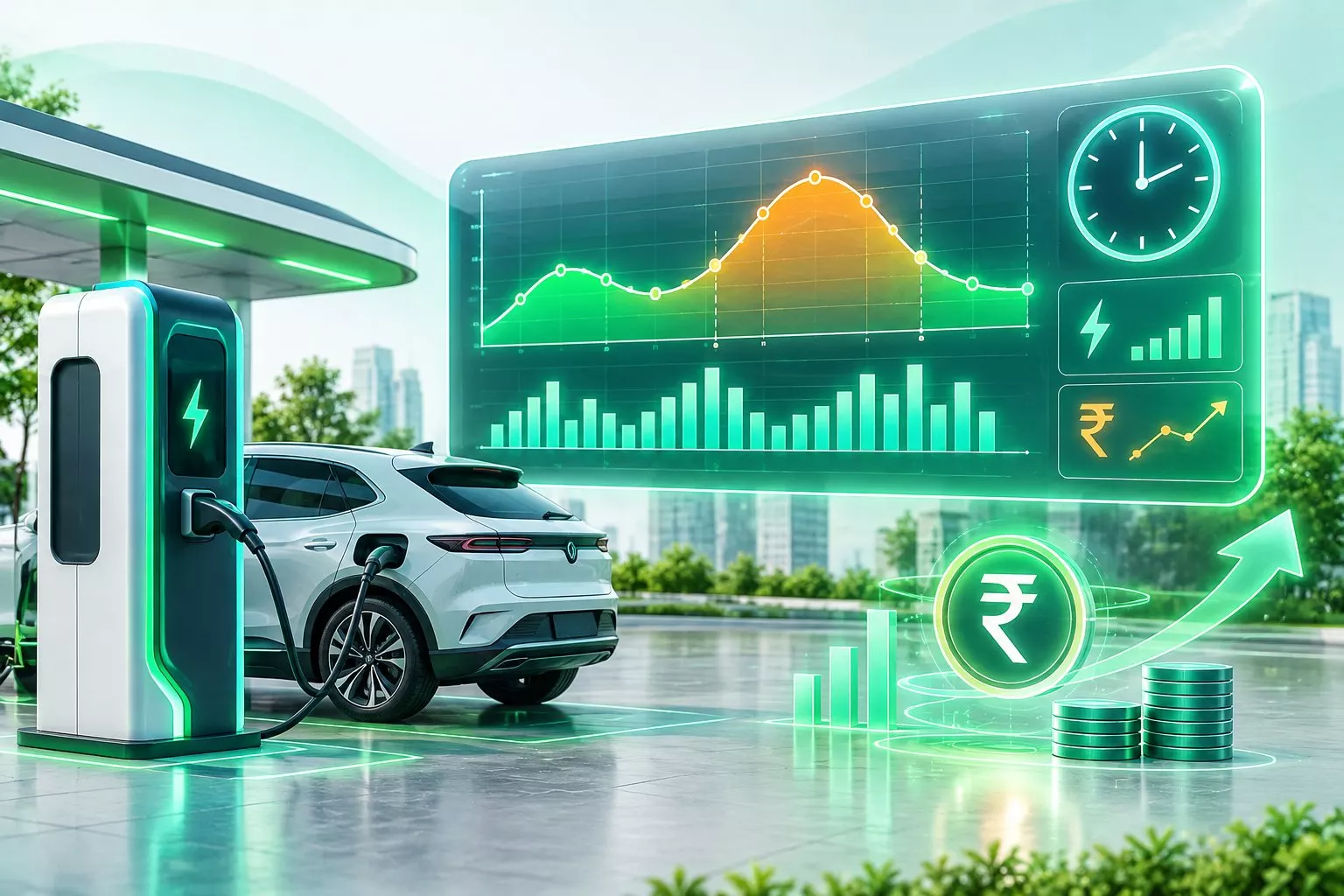
Charging businesses balance electricity costs, equipment investment, maintenance and customer affordability. AI can help assess how tariffs relate to utilization and energy costs, where variable pricing is permitted under applicable rules and commercial agreements.
Illustrative Smart Pricing Structure
The following figures demonstrate a hypothetical time-dependent pricing strategy and are not actual EarthtronEV tariffs.
| Period | Demand | Illustrative tariff |
|---|---|---|
| Early morning | Low | ₹12/kWh |
| Afternoon | Moderate | ₹15/kWh |
| Evening peak | High | ₹18/kWh |
| Late night | Low | ₹13/kWh |
An AI-assisted tool could review historical demand and recommend adjustments within approved pricing limits. Lower off-peak prices might encourage flexible charging, but aggressive price changes can reduce trust and accessibility. Clearly communicated tariffs, customer needs and the regulatory context are vital.
Smart Charging and Energy Load Management
At charging hubs, many vehicles may request power simultaneously while the location has a limited electrical connection. Basic load management allocates power according to fixed rules. AI-enhanced systems can forecast incoming demand and optimize power delivery based on vehicle requirements, departure times, energy prices and available solar or battery supply.
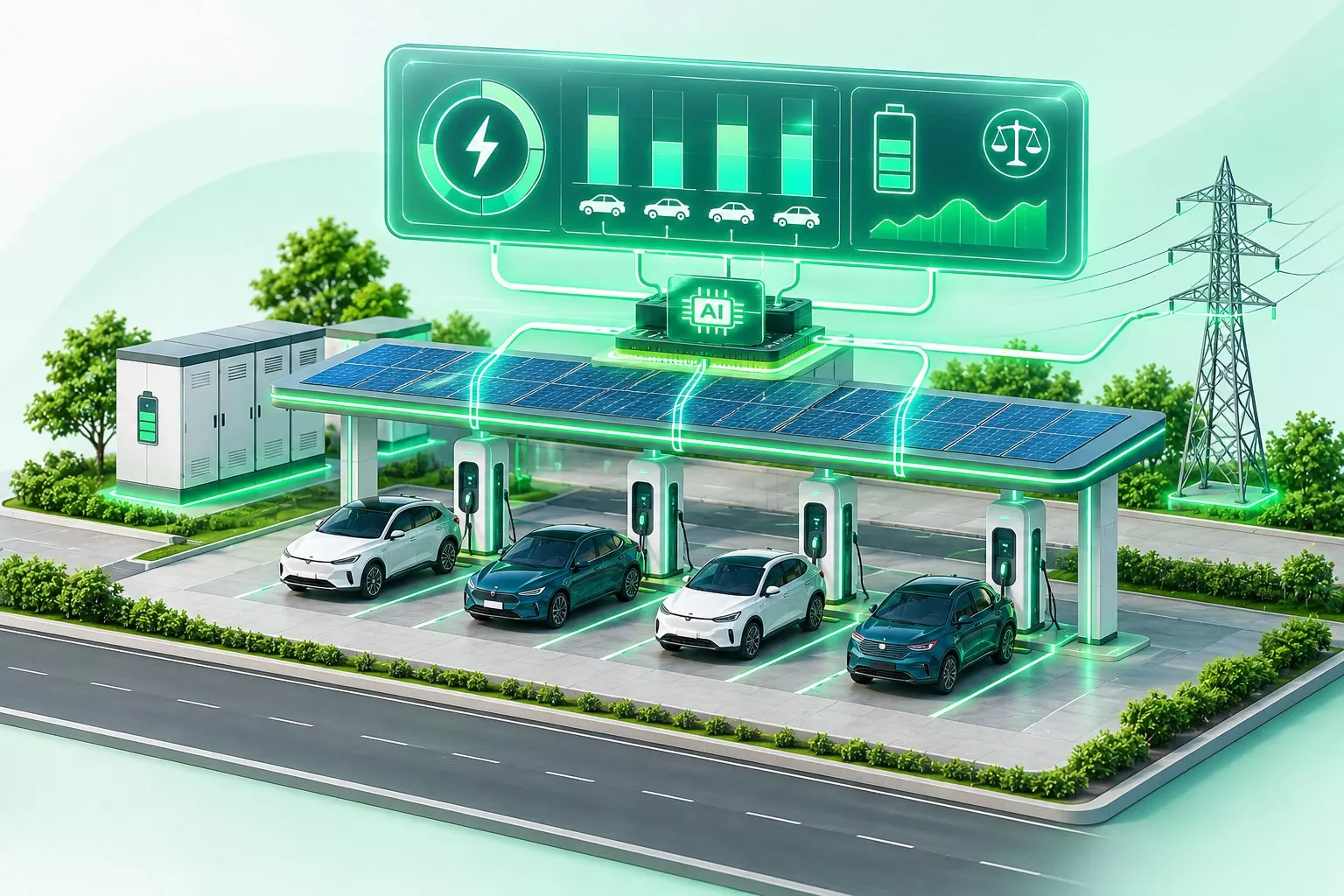
For example, a fleet vehicle parked overnight may allow flexible charging, while a vehicle making a short highway stop needs faster turnaround. Within hardware and safety limits, an intelligent scheduler could prioritize accordingly. These capabilities may reduce unnecessary peak demand and help make better use of grid capacity.
Real-Time Network Monitoring and Charging Management Software
As networks scale, centralized monitoring becomes important. A Charge Station Management System (CSMS) helps operators track charger status, sessions, faults and operational activity. AI analytics can add unusual-pattern detection, fault prioritization and demand estimates. An online charger is not necessarily a reliably functioning charger; successful session data is also valuable.
OCPP and OCPI: Foundations for Connected Charging
OCPP supports communication between charging equipment and management systems, including status reporting, metering and remote functions. OCPI supports interoperability between charging service providers and operators, including roaming and tariff-related exchange. Neither protocol automatically adds AI, but both can help provide data and connectivity for advanced analytics.
Better Charging Experiences for EV Drivers
AI-enabled customer applications may recommend stations using location, compatibility, estimated availability and historical reliability. Combining occupancy information with typical session duration can help estimate waiting times. With appropriate privacy protections, apps can also remember useful preferences and show estimated costs using published tariffs. Recommendations and wait times remain estimates, not promises.
How AI Can Support EV Charging Station Franchise Businesses
For investors, charging performance depends on location quality, utilization, electricity costs, maintenance, rent and financing. Data analysis can support site screening and ongoing reporting, while predictive maintenance and forecasting can help improve operational planning.
Data-Driven Site Selection and Performance
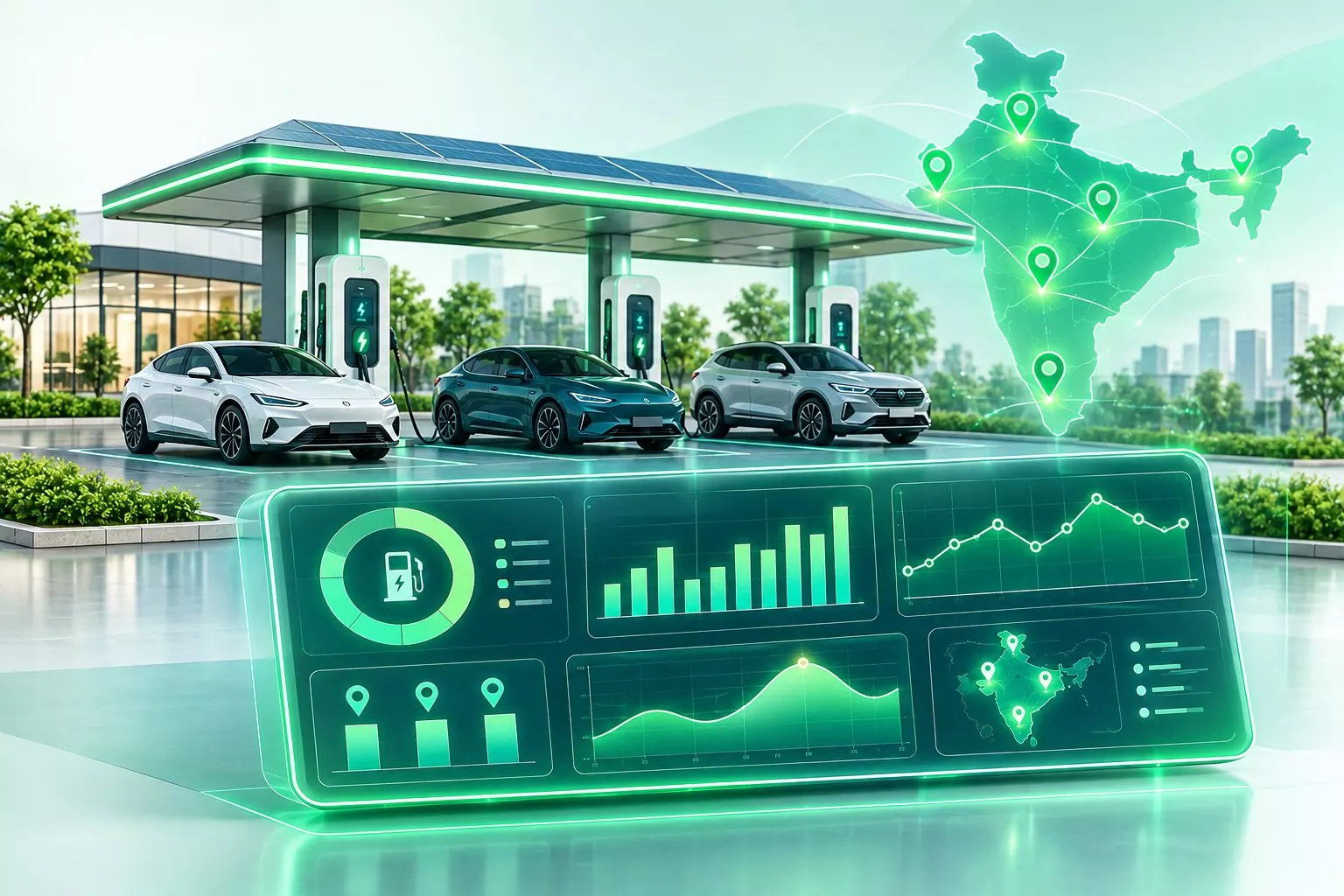
Site evaluation may consider local EV adoption, traffic, proximity to other stations and available electricity infrastructure. Once operational, network dashboards can help track energy delivered, sessions, utilization and revenue trends. Forecasts should always be evaluated against physical site surveys, investment costs and commercial agreements.
FOCO Charging Franchise Operations
In a Franchise-Owned, Company-Operated (FOCO) structure, the investor owns infrastructure while the operator manages agreed day-to-day activities. Centralized monitoring and remote diagnostics can support geographically distributed operations. EarthtronEV offers EV charging station franchise opportunities under a FOCO model. The AI capabilities described in this article represent industry possibilities and should not be interpreted as a claim that EarthtronEV currently provides every one of them.
Challenges of Implementing AI in EV Charging
- Data quality: inaccurate, inconsistent or missing telemetry reduces prediction reliability.
- Hardware compatibility: chargers must provide the necessary measurements and controls.
- Cybersecurity and privacy: connected platforms require secure access and data protection.
- Costs: analytics infrastructure should deliver measurable operating value.
- Human oversight: qualified personnel must validate safety-critical decisions and inspect faults.
The Future of AI-Powered EV Charging in India
Potential next steps include more accurate charging-network planning, improved condition-based maintenance, coordinated solar and battery storage, smarter depot scheduling and load optimization across larger networks. Progress will depend on practical deployments, reliable measurement and clear customer benefits, rather than AI labels alone.
EarthtronEV and Connected Charging Infrastructure
Connected charging hardware, interoperable communication and management software provide a foundation for intelligent charging operations. EarthtronEV supports India’s EV ecosystem through charging infrastructure, management software and franchise network expansion. Operators considering AI should first ensure that chargers, connectivity, electrical infrastructure and operational processes work reliably together.
Conclusion
Artificial intelligence can help make EV charging networks more reliable, efficient and responsive. Predictive maintenance offers earlier warnings about equipment problems; demand forecasting helps plan capacity; smart pricing can support better tariff decisions; and intelligent load management can coordinate power use. For India, the opportunity is not simply to install more chargers, but to manage charging infrastructure intelligently and responsibly.
Explore EarthtronEV to learn more about connected EV charging infrastructure.