Quick Answer
For investors looking to enter India’s EV charging sector without independently building and operating an entire charging network, an EV charging franchise can provide a more structured entry route.
EarthtronEV’s current franchise model starts from ₹18 lakh onwards. A standard 60 kW DC fast-charging setup is listed at ₹18 lakh, while a 120 kW setup is listed at ₹30 lakh. The final investment can vary depending on charger capacity, location, available electrical infrastructure, power requirements, and site conditions.
For a first-time investor, however, the lowest investment amount should not be the only deciding factor. Location quality, expected charger utilization, power availability, operating responsibilities, and commercial terms are equally important.
Why EV Charging Is Attracting Investors in India
India’s public EV charging infrastructure is expanding as electric mobility grows across private vehicles, taxis, delivery fleets, buses, and commercial transport.
According to the Ministry of Heavy Industries, India had 52,718 public charging stations as of July 2026, including 16,561 public charging stations equipped with fast EV chargers for cars.
The Government has also allocated ₹2,000 crore under the PM E-DRIVE scheme for EV public charging infrastructure across India, including cities and highways.
This does not mean every charging station will automatically become profitable. It does show that EV charging infrastructure is becoming an increasingly important part of India’s transport ecosystem.
For investors, this creates opportunities across highways, commercial locations, fleet hubs, hotels, offices, residential clusters, and regional cities.
What Does “Small Investor” Mean in EV Charging?
In EV charging, “small investor” is relative to the size of larger infrastructure projects.
A multi-charger highway hub, fleet depot, or ultra-fast charging facility can require significantly more capital than a standard franchise station.
For investors considering EarthtronEV’s current franchise offering, the starting investment is ₹18 lakh onwards. EarthtronEV currently lists a 60 kW DC charging setup at ₹18 lakh and a 120 kW setup at ₹30 lakh.
Therefore, investors should use ₹18 lakh as the current starting point rather than older investment figures.
Why Choose a Franchise Instead of Setting Up Independently?
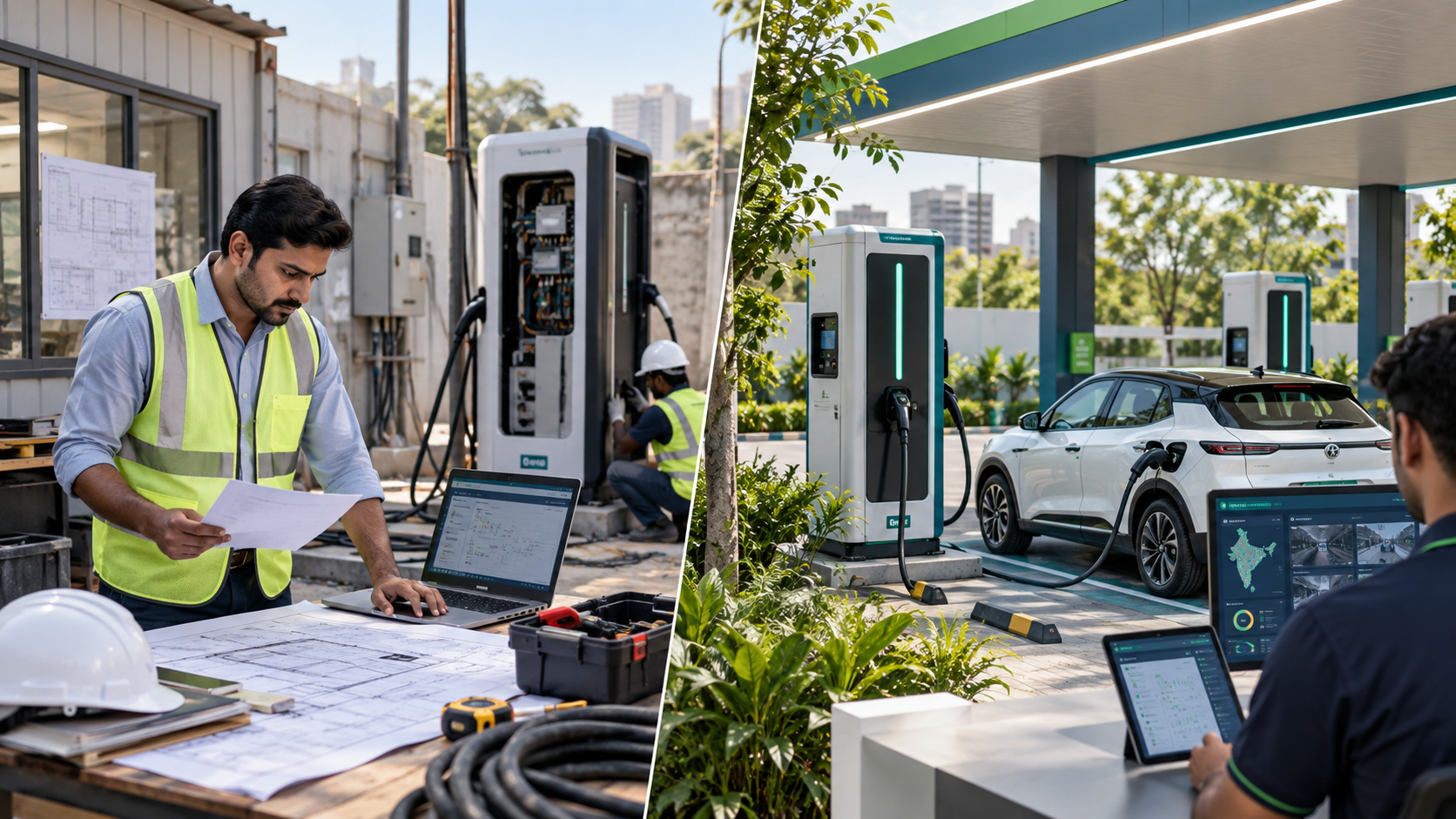
Starting an independent EV charging station involves more than purchasing a charger.
An independent operator may need to manage:
- Site selection
- Charger sourcing
- Electrical connection
- Installation
- Licensing and approvals
- Charging software
- Payment systems
- Maintenance
- Customer support
- Marketing
- Day-to-day station operations
A franchise model can centralize many of these activities.
EarthtronEV states that its franchise model includes equipment installation, licensing and approvals, marketing, station operations, billing, and settlements. Its current published cost guide also states that operating expenditure, marketing, and staffing are covered by EarthtronEV under its franchise structure.
The final agreement should still be reviewed carefully to confirm the exact responsibilities and settlement structure.
EarthtronEV Franchise Investment in 2026
EarthtronEV currently publishes the following structure:
| Item | Current Information |
|---|---|
| Minimum investment | ₹18 lakh onwards |
| 60 kW DC charging setup | ₹18 lakh |
| 120 kW charging setup | ₹30 lakh |
| Minimum space | Approx. 150 sq. ft. |
| Space | Owned or leased |
| Location support | Available for eligible sites |
| Licensing & approvals | Handled by EarthtronEV |
| Marketing | Covered under current model |
| Staffing | Covered under current model |
| Operations | Managed by EarthtronEV |
These figures should be treated as starting points. Additional electrical infrastructure, transformer requirements, load enhancement, cabling, or other site-specific work can affect the final project cost.
What Small Investors Should Evaluate Before Choosing a Franchise
1. Location Quality
Location is one of the most important variables in EV charging performance.
The site should be evaluated for:
- EV traffic
- Accessibility
- Parking availability
- Electrical capacity
- Nearby competition
- Vehicle dwell time
- Future charging demand
A cheaper location is not necessarily a better investment if EV traffic is weak.
2. Installation Responsibility
Investors should clearly understand who manages installation.
Depending on the site, installation may involve:
- Charger installation
- Cabling
- Electrical panels
- Power-load enhancement
- Transformer work
- Civil work
- Signage
- Safety equipment
- Network connectivity
- Commissioning
All inclusions and additional charges should be confirmed before signing the agreement.
3. Ongoing Operating Expenses
The commercial model should clearly explain who pays for:
- Electricity
- Staffing
- Maintenance
- Software
- Network connectivity
- Payment processing
- Marketing
- Repairs
- Insurance
EarthtronEV currently states that operating expenditure, staffing, and marketing are covered under its franchise structure.
4. Settlement Structure
Investors should understand exactly how their commercial settlement is calculated.
Important questions include:
- How often are settlements made?
- What deductions apply?
- How is station revenue calculated?
- How are electricity costs treated?
- What happens during charger downtime?
- Are taxes or fees deducted before settlement?
The written franchise agreement should be the final reference point.
5. Access to Station Performance Data
Investors should ideally have visibility into operating performance.
Useful metrics include:
- Charger uptime
- Number of charging sessions
- Energy delivered
- Utilization rate
- Failed charging sessions
- Revenue per charger
- Electricity consumption
These metrics provide a better understanding of station performance than charger count alone.
Best Locations for Small EV Charging Investors
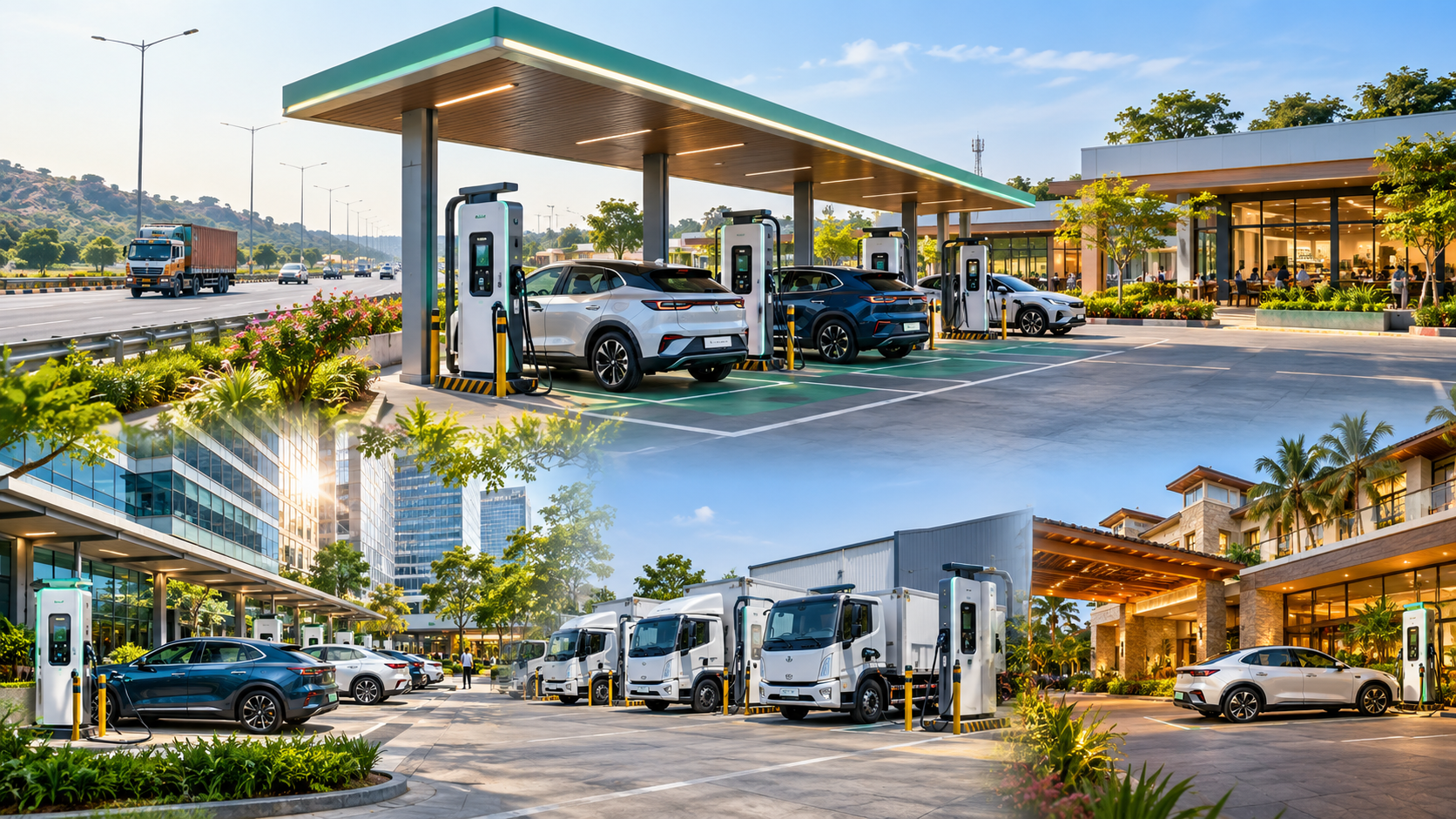
The best location is not always the location with the lowest land cost.
A relatively expensive location with strong EV demand may perform better than a cheap site with limited usage.
Highway and Intercity Locations
Highway locations can be suitable where there is meaningful EV movement between cities and drivers require fast charging during longer journeys.
Important factors include:
- Easy entry and exit
- Good road visibility
- Sufficient electrical capacity
- Parking availability
- Nearby restaurants or cafes
- Washrooms and waiting facilities
- Limited charging alternatives nearby
Highway traffic alone is not enough. Investors should evaluate actual EV traffic.
City and Commercial Locations
Potential city locations include:
- Offices
- Shopping malls
- Hotels
- Hospitals
- Business parks
- Public parking
- Commercial complexes
These locations can benefit from vehicles remaining parked while users work, shop, attend meetings, or stay at the property.
Longer parking duration may also allow different charger configurations compared with highway locations.
Tier 2 and Tier 3 Cities
EV charging infrastructure is expanding beyond major metropolitan cities.
Tier 2 and Tier 3 opportunities may exist around:
- Highways
- Hotels
- Malls
- Industrial areas
- Tourism destinations
- Fleet hubs
- Commercial centres
However, city classification alone should never determine the investment decision.
The site should still be assessed for demand, power availability, parking, access, and competition.
Fleet and Logistics Locations
Fleet-based charging can have different economics from public walk-in charging.
Potential locations include:
- Taxi hubs
- Logistics parks
- Delivery centres
- Warehouses
- Commercial fleet parking
- Employee transport depots
Where vehicles return to the same location regularly, charging demand may be easier to estimate.
Hotels and Destination Properties
Hotels, resorts, restaurants, and tourism locations can also create charging demand.
Drivers may remain at these locations for several hours or overnight, making EV charging a useful additional facility.
The charger capacity should be selected according to expected traffic and parking duration.
60 kW vs 120 kW: Which Is Better for a First-Time Investor?
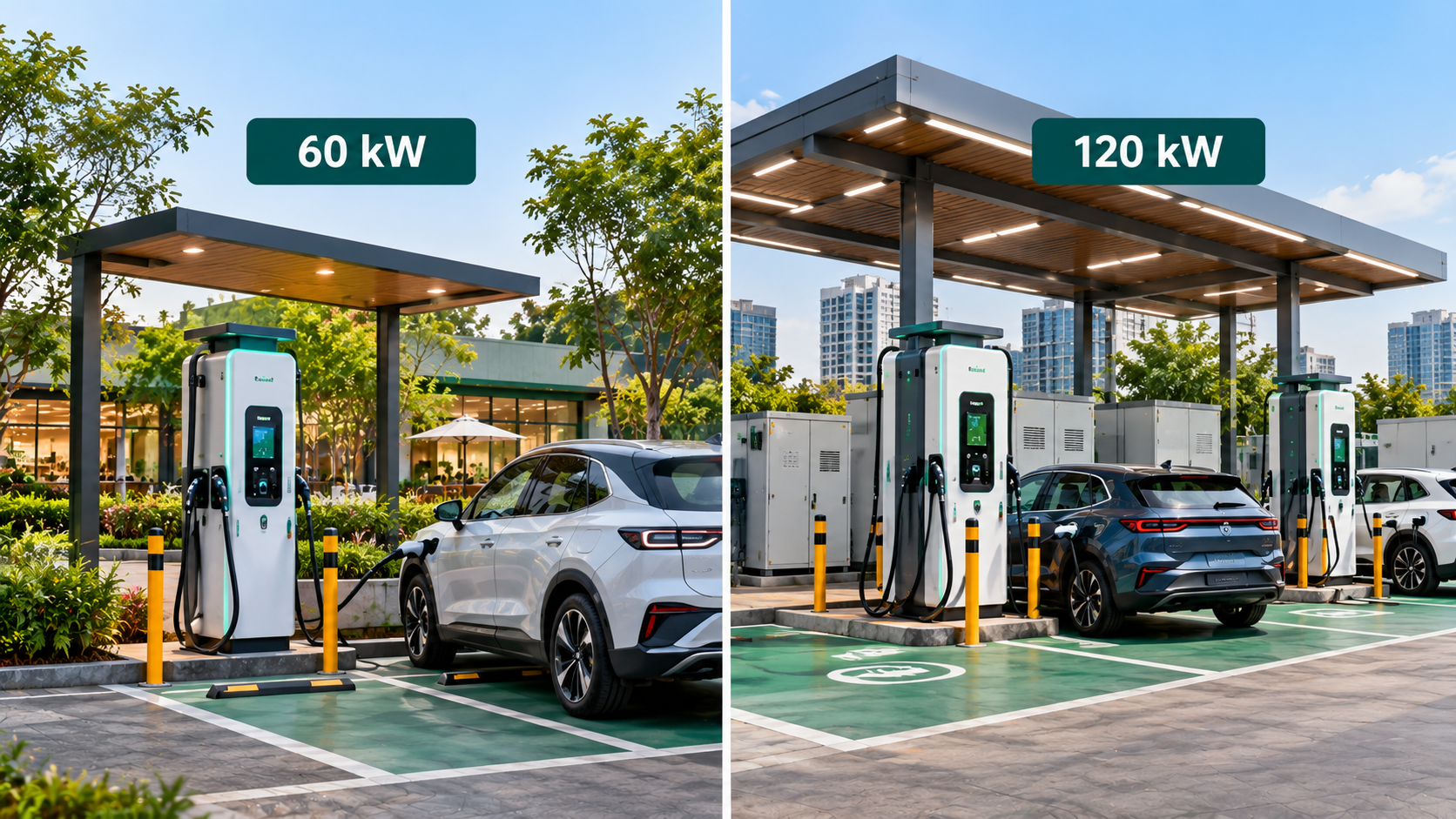
A larger charger is not automatically a better investment.
EarthtronEV currently lists:
- 60 kW DC setup: ₹18 lakh
- 120 kW setup: ₹30 lakh
A 120 kW charger can deliver energy faster when compatible vehicles use it.
But additional charging capacity only creates value when there is enough demand.
A well-utilized 60 kW station can make more commercial sense than a 120 kW charger that remains idle for much of the day.
Charger capacity should therefore be selected after evaluating:
- EV traffic
- Vehicle type
- Charging demand
- Electrical load
- Parking duration
- Expected utilization
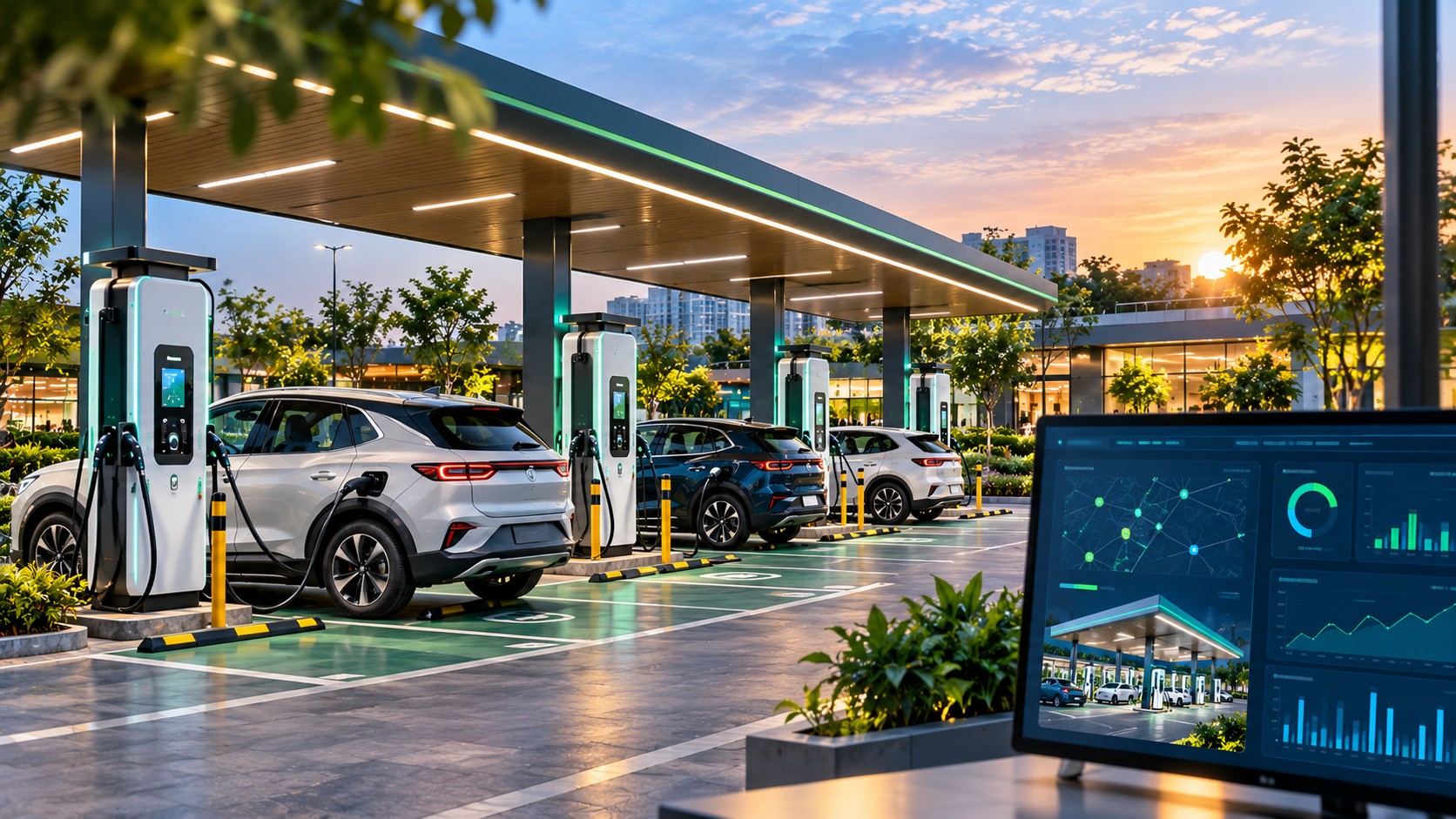
Why Utilization Matters More Than Charger Count
Installing more chargers does not automatically mean better commercial performance.
An EV charging station earns only when vehicles actually use the charging equipment.
Important operational metrics include:
- Number of successful sessions
- Energy delivered
- Charger uptime
- Utilization
- Revenue per charger
- Failed charging sessions
The quality of the location and actual charger usage are therefore more important than simply installing higher-capacity equipment.
What About ROI and Guaranteed Returns?
Investors should avoid assuming that every EV charging station will produce the same return.
Commercial performance varies depending on:
- Location
- EV demand
- Charger utilization
- Charger capacity
- Uptime
- Operating structure
- Commercial settlement terms
Charging-station revenue should not automatically be treated as the investor’s personal income or profit. Actual franchise earnings depend on the commercial terms agreed with the operator.
A location-specific commercial projection is therefore more useful than relying on one universal ROI figure.
Government Support for EV Charging
The Government has allocated ₹2,000 crore under PM E-DRIVE for EV public charging infrastructure.
However, investors should not automatically assume that this amount is available as a direct subsidy to every individual franchise partner.
Government support depends on the applicable scheme, location, eligible entities, approvals, and project structure.
Any subsidy should therefore be considered only after eligibility is formally confirmed.
Risks Small Investors Should Consider
Like any infrastructure business, EV charging involves risks.
Potential risks include:
- Lower-than-expected utilization
- Additional electrical infrastructure costs
- Increasing local competition
- Charger downtime
- Slow EV adoption in the local area
- Poor site accessibility
- Weak parking availability
- Commercial agreement issues
Investors should clearly understand ownership, settlement terms, operating responsibilities, contract duration, maintenance, renewal terms, and exit conditions.
Is an EV Charging Franchise Suitable for a First-Time Investor?
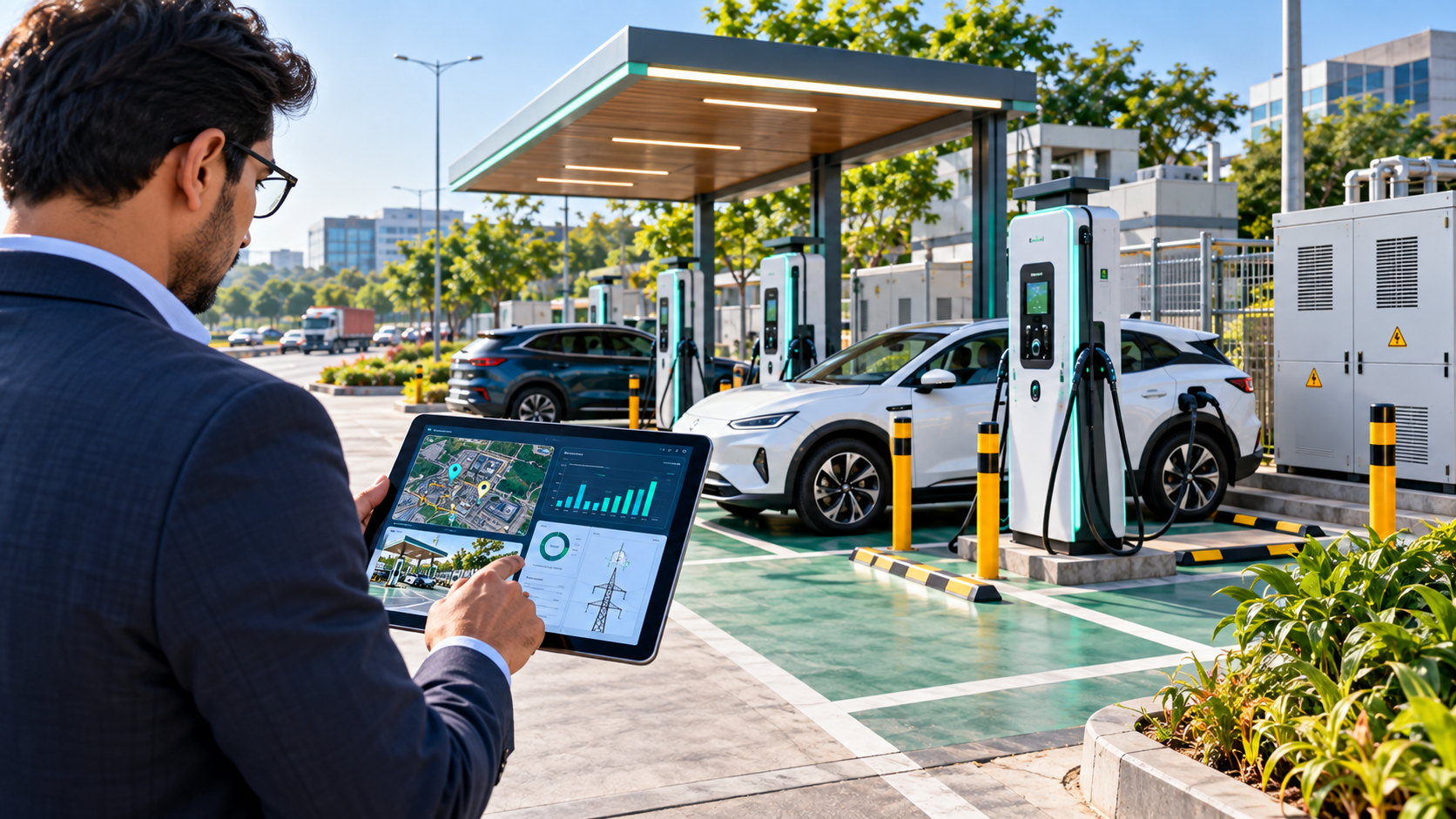
A managed EV charging franchise may be suitable for investors who want exposure to EV infrastructure without independently handling every part of the business.
EarthtronEV’s current model starts from ₹18 lakh onwards and places several operating responsibilities with the company.
That does not remove the need for due diligence.
The proposed station should still be evaluated based on:
- Location
- Expected utilization
- Charger capacity
- Electrical infrastructure
- Commercial settlement
- Franchise agreement
Conclusion
India’s EV charging ecosystem is expanding as EV adoption increases across private vehicles, commercial fleets, taxis, and intercity travel.
For first-time or smaller infrastructure investors, a franchise model can reduce some of the complexity involved in independently building and operating a charging station.
EarthtronEV currently lists its franchise investment from ₹18 lakh onwards, with a 60 kW setup at ₹18 lakh and a 120 kW configuration at ₹30 lakh.
However, the starting investment should not be the only factor considered.
A stronger investment decision depends on the proposed location, expected charging demand, charger utilization, power availability, operator responsibilities, and the commercial terms of the franchise agreement.
For investors considering an EV charging franchise in 2026, a location-specific feasibility and commercial assessment should come before assumptions about revenue or returns.