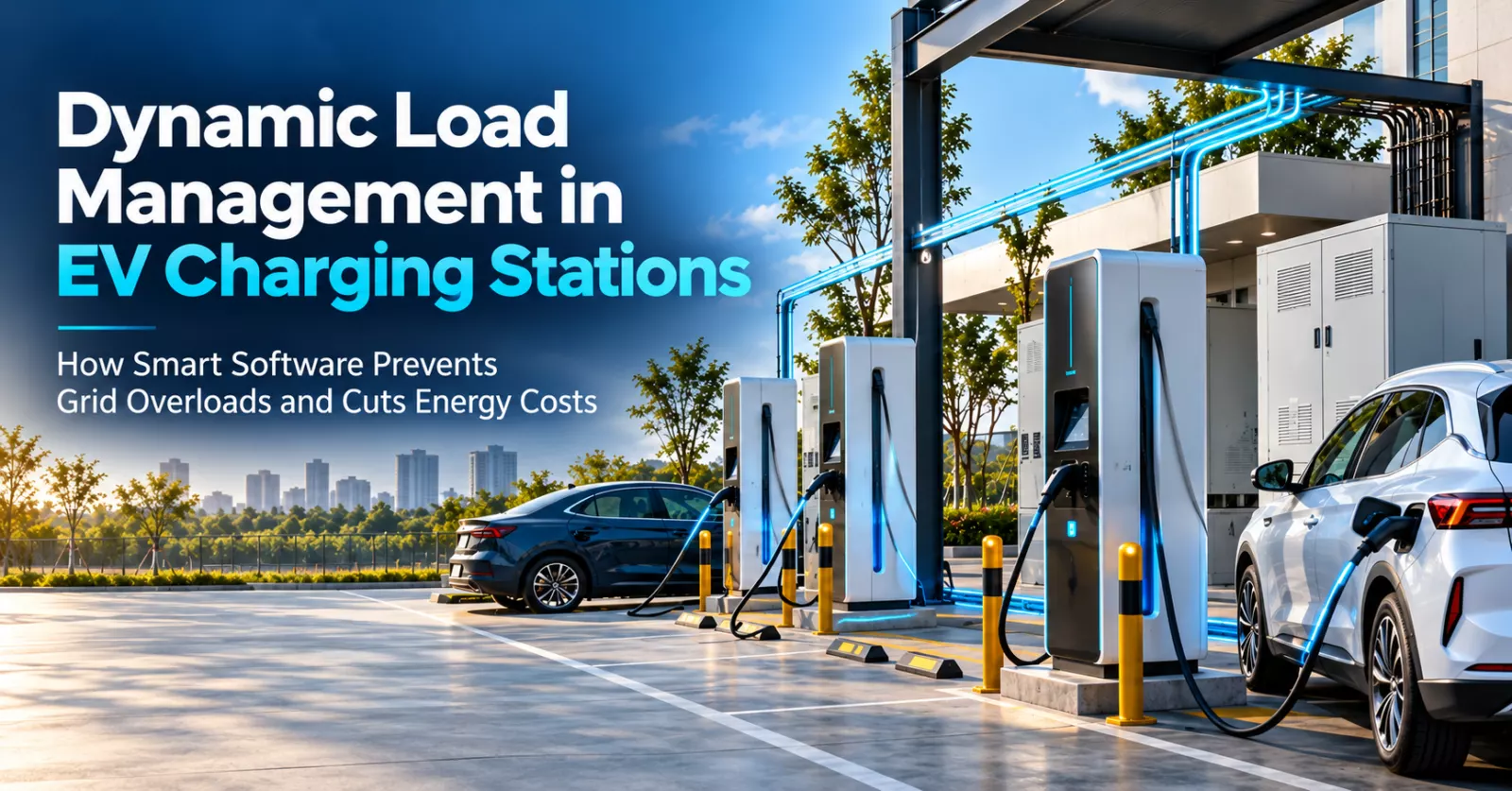
A site can install several fast chargers and still have only a limited amount of electricity available at one time. The result is a practical operating challenge: how can a charging station serve more vehicles without drawing more power than its electrical connection can safely support?
Dynamic load management (DLM) addresses this problem by adjusting charging power as vehicle demand and other on-site electrical loads change. For Indian public charging stations, fleet depots, hotels and commercial properties, it can make existing electrical capacity more useful. It may also improve cost control—but the savings depend on the tariff and how the site actually operates.
What is dynamic load management in EV charging?
Dynamic load management is a control approach that continuously measures or estimates the power available to chargers and updates their power limits accordingly. Unlike a fixed allocation, the system responds when another charger starts, a building switches on heavy equipment or a vehicle reduces its charging demand.
A typical installation combines a site meter or electrical monitoring system, an energy or load-management controller, compatible EV chargers and a charge station management system (CSMS). The operator sets a safe site limit; the control system then distributes power without intentionally exceeding that limit.
DLM is not a substitute for correct cabling, protection devices, transformer sizing, sanctioned electrical load or utility approvals. It is an operational layer that must be engineered around those constraints.
How it works: from site meter to charger
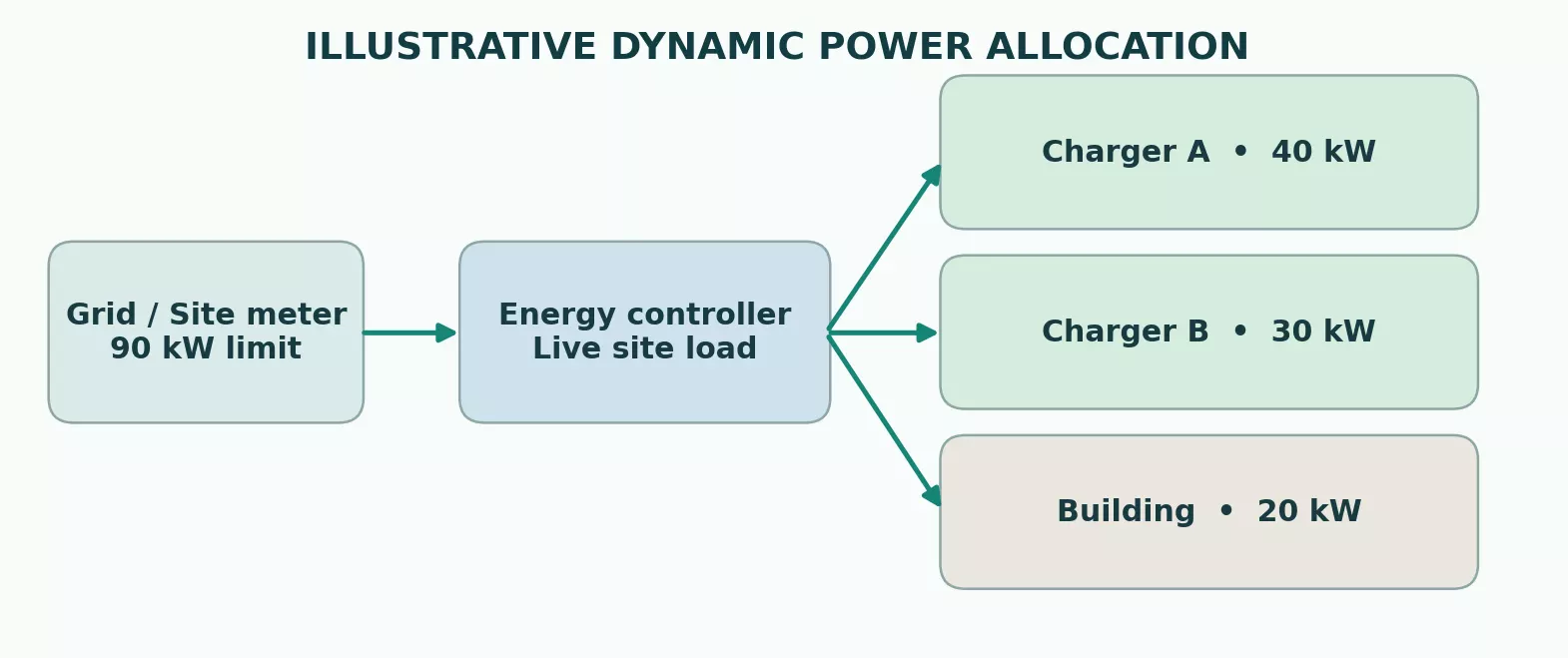
Figure 1. Simplified power flow. All values are illustrative, not a proposed engineering design.
- Measure total site load, including non-EV equipment when chargers share a connection.
- Calculate charging headroom below the configured safe limit, allowing any required engineering margin.
- Allocate permitted power to active chargers using a defined priority or fairness rule.
- Send supported charging limits to the chargers and verify that actual draw follows the limits.
- Recalculate when a new vehicle plugs in, a session ends, building demand changes or communications fail.
Depending on the installation, these functions may run on an on-site controller, an integrated charger system or cloud-managed software. Local fallback behavior matters because power protection should not depend solely on a live internet connection.
Static vs dynamic load management
| Aspect | Static load limits | Dynamic load management |
| Power allocation | Pre-set limits per charger | Adjusts based on measured demand |
| Building load response | Usually does not respond | Can reduce EV power when building use rises |
| Unused capacity | May remain idle | Can be reassigned when available |
| Control complexity | Simpler commissioning | Requires metering, controls and testing |
| Best fit | Predictable small sites | Multiple chargers or variable shared loads |
Example 1: Two 60 kW DC chargers at a 90 kW-capacity site
Assume two DC chargers are rated at 60 kW each. The site has 90 kW available for EV charging after considering other loads and engineering margins. If both vehicles demand full rated power, their combined request would be 120 kW—30 kW above the available capacity.
A dynamic controller could cap the chargers at 45 kW each, or use a different valid allocation such as 50 kW and 40 kW depending on vehicle demand and site policy. When one session finishes, the remaining charger could be allowed up to 60 kW, if the vehicle can accept it.
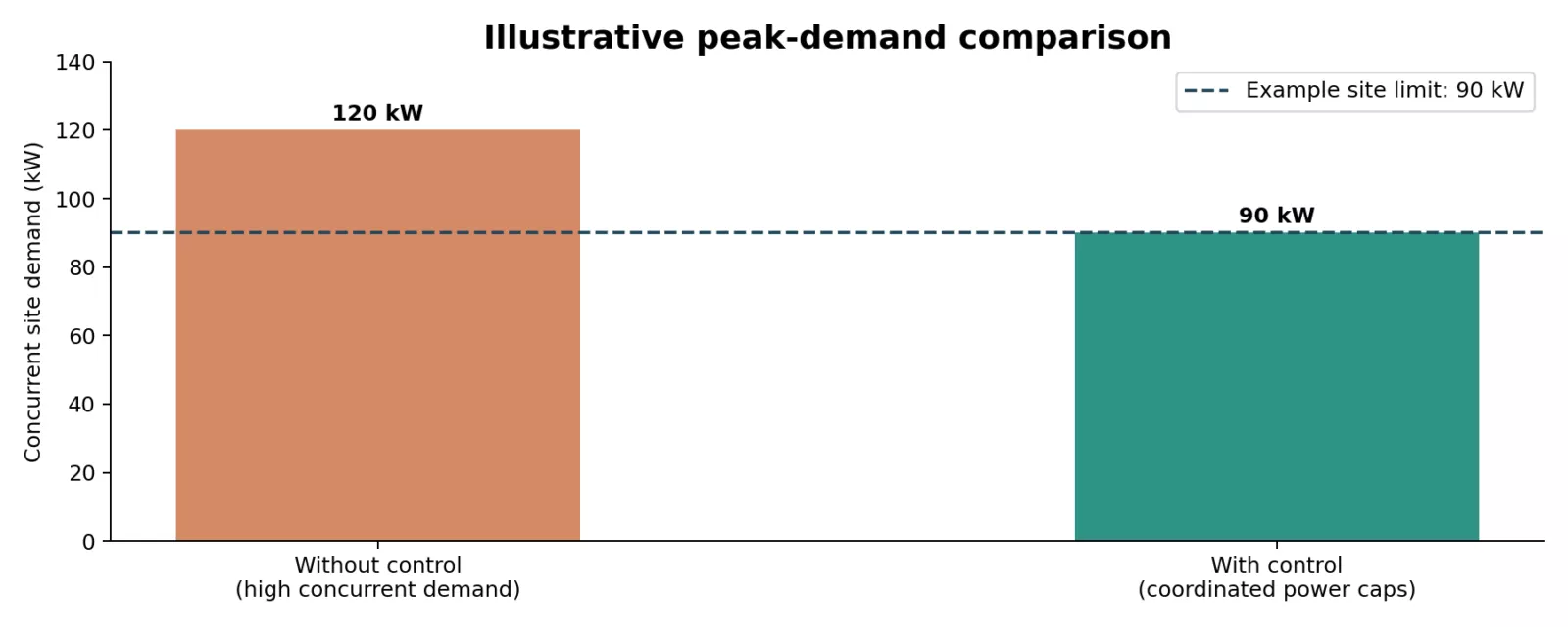
Figure 2. Example of avoiding an attempted 120 kW concurrent draw at a site with a 90 kW charging limit.
Important: a charger rated 60 kW does not always draw 60 kW. Actual power depends on vehicle battery state, temperature, voltage/current constraints and other conditions. DLM caps the upper permitted power; it cannot force a vehicle to charge faster.
Example 2: A hotel or retail site with changing building demand
Consider a location with a 120 kW site limit. During the afternoon, the building draws 35 kW, leaving 85 kW in theory for charging. In the evening, building demand rises to 65 kW, leaving 55 kW. Subject to safety margins and equipment constraints, a dynamic system can reduce combined EV charging from 85 kW to 55 kW automatically as the building load increases.
This example illustrates the main advantage of metered load management: the chargers do not need to remain permanently fixed at the worst-case minimum charging budget. Nevertheless, engineers must account for equipment response time and protective limits during rapid load changes.
How can load management affect electricity costs?
DLM can help reduce unnecessary peak demand, defer some capacity upgrades and shift flexible charging toward preferable hours when the applicable tariff and operations allow. But it does not inherently reduce the total kWh needed to charge vehicles: delivering the same energy generally incurs comparable energy consumption, aside from efficiency differences.
Illustrative cost scenario: peak-demand exposure
Assume a hypothetical tariff charges ₹350 per kVA of monthly billing demand, and managing charging lowers billable demand from 140 kVA to 110 kVA. The illustrative monthly difference is (140 − 110) × ₹350 = ₹10,500, or ₹1,26,000 over 12 months, before taxes and other tariff provisions.
This is a teaching example, NOT an estimate of savings for an actual Indian EV station. Public EV charging tariffs and billing structures vary by state, DISCOM, connection category and date. Some applicable public-charging tariffs may be single-part tariffs, so this demand-charge calculation may not apply. Operators should verify their current electricity bill, contract demand rules, sanctioned load and DISCOM schedule before modelling savings.
Under an energy-only tariff, the principal financial value may instead come from better capacity utilisation, avoiding overload-related interruptions, deferring a connection upgrade where technically and legally appropriate, or scheduling charging under a legitimate time-of-day tariff.
OCPP, meters and the role of smart charging software
OCPP can provide a standardized communication path for a charger and its CSMS to exchange supported smart-charging instructions and meter information. However, the precise functions depend on the OCPP version, the supported feature set, charger firmware and controller implementation. OCPP compatibility alone is not proof that a particular load-sharing strategy will work.
Metering must be timely and fit for the control task. A power command is useful only if the charger implements it correctly and the controller can identify deviations. The design should document what happens during meter failure, network loss, charger restart and an emergency stop. On-site electrical protection remains essential regardless of the software.
Where is dynamic load management most useful?
- Highway charging plazas with several DC fast chargers and simultaneous vehicle arrivals.
- Commercial buildings, shopping centres and hotels where EV chargers share a connection with variable building loads.
- Fleet depots where vehicles have different arrival times, departure deadlines and charging priorities.
- Sites planning phased expansion without oversizing infrastructure at the first stage.
- Solar- or battery-integrated facilities, provided the energy-management hardware and controls are appropriately designed.
Eight checks before installing load-management software
- Electrical design: Confirm connection type, sanctioned load, transformer/panel rating, cables, protection and approved operating limit.
- Meter location: Ensure total relevant site consumption is captured, including non-charger loads.
- Charger compatibility: Test power-cap commands on each proposed charger model and firmware version.
- Fallback mode: Specify local behavior during internet outage, stale meter values or controller restart.
- Control response: Validate update intervals, measurement latency and worst-case simultaneous load changes.
- Priority rules: Define fair sharing, fleet departure priority and minimum viable charging limits.
- Commercial impact: Model site throughput, charging time and customer experience—not only headline energy savings.
- Commissioning tests: Record multi-vehicle tests, protection coordination and responsibility for support.
How EarthtronEV fits into station-level power management
EarthtronEV describes a smart load-management offering that distributes available site power among connected chargers and integrates with its CSMS. Its public information also describes OCPP-based software connectivity. Site owners evaluating this approach should request a charger compatibility list, supported fail-safe modes, meter specifications, commissioning procedure and an operating demonstration for the proposed site.
Explore EarthtronEV resources: Smart Load Management | Charging Station Management System | OCPP and OCPI technology
Conclusion
Dynamic load management allows EV charging operators to use constrained electrical capacity more intelligently. By measuring site demand and adjusting compatible chargers, it can reduce overload risk and provide greater operational flexibility. Financial savings are possible in the right circumstances, but they must be calculated against the actual tariff, electrical design and customer service needs. For an Indian charging station owner or franchisee, the best first step is a site-specific electrical assessment followed by charger-compatibility and fail-safe testing—not a generic promise of a lower electricity bill.
Source and publishing notes
Technical references (for editorial review):
EarthtronEV Smart Load Management
Open Charge Alliance — OCPP 2.0.1 certification / smart charging
Ministry of Power — EV Charging Infrastructure Guidelines 2024