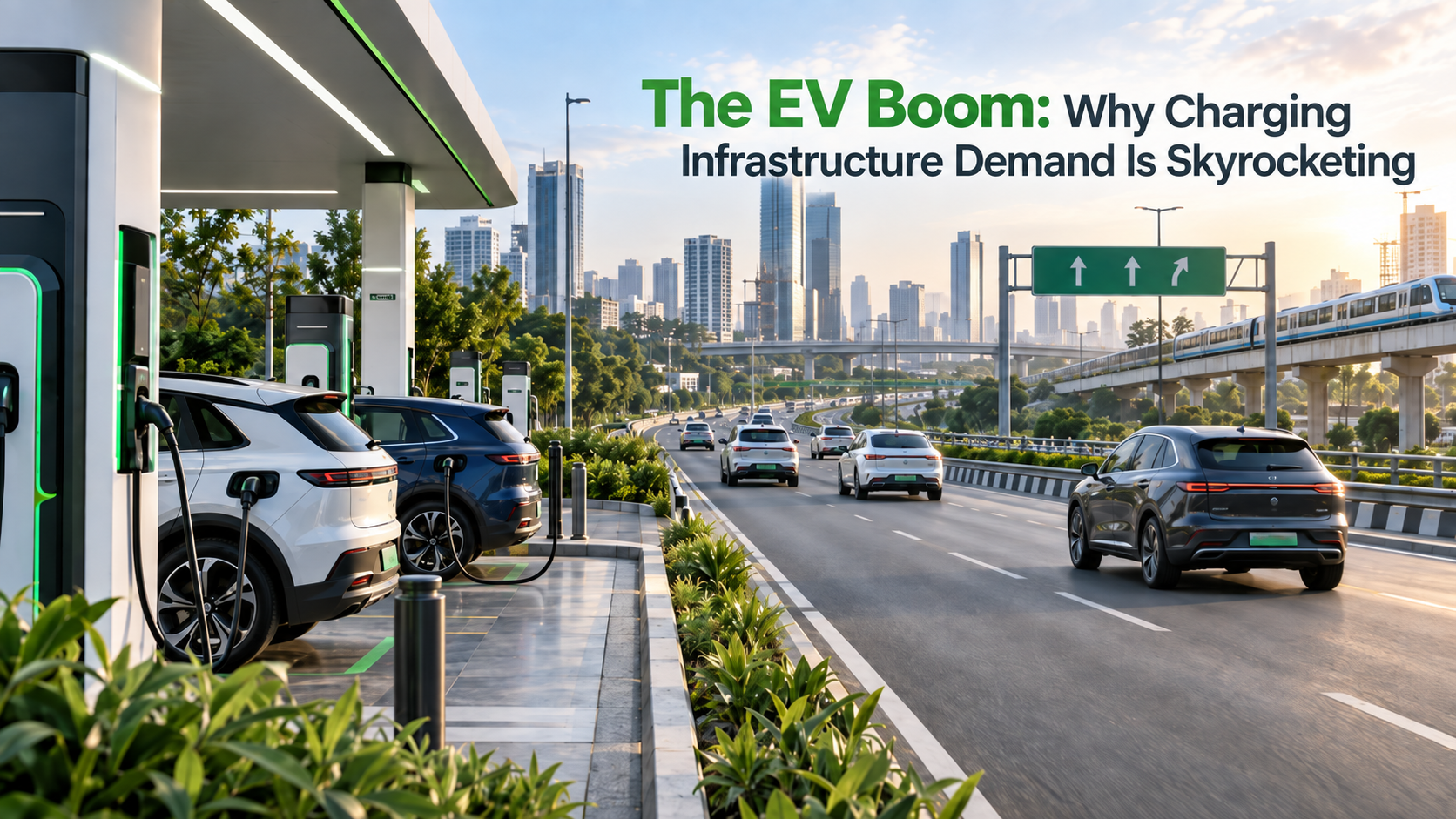
Quick answer: India’s EV charging infrastructure demand is skyrocketing because electric vehicle sales are growing far faster than the charging network. Electric car sales jumped 77% year-on-year in 2025, yet the country has only around 1 charger for every 200+ EVs on the road — well short of the 1.3+ million chargers needed by 2030. This growing gap between vehicle adoption and charging supply is exactly why EV charging is becoming one of India’s fastest-growing infrastructure investment opportunities.
India’s EV Sales Are Growing Faster Than Anyone Predicted
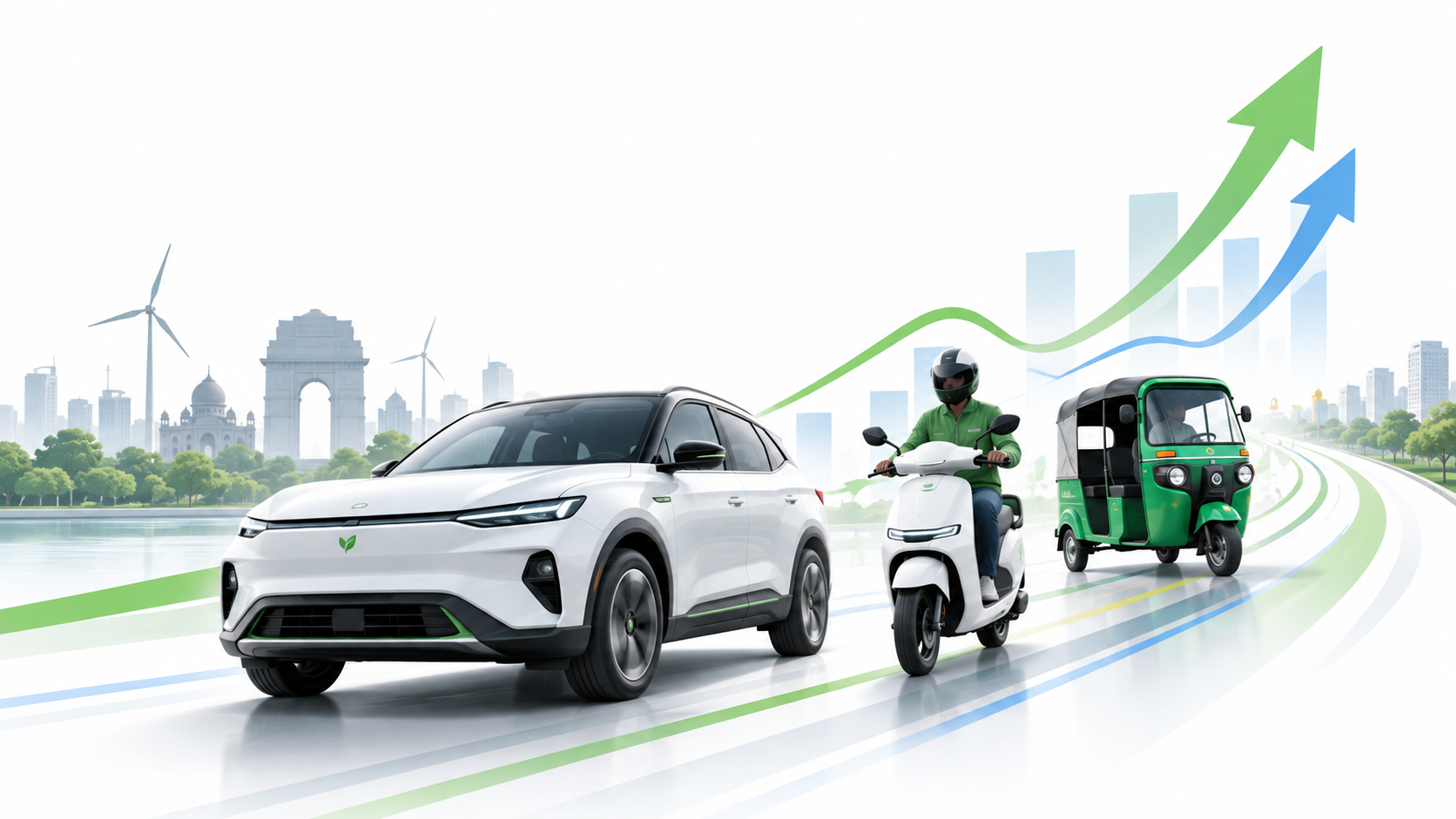
Just a few years ago, electric vehicles were a niche choice in India. That’s no longer true.
- Electric car retail sales rose 77.04% year-on-year to 176,817 units in 2025, up from 99,875 units in 2024, lifting EVs’ share of the total passenger car market.
- Electric three-wheelers now account for over 60% of all three-wheeler retail sales, while two-wheeler EVs have climbed to roughly 7.3% of total two-wheeler sales.
- Electric passenger vehicle penetration nearly doubled in a year, reaching 4.4% of car sales, up from 2.5% previously.
- Looking further out, India’s EV sector is projected to grow from a $3.21 billion market in 2022 to $113.99 billion by 2029 — a 66.52% compound annual growth rate.
Every one of these vehicles needs somewhere to charge. And that’s where the real story begins.
The Charging Infrastructure Gap: The Numbers Don’t Lie
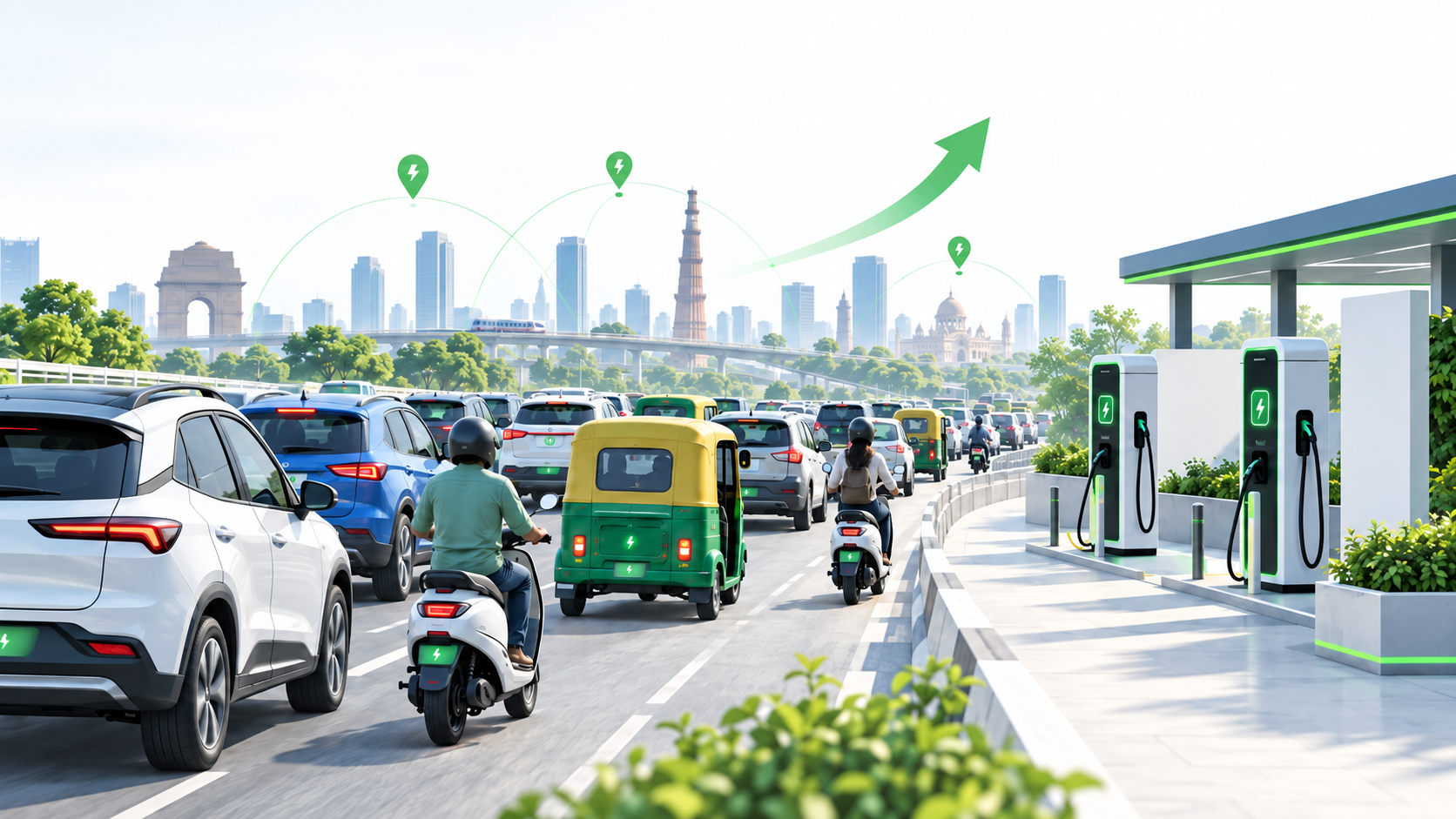
While EV sales have been accelerating, the charging network hasn’t kept pace — and the shortfall is significant.
- India’s public charging network expanded from roughly 5,000 stations in 2022 to over 29,000 by 2025, but demand has grown even faster.
- India’s current charger-to-EV ratio stands at approximately 1:235, compared to global benchmarks of 1:6 to 1:20 in mature EV markets.
- To hit NITI Aayog’s target of 30% EV penetration, India needs an estimated 1.32 million chargers — up from around 30,000 today.
- On the consumer side, the anxiety is real: 43% of surveyed EV owners cited a lack of public charging infrastructure as a top concern, 41% cited charging time, and 31% cited limited residential charging access, according to Deloitte’s 2026 Global Automotive Consumer Survey.
- Existing infrastructure also isn’t always reliable — nearly half of surveyed public fast chargers showed usability issues in reliability testing.
Put simply: for every EV sold in India today, there is nowhere close to enough charging capacity to support it — and the gap is widening, not closing, as sales keep climbing.
Why the Gap Exists — and Why It’s Growing
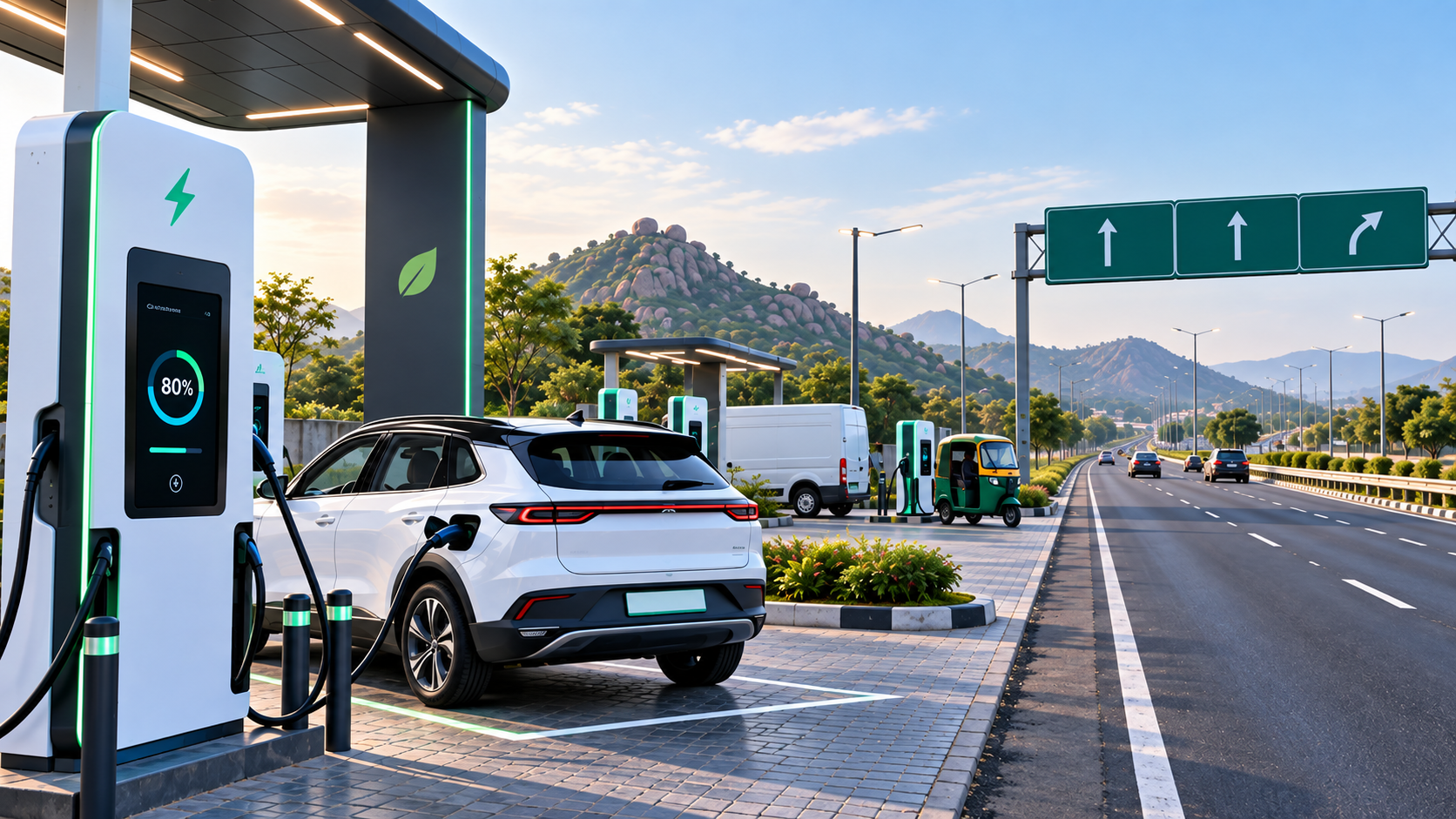
A few forces are colliding to create this surge in demand:
- Intercity travel is the missing link. Most private EV owners charge at home, but hesitate to take their EVs on highway trips because reliable fast-charging along major routes is still scarce.
- Commercial and fleet electrification is accelerating. Cab fleets, delivery vehicles, and three-wheelers are electrifying fast, and these vehicles need dependable, high-uptime charging — not occasional access.
- Policy is pushing adoption harder than infrastructure can follow. Government programs are fueling vehicle demand faster than private and public players can build supply.
- Urban and semi-urban housing rarely supports home charging. A large share of India’s EV buyers live in apartments or shared housing without dedicated parking or charger access, pushing them toward public infrastructure.
Government Policy Is Pouring Fuel on the Fire
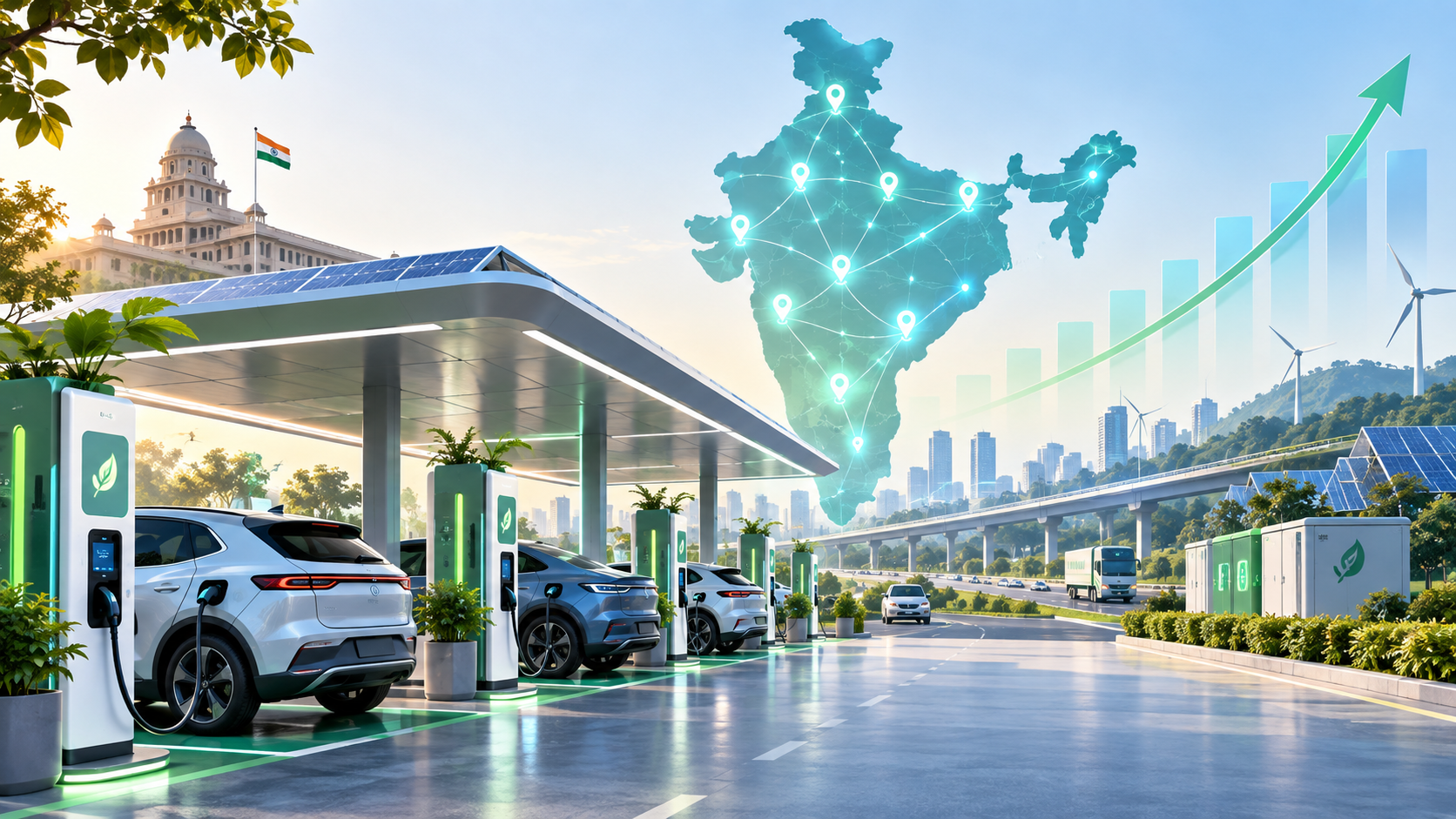
India’s policymakers have made the charging gap a national priority, which is accelerating both funding and franchise opportunity:
- The government has committed roughly ₹10,900 crore under the PM E-DRIVE scheme, covering charging infrastructure, EV adoption incentives, and local manufacturing support.
- Under this scheme, 2,877 charging stations have already been approved, with another 1,576 focused specifically on highways and expressways.
- State governments are setting their own aggressive targets — for example, Maharashtra and Karnataka have both announced ambitious EV and charging infrastructure goals for their transport sectors.
- Major automakers are backing the shift with billions in EV manufacturing investment, which will only add more vehicles to a network that’s already stretched thin.
This is a rare situation where demand, government incentives, and consumer expectations are all pointing in the same direction at the same time — toward more charging infrastructure, faster.
What This Means for Charging Infrastructure Investors
This is precisely the gap EarthtronEV was built to close.
Since 2021, EarthtronEV has focused on interconnecting India’s highways and cities with reliable EV charging — because intercity travel is where the infrastructure gap hurts most. The company currently operates a growing network of fast DC charging stations across major highways, including key routes like Delhi-Agra, Delhi-Jaipur, Delhi-Chandigarh, and Delhi-Haridwar, with a Franchise-Owned, Company-Operated (FOCO) model that handles site selection, installation, charging management, and monthly revenue settlements for franchise partners.
For potential investors, the math behind this gap is the real headline:
- Demand is outpacing supply — meaning charging stations in the right locations aren’t competing for customers; they’re often the only option for kilometers.
- The 2030 target alone requires over 400,000 new charging points every year — a scale of buildout that private franchise partners, not government alone, will need to deliver.
- Highways and tier 2/3 cities remain underserved, which is exactly where a well-placed charging franchise can capture long-term, recurring demand as EV ownership spreads beyond metro cities.
The Bottom Line
The EV charging infrastructure gap isn’t a temporary bottleneck — it’s a structural opportunity. Vehicle sales are compounding year over year, government policy is actively funding the buildout, and the charger-to-EV ratio shows just how much ground still needs to be covered. For investors looking at India’s EV transition, charging infrastructure isn’t a side bet on the industry — it’s the foundation it’s being built on.
Frequently Asked Questions
Why is demand for EV charging stations increasing so fast in India? Because EV sales are growing much faster than charging infrastructure. Electric car sales rose 77% in 2025 alone, while the public charging network grew more slowly, leaving India with roughly one charger for every 235 EVs — far below global benchmarks of 1:6 to 1:20.
How many EV charging stations does India need? Industry estimates suggest India needs around 1.32 million public chargers to support its EV adoption targets, compared to roughly 30,000–29,000 currently in operation — meaning the country needs to add hundreds of thousands of new charging points every year.
Is EV charging infrastructure a good investment right now? The combination of surging vehicle sales, a wide charger-to-EV supply gap, and strong government incentives (like the PM E-DRIVE scheme) makes EV charging infrastructure one of the fastest-growing infrastructure investment categories in India today.
What makes highway charging stations valuable? Highway and intercity charging remains one of the most underserved segments, since most private charging still happens at home. Investors and franchise partners who secure well-located highway sites can capture demand with far less competition than in saturated urban markets.
Interested in bringing EV charging infrastructure to your city or highway route? [Explore EarthtronEV franchise opportunities] to learn more about investment options, setup timelines, and support.
Sources
- Electrive.com — India’s EV momentum accelerates as charging network expands (Jan 2026)
- Business Standard — India is buying more EVs, but can charging infra keep pace with demand? (2026)
- Kotak Securities / Kotak Neo — EV Chargers: Soaring Demand, Limited Supply
- Outlook Business — Three-Wheelers EV Sales Cross 60% Even as Charging Lags Behind (2025)