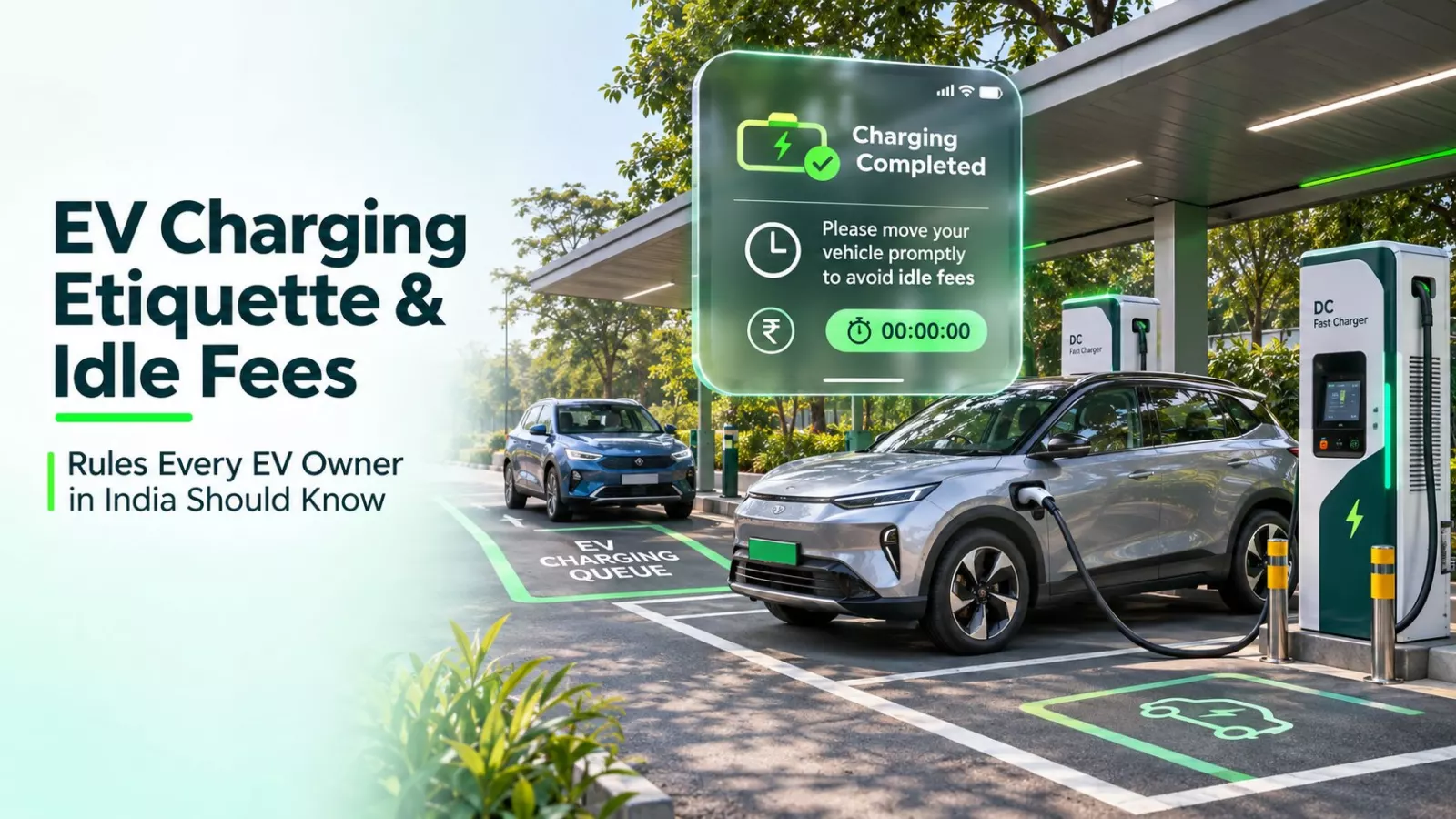
Quick Answer: EV charging etiquette means using public chargers responsibly so others can access equipment without unnecessary delays. Park in a charging bay only as permitted, use compatible connectors, monitor your session and move your vehicle promptly once charging ends. Some operators levy idle or overstay fees, but India has no single nationwide idle-fee amount or universal grace period. Always check the operator’s current app, tariff and parking conditions.
Why Charging Etiquette Matters
Electric cars can occupy public charging bays for minutes or hours, depending on charging technology and battery state. When a fully charged vehicle remains parked in a charging-only bay, the equipment may be working but inaccessible to another driver. On busy highways, this can cause avoidable delays and range anxiety.
Responsible charging habits and clear station policies help increase charger availability, reduce disputes and improve the overall EV ownership experience. India’s Ministry of Power 2024 guidelines provide a framework for charging infrastructure and charging-related costs, while specific parking and idle-fee rules can differ by operator and site.
What Is EV Charging Etiquette?
EV charging etiquette is the set of practical expectations for using shared charging points respectfully and safely. Charging spaces are a shared resource, not automatically general-purpose parking bays.
- Use a charging bay only when permitted and generally only while charging.
- Follow the station’s booking, queueing and parking rules.
- Handle charging cables and connectors carefully.
- Avoid disrupting another driver’s charging session.
- Move your vehicle when charging has ended, unless the site expressly permits continued parking.
- Report faulty chargers through the operator’s support channel.
What Are EV Charging Idle Fees?
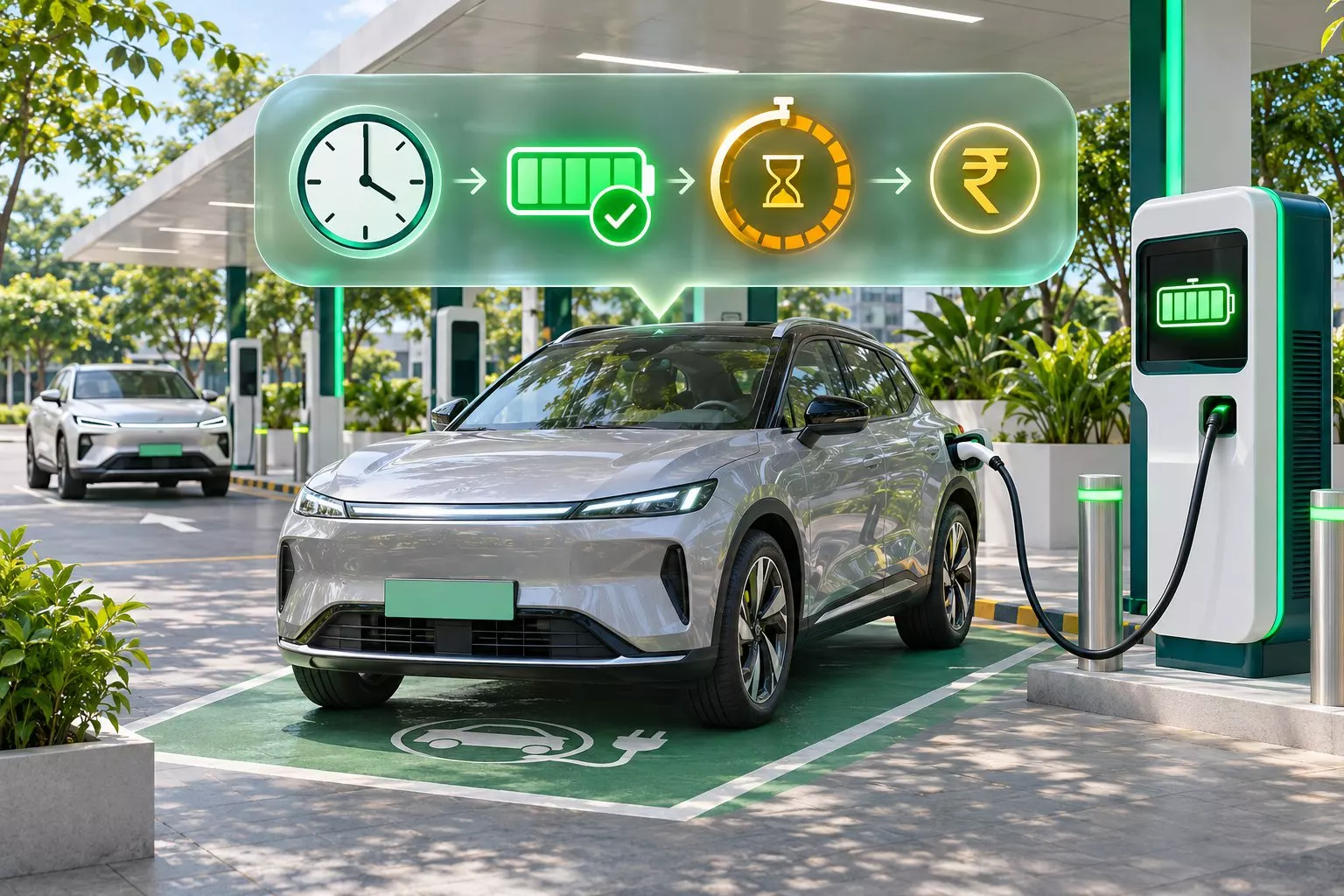
An idle fee is an operator-defined charge that may apply if a vehicle remains connected or occupies a charging bay after charging finishes or after a permitted period ends. Some locations use separate parking or overstay charges instead; many stations do not charge idle fees at all.
Typical Idle-Fee Process
- A driver starts a charging session using the operator’s app or charger interface.
- The vehicle charges until its target or the session endpoint is reached.
- The station registers completion and may send a notification.
- An operator-defined grace period may apply.
- If the vehicle continues occupying the bay beyond the applicable conditions, a fee may accrue.
The objective is to improve charging-bay turnover rather than punish ordinary drivers. Operators should make trigger conditions, rates and grace periods clear before a session starts.
Are Idle Fees Mandatory in India?
No single nationwide idle-fee rate or grace period applies to every Indian public charging station. The Ministry of Power’s September 17, 2024 EV charging infrastructure guidelines address charging infrastructure and cost components. Individual operator conditions and local parking rules still matter.
Check the per-kWh or time-based charging tariff, any session charges, idle/overstay policy, grace period, separate parking charges, GST and dispute process. Do not assume another network’s rules apply at the station you are visiting.
How Much Can an Idle Fee Cost?
The following is a hypothetical example to show how an operator might calculate overstay charges; it is not a stated EarthtronEV rate.
| Item | Illustrative value |
|---|---|
| Session completion | 3:00 PM |
| Grace period | 10 minutes |
| Vehicle departs | 3:35 PM |
| Elapsed idle time | 35 minutes |
| Chargeable time | 25 minutes |
| Example rate | ₹2 per minute |
| Illustrative fee | ₹50 |
Formula: Idle fee = max(0, elapsed idle minutes − grace period) × rate per minute. Electricity charges, parking tariffs and taxes may be additional.
Essential Public EV Charging Etiquette Rules
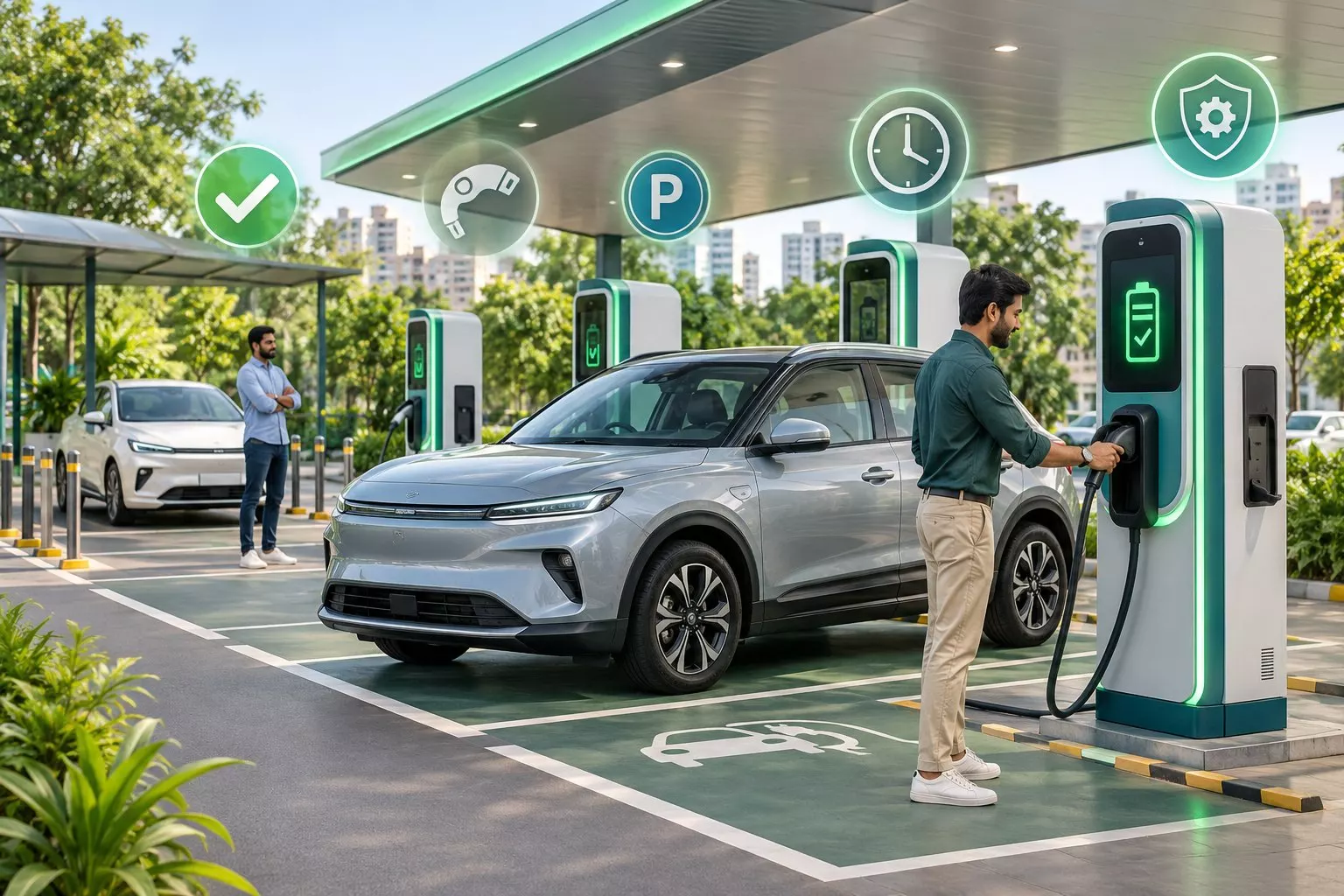
Park only when permitted
An EV charging bay should not be used as ordinary parking when the site designates it for active charging.
Move promptly once finished
Disconnect safely and relocate to regular parking when the session ends, unless the facility permits otherwise.
Never unplug someone else’s EV
Use the station helpdesk or parking management instead of interfering with another driver’s connector.
Verify connector compatibility
Check the vehicle and station specifications. Never force an incompatible connector into a charging port.
Protect shared equipment
Return connectors to holders, avoid pulling cables by the wire and do not drive over charging leads.
Respect waiting drivers
Where possible, limit occupancy at busy fast chargers to the charge needed for your onward journey.
Report equipment faults
Contact the operator for charging failures; never open electrical equipment or bypass safety protection.
Observe station-specific terms
Follow posted signage, queues, operating hours, payment rules and any occupancy restrictions.
What Is ICEing at a Charging Station?
ICEing describes a petrol or diesel vehicle occupying a designated EV charging space. This can block an otherwise functioning charger. India does not have one uniform nationwide ICEing penalty for every private and public facility; enforcement depends on relevant local rules, signage and property management.
If a non-EV blocks a charger, contact the site operator, parking staff or relevant authority. Avoid confrontation or attempting to move someone else’s vehicle.
Why Charging from 80% to 100% Often Takes Longer
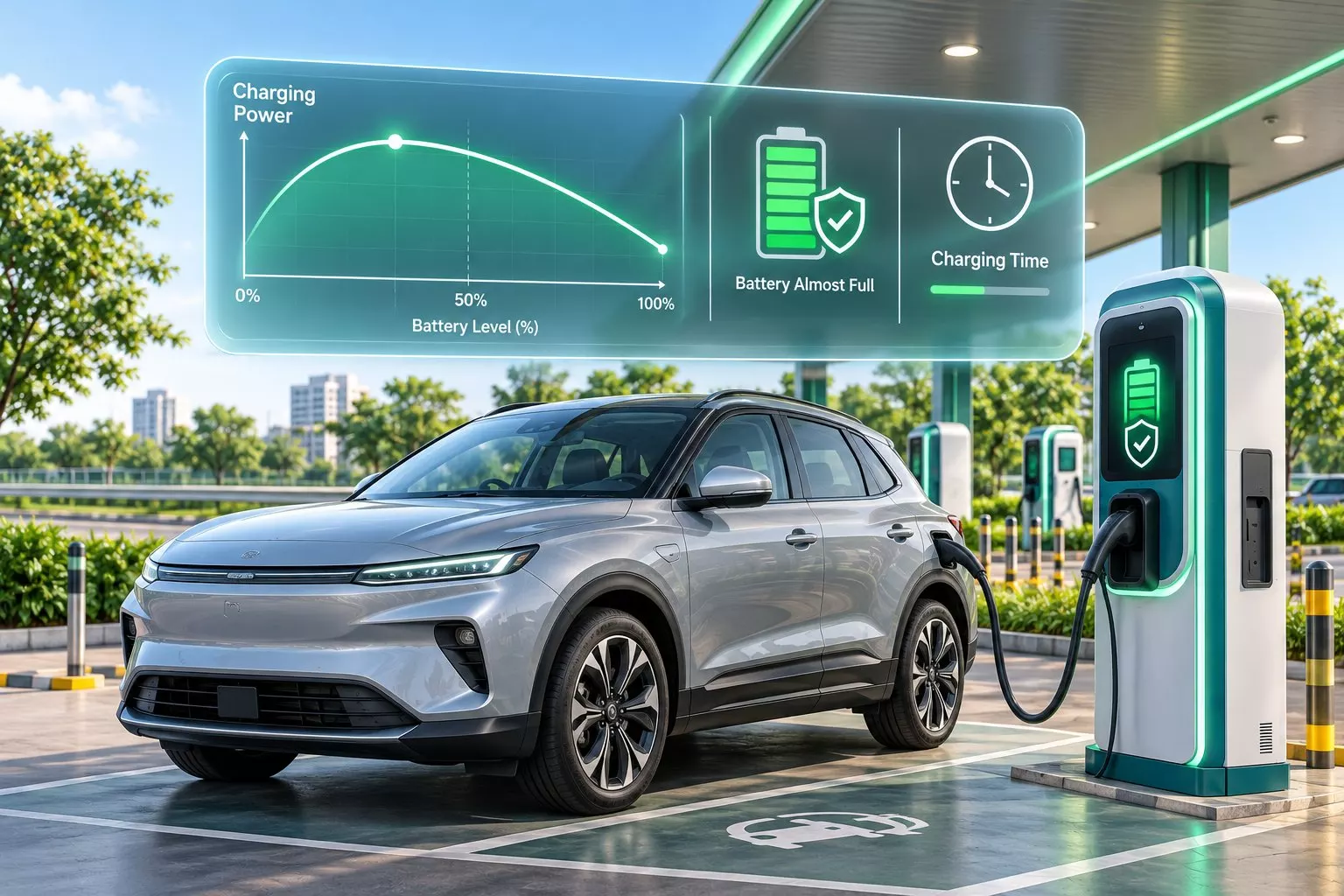
Many EVs reduce charging power at high battery states of charge to stay within battery operating limits. This is called charging taper. The final 20% can therefore take disproportionately long compared with charging at lower levels. The exact curve depends on battery temperature, model and charger output.
| Battery level | Illustrative charging power |
|---|---|
| 20% | 75 kW |
| 40% | 85 kW |
| 60% | 65 kW |
| 80% | 35 kW |
| 90% | 18 kW |
| 95% | 10 kW |
These values are hypothetical, not specifications for a specific EV. Charging past 80% is sometimes necessary for range; considerate use means balancing actual journey needs against demand from waiting drivers.
AC vs DC Charging: Different Expectations
DC chargers at highways and public hubs are commonly intended for faster turnover. AC destination chargers at offices, hotels and residential buildings are often designed around longer parking visits. Neither category carries a universal nationwide idle-fee rule.
| Factor | DC fast charging | AC destination charging |
|---|---|---|
| Typical site | Highways, public hubs | Hotels, malls, offices, housing |
| Typical stop | Shorter | Longer |
| Driver practice | Monitor and move promptly | Follow destination parking terms |
| Idle fee | Operator-dependent | Operator-dependent |
How to Avoid Idle Fees
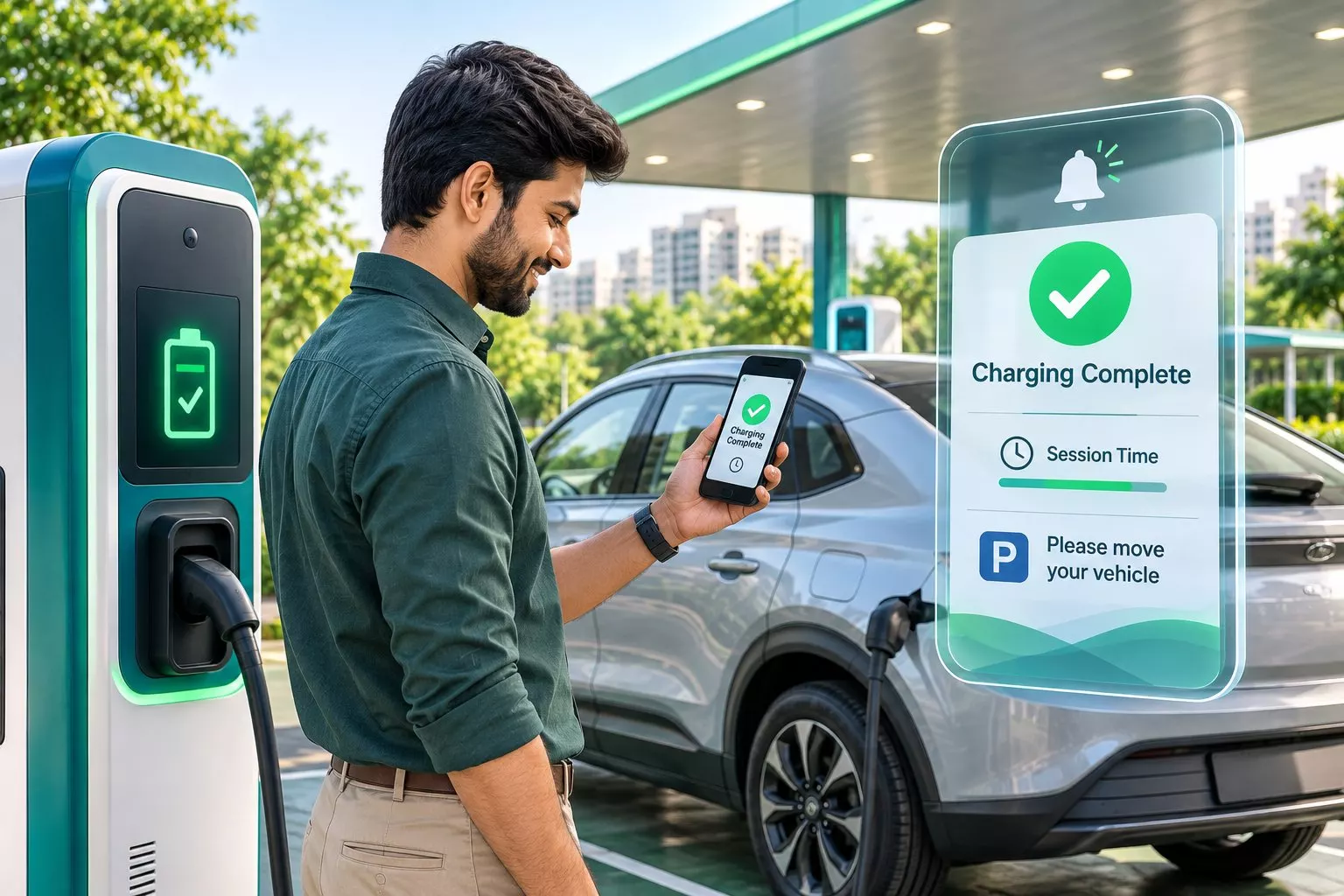
- Read all charges and parking restrictions before starting the session.
- Enable vehicle and charging-app completion notifications if available.
- Estimate charging time conservatively and remain reachable.
- Choose an AC destination charger when you intend to park for several hours.
- Return to the vehicle before the session ends when feasible.
- Keep receipts, session IDs and relevant error screenshots for potential disputes.
What If a Charger Stops Unexpectedly?
Charging interruptions can result from vehicle faults, grid issues, connector communication, charger failures or operating limits. Read the displayed error, stop using visibly damaged equipment and contact the charging network. Do not repeatedly force connectors or attempt internal repairs.
Whether an idle fee applies after an unexpected stoppage depends on the actual terms and the circumstances. Retain the charger ID, location, times and session record, and request billing review when appropriate.
Highway Charging Etiquette
Highway charging access is particularly valuable because the next compatible station may be far away. Check the station’s current availability, avoid blocking adjacent bays, respect any queue, do not interfere with other vehicles, and move after charging. A charger marked available in an app may still have a physically obstructed parking bay.
Etiquette at Offices, Malls and Housing Societies
Workplace chargers may use employee reservations; malls may bill parking separately; housing societies may allocate residential charging bays; hotels may allow overnight charging. Follow the actual property rules rather than assuming that every destination charger demands immediate departure at session completion.
How Operators Can Reduce Idle Time
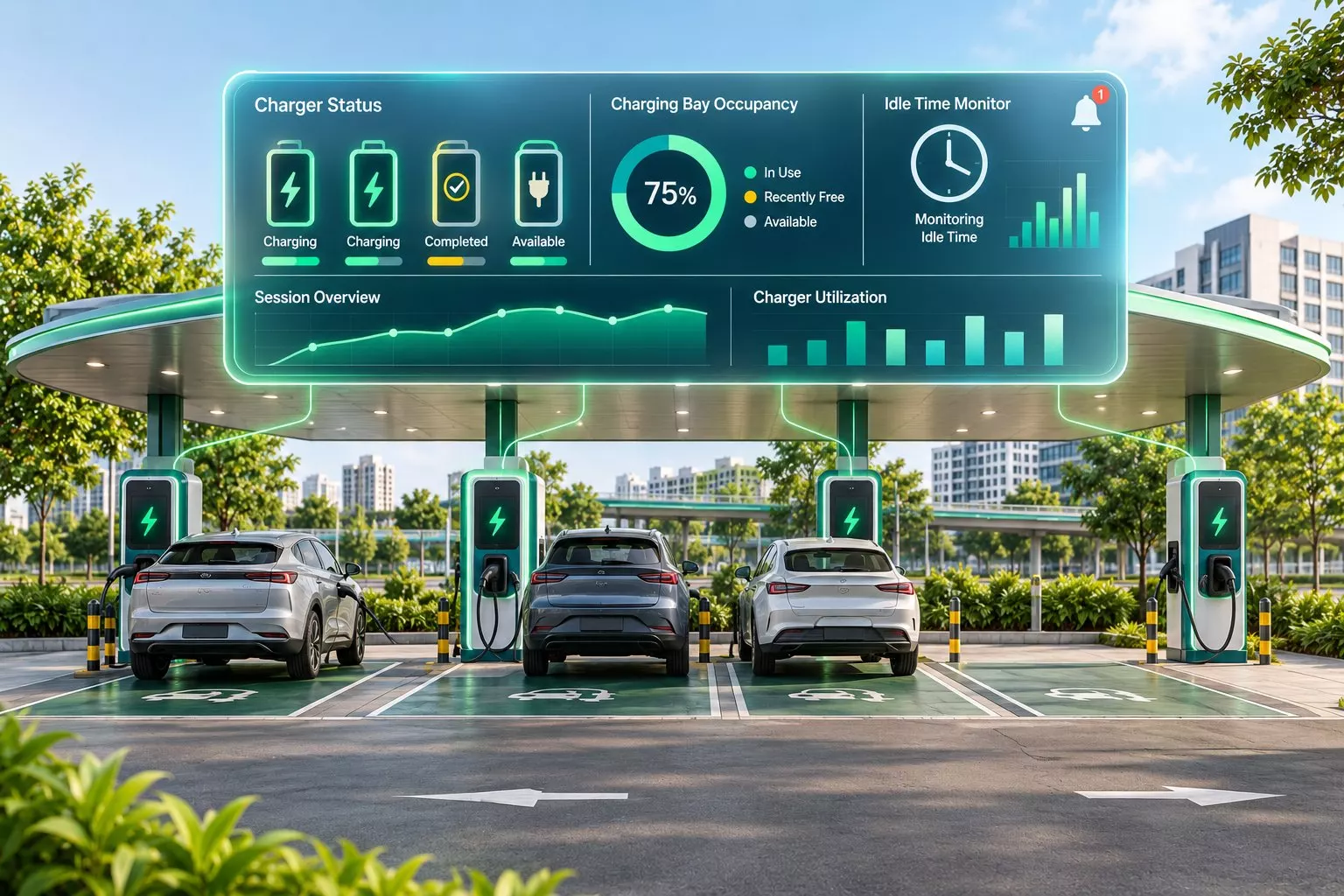
Operators can improve turnover through clear signage, transparent prices, reliable completion notifications, charger uptime monitoring and responsive support. Session tracking and utilization analytics can highlight where bay occupancy causes congestion.
EarthtronEV’s Charge Station Management System (CSMS) supports charging network monitoring, session analytics, billing and operational management. Specific idle-fee automation and grace-period enforcement should be verified against the selected software configuration and charger integration.
Why Charging-Bay Turnover Matters for Business
An occupied but non-charging bay can limit the number of drivers a station serves. Consider a theoretical 12-hour operating window with 40 minutes of charging per vehicle; this example assumes constant demand and excludes downtime and manoeuvring gaps.
| Average charging + overstay | Theoretical sessions in 12 hours |
|---|---|
| 40 + 0 minutes | 18 |
| 40 + 10 minutes | 14 |
| 40 + 20 minutes | 12 |
| 40 + 30 minutes | 10 |
More available time does not automatically mean higher revenue: actual visits, delivered energy, tariffs and costs determine returns. For charging businesses, including an EV charging station franchise in India, good customer experience and transparent operating practices remain important.
The Future of Charging Etiquette in India
Charging networks may increasingly use better session alerts, real-time availability, transparent idle-fee disclosures, reservation systems, parking integrations and fleet scheduling. These features can help manage demand, but sound station design and considerate user behavior are equally important.
Conclusion
As India’s public EV charging network grows, shared charging bays must remain accessible. EV owners can help by using compatible equipment, observing queues, following location-specific parking rules and moving vehicles promptly once charging is complete. Idle fees may discourage unnecessary occupation, but there is no universally fixed nationwide rate or grace period. Always confirm the charging operator’s latest published terms. EarthtronEV supports India’s electric mobility ecosystem with AC and DC charging solutions and connected charging management technology.