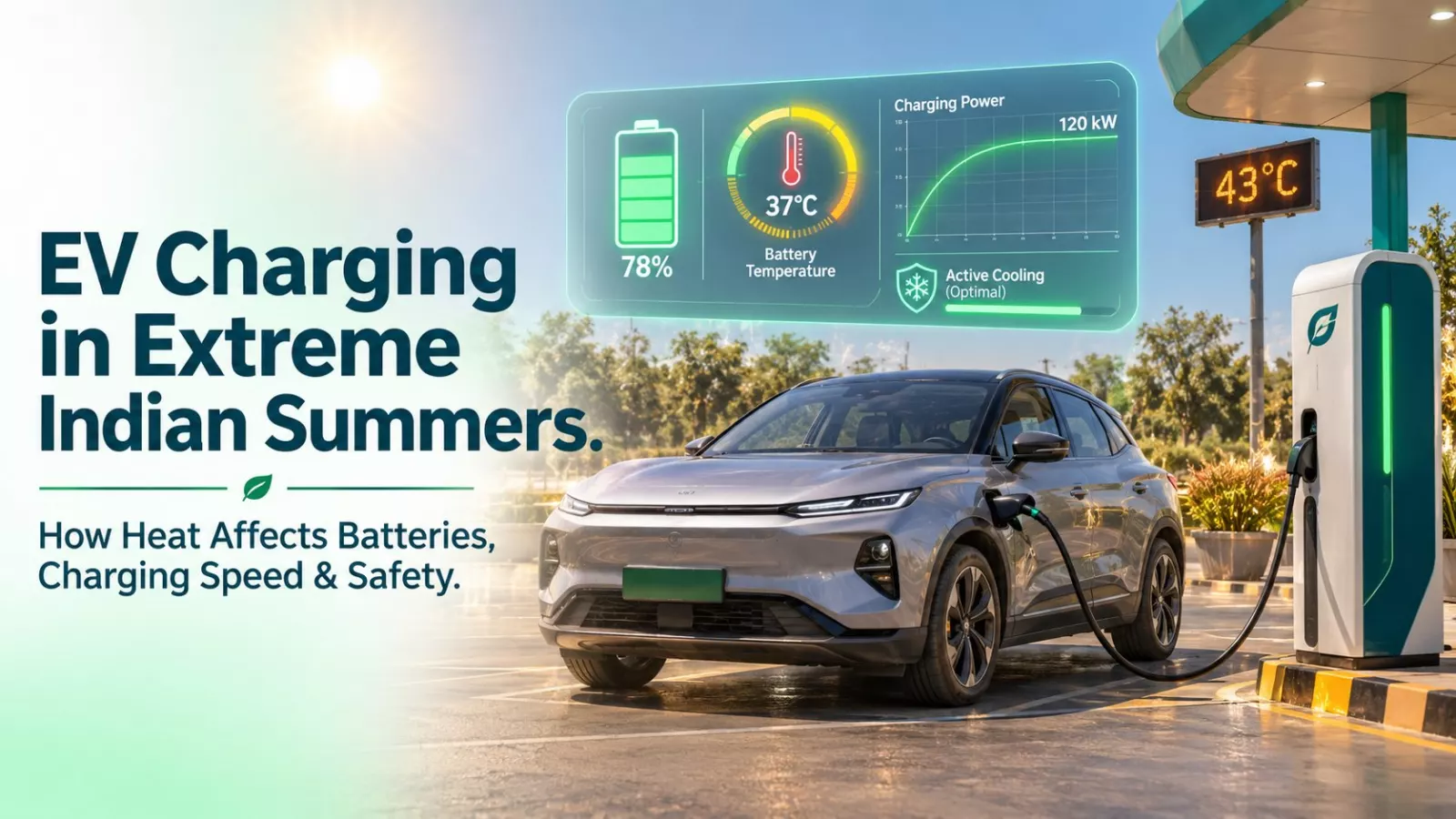
Quick Answer: Extreme summer heat can affect EV charging by raising battery temperatures, increasing cooling-system electricity use and sometimes reducing charging speed. A Battery Management System (BMS) can automatically limit charging power when necessary to protect the battery. Drivers should follow manufacturer guidance, use suitable charging equipment, prefer shaded or well-ventilated locations where practical, and maintain the vehicle’s thermal management system. High ambient temperature does not automatically make charging unsafe.
Why Extreme Indian Summers Matter for Electric Vehicles
Indian summers can be challenging for electric vehicles and charging infrastructure. During peak summer months, cities such as Delhi, Jaipur, Ahmedabad and Nagpur can experience prolonged temperatures above 40°C. EV owners naturally ask whether charging in this heat damages the battery, why DC fast charging sometimes slows down and whether outdoor chargers are safe.
The answers depend on battery chemistry, vehicle design, thermal management, charging power and operating conditions. Modern electric cars contain monitoring and cooling technologies, but prolonged heat exposure can still influence battery ageing and energy consumption. Understanding the difference between ambient temperature and actual battery temperature is key to safer, more predictable charging.
How Does Extreme Heat Affect EV Batteries?
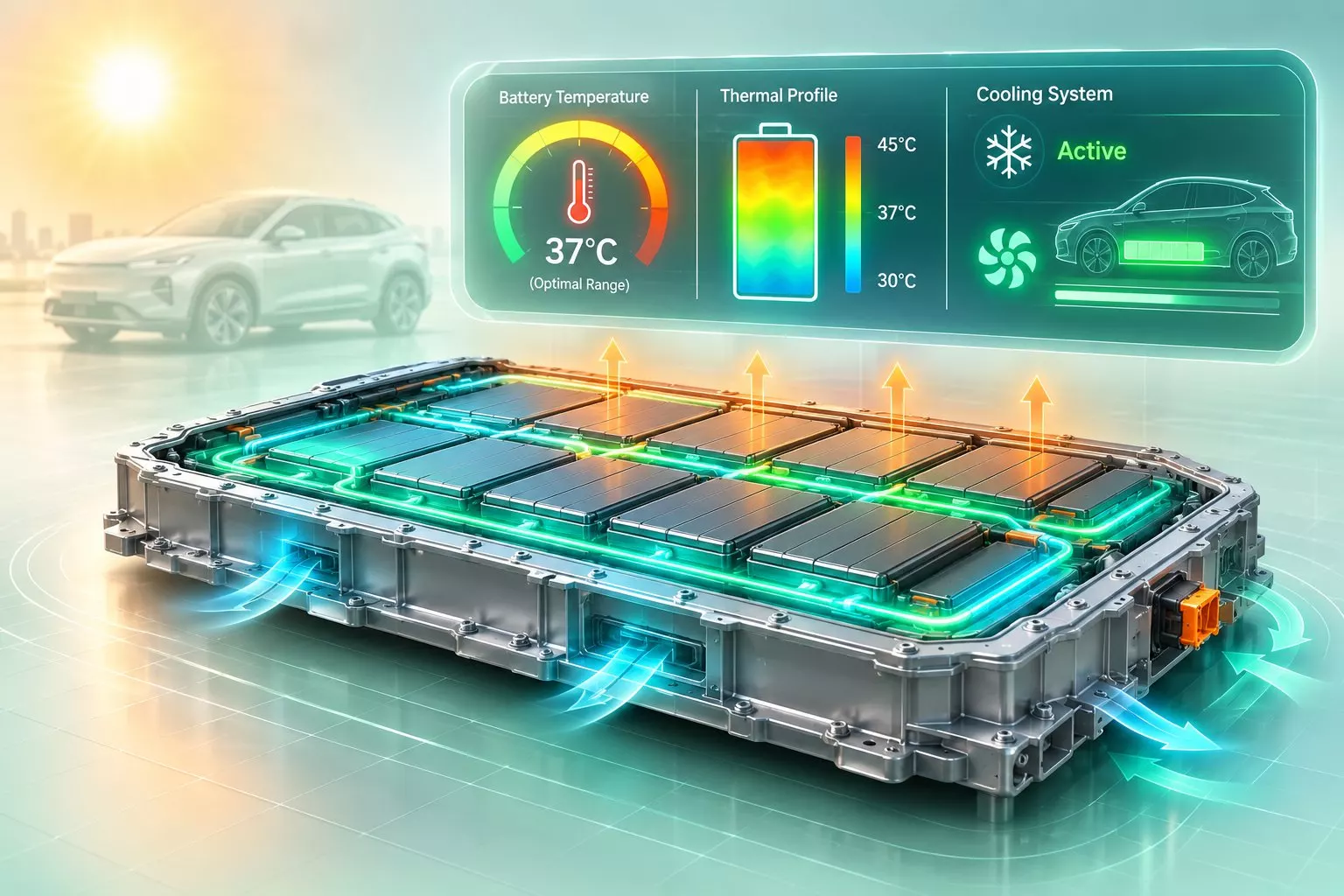
Most electric cars use lithium-ion traction batteries, including lithium iron phosphate (LFP) and nickel manganese cobalt (NMC) chemistries. Batteries produce heat while charging and driving, and environmental heat can add to their thermal load. Excessively high battery temperatures can accelerate chemical ageing, affect resistance and reduce long-term capacity retention.
Battery Temperature vs. Outside Temperature
A battery does not automatically reach ambient air temperature. Its temperature is influenced by battery enclosure design, recent driving, charging power, cooling-system activity, parking conditions and cell chemistry. An EV parked under direct sun may face a different thermal load than one being actively cooled during driving.
- Ambient air temperature and sunlight exposure
- Charging power and recent driving activity
- Battery pack insulation and thermal management
- Battery chemistry, cooling-system design and vehicle condition
Why High Battery Temperature Matters
Long-term exposure to heat may speed up degradation. However, a hot day does not automatically mean immediate battery damage. Vehicle thermal protection systems are designed to keep operation within permitted limits. Manufacturer-specific guidance should always take precedence over generic temperature advice.
What Is the Ideal Temperature for an EV Battery?
Many lithium-ion battery systems perform favorably at moderate temperatures, but the ideal cell operating range varies across vehicles and chemistries. Outside air temperature is not the same measurement as internal battery temperature.
| Ambient conditions | General charging consideration |
|---|---|
| 20–30°C | Often favorable for charging |
| 30–35°C | Cooling activity may increase |
| 35–40°C | Greater thermal management demand |
| 40–45°C | Thermal limits may become more relevant |
| Above 45°C | Follow manufacturer guidance carefully |
These are illustrative ambient-temperature categories, not universal battery temperature limits or automatic charging cutoffs.
Why Does EV Charging Become Slower in Extreme Heat?
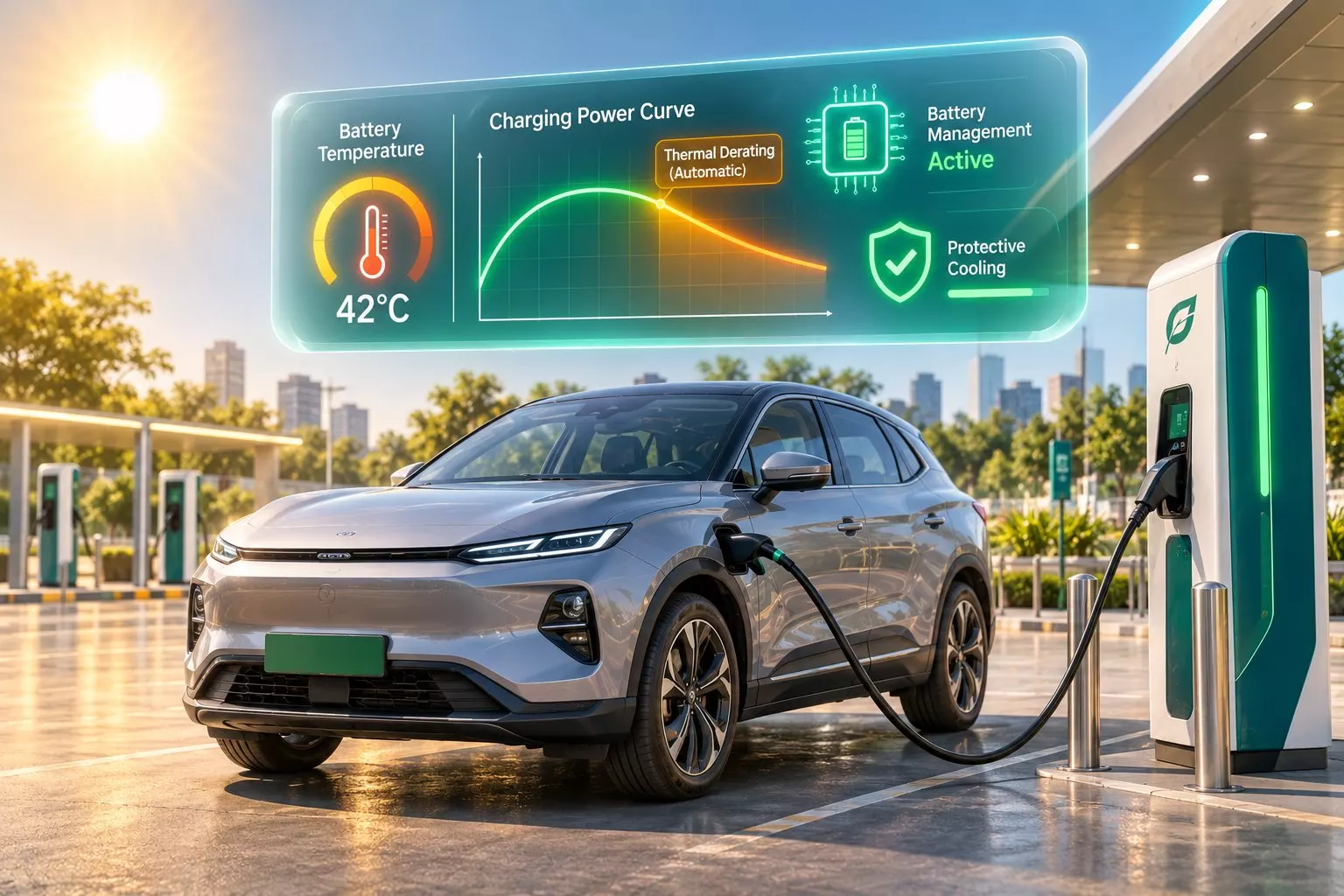
During DC fast charging, a hot battery may accept less power than it does under more favorable conditions. The Battery Management System monitors temperature, voltage and current, and may reduce charging current to limit thermal stress. This protective behavior is called thermal derating.
How the Battery Management System Controls Charging Speed
An EV capable of high peak charging power can still charge slowly after sustained high-speed driving in hot weather. Charging power also depends on the battery’s State of Charge (SoC), the vehicle charging curve, charger capacity, power sharing and possible equipment faults.
| Illustrative charging condition | Average charging power |
|---|---|
| Battery at suitable temperature | 48 kW |
| Moderately warm battery | 38 kW |
| Battery requiring stronger thermal protection | 25 kW |
Illustrative values only, not measured specifications for a particular vehicle or charging station.
Does Extreme Summer Heat Reduce Electric Car Driving Range?
Heat can reduce practical range because air-conditioning and battery cooling systems consume energy. High ambient temperatures, hot cabin interiors and sustained driving can create additional thermal loads. The effect is not necessarily a sudden loss of stored battery capacity; instead, more electricity is used during the journey.
| Parameter | Moderate conditions | Hot summer conditions |
|---|---|---|
| Energy consumption | 15 kWh/100 km | 18 kWh/100 km |
| Usable energy | 45 kWh | 45 kWh |
| Illustrative range | 300 km | 250 km |
This hypothetical example represents a 20% increase in electricity consumption and approximately a 16.7% range reduction. Actual results depend on vehicle, driving speed, route, weather and thermal management.
Is DC Fast Charging Safe During Indian Summers?
DC fast charging can be safe in hot weather when vehicles and chargers are in good condition and operate within their rated limits. Chargers can have temperature sensors, cooling equipment, fault detection and protective power reduction or shutdown systems.
High current produces heat in cables, connectors and power electronics. If a station becomes too hot, its controller may lower power or stop the session. Repeated faults require inspection by qualified maintenance personnel.
- Use properly maintained, compatible chargers with adequate ventilation.
- Do not use visibly damaged connectors or charging cables.
- Never bypass overheating alerts or automatic shutdowns.
- If there is smoke, sparking or an unusual smell, stop use, move clear and contact the operator or emergency services.
AC Charging vs. DC Fast Charging: Which Is Better in Summer?
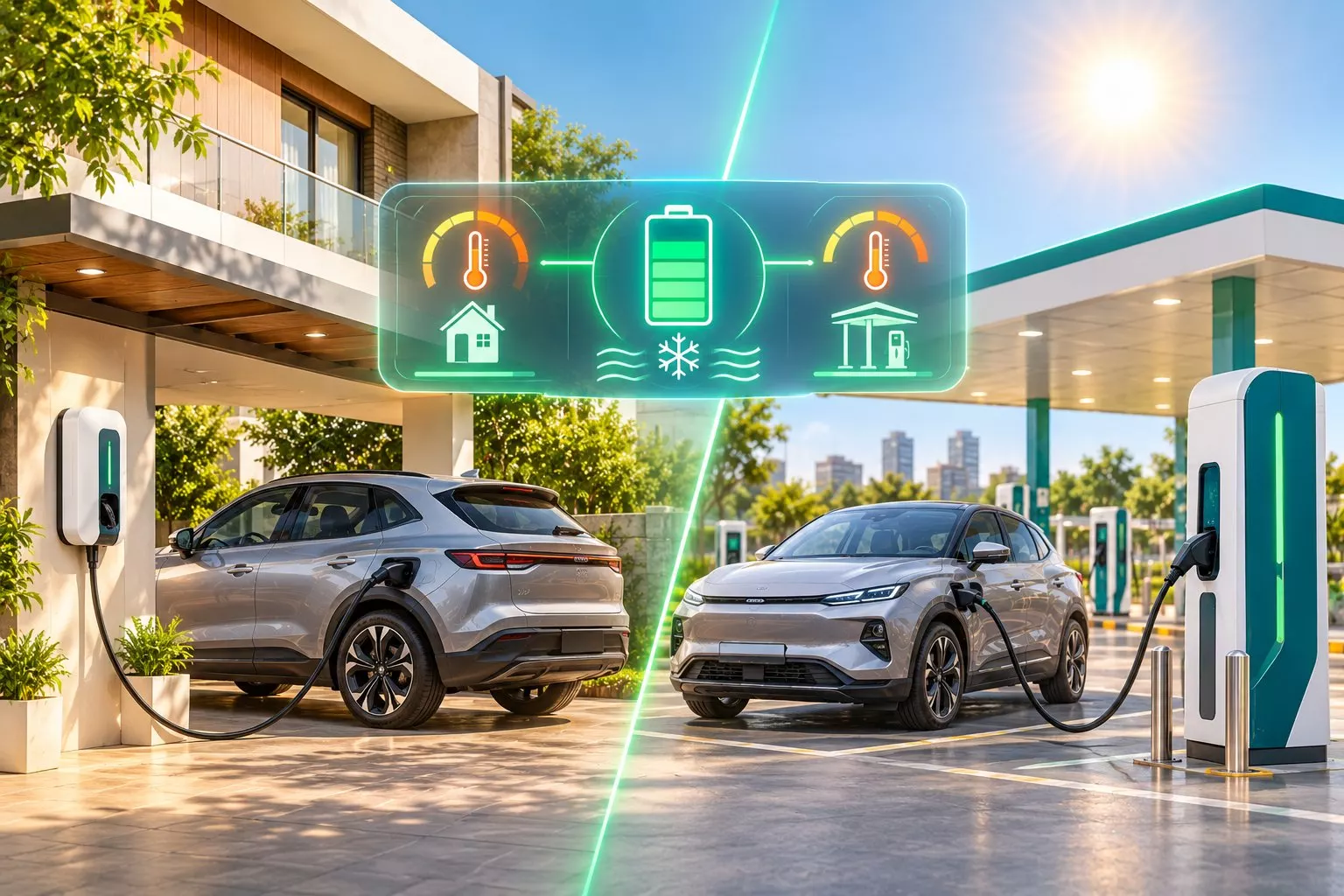
AC charging is common at homes, workplaces and destinations with longer parking durations. Lower charging power often creates less battery heat under comparable conditions. DC charging delivers higher power for quicker stops, placing greater demands on thermal management. Neither method is inherently unsafe when used correctly.
| Factor | AC charging | DC fast charging |
|---|---|---|
| Typical location | Home/workplace | Highway/public hub |
| Power | Usually lower | Usually higher |
| Charging time | Longer | Potentially shorter |
| Thermal demands | Often lower | May be higher |
| Best use | Routine or overnight | Time-sensitive trips |
How to Charge Your EV Safely at Home During Summer
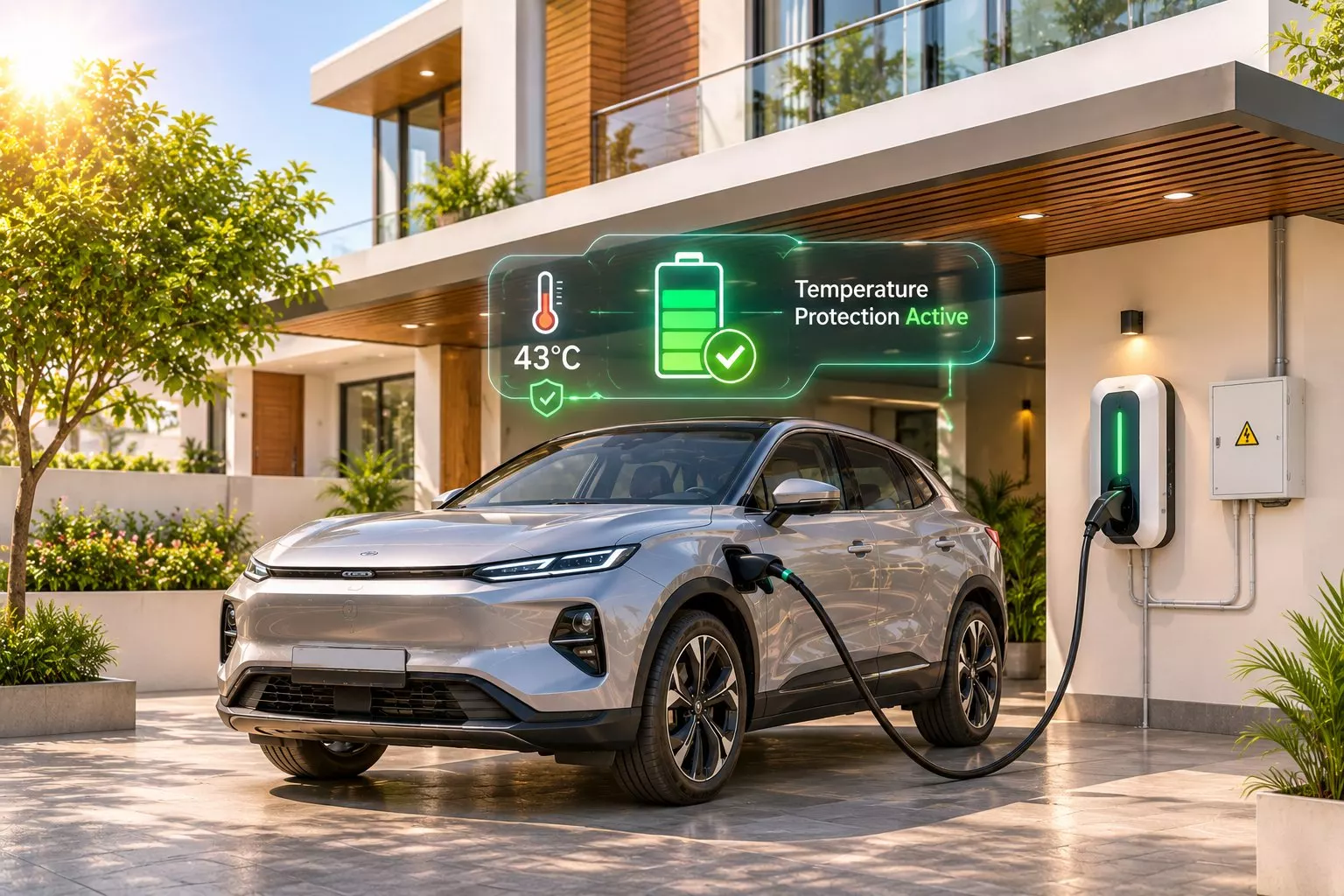
Proper residential charger installation is more important than any single summer charging trick. Choose a location consistent with the charger manufacturer’s temperature, weather-protection and ventilation specifications. Have all electrical work completed by qualified professionals.
Practical Home Charging Precautions
- Prefer an appropriately shaded, ventilated charging area where feasible.
- Avoid improvised extension leads, multi-plug adapters or unsuitable household wiring.
- Use approved protective equipment, grounding/earthing and a properly sized electrical circuit.
- Follow the EV manufacturer’s charge limits, which may vary by battery chemistry.
- Use scheduled charging if it suits your vehicle, energy tariff and travel routine.
- Check accessible external cables and housings for visible damage; do not open electrical enclosures.
How to Protect EV Battery Health During Heatwaves
Reduce avoidable thermal stress by using covered parking, maintaining cooling systems and following official charging guidance. Some vehicles support battery preconditioning before fast charging; depending on conditions, this may involve heating or cooling the pack. Never assume all EVs need the same charging routine.
- Avoid prolonged direct sunlight when shaded parking is available.
- Maintain coolant and battery thermal management components as specified.
- Plan extra time for possible summer fast-charging derating.
- Do not ignore recurring charging errors or battery temperature warnings.
- Follow vehicle-specific recommendations for long-term storage and charging limits.
How Extreme Heat Affects Public EV Charging Stations
Public chargers contain power modules, cooling fans, electrical protection devices, connectors and communication equipment. Summer sun and high ambient temperatures can add to operational stress. Restricted ventilation, clogged filters or cooling failures may increase fault frequency and downtime.
Operators should specify suitable environmental ratings, preserve manufacturer-required clearances, keep ventilation systems clean and investigate repeated thermal shutdowns. Compliance with applicable Indian electrical safety rules is essential.
Why Shaded EV Charging Stations Matter in India
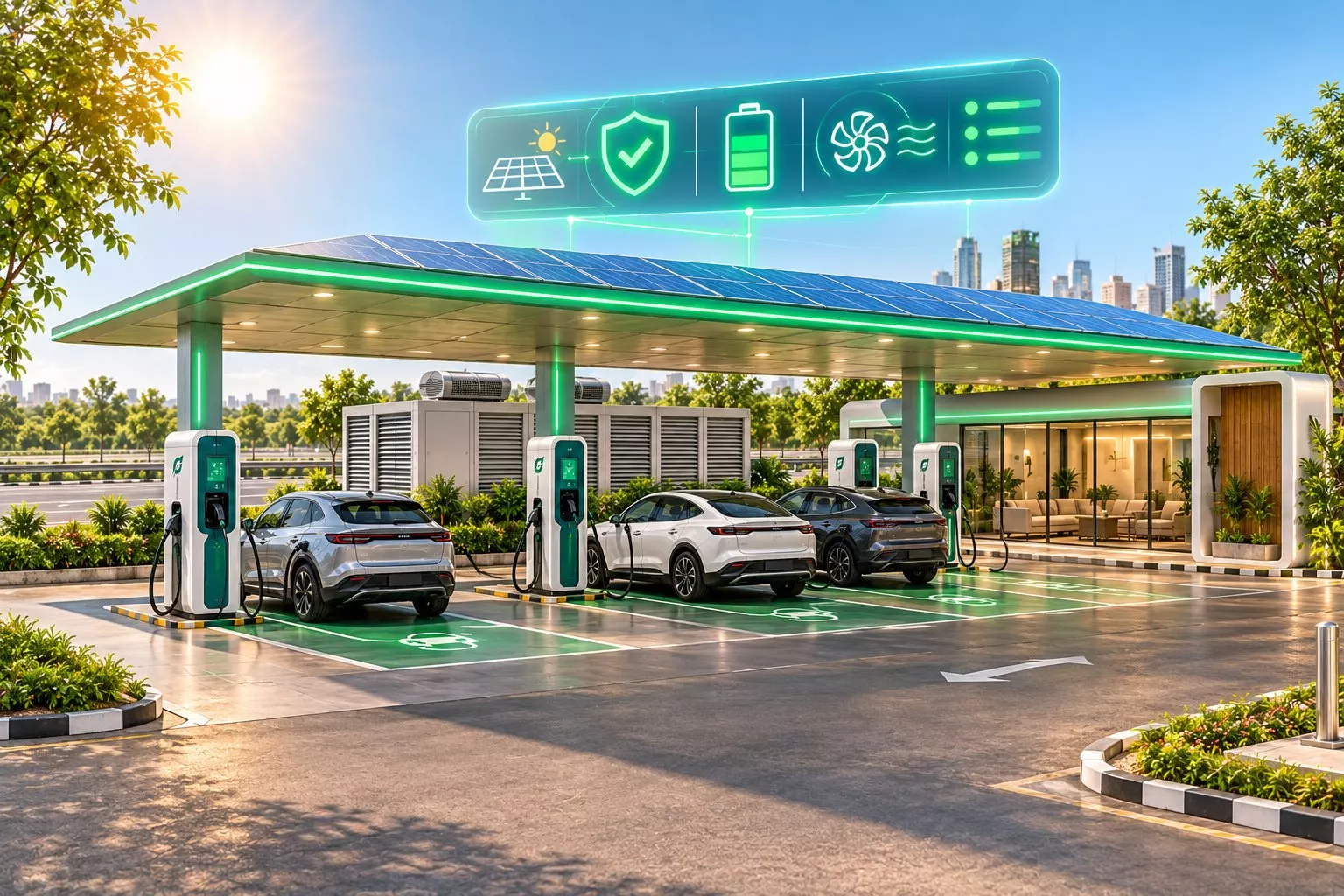
A well-designed canopy can reduce direct solar exposure to vehicles, charger housings and people using the station. Covered bays can make cables and payment interactions more comfortable. Solar panels may be incorporated into canopy designs, but solar generation does not replace proper ventilation or thermal protection.
Benefits of Heat-Conscious Charging Hub Design
- Reduce direct solar heating on exposed equipment surfaces.
- Improve driver comfort during charging stops.
- Support weather protection while preserving equipment clearances.
- Create opportunities for solar generation where technically feasible.
- Keep maintenance and emergency access unobstructed.
How Smart Charging Management Helps During Extreme Summer Heat
A connected Charge Station Management System (CSMS) can help operators monitor availability, charging sessions and reported equipment faults. Depending on supported charger telemetry, it can assist with diagnostics, service prioritization and load management. Smart software does not replace charger hardware thermal safeguards.
EarthtronEV provides connected EV charging solutions and charging management technology. Learn more about its Charge Station Management System.
Summer Charging Checklist for EV Owners
- Check the vehicle dashboard for battery or charging warnings.
- Select a compatible charger that appears properly maintained.
- Inspect the plug and cable externally for visible damage.
- Prefer shade or suitable ventilation where practical.
- Allow extra time if fast-charging power is reduced.
- Follow manufacturer charging and State of Charge guidance.
- Avoid unsuitable adapters and extension cables.
- Do not override charger fault shutdowns.
- Keep charging bays and emergency access clear.
- Report smoke, unusual smells, sparking or repeated failures.
Planning EV Charging Infrastructure for India’s Climate
Commercial charging sites should be designed around local heat, dust, electricity capacity and expected utilization. Suitable equipment ratings, airflow, protection, canopies and routine maintenance matter for long-term reliability. These factors should be included during site selection and commissioning, not treated only after a problem occurs.
EarthtronEV offers EV charging infrastructure and a Franchise-Owned, Company-Operated (FOCO) charging franchise model. See the EV charging station franchise in India page for information on the business model and operating arrangements.
The Future of Heat-Resilient EV Charging Infrastructure in India
Improved battery thermal systems, smarter charger controls, thoughtful canopy designs and connected maintenance systems may make EV charging networks more resilient to heat. Solar and energy storage can play a supporting role when correctly engineered. Long-term success depends on validated technology, equipment standards, preventive maintenance and responsible operation.
Conclusion
Extreme Indian summers can increase EV cooling demand, affect range and sometimes reduce charging speed. Modern vehicles and charging stations use electrical and thermal protections to manage these conditions. Drivers benefit from following manufacturer instructions, checking equipment condition and responding to warnings; operators benefit from temperature-appropriate infrastructure design and proactive maintenance.
The goal is not to avoid EV charging in hot weather, but to use properly designed and maintained vehicles and equipment within their operating limits. EarthtronEV supports India’s electric mobility ecosystem through charging infrastructure, management technology and operated charging locations. Learn more at EarthtronEV.