Quick Answer: Government EV charging tenders can give experienced charge point operators (CPOs) access to public land and PM E-DRIVE-supported infrastructure. Under the Ministry of Power model, government/public entities use a fixed land revenue share of ₹1 per kWh, while public land offered to private entities through bidding uses ₹1 per kWh as the floor price. PM E-DRIVE can support 80% to 100% of upstream infrastructure costs and, in eligible location categories, 70% to 100% of charger costs. As of 1 July 2026, the Ministry of Heavy Industries had approved about ₹689 crore for deployment of 6,562 chargers across three Oil Marketing Companies and nine states. Winning a tender usually depends on exact eligibility compliance, relevant operating experience, financial strength, site due diligence and a revenue-share bid that still leaves enough margin to operate profitably.
Government tenders can provide a structured route for experienced CPOs to scale across multiple public sites, especially where land access and upstream infrastructure support are built into the project.
But these tenders are competitive and highly document-driven. A bidder can lose for a missing certificate, an experience threshold interpreted incorrectly, weak financial credentials or an unrealistic commercial bid.
The bigger risk is not only losing. It is winning a site with grid costs, utilisation or revenue-share obligations that make the project uneconomic.
This guide explains how government EV charging tenders work, how PM E-DRIVE support fits into the model, what historical Delhi tenders have required, how to evaluate an RFP, and how to prepare a competitive bid without overbidding.
Why Government EV Charging Tenders Matter in 2026
Three developments make 2026 important for public EV charging procurement in India.
- PM E-DRIVE funding has moved into implementation. The scheme allocates ₹2,000 crore for EV public charging infrastructure. As of 1 July 2026, about ₹689 crore had been approved for deployment of 6,562 chargers across three OMCs and nine states.
- Government and public-sector landowners are increasingly aggregating charging demand at transport hubs, municipal parking, fuel outlets, highways and other public locations.
- The Ministry of Power 2024 charging guidelines and PM E-DRIVE operational guidelines now provide a clearer framework for land revenue sharing, service-charge limits, subsidy categories and implementation compliance.
Official PM E-DRIVE scheme documents and updates are available on the PM E-DRIVE portal.
How Government EV Charging Tenders Work
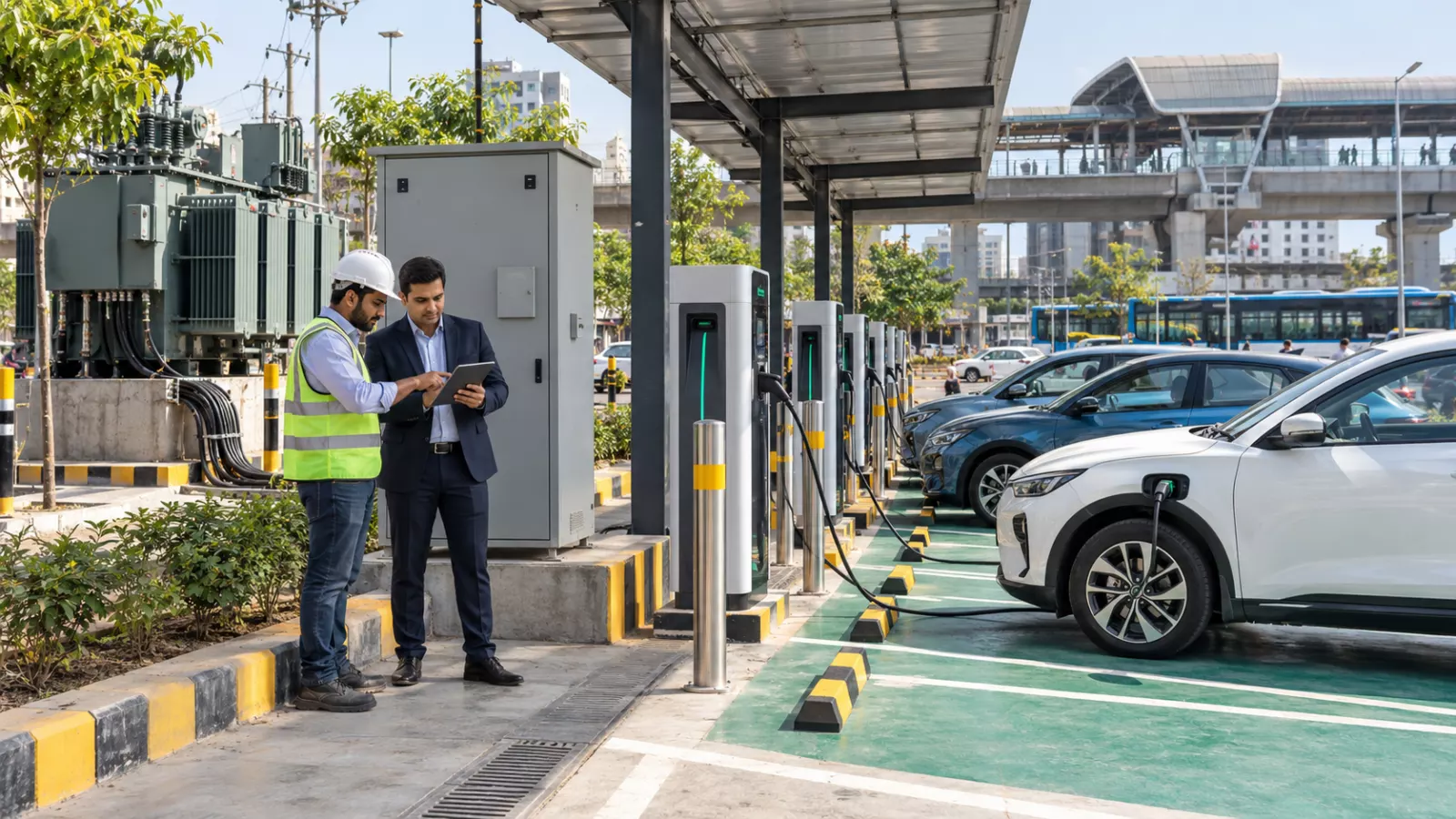
Private CPOs generally do not submit PM E-DRIVE subsidy proposals directly to the Ministry of Heavy Industries. Eligible government/public entities or their appointed nodal agencies submit proposals and may engage private CPOs through tenders, concessions or implementation partnerships.
A typical tender process looks like this:
- A government body, nodal agency, municipal authority, transport body, DISCOM, PSU or other public entity identifies charging sites.
- The agency issues an RFP or tender inviting qualified CPOs to install, operate and maintain charging infrastructure.
- Bidders submit technical credentials, financial documents, charger compliance details and a commercial offer.
- The evaluation may consider experience, net worth, technical compliance, project plan, service charge or revenue share, depending on the RFP.
- The selected bidder signs the concession or implementation agreement, completes electrical/civil work and commissions the chargers within the tender timeline.
- PM E-DRIVE subsidy disbursement, where applicable, follows the scheme’s implementation, documentation, commissioning and compliance requirements.
Who Receives the PM E-DRIVE Subsidy?
PM E-DRIVE EVPCS proposals are submitted by eligible government/public entities, including central ministries, CPSEs/autonomous bodies, state or UT governments and their eligible public-sector agencies. Private CPOs typically participate through implementation arrangements or tenders floated by these entities.
Government-Land Revenue-Sharing Model
Under the Ministry of Power 2024 framework, the model treatment differs by the type of entity receiving public land:
| Land / Entity Model | Revenue-Sharing Treatment |
| Government/public entity using government land | Model fixed revenue share of ₹1 per kWh, paid to the land-owning agency. |
| Private entity selected through bidding for public land | ₹1 per kWh acts as the floor price; the actual bid may be higher. |
The Ministry of Power model uses a 10-year revenue-sharing framework for government land, but actual tender tenure and commercial conditions can vary. Always follow the final RFP and concession agreement.
EV Charging Service-Charge Limits
The Ministry of Power 2024 framework caps service charges for public EV charging stations, excluding GST and land cost, through 31 March 2028.
| Charger Type | Solar Hours | Non-Solar Hours |
| AC charging | ₹3/kWh | ₹4/kWh |
| DC fast charging | ₹11/kWh | ₹13/kWh |
Electricity cost and land cost are treated separately under the framework. For bidders, this makes the commercial model sensitive to the land revenue-share bid: an aggressive bid can win a site while weakening the operator’s long-term margin.
PM E-DRIVE Subsidy for EV Charging Stations
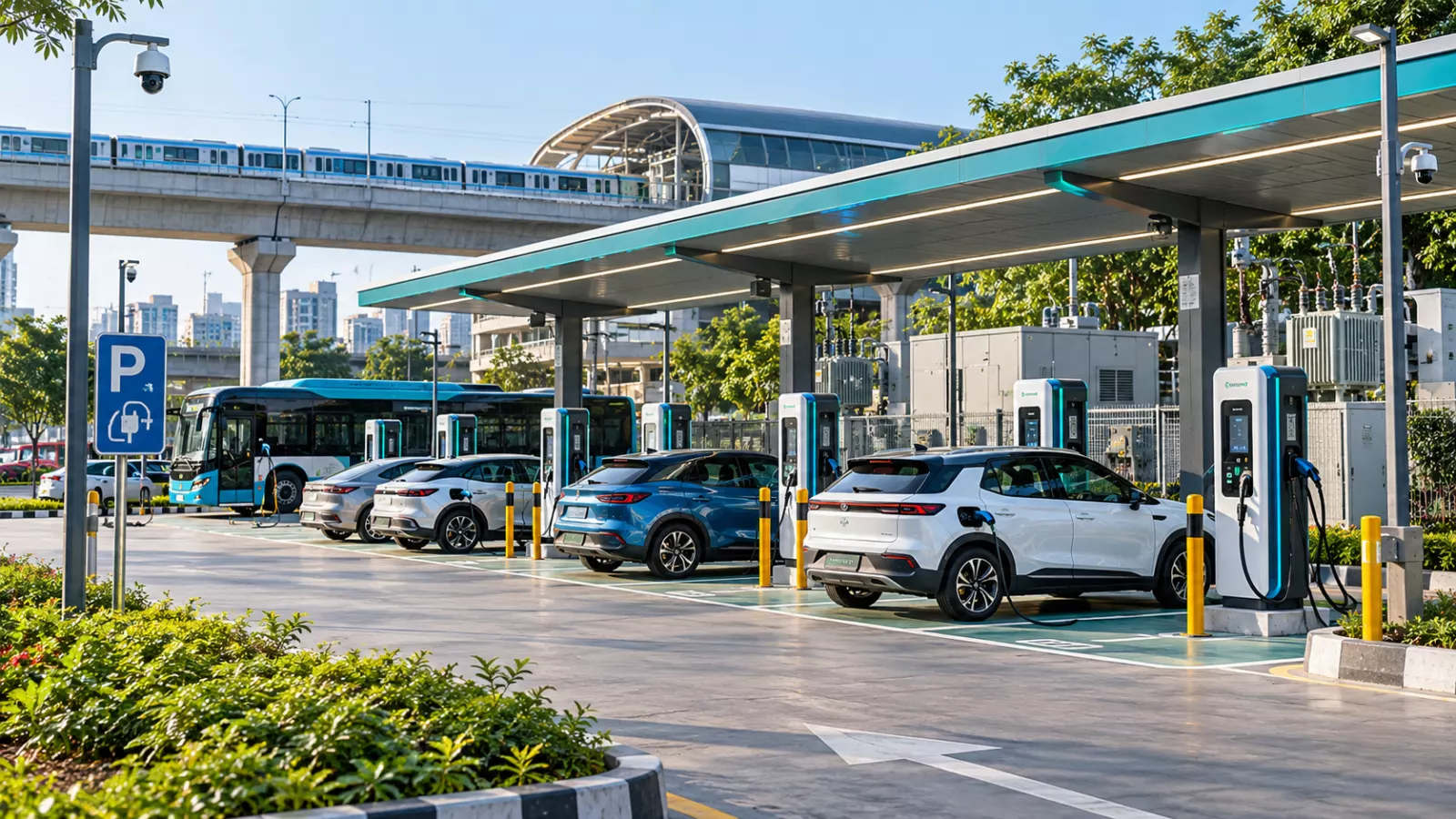
PM E-DRIVE support depends on the location category and is calculated against eligible costs and scheme benchmarks. The exact reimbursement is governed by the official operational guidelines and subsequent clarifications.
Subsidy by Location Category
| Location Category | Upstream Infrastructure | EVSE / Charger |
| Government offices, government residential complexes, hospitals and educational institutions where charging is free to the public | 100% | 100% |
| Railway stations, AAI airports, PSU fuel outlets, STU bus stations, metro stations, municipal parking, PSU ports, NHAI/state toll plazas and wayside amenities | 80% | 70% |
| City streets, malls, market complexes, highways and expressways | 80% | Not covered under this category |
| Battery swapping / battery charging stations at eligible locations | 80% | Not covered under this category |
Benchmark Costs
Benchmark costs are scheme reference values, not universal market prices. MHI/BEE has revised benchmark values over time, so bidders should use the latest version applicable to the tender date rather than older media summaries.
For the latest benchmark tables, see the official PM E-DRIVE EVPCS operational guidelines and FAQs.
Technical & National Unified Hub Requirements
- Two- and three-wheeler charging must comply with the charger standards required in the applicable scheme/tender, including relevant LEV standards where specified.
- Four-wheeler and bus charging configurations must meet the applicable CCS-II and power-rating requirements in the tender and PM E-DRIVE documentation.
- PM E-DRIVE-supported chargers are required to be onboarded onto MHI’s National Unified Hub as part of scheme implementation and subsidy compliance.
- Applicable charger type-approval, BIS/Indian Standard compliance, testing-agency certificates and PMP documents should be checked against the exact RFP.
Delhi EV Charging Tender: Current 2026 Status
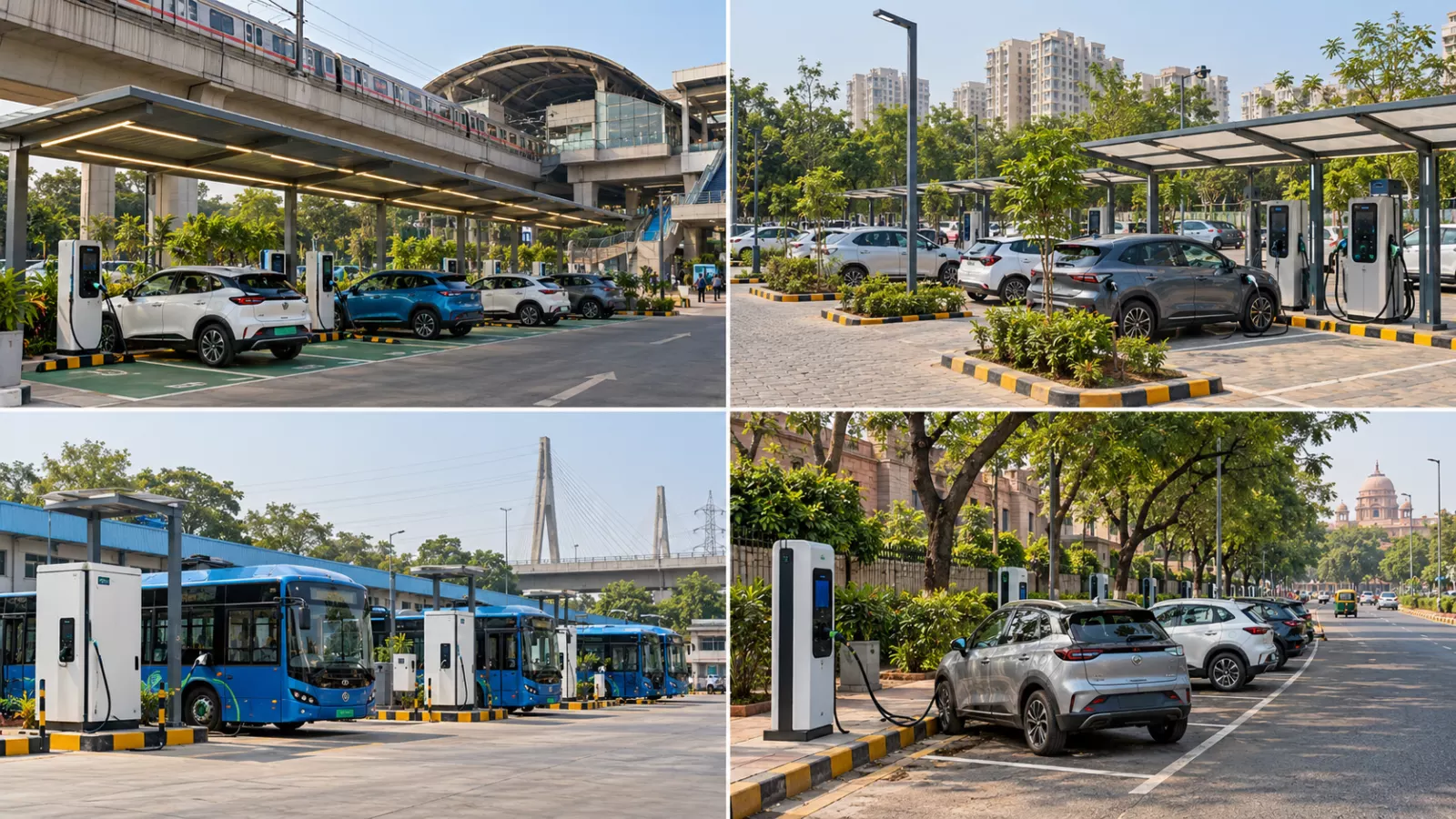
Recent reporting in October 2026 says Delhi has identified a large batch of PM E-DRIVE-supported public charging locations and plans an initial tender for a smaller group of higher-readiness sites. However, a bidder should not treat reported site counts or draft rollout plans as final tender conditions until the official RFP is published on the Delhi e-procurement portal.
As of 8 October 2026, the Delhi e-tender portal is active, but the final EV charging RFP should be verified directly by tender title/reference number before relying on site counts, eligibility rules, EMD or commercial terms.
Check the official Delhi eProcurement portal for live tender notices, corrigenda and final bid documents.
Planning rule: separate “announced/planned rollout” from “official tender published.” Only the latter should be used for final bid preparation.
Historical Tender Examples: What Past Delhi Bids Required
Past tenders are useful for understanding the type of eligibility and commercial conditions that may appear again, but they are not the eligibility rules for Delhi’s next PM E-DRIVE tender.
| Requirement | Delhi Transco Tender (2021) | REIL / NDMC-Area Tender (2024) |
| Scope | Install, operate and maintain public charging / swapping stations across site packages | Survey, supply, install, commission, operate and maintain chargers at multiple sites |
| Experience | Historical tender required prior charging / swapping operating experience across multiple locations | Historical tender used a higher operating-experience threshold, including government-premises experience |
| Financial strength | Net-worth requirement applied, with startup treatment specified in the tender | Performance security / project financial conditions applied |
| Bid security | EMD applied, with historical startup concession | Tender-specific bid/security structure; bidders had to follow the exact RFP |
| Charger requirement | As specified under then-applicable Ministry of Power framework | At least one 60kW dual-gun charger per site in the cited historical tender |
| Grid work | Bidder responsibility under the historical tender | Bidder responsibility included connection / transformer / cabling scope |
| Operating term | Tender-specific | 10-year operation in the cited historical project |
Two lessons stand out: experience thresholds can increase materially from one tender to another, and grid/civil responsibilities can transfer substantial upfront cost to the bidder. Always preserve the exact terminology used in the RFP — for example, “charging point,” “charging station,” “government premises,” and “operational experience” are not necessarily interchangeable.
What Government EV Charging Tenders Usually Ask For
- Corporate registration, PAN, GST and authorised-signatory documents.
- Audited financial statements and a net-worth certificate in the format/date required by the tender.
- Past work orders, commissioning certificates and operating-history evidence.
- Charger compliance documents, applicable standards/testing certificates and technical datasheets.
- OCPP/backend compliance and remote-monitoring capability where required.
- Bid security / EMD or other tender-specific security instruments.
- Performance bank guarantee after award where required.
- Site-wise implementation plan, electrical plan, project timeline and O&M methodology.
- SLA commitments for uptime, service response, repair time and customer support.
- Commercial bid such as service charge, revenue share or other tender-defined metric.
How to Prepare a Competitive EV Charging Tender Bid

1. Build Operating Experience
Most tenders value commissioned and operating sites more than equipment sales alone. Maintain evidence of commissioning dates, uptime, energy delivered, location count and O&M responsibility. Where allowed, a consortium or JV with an experienced CPO may help bridge a qualification gap.
2. Keep Documentation Tender-Ready
Keep audited statements, net-worth certificates, corporate documents, GST/PAN, startup recognition where relevant, past work orders, completion/commissioning certificates, charger compliance documents and backend/OCPP evidence updated before a tender opens.
3. Conduct Site Due Diligence
Visit every site you can. Check sanctioned load, transformer distance, cable route, parking layout, vehicle access, expected traffic, competing chargers and any civil constraints. A site that looks strong on a spreadsheet may be expensive to electrify.
4. Match Charger Configuration to the Site
Use the vehicle segment and expected dwell time specified in the RFP. Avoid installing high-power car chargers at a site intended mainly for light EVs, or low-power equipment at a high-throughput highway site.
5. Price Revenue Share Carefully
Model every site using realistic utilisation. A higher revenue-share bid may improve your rank but can destroy margin over a long concession. Run downside scenarios before submitting the commercial bid.
6. Plan Operations and Uptime
Build remote monitoring, preventive maintenance, spare-parts availability, field-service coverage and escalation SLAs into the bid. PM E-DRIVE subsidy disbursement is linked to prescribed implementation milestones, commissioning and compliance requirements.
7. Monitor the Right Tender Portals
Track the Central Public Procurement Portal, GeM, state e-procurement portals, PSU websites, DISCOM tender pages and transport/municipal agency sites. Set internal alerts for terms such as “EV charging,” “EVPCS,” “charge point operator,” “PCS,” “battery swapping” and “CPO”.
How to Evaluate a Tender Before You Bid
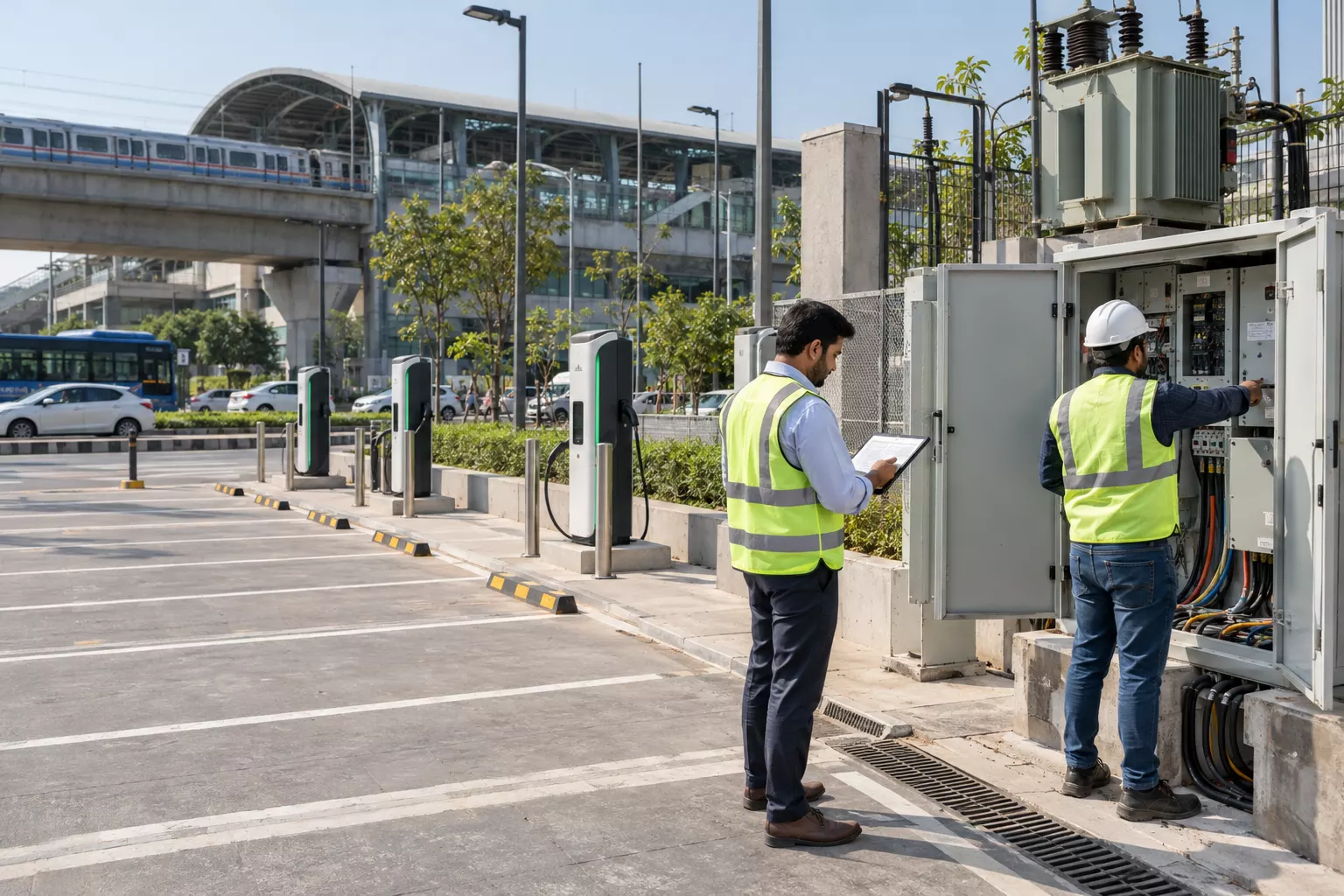
Before submitting a bid, build a site-by-site commercial checklist. At minimum, verify:
- Total sites and whether bidding is site-wise or package-wise
- Mandatory charger type, rating and number of connectors
- Existing sanctioned load and confirmed power availability
- Who pays for transformer, RMU, cables, metering and new connection
- Land tenure and concession period
- Revenue-share / service-charge bid mechanism
- Applicable service-charge ceilings
- Capex responsibility and eligible subsidy component
- Expected timing and conditions for subsidy reimbursement
- Uptime SLA and performance penalties
- EMD, performance bank guarantee and project-management fees
- Minimum operating-experience threshold
- Net-worth / turnover requirement
- Project completion deadline
- Termination and default clauses
- Asset ownership and handover obligations at concession end
A strong bid model should include a base case, low-utilisation case and grid-cost overrun case before the commercial offer is finalised.
Illustrative Tender Economics — Not a Bid Recommendation
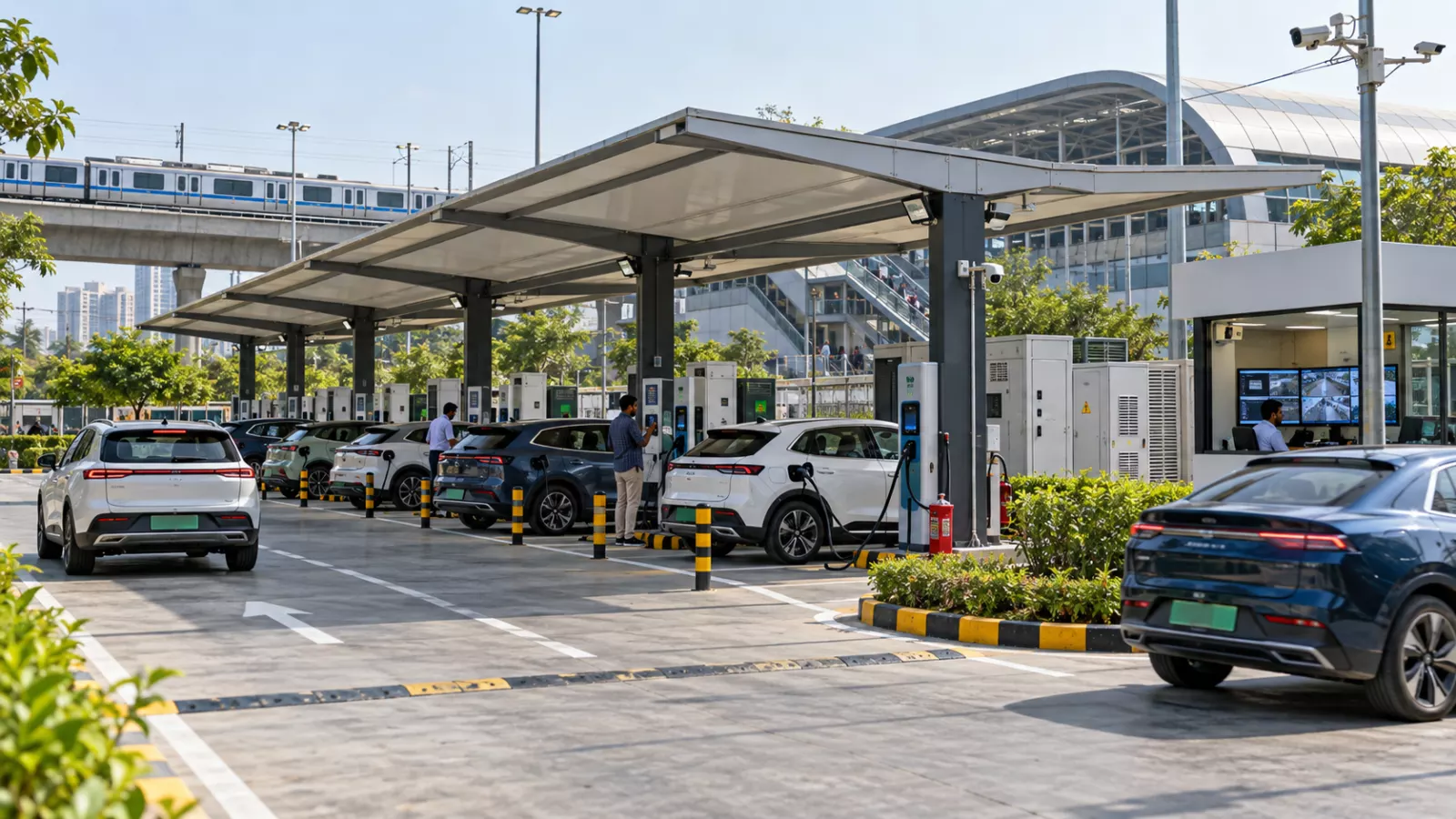
The example below is only to show how utilisation and land revenue share interact. Actual tender payment structures can differ, so always model the exact RFP and concession agreement.
Assume one 60kW DC charger at a tender site:
- Illustrative service-charge economics available before land revenue share and operating costs: ₹12/kWh
- Illustrative land-owner revenue-share bid: ₹2/kWh
- Illustrative remaining service margin before operating costs: ₹10/kWh
- 8 charging sessions per day
- 25 kWh delivered per session
- Annual energy delivered: about 73,000 kWh
At those assumptions, the illustrative margin before maintenance, software, payment fees, staff and connectivity is about ₹7.3 lakh per year. If the land revenue-share bid rises from ₹2/kWh to ₹4/kWh, the same utilisation produces about ₹5.8 lakh before those operating costs. If utilisation halves, the economics fall sharply again.
The lesson: utilisation and the revenue-share bid can matter more than headline charger capacity. Win sites you can operate profitably, not simply the largest number of sites.
Common Reasons EV Charging Bids Fail
- Missing, expired or incorrectly formatted eligibility documents.
- Not meeting experience thresholds exactly as written in the RFP.
- Counting private-site experience where government-site experience is specifically required.
- Overbidding the revenue share and creating an uneconomic concession.
- Underestimating transformer, cabling, RMU, metering or connection costs.
- Ignoring the vehicle segment and charger configuration required at the site.
- Weak implementation schedules or O&M plans.
- Not pricing downtime, payment fees, software, maintenance and field-service costs.
- Failing to track corrigenda that change dates, eligibility or technical specifications.
What If You Do Not Qualify Yet?
Smaller investors and newer CPOs may not independently meet government-tender thresholds. Possible routes include:
- Joining a consortium or joint venture where the RFP permits it.
- Partnering with an established CPO as an investor, technology provider or implementation partner.
- Building operating history on private commercial sites first.
- Using fleet, highway, petrol-pump or destination-charging projects to build measurable uptime and utilisation records.
- Exploring managed or franchise charging models for private projects, while recognising that these do not automatically satisfy government tender eligibility.
For commercial charging projects outside government tenders, EarthtronEV also offers an EV charging station franchise programme. Tender eligibility must still be assessed separately against each RFP.
FAQs
Can a private company apply for PM E-DRIVE charging subsidy directly?
Private CPOs generally do not submit EVPCS subsidy proposals directly to MHI. Eligible government/public entities or their appointed nodal agencies submit proposals and can engage private CPOs for implementation through tenders or partnerships.
How much subsidy does PM E-DRIVE provide for public EV charging?
It depends on location category. Eligible government-premises projects offering free public charging can receive 100% support for eligible upstream infrastructure and EVSE. Many transport hubs, PSU fuel outlets, metro stations, municipal parking and similar sites can receive 80% upstream support and 70% EVSE support. Other categories may receive 80% upstream support only. Always use the latest official operational guidelines.
What is the revenue share for government land in EV charging tenders?
Under the Ministry of Power model, government/public entities use a ₹1/kWh revenue share. Where public land is offered to private entities through bidding, ₹1/kWh is the floor price and the winning bid may be higher.
How many PM E-DRIVE chargers had been approved by July 2026?
The Ministry of Heavy Industries reported that as of 1 July 2026, about ₹689 crore had been approved for deployment of 6,562 chargers across three Oil Marketing Companies and nine states.
How many sites will Delhi tender for EV charging?
Recent reporting has described a large Delhi rollout and an initial group of higher-readiness sites, but bidders should rely only on the final RFP published on the Delhi eProcurement portal for the official site count, package structure and conditions.
What experience do I need to bid for an EV charging tender?
There is no universal threshold. Historical Delhi tenders have used different minimum operating-experience requirements. The exact definition of qualifying experience in the current RFP controls.
What is the EMD for an EV charging tender?
It varies by tender. Some historical tenders required site-wise EMD, while others used different security structures. Check the bid data sheet and corrigenda for the current amount and exemptions.
How long do government EV charging concessions last?
The Ministry of Power government-land model uses a 10-year framework, but actual concession tenure is tender-specific.
Do I need a licence to run a public EV charging station?
Setting up and operating public EV charging is a de-licensed activity under India’s electricity framework, subject to applicable technical, safety, electricity and local requirements.
Conclusion
Government EV charging tenders can be attractive because they combine public locations, structured procurement and, in eligible cases, PM E-DRIVE infrastructure support.
But the winning strategy is not to bid the highest revenue share or promise the fastest rollout. The stronger strategy is to qualify cleanly, understand every site, price grid and operating costs accurately, and submit a commercial offer that remains viable under realistic utilisation.
Use official scheme documents for subsidy rules, the live RFP for eligibility and commercial conditions, and site-level due diligence for the financial model. Historical tenders are useful references, but they are not substitutes for the current bid document.
For Delhi specifically, treat reported rollout numbers as planning information until the official tender and corrigenda are published on the Delhi eProcurement portal.
Sources & References
- Ministry of Heavy Industries — PM E-DRIVE EVPCS Operational Guidelines and FAQs
- Press Information Bureau / Ministry of Heavy Industries — PM E-DRIVE status, 28 July 2026
- Ministry of Power — Guidelines for Installation and Operation of Electric Vehicle Charging Infrastructure 2024
- Delhi eProcurement Portal — live tenders and corrigenda
- Switch Delhi — Charging Infrastructure overview
- EarthtronEV — EV Charging Station Franchise Partner