India’s electric vehicle ecosystem is expanding, creating opportunities for businesses investing in public charging stations, commercial charging infrastructure and EV charging station franchises. Before starting a charging business, understanding Goods and Services Tax (GST) is essential.
What is the GST rate on EV charging in India? The answer depends on what is supplied. Qualifying EV charging equipment generally attracts 5% GST, while public EV battery charging services generally attract 18% GST. The supply of electrical energy itself is exempt from GST, but this exemption does not automatically extend to public charging services.
For businesses evaluating an EV charging station franchise, these distinctions can affect equipment costs, customer prices, input tax credit and business economics.
What Is the GST Rate on EV Charging in India?
GST treatment depends on whether the transaction involves charging equipment, a charging service or another business activity. The concessional rate on chargers does not automatically apply to related services.
| Transaction | Indicative GST | Qualification |
|---|---|---|
| Qualifying EV chargers / charging stations | 5% | Subject to correct goods classification |
| Public EV battery charging services | Generally 18% | Charging-service treatment |
| Standalone supply of electrical energy | Exempt | Not the same as a full charging service |
| Separately contracted installation services | Generally 18% | Depends on classification |
| Charging management software services | Generally 18% | Depends on supply structure |
| Franchise management / operating services | Generally 18% | Contract-specific classification |
| Property leasing / rental | Depends | Separate tax analysis required |
These are general guidelines. Turnkey contracts, bundled supplies and franchise agreements require analysis of their actual terms.
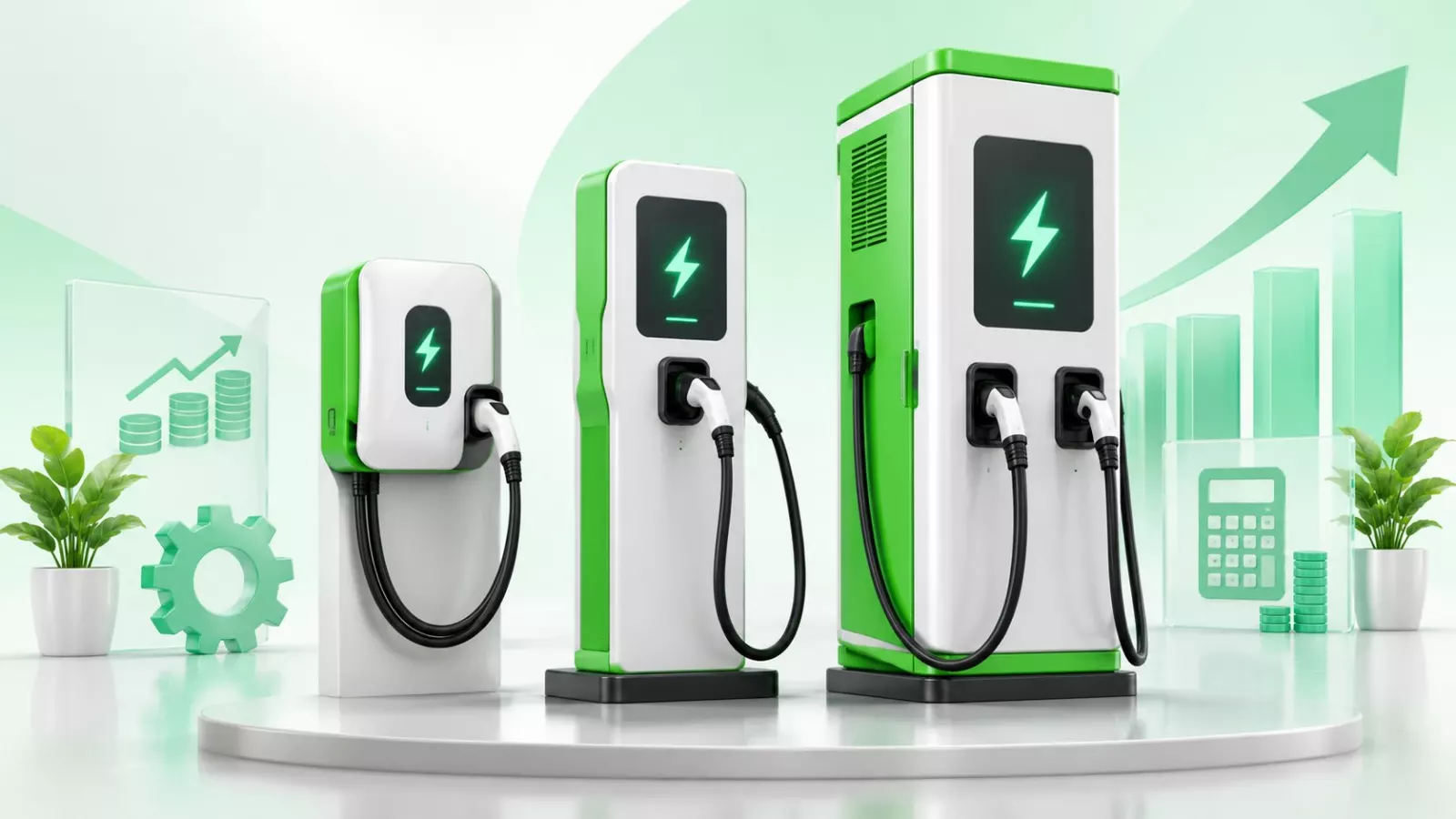
GST on EV Chargers and Charging Stations: Why Is It 5%?
The GST rate for qualifying EV chargers and charging stations was reduced from 18% to 5%, effective 1 August 2019, to support electric mobility. The concession covers goods correctly classified as chargers or charging stations for electrically operated vehicles. It does not necessarily cover every electrical or construction component supplied with a project.
Example: GST Calculation on an EV Charger
| Particulars | Amount |
|---|---|
| Equipment price before GST | ₹10,00,000 |
| GST at 5% | ₹50,000 |
| Total equipment invoice | ₹10,50,000 |
Installation, civil works, transformer upgrades, electrical cabling and software may need separate classification. Request a detailed breakdown when assessing EV charging station business opportunities in India.
GST on EV Charging Services: Why Is It Generally 18%?
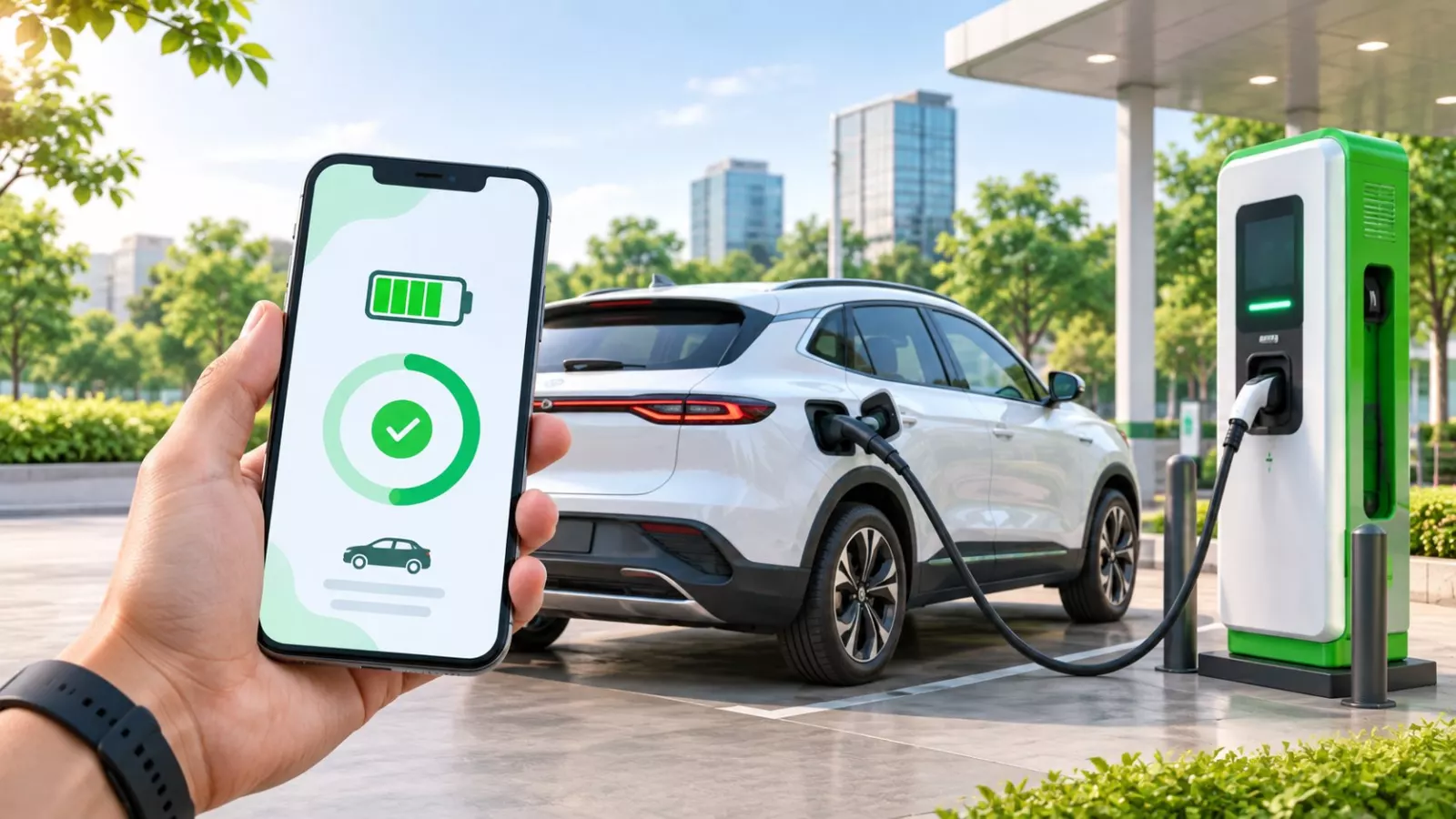
A public charging station supplies access to chargers and related facilities, session management, billing and maintenance in addition to electrical energy. A 2023 Karnataka Authority for Advance Ruling decision involving Chamundeswari Electricity Supply Corporation Limited treated EV battery charging as a taxable service at 18%.
The ruling examined charging bills with energy and service components and treated the activity as a charging service. Separately showing electricity and service charges does not, by itself, make the electricity component GST-exempt. An advance ruling is primarily binding on its applicant and the concerned tax authorities; similarly situated operators should confirm their position with a qualified adviser.
How GST Is Calculated on an EV Charging Bill
Assume a customer receives 40 kWh at a pre-tax service tariff of ₹15 per kWh. Under the 18% charging-service treatment:
| Particulars | Value |
|---|---|
| Electricity delivered | 40 kWh |
| Pre-tax tariff | ₹15/kWh |
| Taxable charging service value | ₹600 |
| GST at 18% | ₹108 |
| Total customer invoice | ₹708 |
The effective GST-inclusive price is ₹17.70 per kWh. A published rate that already includes GST requires a different calculation; operators should clearly describe tariff inclusions.
Is Electricity Used for EV Charging Exempt from GST?
Electrical energy supplied as goods is generally exempt from GST. A distribution company selling electricity to a charging facility is therefore in a different tax position from a charging operator providing an integrated charging service to a customer. Do not assume that GST exemption on electricity procurement makes public charging bills tax-free.
GST on EV Charging Station Installation and Infrastructure
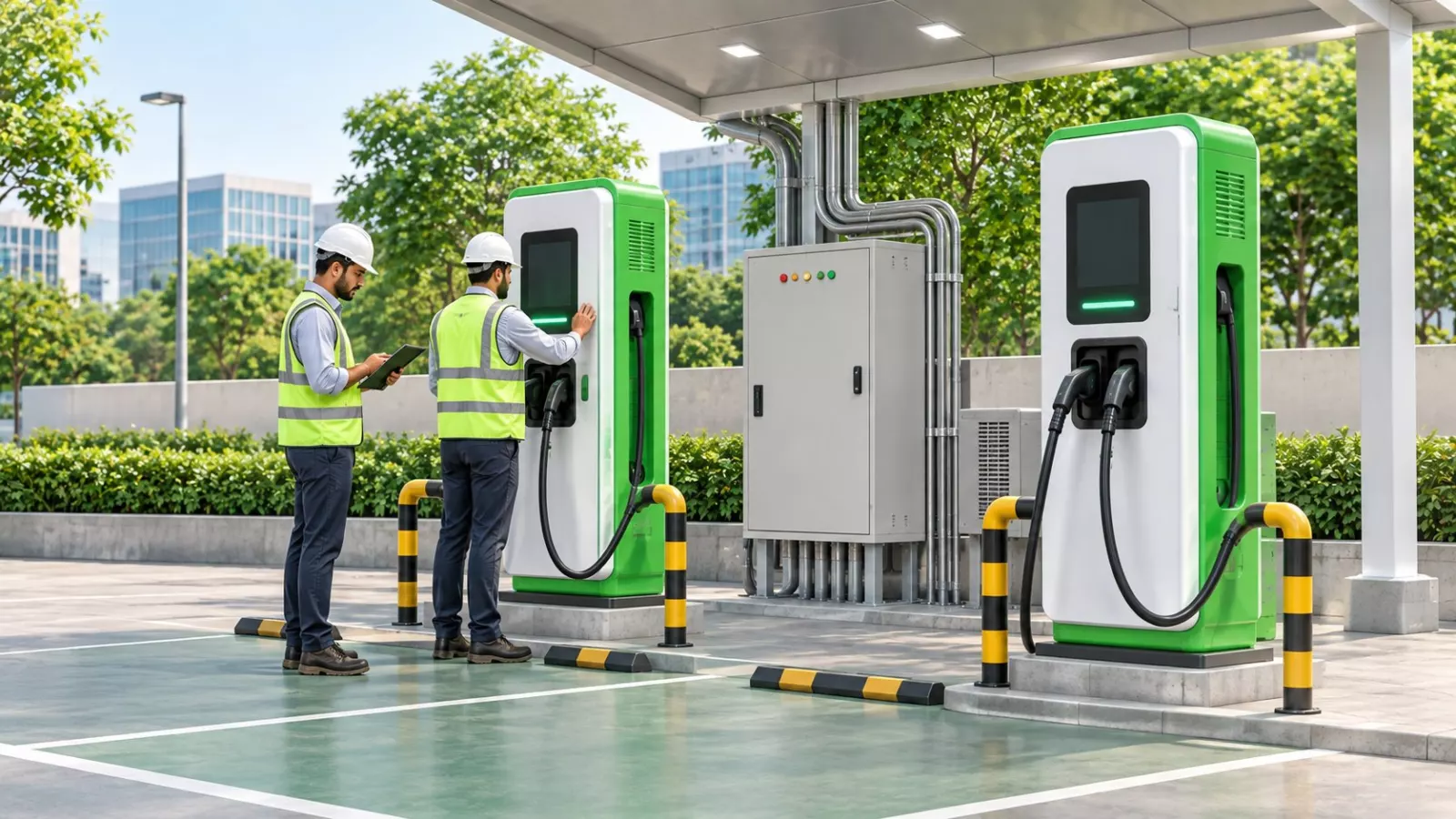
Commercial charging projects can involve DC chargers, electrical panels, cables, transformer work, foundations, site preparation, commissioning, software and safety equipment. The concessional equipment rate does not necessarily apply to installation services or separately supplied infrastructure.
Example: Charging Station Project Cost
| Component | Before GST | Assumed rate | With GST |
|---|---|---|---|
| Qualifying DC charger | ₹12,00,000 | 5% | ₹12,60,000 |
| Separately contracted installation | ₹1,00,000 | 18% | ₹1,18,000 |
| Separately supplied electrical equipment | ₹2,00,000 | 18% | ₹2,36,000 |
| Total | ₹15,00,000 | — | ₹16,14,000 |
This is an illustrative example rather than an EarthtronEV price quote. A turnkey contract could be assessed differently under composite-supply, mixed-supply or works-contract provisions.
GST on EV Charging Station Franchise Businesses
A charging franchise agreement may separate ownership of chargers, station operation, customer billing and maintenance. In a Franchise-Owned, Company-Operated (FOCO) arrangement, an investor generally owns assets while an operating company manages them under agreed commercial terms.
The entity that supplies the charging service to the driver may differ from the one that owns the equipment. The agreement should identify responsibility for customer invoices, tax collection, operations and revenue settlement. A revenue-sharing transfer does not have one automatic GST treatment: its underlying nature matters.
GST on Franchise Fees and Management Charges
Initial franchise fees, software subscriptions, royalties and recurring management services may generally attract 18% GST, subject to their actual classification. Investors should assess the contracts rather than relying on a standard assumption for all financial flows.
Key contract questions include: who owns equipment, who issues charging invoices, who collects payments, who supplies management services, and who may claim eligible input tax credits?
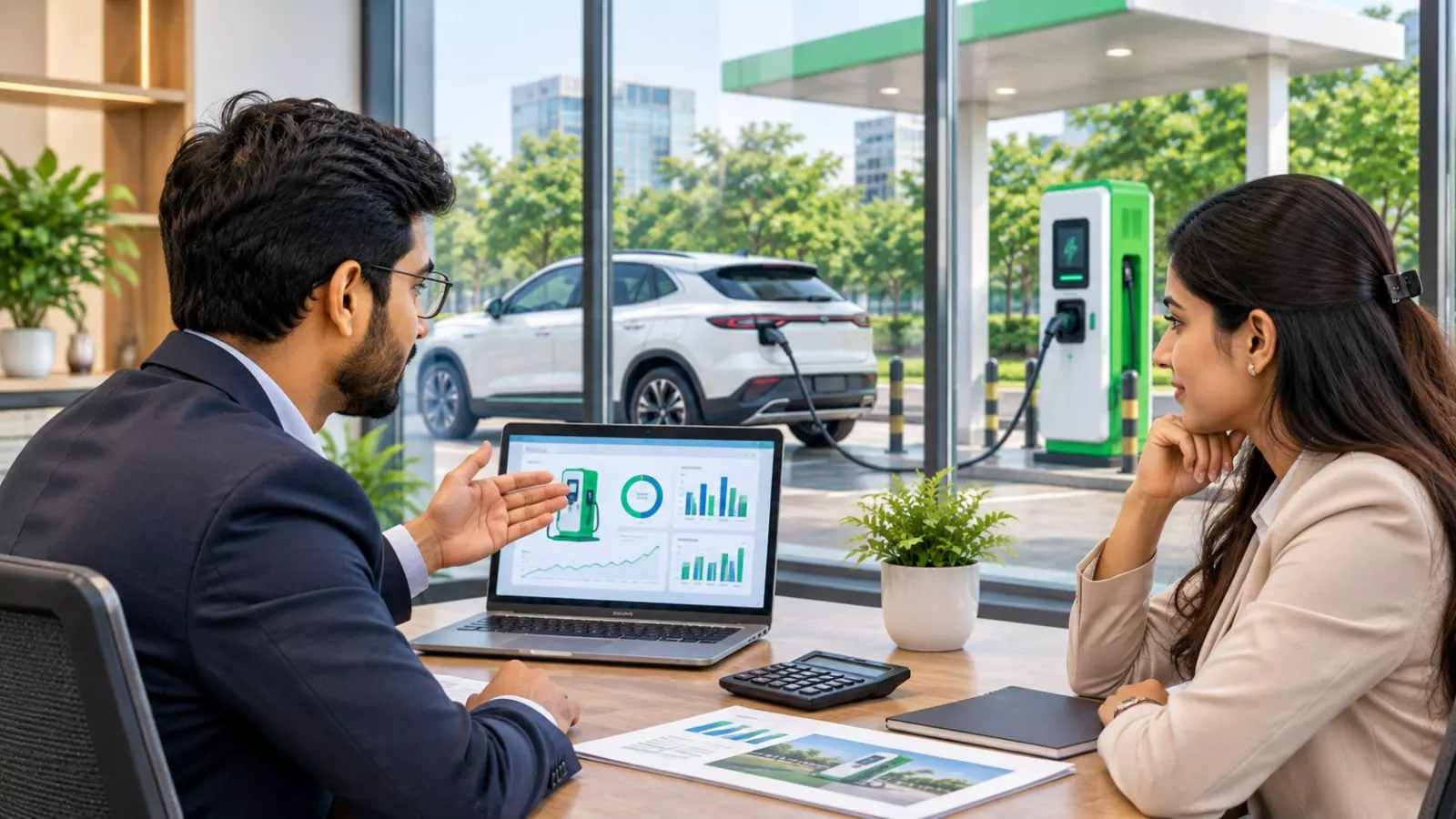
Can EV Charging Station Owners Claim Input Tax Credit?
Input Tax Credit (ITC) allows an eligible GST-registered business to offset GST paid on qualifying business inputs and input services against its output GST liability. Charging equipment, eligible software and certain operational services may qualify when statutory conditions are met.
Credits may be restricted for categories such as certain immovable-property construction, works contracts, exempt activities or personal use. Valid tax invoices, receipt of supplies, returns and other legal conditions also matter.
| ITC illustration | Amount |
|---|---|
| Output GST on charging services | ₹90,000 |
| Eligible available ITC | ₹35,000 |
| Net GST payable after adjustment | ₹55,000 |
This is only an illustration; not all GST paid during the development of a station will necessarily be recoverable.
GST Registration Requirements for EV Charging Businesses
The general registration threshold for many service suppliers is ₹20 lakh of annual aggregate turnover, with ₹10 lakh applying in certain specified states. Other statutory registration rules can apply irrespective of turnover. Aggregate turnover is generally considered across the same PAN, not station by station.
For franchise models, the registration analysis depends on which party makes taxable outward supplies rather than simply who owns the charging station.
How GST Affects EV Charging Station Profitability
GST can affect customer tariff competitiveness, capital expenditure, operational cash flow and the amount of eligible input tax credit. Charging operators must distinguish GST-inclusive prices from GST-exclusive prices.
| Tariff situation | Calculation |
|---|---|
| ₹18/kWh before 18% GST | Customer pays ₹21.24/kWh |
| ₹18/kWh inclusive of 18% GST | Taxable value approximately ₹15.25; tax approximately ₹2.75 |
Profitability also depends on the electricity tariff, station utilisation, service fees, rent, maintenance and transaction costs. For planning, read How Much Power Is Required for EV Charging?.
Recent GST Developments Affecting Electric Mobility
GST policy continues to evolve for electric mobility. An October 2026 GST Council recommendation concerning certain EV-based passenger transportation or rental services should not be mistaken for a blanket reduction in GST on standalone public charging services. Always check issued notifications and effective dates before applying a changed rate.
Common GST Mistakes EV Charging Station Owners Should Avoid
Using 5% GST for all EV charging transactions: The lower rate for qualifying equipment does not automatically apply to charging services or franchise fees.
Treating charging revenue as exempt electricity sales: The full public charging service may be taxable.
Assuming every project cost qualifies for ITC: Some expenses are blocked or restricted.
Using incorrect HSN or SAC classifications: Misclassification can cause incorrect tax calculation.
Ignoring GST when comparing charging tariffs: Always distinguish inclusive and exclusive prices.
Leaving tax responsibilities undefined in franchise contracts: Identify the supplier, invoice issuer and settlement obligations.
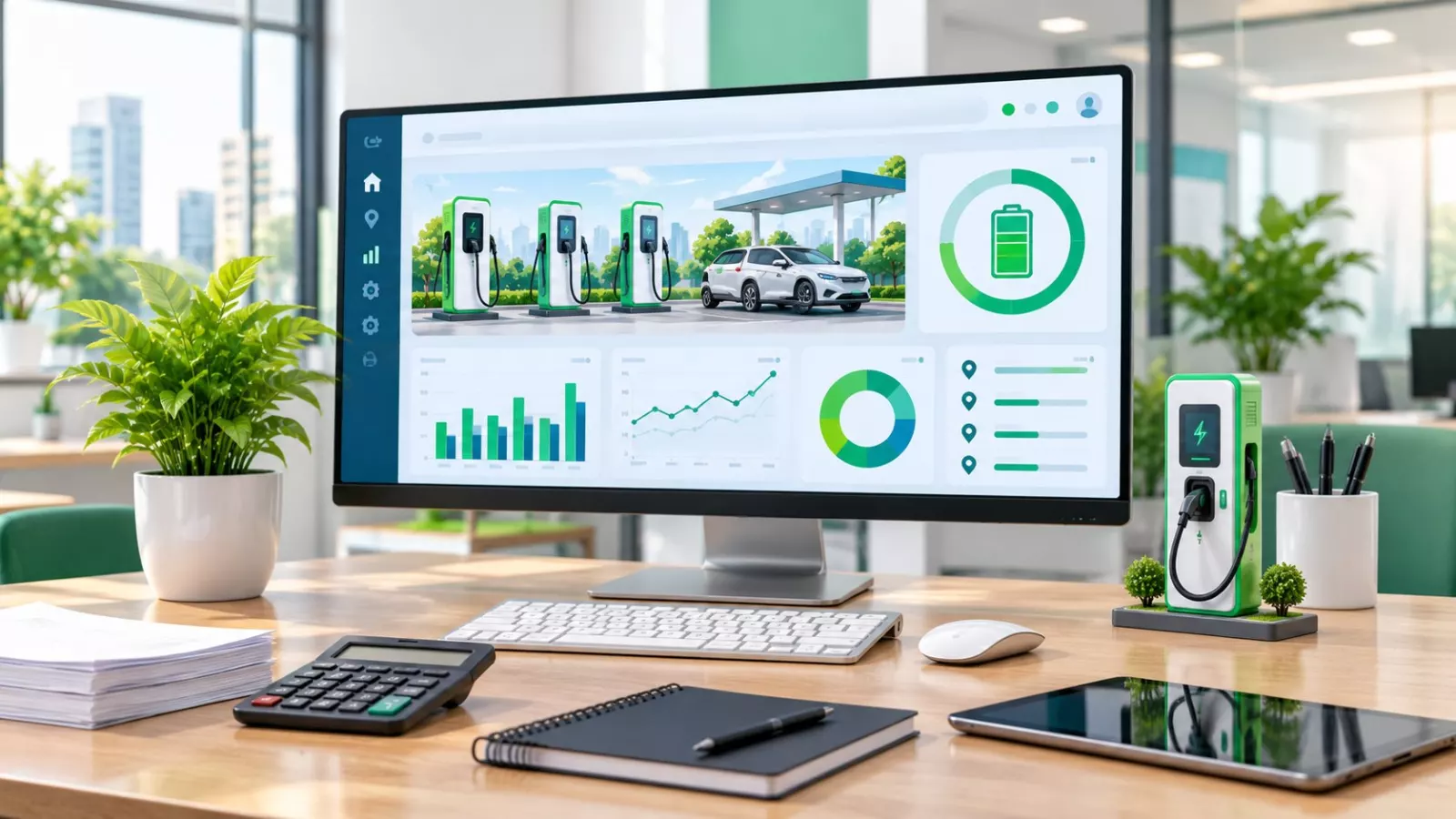
How EarthtronEV Supports EV Charging Station Investors
EarthtronEV offers EV charging infrastructure, DC fast charging solutions, station management software and franchise opportunities. Digital monitoring and usage records can support operational administration and billing.
Through its FOCO model, ownership and operation are allocated by agreement. Investors should analyse GST alongside the initial investment, infrastructure requirements, management fees and charging demand. Explore the EarthtronEV franchise programme and charging station business opportunities.
Conclusion
Understanding GST on EV charging in India is important for charging station owners, equipment suppliers and franchise investors. Qualifying chargers generally attract 5% GST, while public EV battery charging services generally attract 18%. Exempt electrical energy supplied as goods is not automatically the same as a charging service.
Installation contracts, ITC, software and franchise transactions require a closer look at the underlying supply and contract. Clear tax planning supports better costing, transparent customer pricing and compliance. Learn more about charging infrastructure at EarthtronEV.
References
Regulatory starting points: Ministry of Finance / PIB GST rate reduction for EV chargers (2019); Karnataka AAR ruling concerning EV charging (2023); CGST Act and relevant GST notifications. This article is general information, not formal tax advice.