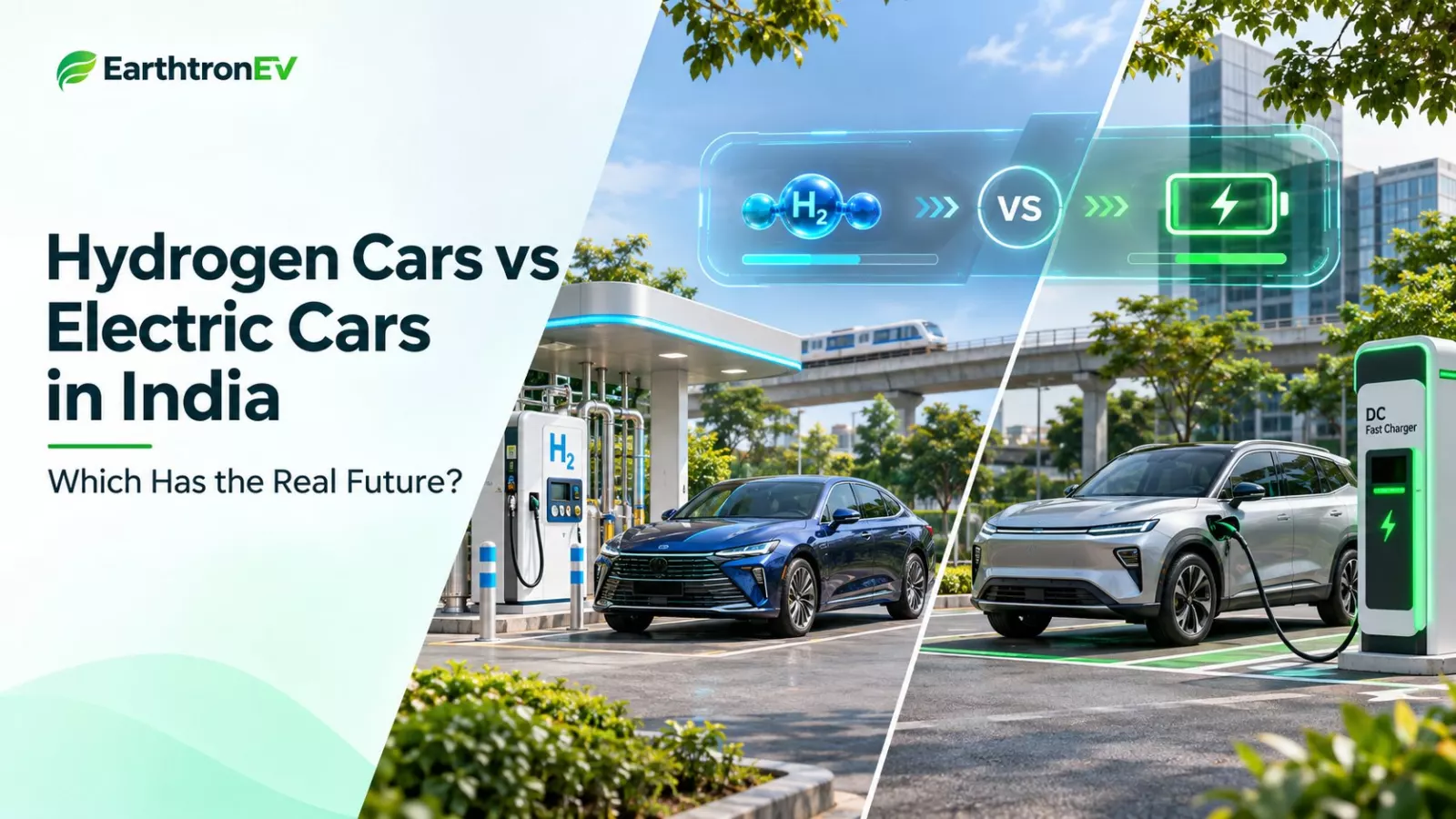
Quick Answer: For passenger cars in India, battery electric vehicles (BEVs) currently have a much stronger practical outlook. They are commercially available, can charge at home and generally make more efficient use of electricity. Hydrogen fuel-cell electric vehicles (FCEVs) can refuel quickly under suitable conditions, but public hydrogen stations and retail vehicle availability remain extremely limited in India. Hydrogen may find stronger applications in dedicated heavy-duty and industrial transport fleets.
Is India’s Automotive Future Hydrogen or Electric?
India is exploring cleaner transport technologies to reduce pollution, reliance on imported fuels and transport-related emissions. Battery electric vehicles have moved into commercial dealerships, while hydrogen vehicles are mainly being assessed through demonstrations and specialist fleet projects. Understanding their real-world prospects means looking beyond headline driving ranges to energy efficiency, infrastructure, prices and ownership practicality.
A July 2026 Ministry of Heavy Industries response reported 52,718 public EV charging stations in a BHEL-based dataset, including 16,561 stations with fast chargers for cars. In contrast, a government update described 12 awarded hydrogen mobility pilots involving 70 buses and trucks and 16 planned refuelling stations across 21 routes. Planned hydrogen stations should not be assumed to be fully operating. [Sources: Ministry of Heavy Industries, July 2026; Ministry of New and Renewable Energy, 2026.]
What Are Hydrogen Cars and How Do They Work?
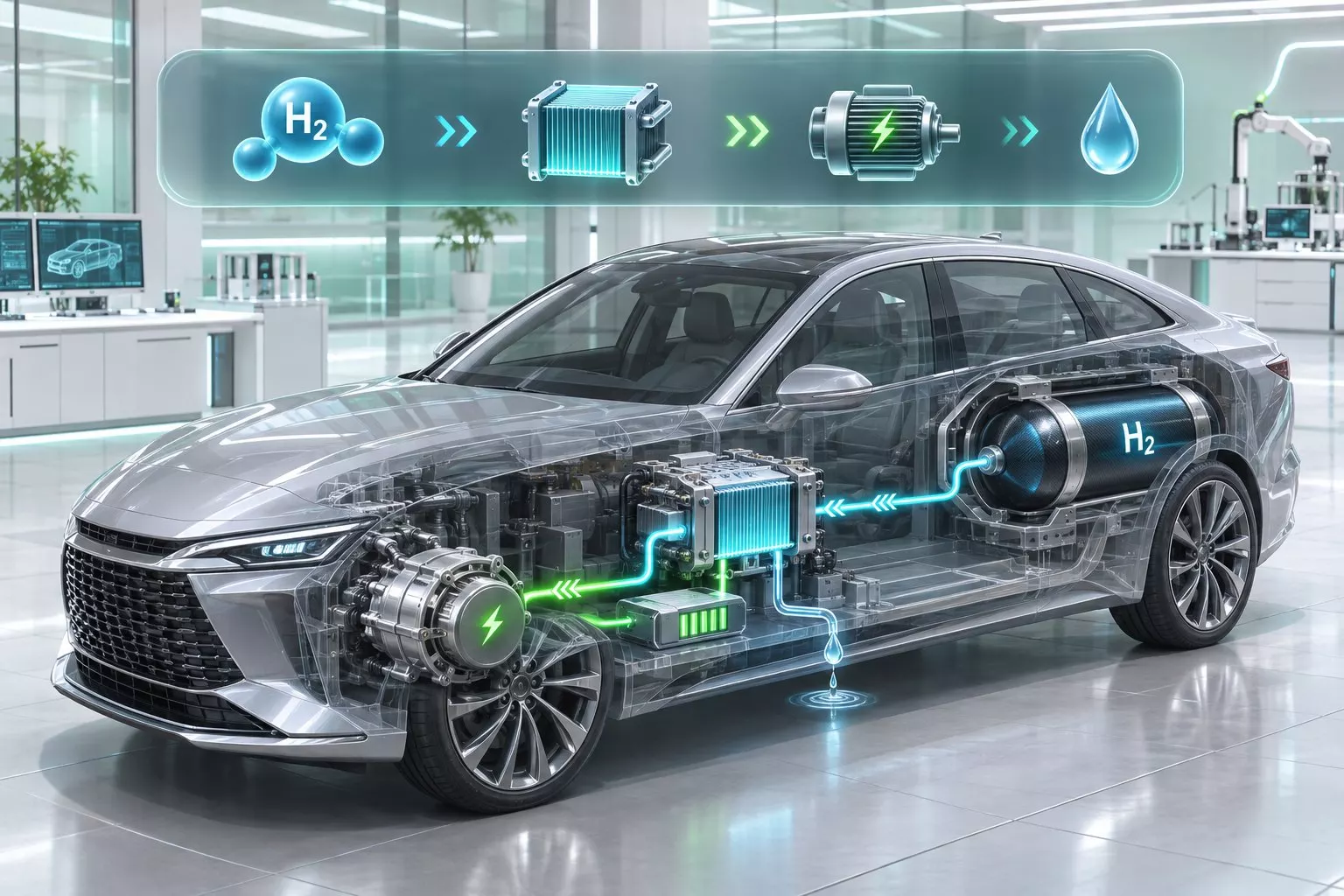
A hydrogen fuel-cell car is an electric vehicle that generates electricity onboard. Compressed hydrogen is supplied to a fuel-cell stack, where its electrochemical reaction with oxygen produces electricity, heat and water. The electricity powers an electric traction motor, with a smaller battery helping during acceleration and regenerative braking.
Main Components of a Fuel-Cell Car
- High-pressure hydrogen tanks store the vehicle’s fuel.
- A fuel-cell stack produces electrical energy from hydrogen and oxygen.
- A power electronics system supplies electricity to an electric motor.
- A smaller rechargeable battery captures regenerative-braking energy.
- Thermal and safety systems regulate the fuel cell and storage system.
The simplified reaction is 2H₂ + O₂ → 2H₂O + energy. Fuel-cell passenger cars such as the Toyota Mirai and Hyundai Nexo demonstrate the technology internationally. Indian passenger-car activity is primarily at the demonstration and pilot stage, not broad mass-market retail availability.
What Are Battery Electric Cars and How Do They Work?
A battery electric car stores electricity in a rechargeable traction battery, then supplies power through an inverter to the electric motor. The battery management system monitors temperature, voltage and battery conditions. Vehicles can use a compatible home AC charger, destination charger or DC fast charger.
India already offers a range of commercially available electric cars, including models from Tata Motors, MG Motor and Mahindra. Charging at home while parked is a major everyday convenience advantage where a suitable electrical installation is possible.
Hydrogen Cars vs Electric Cars: Key Differences
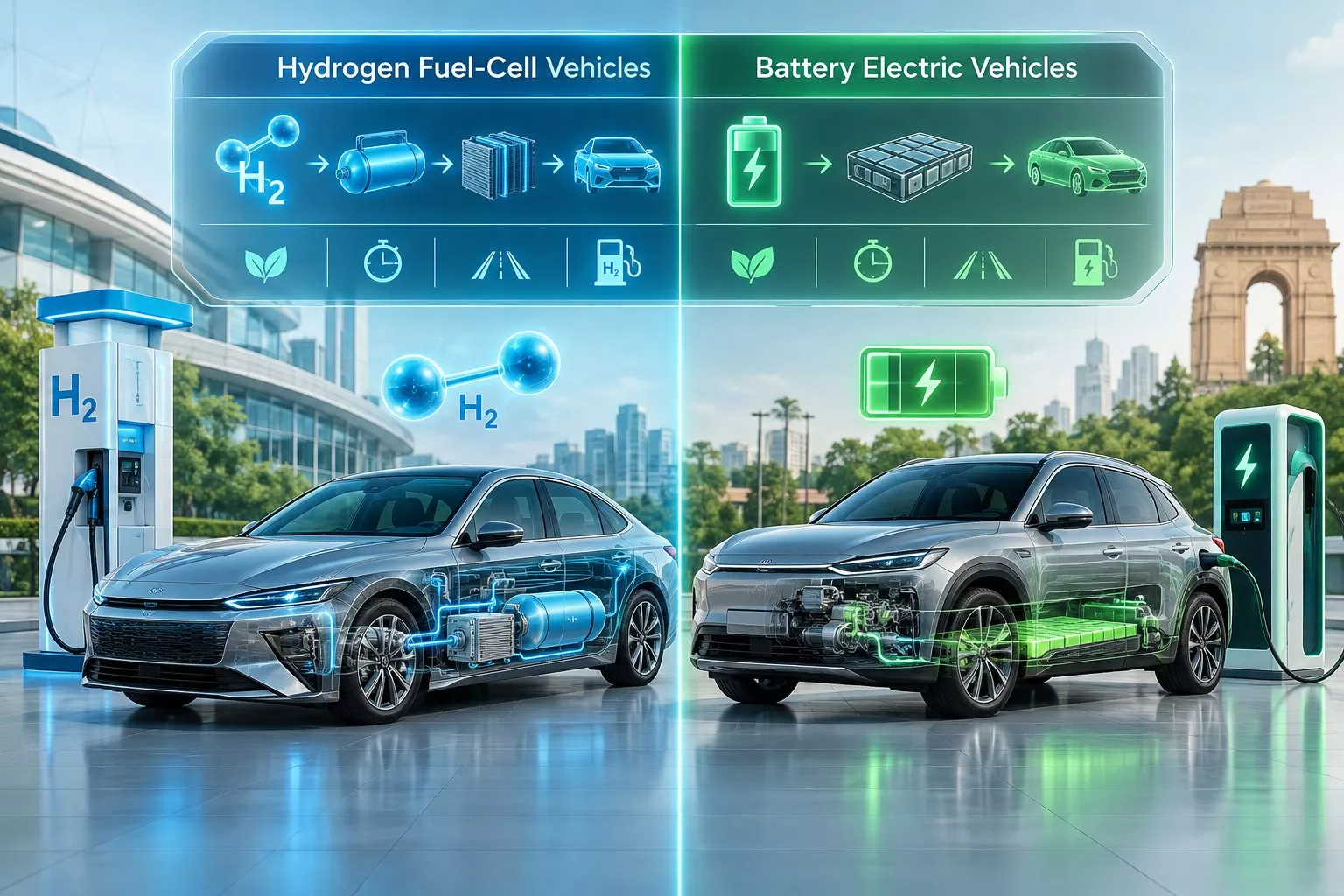
| Factor | Hydrogen fuel-cell car | Battery electric car |
|---|---|---|
| Energy source | Compressed hydrogen | Rechargeable battery |
| Powertrain | Fuel cell + electric motor | Battery + electric motor |
| Tailpipe CO₂ | None during operation | None |
| Energy conversion | More stages and losses | More direct electricity use |
| Energy replenishment | Specialized H₂ station | Home AC or public AC/DC charging |
| Passenger availability in India | Mostly pilots and demos | Commercial models available |
| Infrastructure maturity | Very limited | Expanding public network |
| Typical advantage | Quick refuelling where available | Efficiency and charging convenience |
Which Is More Energy-Efficient?
For a vehicle powered by renewable electricity, using that electricity directly in a battery electric car usually requires fewer conversion steps. Green hydrogen first requires electrolysis, then compression, storage and distribution; the vehicle fuel cell subsequently converts hydrogen back to electricity. Every stage has losses.
As a simplified illustrative comparison, 100 kWh of renewable electricity might deliver about 75 kWh of mechanical energy at the wheels through a battery vehicle versus about 30 kWh through a green-hydrogen pathway. Results vary substantially by hardware and operating conditions; these values are examples, not universal test results.
This efficiency gap matters where renewable generation, land and infrastructure investment must be shared across many energy uses.
Hydrogen Refuelling vs EV Charging: Which Is More Convenient?
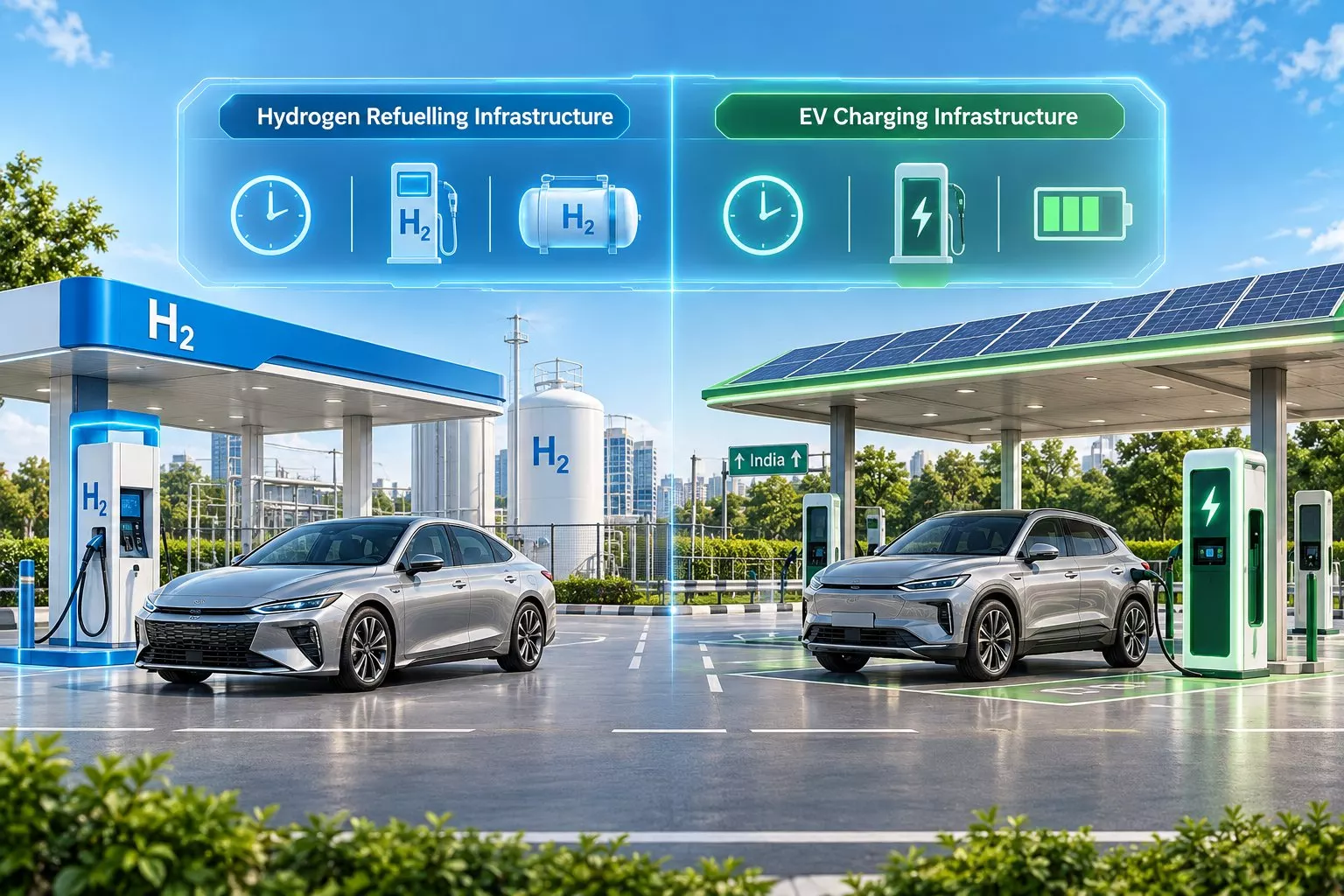
A compatible passenger fuel-cell car may refuel in roughly three to five minutes under suitable station conditions. By comparison, electric-car charging ranges from shorter high-power DC stops to several hours on AC. Yet charging often happens when the driver is already parked at home, at work or at a destination, while hydrogen refuelling requires a dedicated high-pressure station.
Illustrative EV Charging Calculation
A 60 kWh EV replenishing from 20% to 80% adds 36 kWh to its battery. At an assumed average delivery power of 60 kW, the idealized duration is 36 minutes (36 kWh ÷ 60 kW). Real sessions vary due to battery temperature, charging taper, losses and equipment capability.
Charging and Hydrogen Infrastructure in India
Public EV charging is already expanding across cities and road networks, supported by private investors and public initiatives such as PM E-DRIVE. The July 2026 public station count quoted earlier is a reported deployment figure, not proof that every site is online or available at a particular moment.
Hydrogen infrastructure is much more limited. Pilot routes and dedicated fleet facilities are developing, but no comparably broad network for ordinary hydrogen passenger cars exists. Hydrogen stations also require specialized storage, compression, supply and safety arrangements.
| Infrastructure feature | EV charging | Hydrogen refuelling |
|---|---|---|
| Household use | Possible with suitable equipment | Generally impractical |
| Supply chain | Electric grid and compatible chargers | Hydrogen production and distribution |
| Indian rollout | Commercial and expanding | Pilot-stage / dedicated fleets |
| Main limitation | Grid capacity and charger reliability | Fuel availability and high station costs |
Which Costs Less to Run in India?
Battery EV running costs depend on the electricity tariff, vehicle efficiency and charging fees. Hydrogen costs depend on the production route, transport and the retail price per kilogram; a widespread Indian retail price benchmark for passenger-car hydrogen is not established.
| Hypothetical comparison | Battery electric car | Fuel-cell hydrogen car |
|---|---|---|
| Consumption | 15 kWh per 100 km | 1 kg H₂ per 100 km |
| Assumed energy price | ₹10 per kWh | ₹400 per kg |
| Energy cost per 100 km | ₹150 | ₹400 |
| Energy cost per kilometre | ₹1.50 | ₹4.00 |
These prices and consumption figures are illustrative only, not live quotations. Public EV charging can cost more than home charging because service charges and taxes may apply. Green hydrogen costs also reflect energy-intensive production and distribution.
Which Offers Better Driving Range?
Both hydrogen and battery electric cars can offer several hundred kilometres of rated range, depending on model. Official test-cycle range often differs from real-world driving. A long hydrogen vehicle range is of limited practical value if the nearest compatible refuelling station is unavailable; a shorter-range BEV can be convenient when reliable home and public charging is available.
Are Hydrogen and Electric Cars Better for the Environment?
Neither technology emits CO₂ from its tailpipe while driving. Their full environmental impact depends on vehicle manufacture, electricity and fuel production, maintenance and end-of-life processes. Battery EV impacts depend partly on the electricity mix. Hydrogen impacts vary considerably by production pathway: grey hydrogen is typically fossil-based without carbon capture, blue hydrogen uses fossil feedstock with carbon capture, and green hydrogen uses electricity from renewable sources for electrolysis.
For renewable-electricity-powered passenger travel, direct battery electrification normally makes more efficient use of the available energy. Hydrogen may be valuable in sectors that are more difficult to electrify directly.
What Is India Doing to Develop Hydrogen Vehicles?
India approved the National Green Hydrogen Mission in January 2023, with an initial outlay of ₹19,744 crore and an ambition to reach at least 5 million metric tonnes of annual green hydrogen production capacity by 2030. Government-supported mobility pilots cover buses, trucks, refuelling infrastructure and technology evaluation. These investments support a broad hydrogen economy including industrial uses; they do not imply that hydrogen passenger cars will replace battery EVs.
Can Hydrogen Cars Replace Electric Cars in India?
Major barriers include the lack of widespread public hydrogen refuelling, limited passenger vehicle availability, higher overall energy requirements and specialized equipment costs. Hydrogen technology would also need a mature service and parts network. Meanwhile, battery EVs already benefit from commercial supply chains and the ability to charge at home.
Hydrogen may coexist with battery vehicles, but a near-term nationwide switch to hydrogen passenger cars appears unlikely under current conditions.
Where Hydrogen Vehicles Could Have a Stronger Future
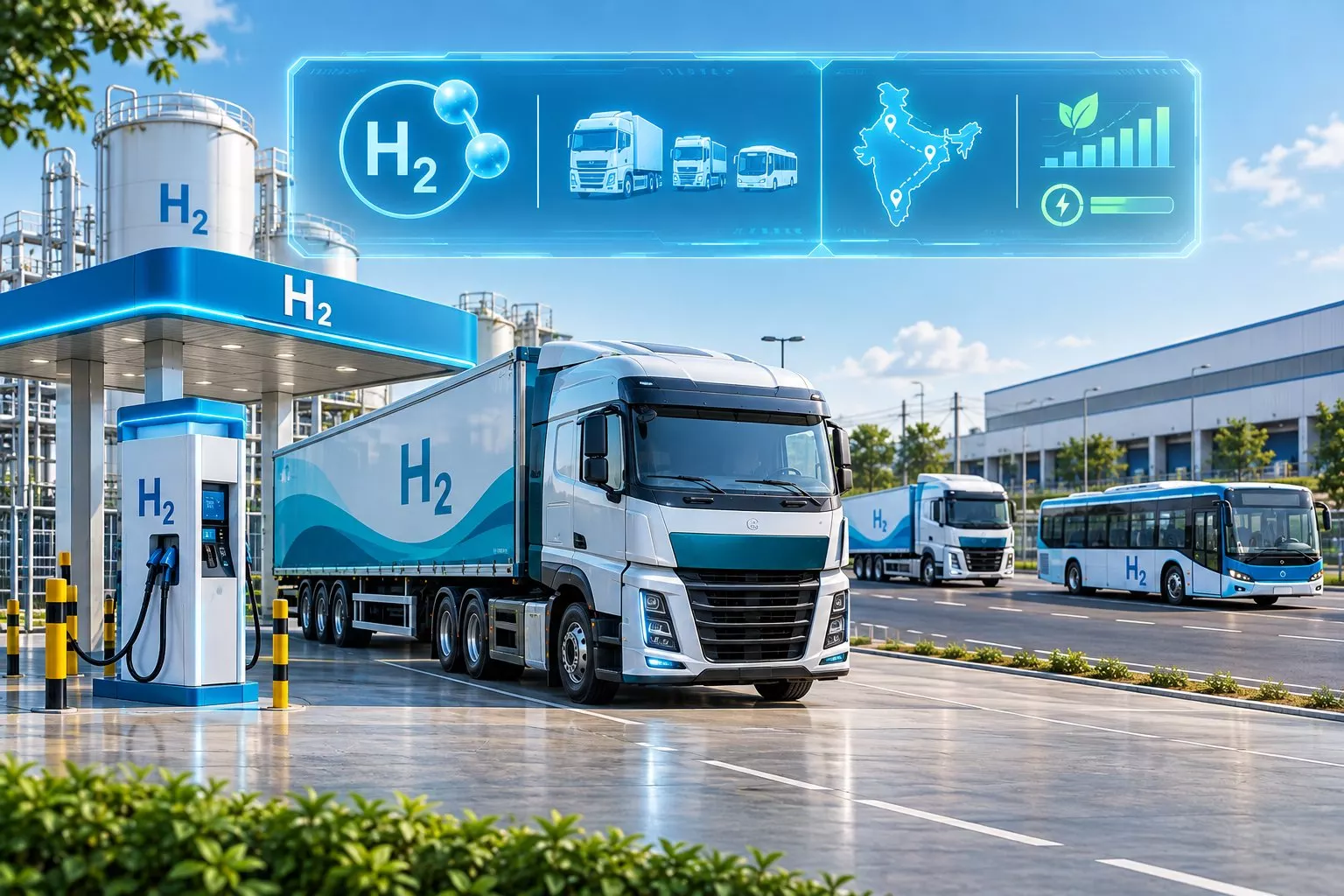
Dedicated heavy-duty fleets could offer more promising early opportunities for hydrogen, particularly where routes, demand and refuelling infrastructure are coordinated. Potential examples include certain long-haul trucks, depot-based buses, ports and industrial logistics. These uses still need case-by-case comparison with battery electric alternatives on energy consumption, payload, total cost and reliability.
For private passenger vehicles, two-wheelers, auto-rickshaws and many urban fleets, direct battery electrification currently has important advantages.
Which Technology Offers Better Business Opportunities?
EV charging businesses can serve an existing base of battery electric vehicles across highway, destination, office and fleet sites. Commercial feasibility depends on traffic, charger utilization, tariffs, grid connection costs and operations. Hydrogen station opportunities presently fit best with committed industrial buyers or captive fleets rather than speculative public retail demand.
| Business consideration | EV charging stations | Hydrogen stations |
|---|---|---|
| Demand base | Existing vehicles and fleets | Limited dedicated fleets |
| Supply | Electricity | Specialized H₂ delivery |
| Typical station design | AC/DC electrical equipment | High-pressure H₂ handling systems |
| Project assessment | Utilization, power and location | Contracted fuel demand, safety and logistics |
How EarthtronEV Supports the EV Future
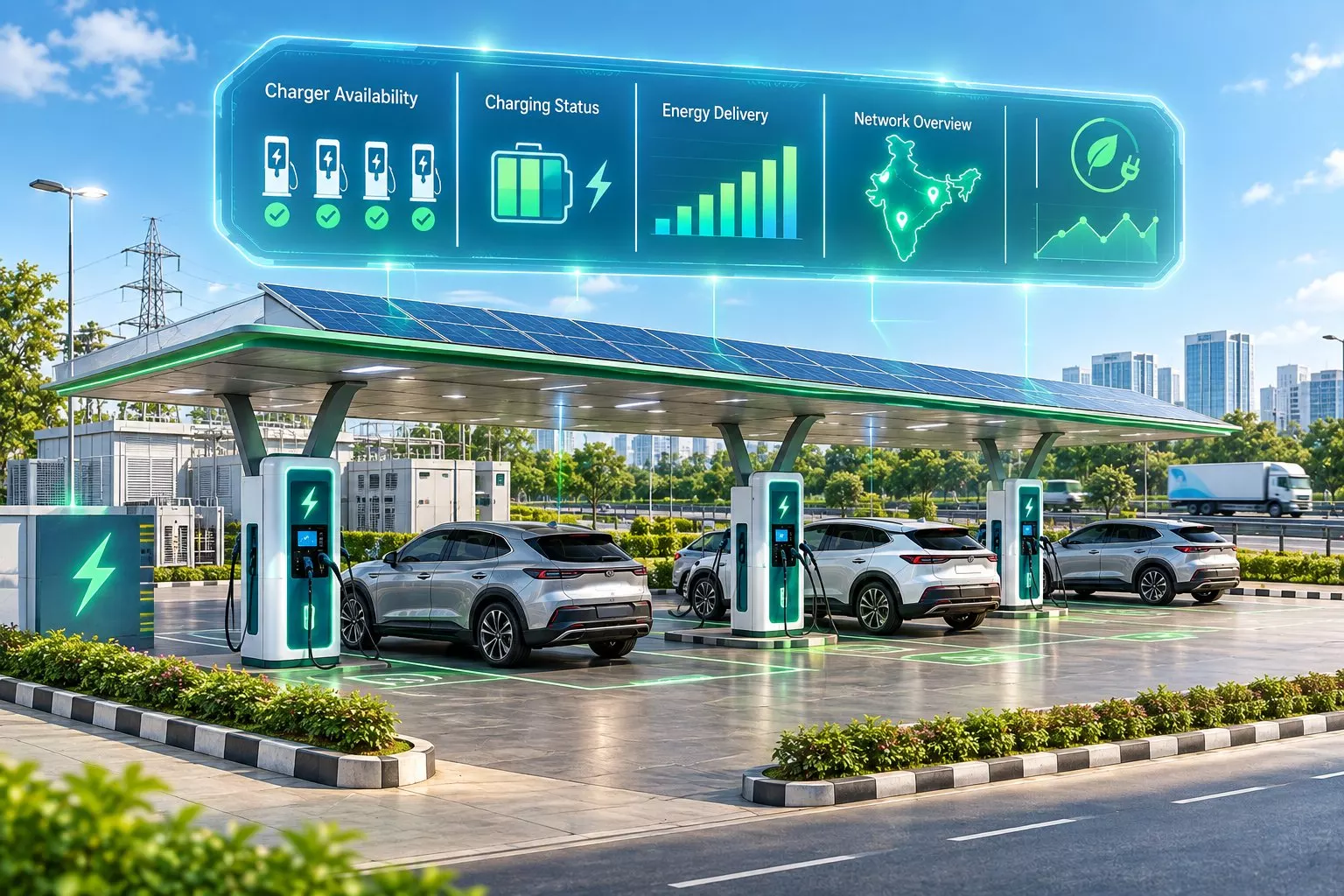
EarthtronEV supports battery electric mobility through AC and DC charging infrastructure and charging-network management solutions. Its Charge Station Management System helps operators oversee equipment availability, charging sessions and operations. The company also promotes an EV charging station franchise pathway using a Franchise-Owned, Company-Operated (FOCO) model; investment outcomes depend on site-specific demand and commercial terms.
Learn more about the EV charging station franchise in India and how much power is required for EV charging.
Hydrogen vs Electric Cars: Which Has the Real Future?
| Decision factor | Stronger current position |
|---|---|
| Electricity-to-wheel efficiency | Battery electric |
| Home energy replenishment | Battery electric |
| Indian passenger-car availability | Battery electric |
| Public infrastructure accessibility | Battery electric |
| Quick stop at a compatible dispenser | Hydrogen |
| Some dedicated heavy-duty applications | Depends on duty cycle and economics |
Battery electric passenger cars have a clearer path to large-scale Indian adoption. Hydrogen still deserves serious attention for selected industrial and heavy-duty roles, particularly when green hydrogen production and dedicated refuelling arrangements become commercially robust.
Conclusion
Hydrogen cars and battery electric cars both use electric motors, but they rely on different energy systems. Hydrogen offers fast refuelling where dedicated infrastructure exists, while battery electric vehicles deliver high electricity-use efficiency and the practicality of home and public charging. Today, battery electric cars have the stronger commercial future for most Indian passenger drivers. Hydrogen can complement them in selected difficult-to-electrify transport and industrial applications.
Reliable public and destination charging infrastructure remains essential to India’s EV transition. EarthtronEV supports that transition with charging solutions and connected network operations. Explore EarthtronEV’s EV charging infrastructure solutions for charging infrastructure and franchise information.