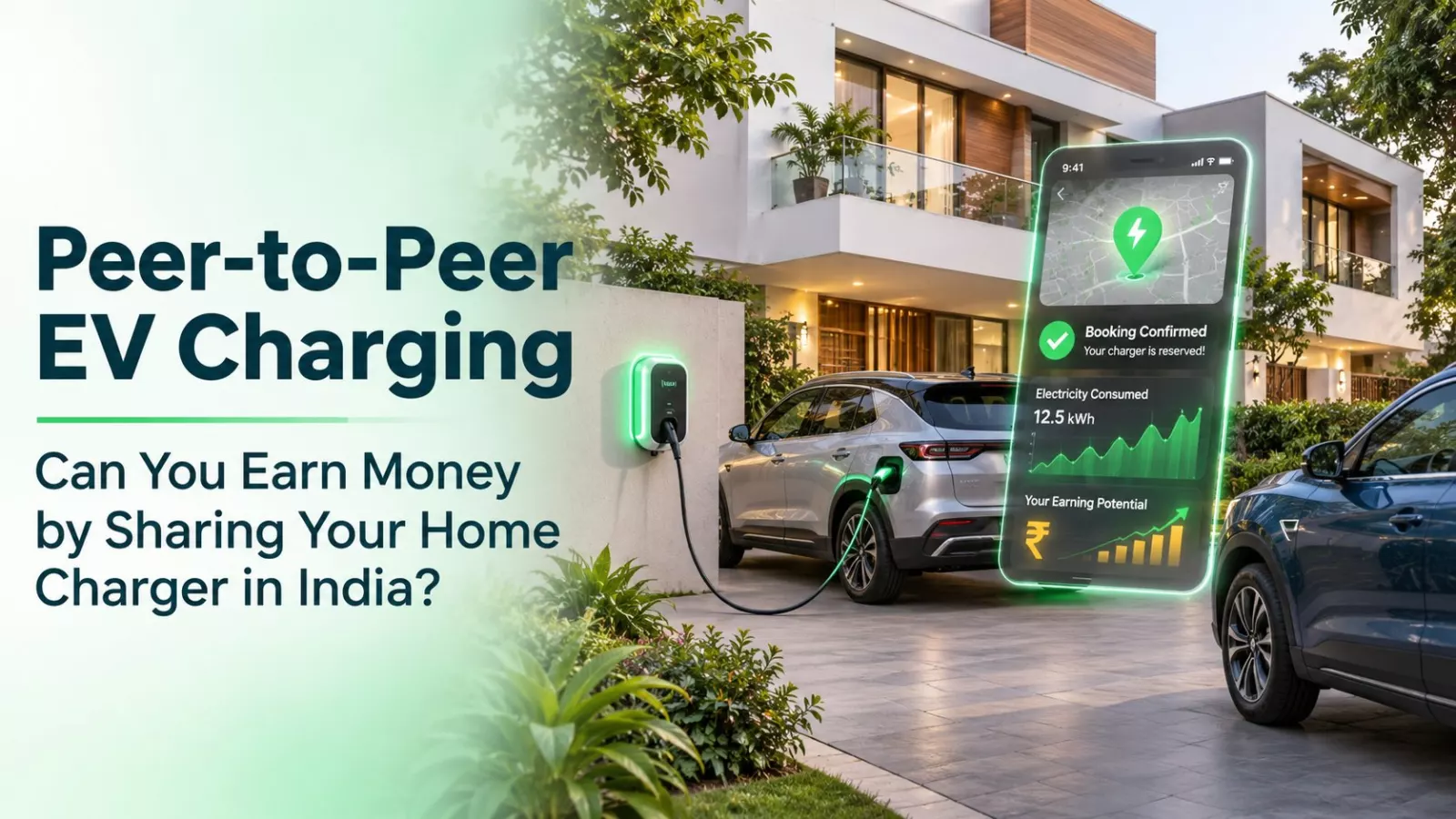
Quick Answer: Yes, sharing a home EV charger with other drivers can create a potential income opportunity in India. Peer-to-peer (P2P) charging allows private charger owners to offer access to compatible charging equipment, often with bookings and payments handled through a digital platform. However, earnings are not guaranteed. Owners must first check electricity connection terms, DISCOM requirements, property permissions, safety standards, and the costs of operating the service.
Your Home EV Charger Could Be More Than a Personal Convenience
Electric vehicles are becoming more common on Indian roads, but not every driver has convenient access to a charging point. At the same time, many chargers installed at homes and apartment parking spaces remain idle for substantial portions of the day. Peer-to-peer EV charging explores a simple idea: allow another driver to use an otherwise-unused charger, subject to suitable access and permissions.
The opportunity is attractive, but it must be examined as a practical charging service rather than an effortless source of passive income. Location, electricity rates, customer demand and regulation all influence commercial viability.
What Is Peer-to-Peer EV Charging?
Peer-to-peer EV charging is an arrangement in which a private charger owner makes an existing charging point available to other users. It may operate at a home, apartment complex, workplace or private parking site. A compatible digital platform can help with discovery, scheduling, consumption records and payment.
How P2P EV Charging Works
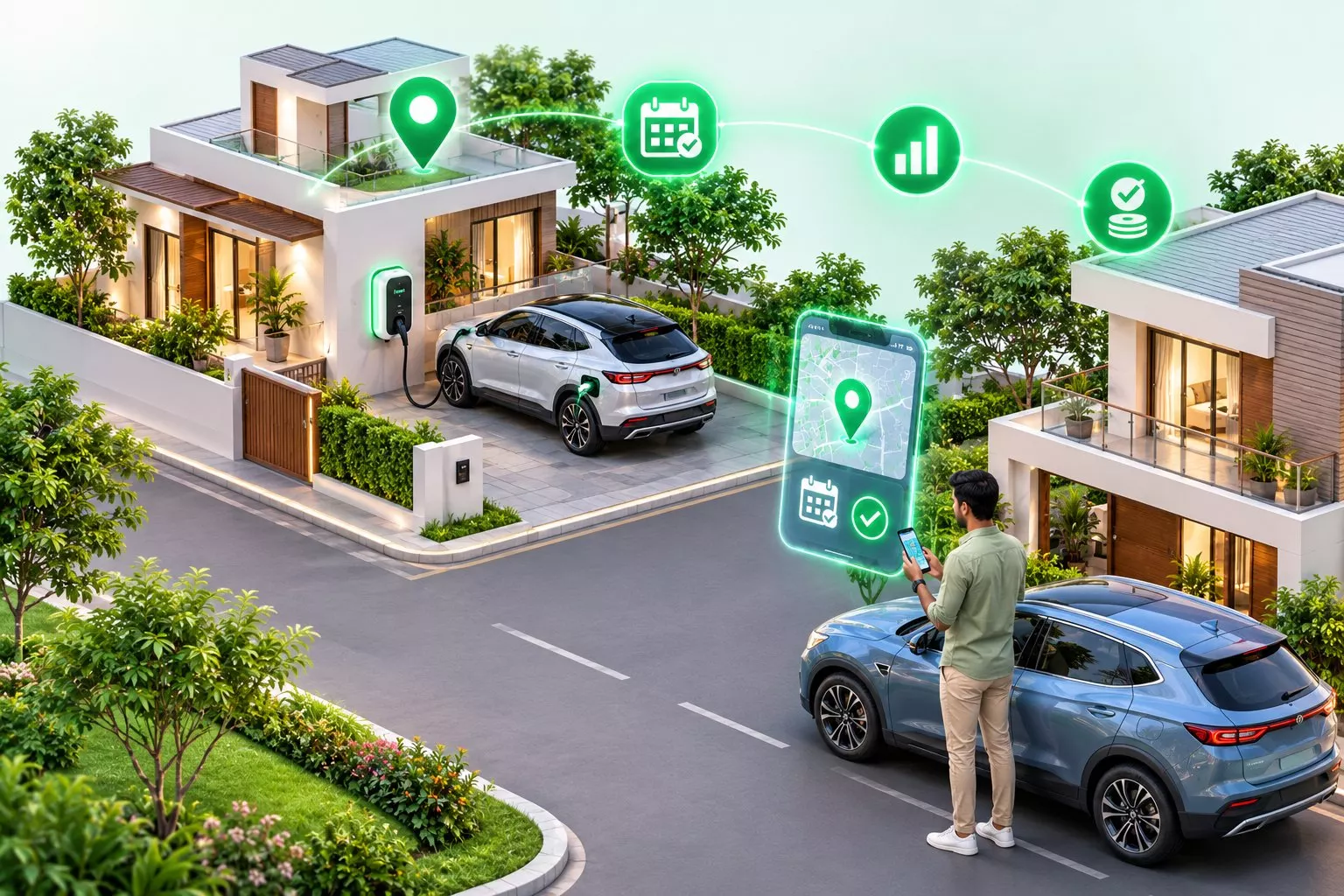
- The owner registers an eligible charging point on a participating platform.
- The owner sets times when the charger and parking space are available.
- An EV driver finds a nearby compatible charger and makes a booking.
- The driver visits the site and completes the charging session safely.
- Energy use and any approved charges are calculated and settled under agreed terms.
Why Peer-to-Peer Charging Could Grow in India
Growing EV adoption creates a need for more charging options across neighborhoods, destinations and travel corridors. Shared chargers could improve utilization of installed equipment, extend access to drivers without their own parking, and complement public charging infrastructure.
- Better use of existing equipment: idle residential chargers may serve additional EVs.
- Local convenience: suitable private parking locations may reduce the distance to a charger.
- Potentially smaller setup costs: sharing an existing charger can cost less than building a dedicated fast-charging site.
- Additional income possibility: owners might recover energy costs and earn a margin where the model is permitted.
P2P charging remains an emerging model. Customers may favor professionally operated public chargers for predictable access, fast charging and assistance.
Can You Legally Share Your Home EV Charger for Money in India?
EV charging station operation is generally treated as an unlicensed activity in India, but this must not be confused with automatic authorization to sell charging services through any residential electricity connection. The Ministry of Power’s 2024 EV Charging Infrastructure Guidelines address private parking, group housing and other charging locations. The proposed usage must still meet the terms of the power connection and other applicable rules.
Requirements to Check Before Offering Paid Charging
- Electricity supply: ask the local DISCOM whether third-party paid charging is permitted on your existing connection and whether a different meter or tariff is needed.
- Property access: obtain housing-society, landlord or property-management permission where applicable.
- Electrical protection: ensure correct earthing, wiring, protection devices, rated load and professional installation.
- Metering and billing: determine appropriate energy measurement, tariffs and invoicing practices.
- Taxes and liability: review applicable income-tax, GST and insurance implications with qualified advisers.
The lack of a separate distribution licence requirement does not remove electrical safety obligations or other local permissions. Confirm details before listing a charger for paid use.
How Much Money Can You Earn by Sharing Your Home EV Charger?
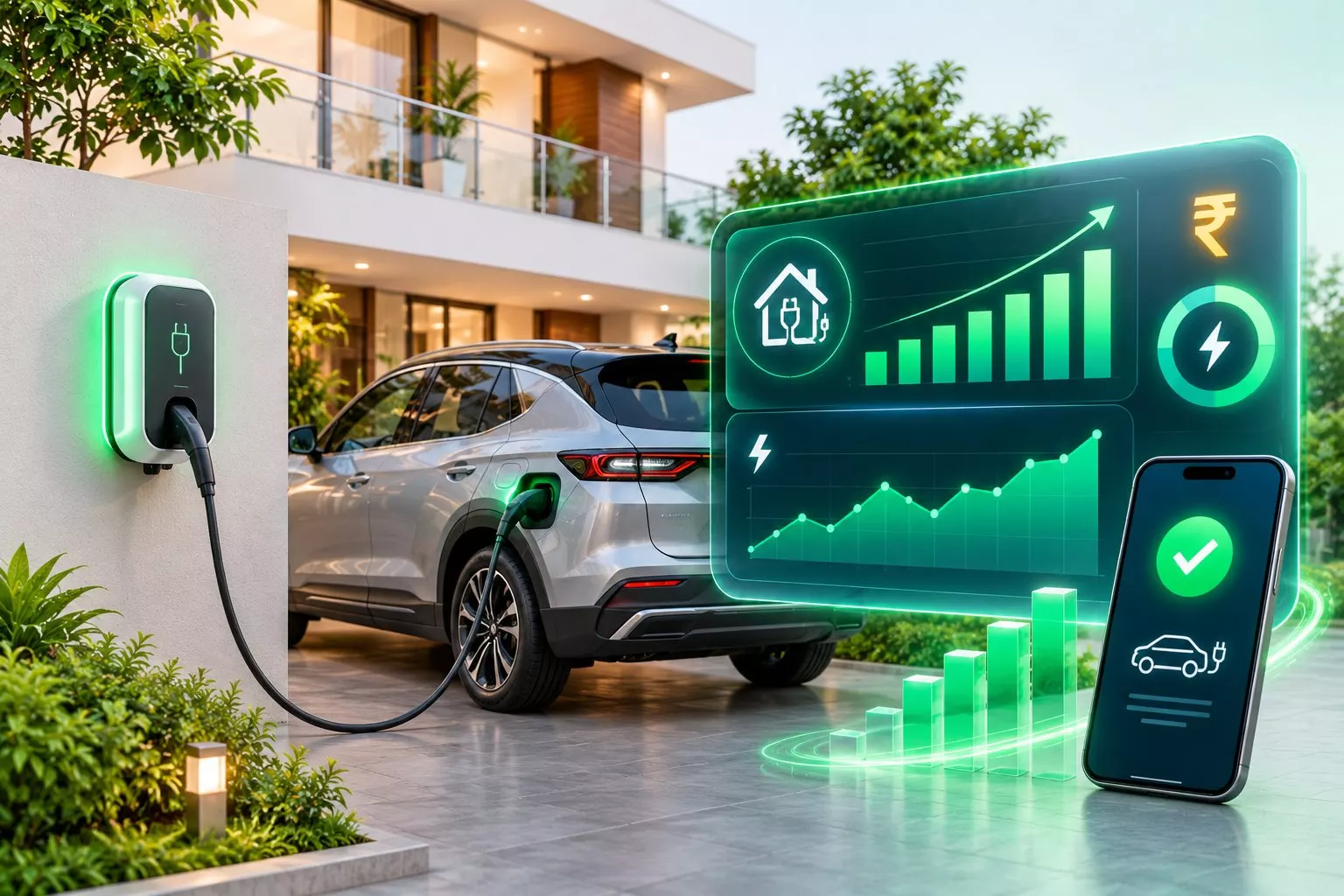
Earnings depend on the number of charging customers, energy delivered, customer tariffs, electricity rates and ongoing operating costs. A home charger near a dense apartment area may experience different usage from one in a low-traffic residential street.
Illustrative Monthly Earnings Calculation
| Factor | Example assumption |
|---|---|
| Customers per day | 2 |
| Energy per customer | 12 kWh |
| Operating days per month | 25 |
| Customer price | ₹12/kWh |
| Electricity cost | ₹8/kWh |
| Monthly energy delivered | 600 kWh |
| Gross charging revenue | ₹7,200 |
| Electricity expense | ₹4,800 |
| Balance before other costs | ₹2,400 |
This is a hypothetical example, not an EarthtronEV tariff or earnings projection. The ₹2,400 balance is not net profit: charging losses, payment fees, platform commissions, maintenance, equipment depreciation and taxes may further reduce it. Confirm whether the assumed customer price is permitted locally.
What Equipment Do You Need to Share a Home Charger?
- An appropriate AC EV charger, such as a compatible wall-mounted Type 2 unit.
- An electricity connection and load capacity suitable for the intended duty cycle.
- Accurate metering to record energy delivered to each user.
- Connectivity and access control where the sharing platform requires them.
- Appropriate circuit protection, earthing and professional commissioning.
- Safe, accessible parking with clear owner and customer responsibilities.
A 7.4 kW charger does not always deliver 7.4 kW to a vehicle: actual power depends on the car’s onboard charger, electrical supply and other conditions. Never improvise public charging through unsafe extensions or unsuitable sockets.
What Does It Cost to Make a Home Charger Shareable?
Costs depend on whether a suitable charger is already installed. New hardware, electrical protection, wiring, additional metering, connectivity, installation and property-access changes may be necessary. A professional site assessment is the best way to estimate cost and identify safety issues.
| Cost area | Reason |
|---|---|
| AC charging hardware | Compatible charging for vehicles |
| Wiring and protection | Safe operation at intended power |
| Energy measurement | Accurate charging-session billing |
| Software / connectivity | Bookings, monitoring and settlements |
| Installation and commissioning | Testing and compliance |
| Parking and access | Practical use by third parties |
Biggest Challenges of P2P EV Charging
- Demand may be too low or too irregular to generate material income.
- Home AC chargers may be too slow for drivers seeking quick top-ups.
- Gated communities and private drives may have restricted visitor entry.
- Residential electrical capacity may not support repeated additional sessions.
- Energy costs, fees and maintenance can substantially reduce the margin.
- Safety, property damage and customer access issues require clear responsibility.
Peer-to-Peer Charging vs. Commercial EV Charging Stations
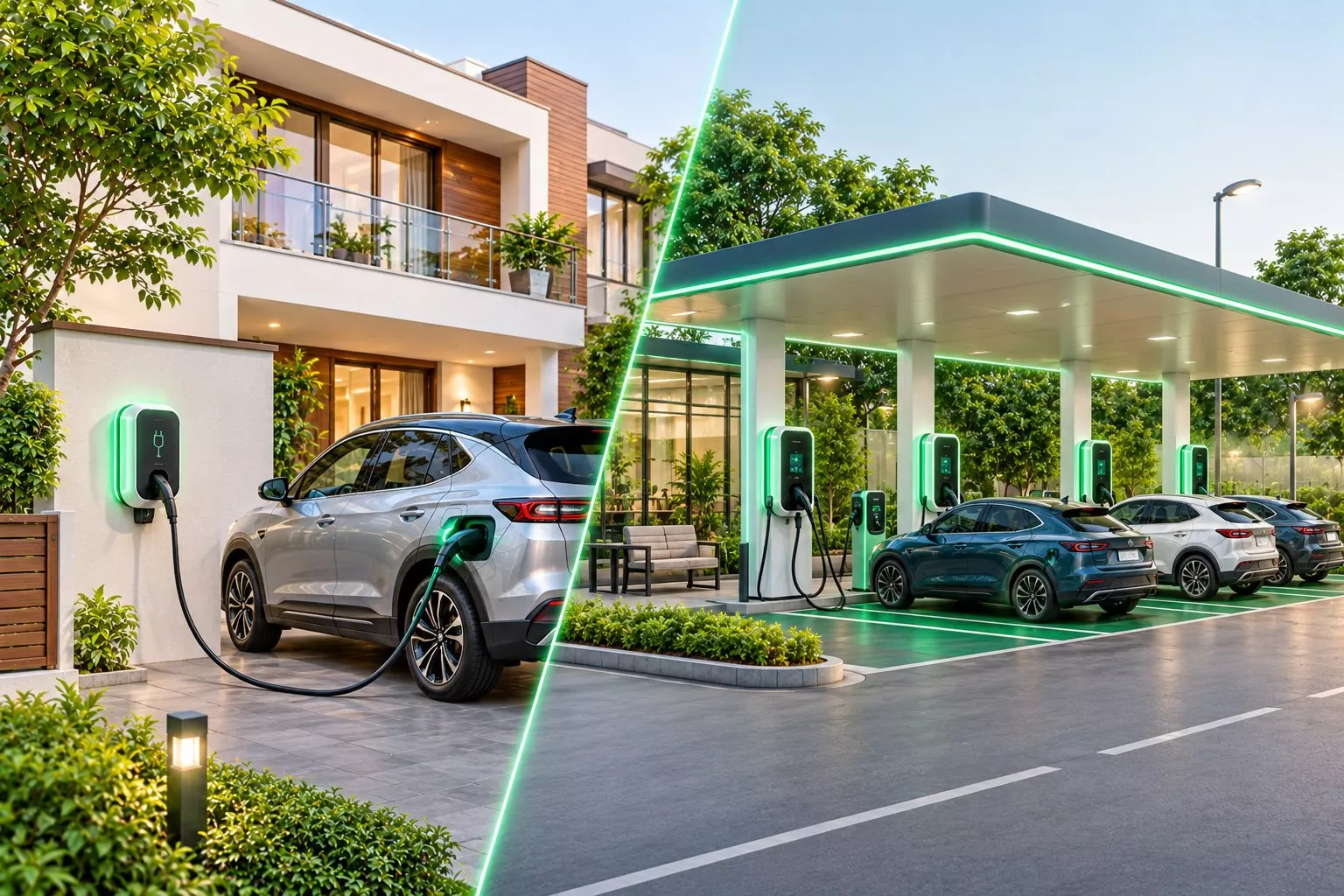
Home-based sharing and dedicated commercial charging infrastructure have different strengths. The right choice depends on the owner’s available property, investment capacity, operational goals and local charging demand.
| Feature | Home / P2P charging | Commercial charging |
|---|---|---|
| Typical site | Home or private parking | Public or commercial property |
| Equipment | Often AC | AC and/or DC fast chargers |
| Access | Restricted / scheduled | Designed for eligible public access |
| Investment | May be lower if equipment exists | Usually higher |
| Operations | Owner and/or platform | Dedicated charging operator |
| Scale | Limited by property and connection | Multiple bays and sites possible |
For an investor considering a dedicated charging venture, EarthtronEV describes a Franchise-Owned, Company-Operated (FOCO) model for its EV charging station franchise in India. Its investment requirements, risks and revenue arrangements are separate from residential P2P charging.
Can Housing Societies Build Community EV Charging Networks?
Housing societies and apartment complexes could offer shared charging points to approved residents instead of duplicating installations for every parking bay. Shared infrastructure can support planned power distribution, centralized access, individual consumption records and coordinated maintenance.
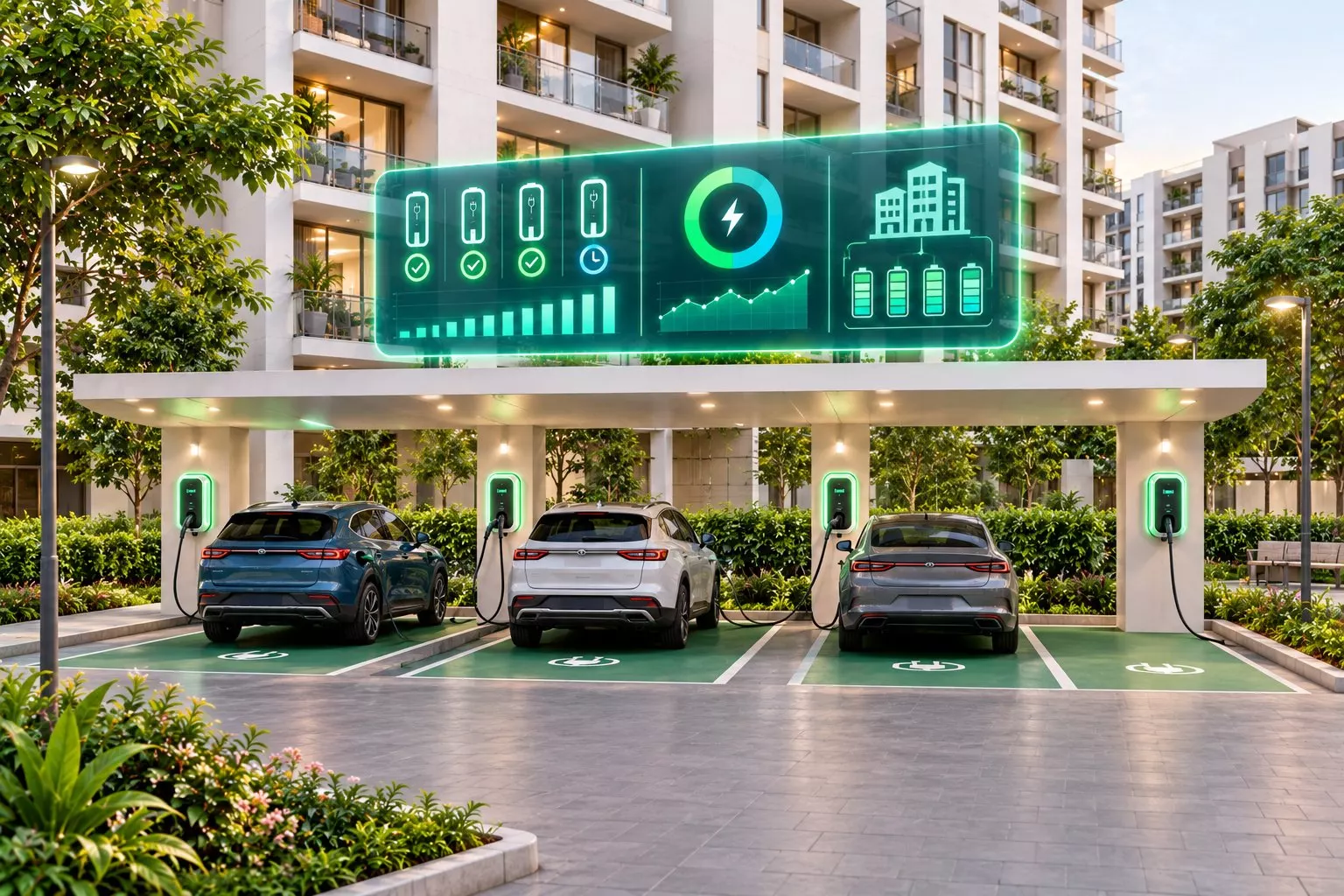
The society should establish parking rules, billing methods, safety procedures and a maintenance owner before opening a shared facility. Local DISCOM and property permissions remain central to implementation.
How Charging Management Software Supports Shared EV Charging
A charge station management system (CSMS) can reduce manual work by recording charge sessions, tracking device status, managing approved users and supporting tariff configuration. Smart chargers may use the Open Charge Point Protocol (OCPP) to communicate with a compatible backend.
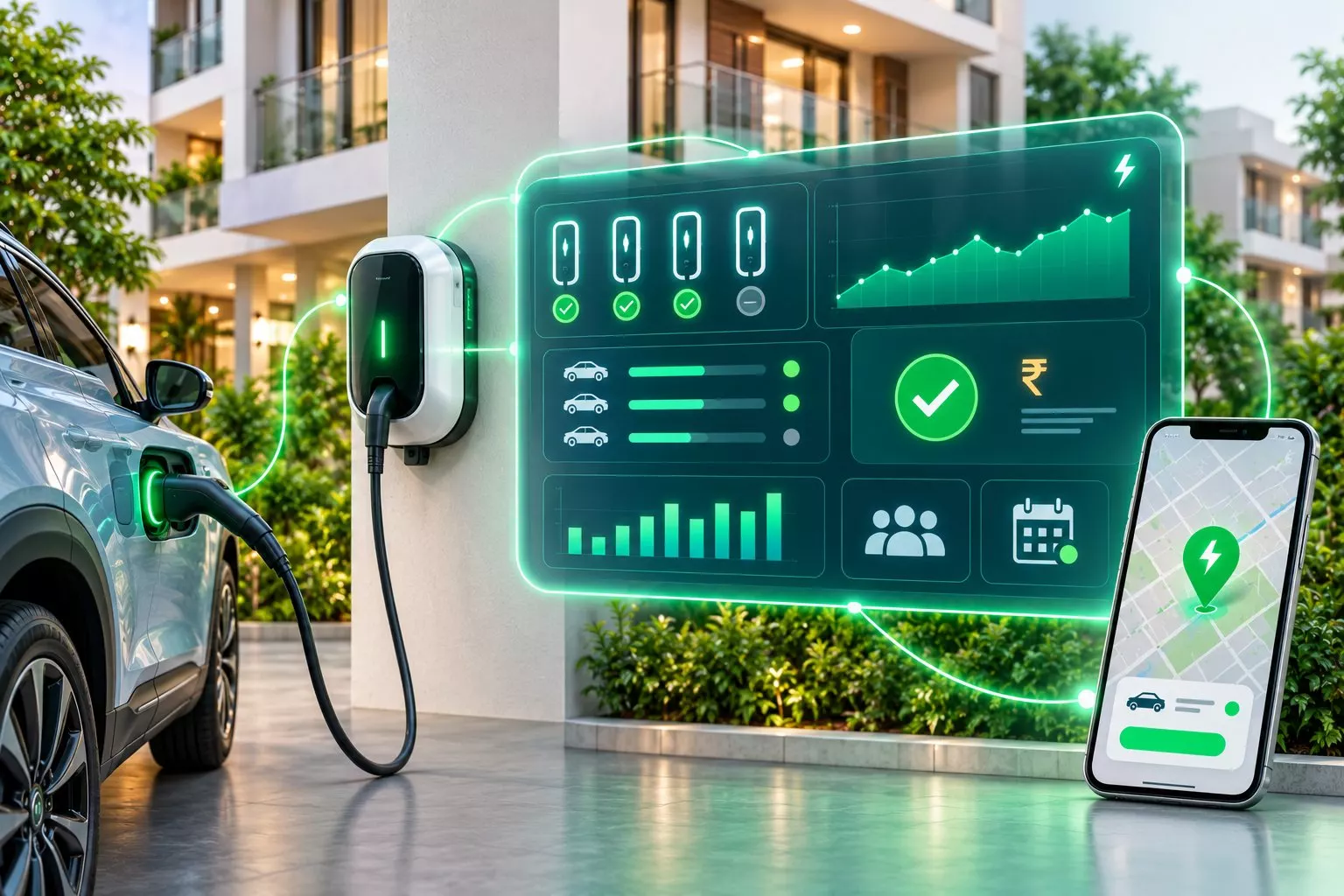
- Monitor online status and charging-session history.
- Measure delivered electricity and keep records.
- Manage access privileges and charging availability.
- Apply agreed tariff settings and support payment workflows.
- Surface charger faults, alerts and service needs.
EarthtronEV provides information on its Charge Station Management System. The existence of CSMS capabilities does not, by itself, establish a current EarthtronEV home-charger-sharing program; homeowners should verify eligibility and compatibility with the provider.
How to Start Sharing Your Home EV Charger
- Assess the local need for charging and whether customers can reach your parking space.
- Confirm electricity and property permissions for paid third-party charging.
- Have an electrician assess load, wiring, protection and equipment compatibility.
- Choose suitable metering and a platform that supports your charger.
- Calculate financial viability using realistic customer demand and all costs.
- Set access times, payment conditions and customer responsibilities.
- Pilot the service with proper records, then review utilization and actual margin.
The Future of Peer-to-Peer EV Charging in India
Improved charging discovery, bookings, interoperability and payment technology could make charger sharing simpler. Community schemes in housing societies and workplaces may offer a particularly practical path because access rules can be defined and managed centrally. Forecasting tools may also help operators identify promising periods of demand.
Nevertheless, P2P charging is more likely to complement than replace public fast charging: residential AC equipment is generally better suited to longer parking sessions rather than rapid highway stops.
Is Peer-to-Peer EV Charging a Good Business Opportunity?
P2P sharing can be worthwhile for a homeowner who already has a suitable charger, accessible parking and reliable nearby demand. It should generally be approached as potential supplementary income, not guaranteed passive earnings. Anyone aiming to build a larger charging business should compare the economics of a dedicated site with their available capital and risk tolerance.
Conclusion
Peer-to-peer EV charging could help India make better use of existing home chargers while extending charging access within neighborhoods. However, charging another driver for use of a residential unit is not simply a matter of plugging in and collecting money. Permissions, safe electrical design, accurate measurement, customer demand and all operating costs determine whether the model is practical.
For professionally managed charging infrastructure and franchise opportunities, explore EarthtronEV.