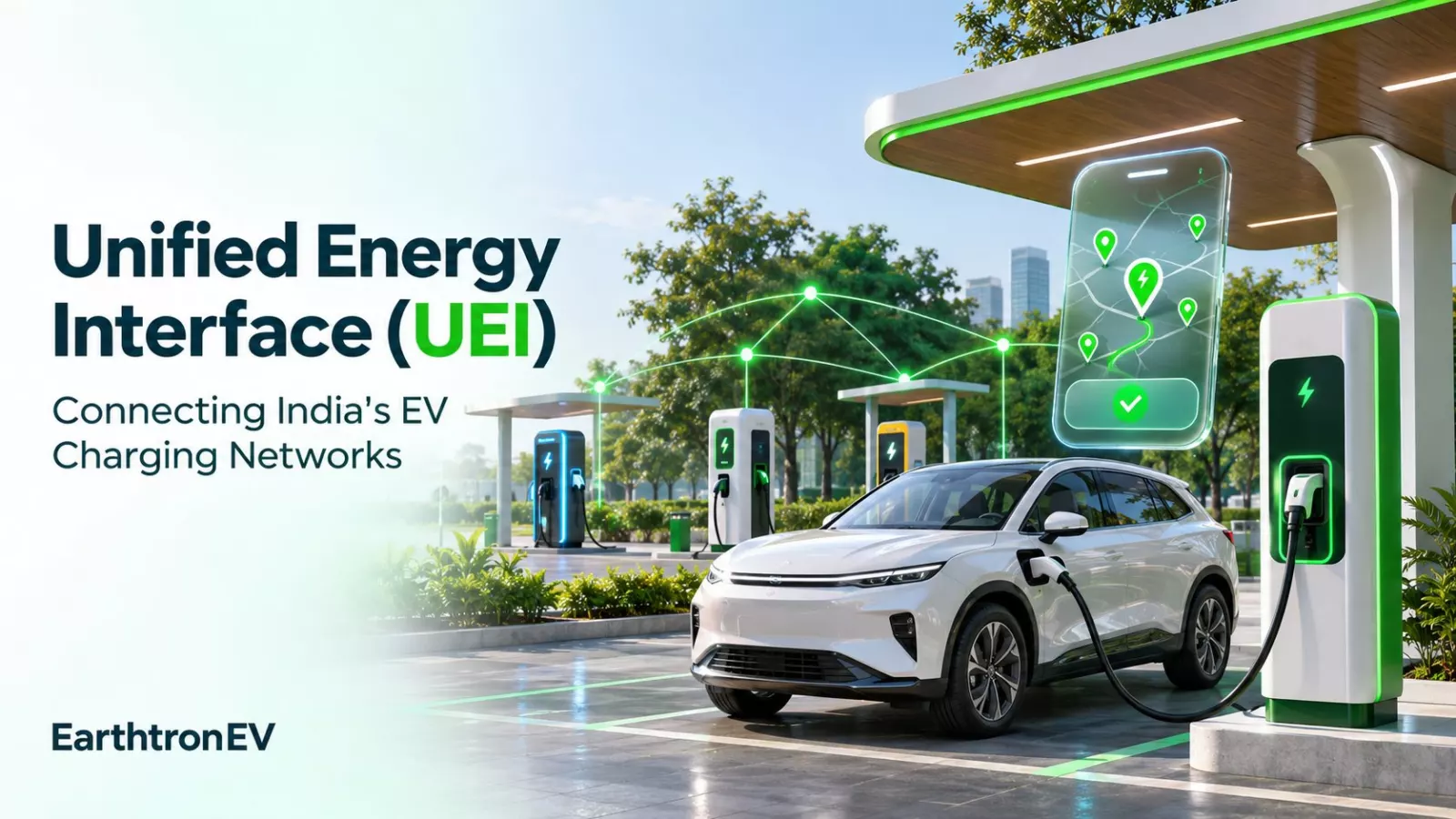
India’s electric vehicle ecosystem is expanding rapidly, with more electric cars, two-wheelers, buses and commercial fleets entering the market. As EV adoption increases, the demand for convenient, reliable and accessible charging infrastructure is becoming equally important.
However, one challenge continues to affect the charging experience: fragmentation across EV charging networks.
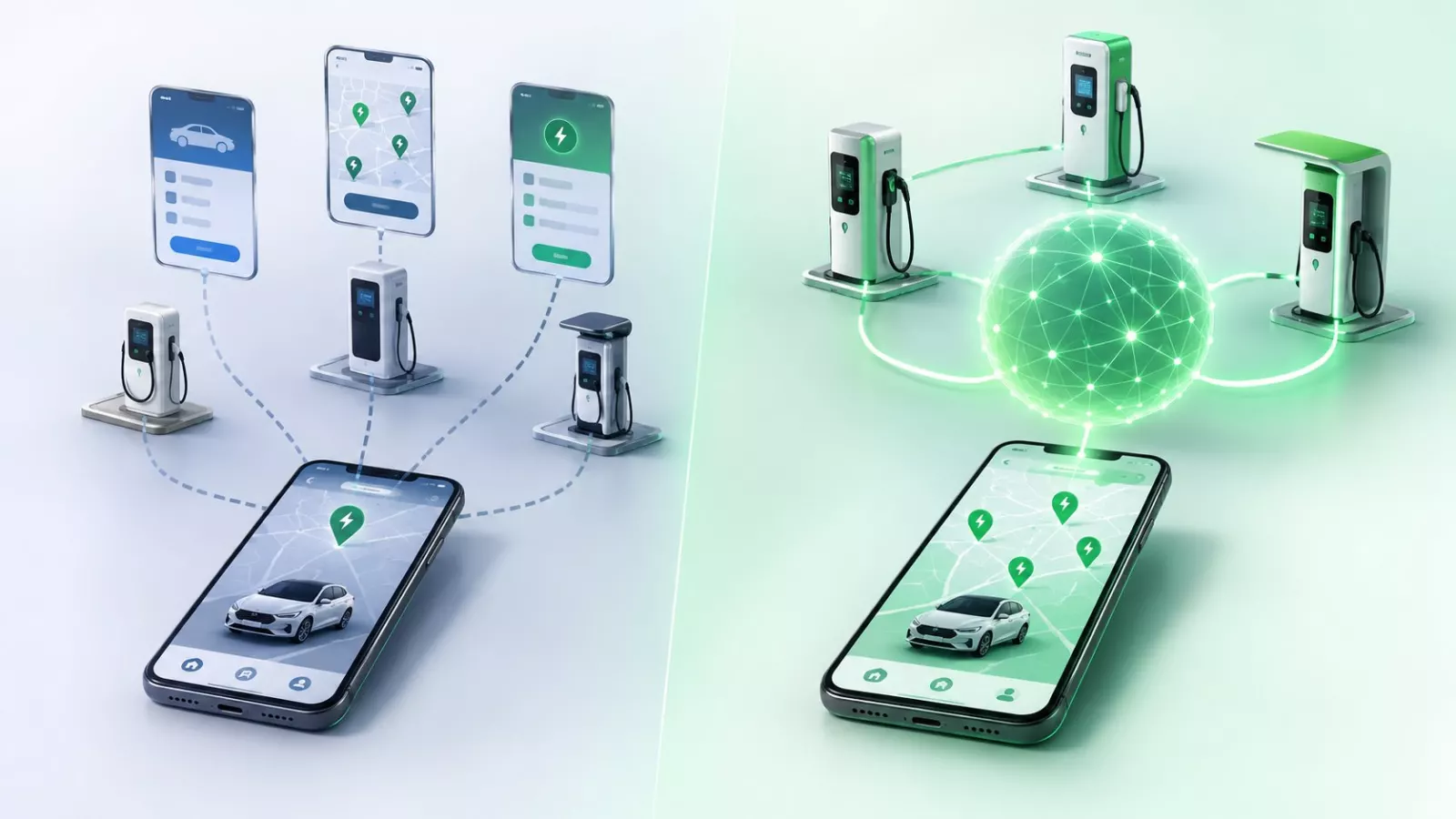
An electric vehicle driver may need multiple mobile applications to locate charging stations, check availability, start charging sessions and complete payments. Different charging operators often maintain separate platforms, making long-distance travel and public charging unnecessarily complicated.
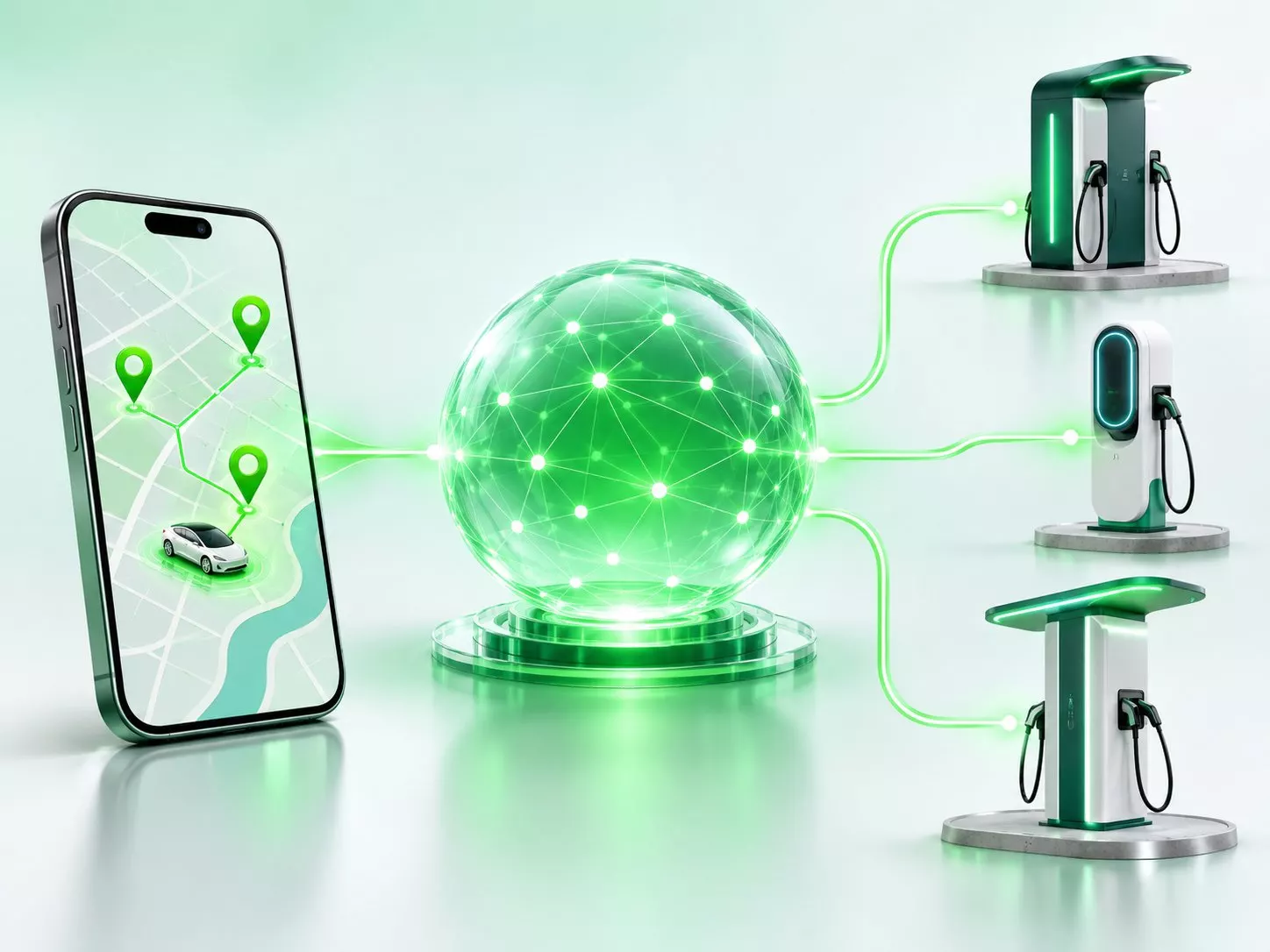
The Unified Energy Interface (UEI) aims to address this challenge by enabling interoperability between different energy and EV charging platforms. Built around open digital protocols, UEI is designed to allow charging service providers and consumer-facing applications to communicate through a common network.
India’s growing focus on interoperable charging infrastructure, including initiatives such as Unified Bharat e-Charge, could make EV charging more accessible and convenient for both drivers and charging station operators. For businesses exploring EV charging station franchise opportunities, understanding UEI is increasingly important because digital accessibility can influence station visibility, customer convenience and long-term business potential.
What Is the Unified Energy Interface (UEI)?
The Unified Energy Interface (UEI) is an open, interoperable digital network designed to enable seamless communication and transactions between different participants in the energy ecosystem. It uses the open-source Beckn Protocol to support interactions between digital platforms without requiring every participant to operate within a single proprietary application.
In the EV charging sector, UEI aims to connect charging service providers with applications used by electric vehicle owners. This could allow drivers to discover charging stations from different operators through participating applications, rather than searching separately on multiple charging networks.
UEI is not itself a physical EV charger, electricity supplier or payment application. Instead, it provides a common digital framework through which participating systems can exchange information and coordinate transactions. Beyond EV charging, the broader UEI vision also includes distributed energy resources, demand flexibility and electricity services.
Why Does India Need UEI?
India’s EV charging ecosystem includes multiple companies operating their own infrastructure and software platforms. Although this diversity encourages competition and investment, it also creates challenges when charging networks cannot communicate with each other.
- Different mobile applications for different charging networks
- Limited visibility of chargers operated by competing providers
- Inconsistent information about charger availability
- Separate payment and authentication processes
- Difficulty planning long-distance EV journeys
- Limited interoperability between charging management platforms
UEI aims to reduce these barriers by supporting a common network through which participating applications and charging operators can exchange relevant information. The goal is not to replace charging companies but to make their services easier to discover and use.
How Does Unified Energy Interface Work for EV Charging?
UEI uses an open-network approach that connects consumer-facing applications with charging service providers. Instead of requiring every application to establish a separate proprietary integration with every charging company, compatible platforms can communicate through a shared protocol.
Step 1: Discover Nearby EV Charging Stations
An electric vehicle owner opens a UEI-compatible application and searches for charging stations near their location or along a planned route. The application sends a discovery request through the network. Participating charging service providers can respond with information about location, charger type, availability, charging capacity and pricing, depending on implementation.
Step 2: Compare Charging Options
The driver can review available stations and select a suitable charging point. For example, someone travelling between Delhi and Chandigarh may want a CCS2-compatible DC fast charger near the highway. An interoperable platform could help compare relevant stations from participating operators.
Step 3: Select and Initiate Charging
After choosing a charging station, the driver proceeds through the available charging workflow. Depending on the network and operator, this may involve selecting a connector, placing a request or starting a session at the charger. Participating systems exchange the necessary transaction information.
Step 4: Complete the Payment
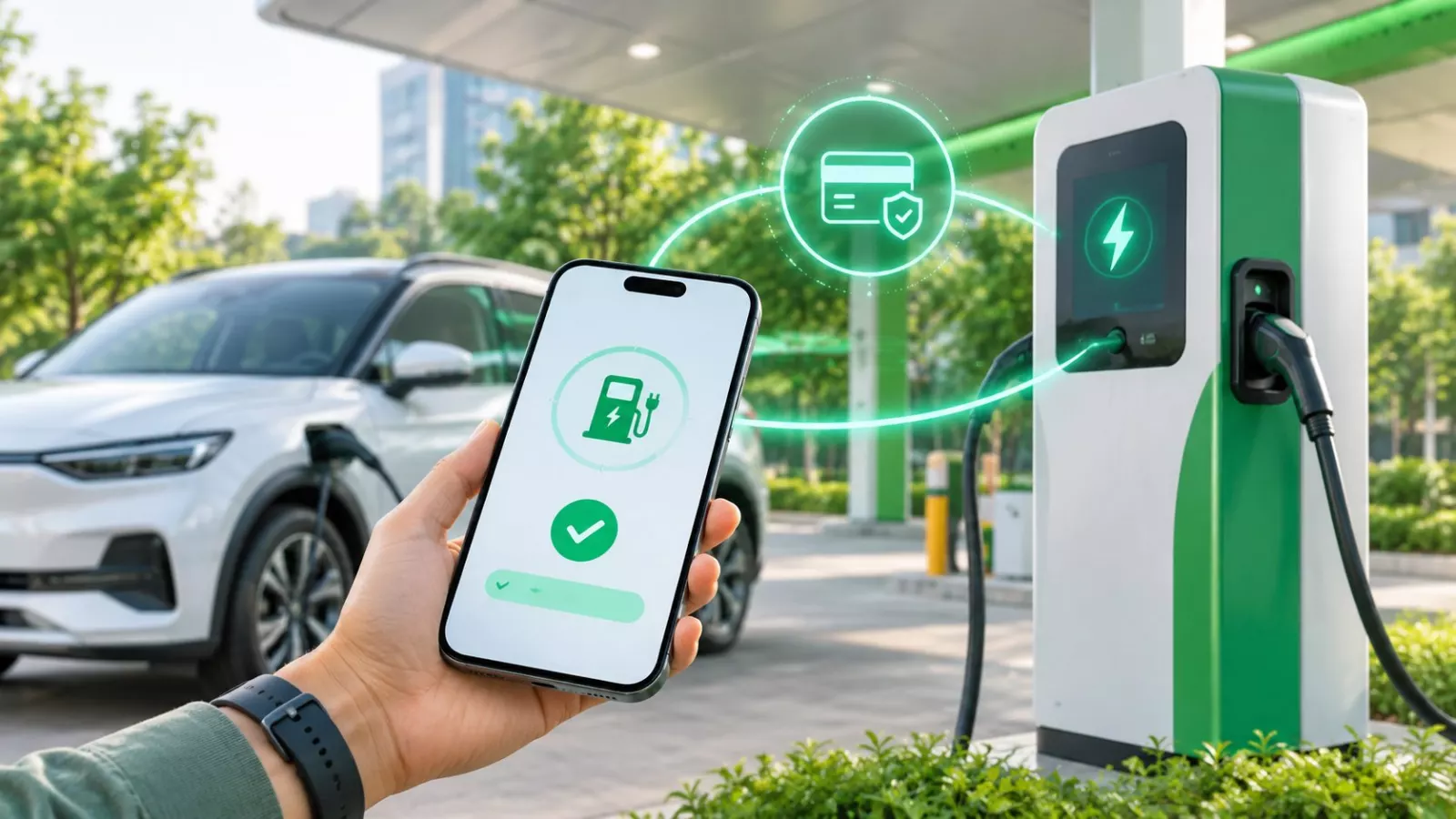
UEI can coordinate charging transactions across participating platforms, while payment processing takes place through supported payment systems. Integration with UPI may simplify the customer experience, but available options depend on the actual network implementation.
Step 5: Receive Charging Session Information
After charging, the application may display electricity consumed, transaction amount and charging duration. Where supported, the operator and consumer application can exchange session information for billing and records.
How UEI Is Different from Traditional EV Charging Apps
Traditional EV charging applications generally provide access to stations within an operator’s network or through existing roaming partnerships. UEI introduces an open-network architecture intended to simplify cross-network transactions.
| Feature | Traditional charging app | UEI-enabled ecosystem |
|---|---|---|
| Station discovery | Often limited to operator and partners | Potentially across participating networks |
| App requirements | Multiple operator apps may be needed | One compatible app can access multiple providers |
| Availability | Operator-dependent integration | Shared across connected platforms |
| Payments | Operator-specific workflows | Interoperable transaction workflows where supported |
| Customer reach | App and partner users | Users of participating applications |
These benefits depend on actual participation and integration. UEI connectivity does not automatically mean every charging station in India is accessible through every application.
What Is the Beckn Protocol and Why Is It Important?
The Beckn Protocol is an open-source protocol designed to enable digital platforms to interact through decentralised networks. It allows independent applications and service providers to discover services and coordinate transactions without relying on one centralised commercial platform.
For EV charging, the Beckn-based UEI approach creates opportunities for consumer-facing applications and charging service providers to communicate through standardised network interactions.
- EV charging station operators
- Consumer-facing charging applications
- Fleet management platforms
- Charging network aggregators
- Technology service providers
- Energy service platforms
A charging operator can publish station information through a compatible interface, while an independent app may help drivers discover and access that service. This separation can encourage competition and innovation.
Unified Energy Interface vs OCPP vs OCPI: What’s the Difference?
OCPP: Communication Between Chargers and Management Software
The Open Charge Point Protocol (OCPP) enables communication between an EV charger and its central charging management system, supporting remote monitoring, session control, operational notifications and charging data exchange.
OCPI: Roaming Between Charging Networks
The Open Charge Point Interface (OCPI) supports data exchange between charging operators and mobility service providers, including station information, charging tariffs, session records and roaming-related data.
UEI: Open-Network Discovery and Transactions
UEI operates at a broader digital interoperability layer, enabling participating consumer applications and energy service providers to discover and transact with one another through an open network.
| Protocol | Primary function | Main participants |
|---|---|---|
| OCPP | Charger-to-management-system communication | Chargers and management platforms |
| OCPI | Roaming and data sharing between networks | Charging operators and mobility service providers |
| UEI | Open-network service discovery and transactions | Consumer applications and energy platforms |
These technologies are complementary rather than interchangeable. A network may use OCPP to manage chargers, OCPI for roaming and a UEI-compatible integration for broader service discovery.
How UEI Can Improve EV Charging Discovery in India
Finding a compatible, working and available charger is central to the EV ownership experience. UEI may help participating platforms improve the visibility and consistency of charging information.
Access to Multiple Charging Networks
One participating application could show chargers from different providers and expand the range of options available to drivers.
Better Availability Information
Where operators share timely status updates, apps could display whether equipment is available or occupied.
Improved Highway Charging Experience
Interoperable discovery could help long-distance drivers find compatible charging stations across several operators along a route.
Greater Transparency in Charging Prices
Applications may display participating operators’ tariffs, helping users compare options where this data is supplied.
Easier Access for New EV Users
Reducing the need to navigate several different apps can make public charging more approachable.
How UEI Can Simplify EV Charging Payments
Digital payments are widely used in India, especially through the Unified Payments Interface (UPI). UEI seeks to bring an emphasis on interoperability to energy-service discovery and transactions. UPI is a payment system, whereas UEI is an open network for energy-related services.
A UEI-compatible charging platform can potentially integrate supported payment systems to enable transactions with participating charging providers. This could reduce dependence on separate prepaid wallets, subject to the capabilities and agreements of the specific participants.
Unified Bharat e-Charge has been presented as an open EV charging interoperability initiative involving the Ministry of Heavy Industries, Bharat Heavy Electricals Limited and the National Payments Corporation of India. Its stated purpose is to connect charging networks to compatible consumer and payment applications through Beckn-based technology. Actual payment options and network coverage depend on rollout and integration.
What Is Unified Bharat e-Charge and How Is It Related to UEI?
Unified Bharat e-Charge is part of India’s broader effort to establish a more interoperable public EV charging ecosystem. It focuses on connecting participating charging operators and consumer applications through an open digital protocol.
While UEI describes a broader interoperable energy-network approach, Unified Bharat e-Charge focuses specifically on EV charging discovery and transactions. It aims to support charger discovery, charging-session coordination, transaction information exchange and digital payments based on Beckn interoperability principles.
Building additional chargers is only one part of the solution: drivers must also be able to find, access and pay for charging services with minimal friction. Specific integrations and availability should always be checked rather than assumed.
Benefits of UEI for EV Charging Station Owners
For charge point operators, interoperability could influence station discoverability and customer convenience, though commercial gains are not guaranteed.
Greater Visibility for Charging Stations
A station connected to an interoperable network may appear in several participating applications, reaching drivers who do not use its proprietary app.
Potential for Higher Station Utilisation
Easier discovery could attract additional sessions, although utilisation still depends heavily on location, demand, reliability and pricing.
Reduced Dependence on a Single Application
Open-network participation can offer additional discovery channels alongside an operator’s own mobile application.
Opportunities for Network Partnerships
Common interfaces may support collaboration with mobility platforms, fleet services and other charging providers.
Better Digital Infrastructure Planning
Standardised data management may improve charging monitoring and operational performance.
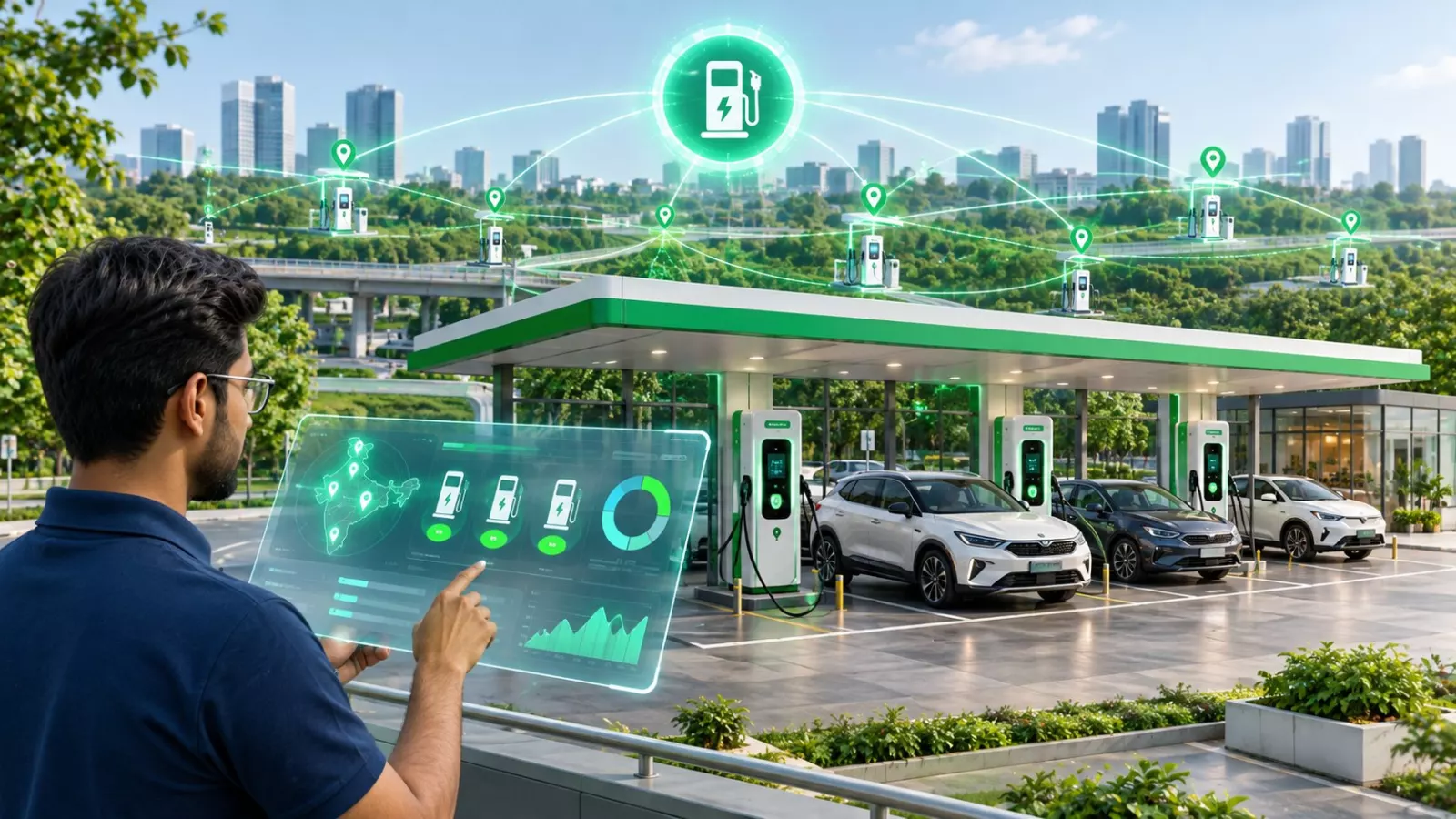
What Does UEI Mean for EV Charging Station Franchise Businesses?
The expansion of charging infrastructure creates opportunities for businesses interested in owning stations without building an entire proprietary charging network. Franchise providers may supply equipment, management software, operating support and digital services.
A future-ready EV charging franchise should consider:
- Compatibility with established charger communication standards
- Support for interoperable charging network integrations
- Reliable real-time charging station information
- Transparent billing and digital payment capabilities
- Scalable charging management software
- Flexibility to support emerging standards
Franchise investors should carefully distinguish confirmed integrations from planned future capabilities when selecting infrastructure and software providers.
How EarthtronEV Supports Interoperable EV Charging Infrastructure
EarthtronEV provides EV charging infrastructure solutions for highway, urban, commercial and fleet applications. Its offerings include AC and DC charging solutions, charging management software and EV charging station franchise opportunities.
A central station management system (CSMS) can help operators monitor connected equipment, manage charging sessions and oversee performance. Standards such as OCPP and OCPI are relevant to charger management and interoperability, but their use must not be confused with confirmed UEI integration: that requires a separate implementation.
EarthtronEV also offers a Franchise-Owned, Company-Operated (FOCO) model in which franchise partners own infrastructure while operations are managed under the agreed commercial arrangement. Reliable hardware, flexible software and professional network management can help support scalable charging infrastructure.
Explore EarthtronEV franchise opportunities.
Read about EV charging station business opportunities in India.
Challenges in Implementing UEI Across India
Network Integration
Operators use different software platforms and equipment, so connecting to a shared network may require development, testing and integration.
Data Accuracy
Incorrect availability status, outdated tariffs and incomplete location details can undermine customer trust.
Payment Coordination
Cross-platform transactions require secure processing, accurate billing and reliable settlement arrangements.
Cybersecurity and Data Protection
Connected equipment and customer transaction records require appropriate authentication and security controls.
Participation Across Operators
The practical value of interoperability depends on the number and diversity of charging providers and applications on the network.
The Future of Unified Energy Interface in India
India’s EV charging ecosystem is likely to depend on both physical infrastructure growth and digital interoperability. More chargers will not by themselves resolve fragmented applications, inconsistent data and separate payment workflows.
UEI offers a framework through which participants can work towards broader charger discovery, more convenient transactions and a more connected charging experience. The same open-network principles could also support future energy use cases involving renewable energy and demand flexibility.
For charging businesses, flexible and standards-based architecture can reduce dependence on isolated digital platforms. For EV drivers, improved interoperability could make charging easier to plan and use. Actual progress will depend on adoption and implementation by network operators, app providers and payment partners.
Conclusion
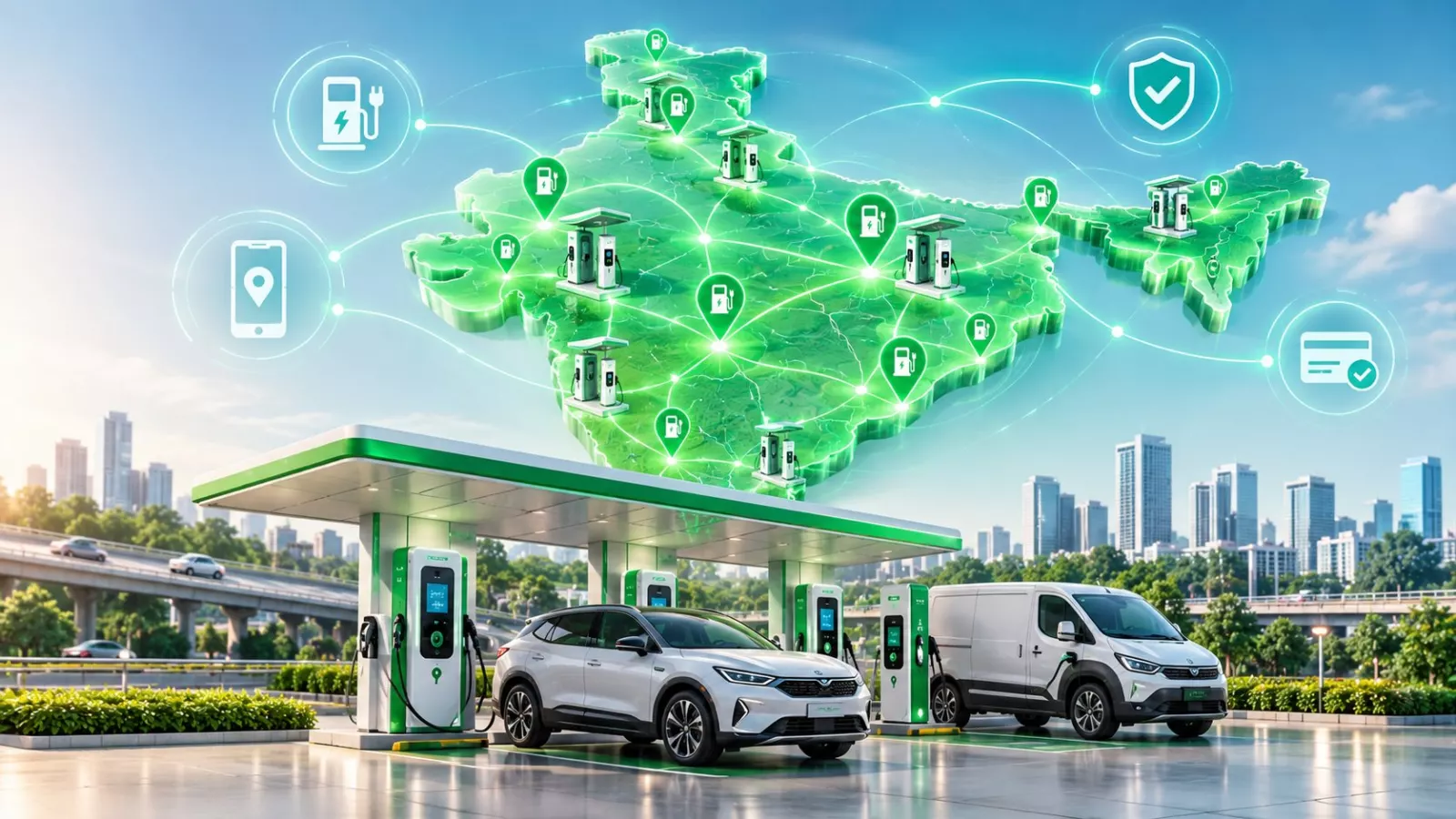
The Unified Energy Interface (UEI) represents an important step towards a more connected EV charging ecosystem in India. By enabling participating charging networks and consumer applications to exchange information, it aims to simplify charger discovery, transactions and cross-network access.
Its open-network approach could reduce the need for multiple charging applications while offering operators more channels through which to reach customers. These benefits depend on successful integration, reliable data and participation.
For charging investors, interoperability is increasingly worth evaluating alongside hardware reliability, station location and management software. EarthtronEV supports commercial EV charging through its infrastructure and franchise solutions as the Indian charging ecosystem continues to evolve.
Learn more about EarthtronEV.
Reference Sources