Quick Answer
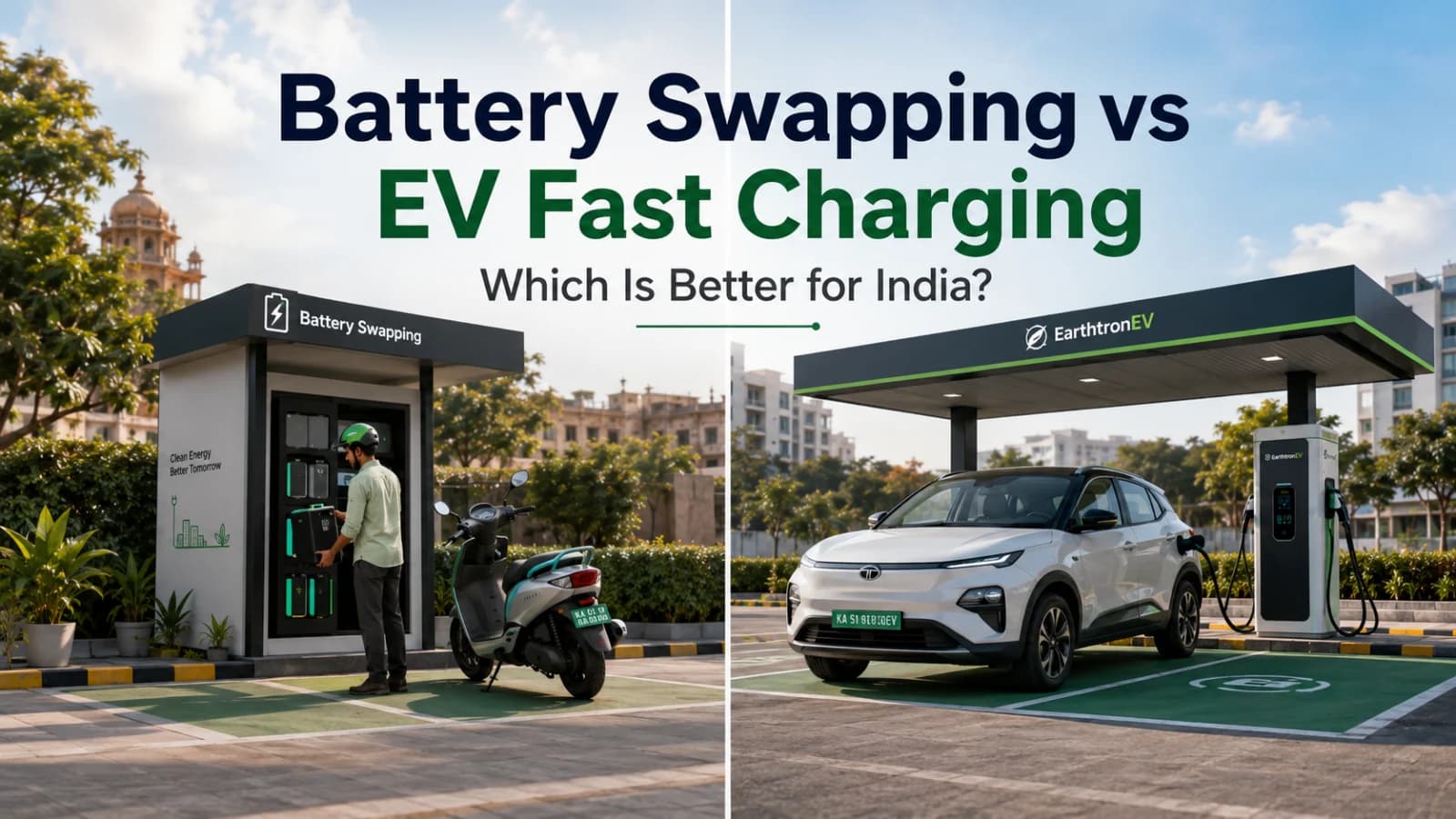
Battery swapping and EV fast charging are both useful for India, but they serve different vehicle segments and operating needs. Battery swapping is particularly suited to vehicles that can use standardised removable batteries and need very short turnaround times, such as some two-wheelers, three-wheelers and high-use fleet applications. Fast charging is better suited to passenger EVs, highways, public charging networks and locations that need to serve multiple vehicle models through established charging connectors.
India is therefore unlikely to need one solution instead of the other. The more practical approach is to deploy each technology where its operational advantages are strongest.
What is battery swapping?
Battery swapping replaces a discharged vehicle battery with a charged battery instead of waiting for the battery to recharge inside the vehicle. The user arrives at a swapping point, exchanges the battery and continues the journey with minimal waiting time.
The model can work well when the vehicle battery is removable, the battery format is standardised within the operating ecosystem and the swapping network maintains enough charged inventory. This makes swapping particularly attractive for high-utilisation vehicles where every minute off the road affects productivity.
However, swapping shifts part of the infrastructure challenge from charger power to battery inventory and battery management. The operator must track battery health, charging cycles, availability and safe storage in addition to managing the physical swap location.
What is EV fast charging?
EV fast charging supplies high-power electricity directly to the vehicle battery through a compatible charging connector. Instead of changing the battery, the user plugs in and waits while the vehicle receives the required charge.
Fast charging is central to public passenger-EV infrastructure because it does not require the vehicle owner to exchange the battery. It can support different compatible vehicle models at the same site and is suitable for highways, urban charging hubs, commercial properties and fleet locations.
The performance of a fast-charging site depends on available power, charger capability, vehicle charging limits, site utilisation and how long users are willing to wait. The charging station must also provide safe electrical infrastructure and dependable network connectivity.
Why battery swapping is attractive for high-utilisation vehicles
Delivery vehicles, e-rickshaws and other high-use vehicles may operate for long hours each day. For these users, charging downtime can directly reduce the number of trips completed. A battery swap can reduce waiting compared with conventional charging if the vehicle and battery ecosystem are designed for it.
This can make swapping commercially attractive where the same vehicle type returns repeatedly to known locations and the operator can forecast battery demand. Dense urban routes, last-mile logistics and structured fleets can create the predictable usage patterns that swapping networks need.
Why fast charging is important for passenger EVs
Passenger EV drivers generally expect to keep the same vehicle battery and charge when needed. Fast charging supports this behaviour and can serve drivers across different routes and destinations, provided their vehicles use compatible connectors and charging standards.
For highways and intercity travel, fast charging gives drivers a way to add useful range during a planned stop. In cities, it supports apartment residents, office users, visitors and drivers who cannot rely only on home charging. This broad compatibility is one of the reasons fast charging remains important to public charging infrastructure.
Battery swapping vs fast charging: the key differences
The two systems solve the same broad problem—keeping an EV moving—but they do so through different infrastructure models.
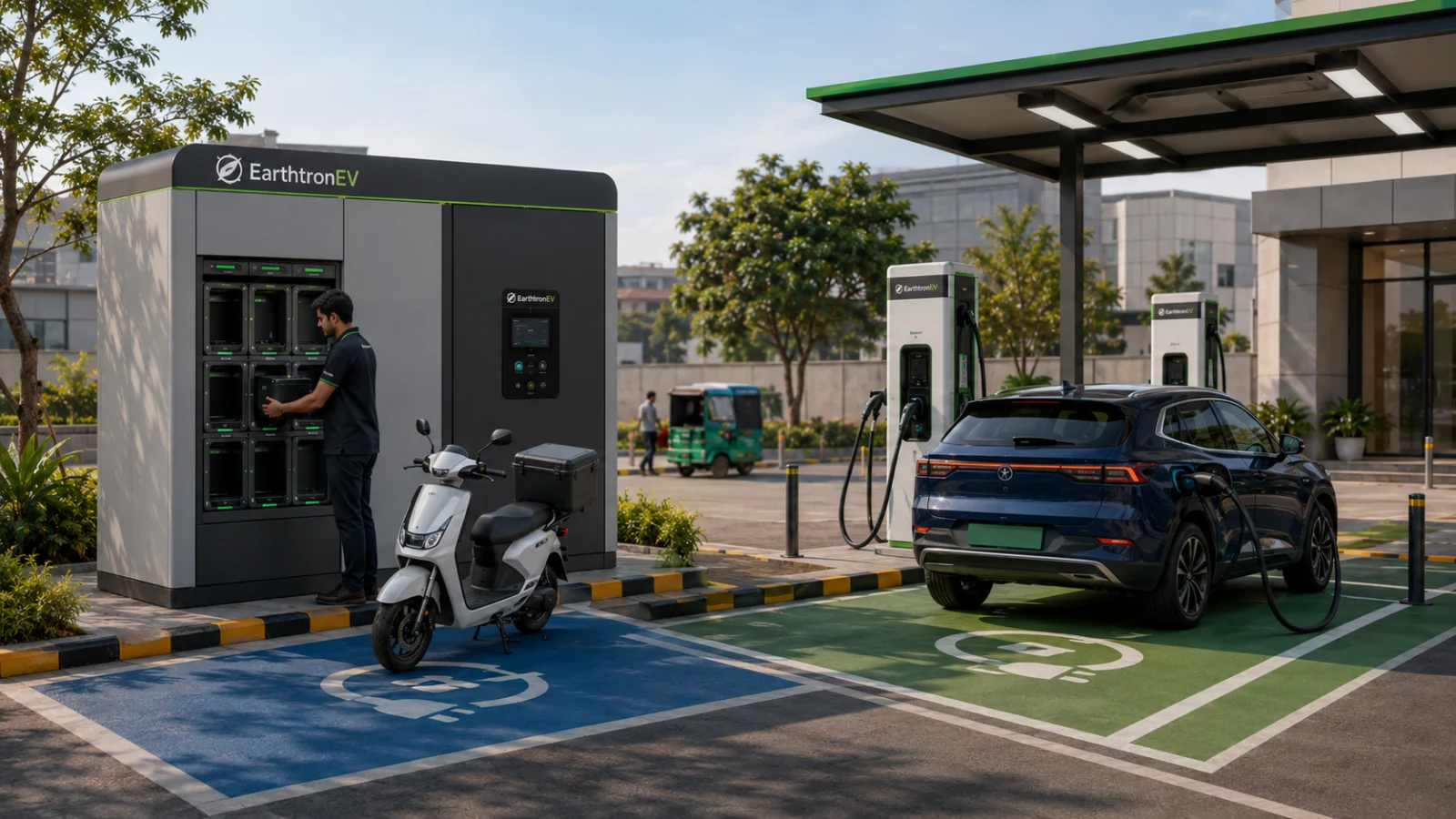
- Turnaround time: swapping can be very quick for compatible vehicles, while fast charging still requires a charging period.
- Battery ownership and control: swapping involves a managed pool of batteries; fast charging keeps the vehicle’s own battery in place.
- Compatibility: swapping depends heavily on battery standardisation; fast charging depends on charging-connector and communication compatibility.
- Infrastructure requirement: swapping needs charged battery inventory and safe battery handling; fast charging needs adequate electrical capacity and high-power chargers.
- Best-fit vehicles: swapping is strongest for certain two- and three-wheeler or fleet ecosystems; fast charging is stronger for passenger EVs and public charging.
- Network scalability: swapping scales most easily inside a controlled battery ecosystem, while fast charging can serve a wider set of compatible vehicles at public sites.
Infrastructure requirements for battery swapping
A battery-swapping station needs more than a set of lockers. It requires charging equipment for the battery inventory, safe handling procedures, temperature and environmental management, battery identification, state-of-health monitoring and enough charged batteries to meet demand peaks.
Inventory is a critical business factor. If the station has too few charged batteries, users may still experience delays. If it holds too much battery inventory, capital is tied up in underused assets. Operators therefore need accurate demand forecasting and strong digital battery-management systems.
Infrastructure requirements for EV fast charging
A fast-charging station requires sufficient incoming electrical supply, protection equipment, charger hardware, safe cable routing, parking bays and backend connectivity. High-power sites may also need more extensive electrical infrastructure and energy management.
The site layout matters because vehicles need space to enter, align with the connector and leave without conflict. Fast-charging stations also need high uptime because users often arrive specifically to charge; an unavailable charger can disrupt a trip more than a slow destination charger would.
Cost differences: where the money is invested
Battery swapping and fast charging concentrate investment in different areas. Swapping requires a battery pool in addition to swap hardware and battery-charging infrastructure. Fast charging puts more emphasis on high-power chargers, electrical infrastructure and site development.
Neither model is automatically cheaper in every situation. The better economics depend on vehicle type, daily utilisation, energy demand, site cost, battery ownership structure and how quickly the infrastructure is used. A technology that looks inexpensive at equipment level can become costly if it requires a large underused asset base.
User experience: speed versus familiarity
Swapping can offer an extremely fast user journey when the system is standardised and batteries are available. The user does not need to wait for charging, which is valuable for commercial drivers.
Fast charging is more familiar to passenger-car users because it works like refuelling the same vehicle rather than exchanging a major vehicle component. The user keeps control of the same battery and simply chooses how long to charge. For mixed public environments, this can make the user journey easier to understand across different vehicle brands.
Which model is better for two-wheelers and three-wheelers?
For high-utilisation two- and three-wheelers with removable standardised batteries, swapping can be a strong option. The vehicle is smaller, battery packs can be designed for handling, and frequent commercial use creates a clear need to minimise downtime.
However, the answer still depends on the vehicle ecosystem. If battery formats are fragmented or the swapping network is sparse, users may prefer fixed-battery vehicles and conventional charging. The success of swapping therefore depends as much on ecosystem design as on the swap technology itself.
Which model is better for passenger cars?
Fast charging is generally the more practical public-infrastructure model for passenger cars. Passenger EV batteries are large, deeply integrated into the vehicle and not typically designed for manual exchange. Drivers also need charging access across cities and highways without being restricted to a single battery pool.
Fast charging can support this requirement by creating multi-vehicle public infrastructure. The site operator focuses on connector compatibility, power delivery, uptime and a consistent charging experience rather than maintaining a large inventory of vehicle batteries.
Which model is better for fleets?
Fleets can use either model depending on the vehicle category and operating schedule. A last-mile two-wheeler fleet may benefit from swapping because rapid turnaround is central to productivity. A passenger taxi or commercial car fleet may prefer fast charging or scheduled depot charging because the vehicles are designed around fixed batteries.
The correct fleet decision should be based on route length, shift timing, depot dwell, battery architecture, utilisation and the cost of supporting the charging or swapping network.
Can battery swapping and fast charging coexist?
Yes. In fact, a mixed EV ecosystem makes coexistence more likely than a winner-takes-all outcome. A mobility hub could support swapping for two-wheelers and three-wheelers while also providing fast charging for cars. Each service can use the same broader location while serving different customers.
Such mixed sites need careful planning so that battery-handling areas, passenger-car charging bays and vehicle circulation do not interfere with one another. When designed properly, the site can become a broader e-mobility energy hub rather than a single-format charging point.
Which is better for India?
India’s mobility market is unusually diverse. Two-wheelers and three-wheelers play a much larger role than in many other countries, while passenger EVs and commercial fleets are also expanding. That diversity makes a single national technology choice unrealistic.
Battery swapping is likely to remain valuable where standardised removable batteries and high daily utilisation create a clear operational advantage. Fast charging is likely to remain essential for passenger EVs, highways, public networks and multi-brand charging access. The best infrastructure strategy is therefore segment-specific rather than technology-exclusive.
Conclusion
Battery swapping and EV fast charging should be viewed as complementary tools for India’s electric-mobility transition. Swapping offers extremely fast turnaround when vehicles and batteries are designed around a controlled exchange ecosystem. Fast charging offers broader compatibility and is better suited to public passenger-EV infrastructure and long-distance travel.
The right choice depends on the vehicle, the operating model and the location. India can benefit most by deploying battery swapping where it improves commercial uptime and fast charging where drivers need reliable, interoperable charging access.
Planning to invest in EV charging? With an EV charging station franchise from EarthtronEV, you invest in the station while we handle site assessment, approvals, installation and operations.
Related Reading
- How Are Electric Car Batteries Made? Materials, Chemistry and Process
- AC vs DC EV Chargers: Which One Is Best for Your EV Charging Station?
- L3 E-Rickshaw vs L5 Electric Three-Wheeler: Differences, Rules and Subsidies
- EV Charging Stations for Logistics and Fleet Operators in India
Learn more about fleet charging solutions.