Quick Answer
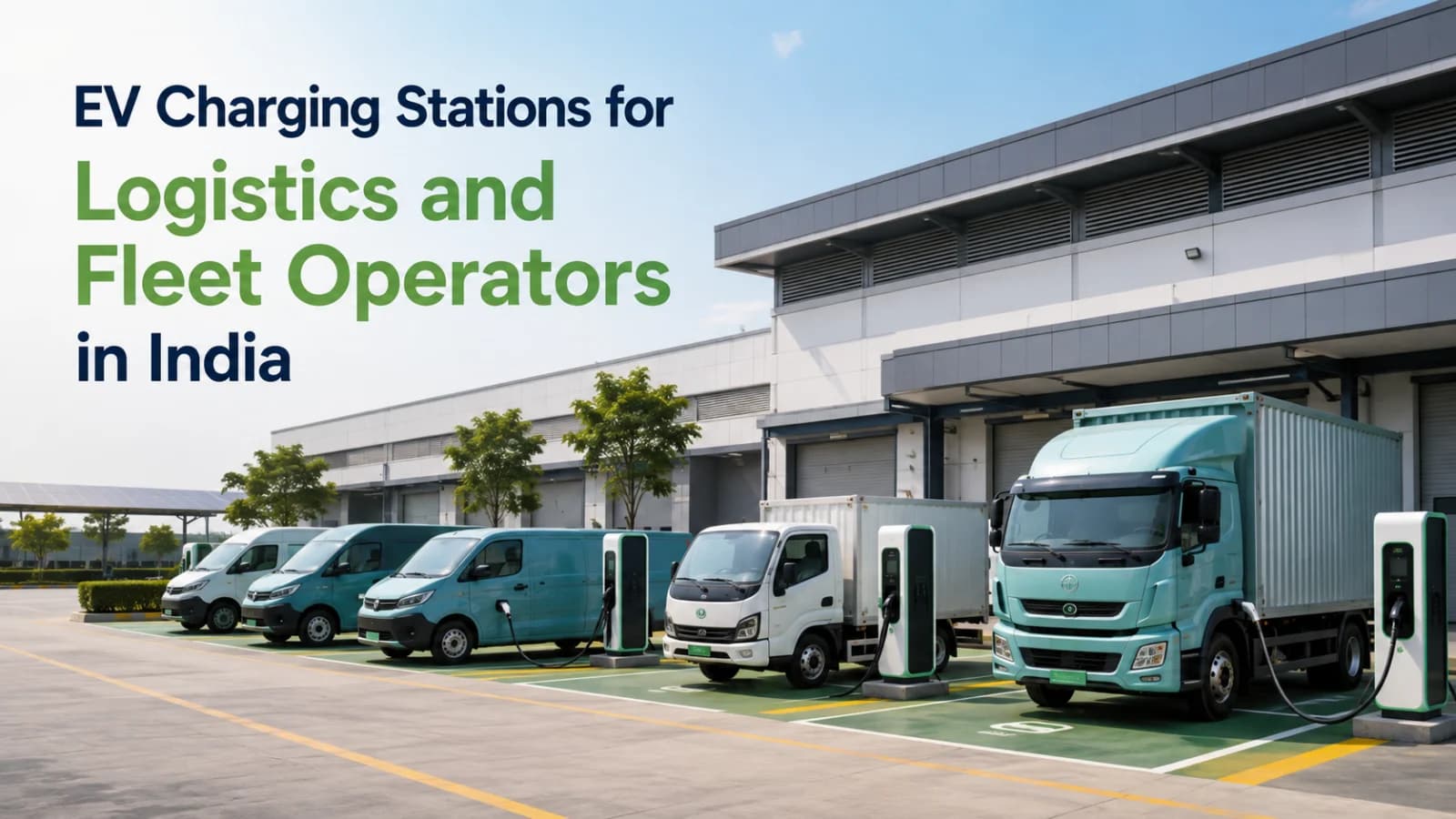
EV charging infrastructure for logistics and fleet operators needs to do more than simply charge vehicles. Fleet operators require reliable charging capacity, multiple charging points, planned charging schedules, load management, monitoring and ongoing technical support to keep vehicles ready for daily operations.
EarthtronEV provides end-to-end fleet charging solutions for logistics companies, delivery fleets, commercial vehicles and enterprise fleets, covering charging infrastructure, installation, smart charging management, monitoring and maintenance.
India’s logistics and commercial transportation sector is gradually moving towards electric mobility. Delivery vans, electric trucks, taxis, buses, two-wheelers and other commercial EVs can help businesses reduce dependence on conventional fuels while supporting cleaner transportation.
However, operating an electric fleet successfully requires dependable charging infrastructure.
Unlike an individual EV owner who may charge one vehicle overnight, a fleet operator may need to charge multiple vehicles within a limited period and ensure that they are ready before the next shift or scheduled route.
This makes proper fleet charging planning an important part of commercial EV operations.
Why Fleet Charging Matters for Logistics Operators
Commercial vehicles are productive when they are on the road. Unplanned charging delays, unavailable chargers or poor charging schedules can affect delivery timelines and overall fleet availability.
A properly planned fleet charging setup can help operators:
- Charge multiple vehicles from one location
- Schedule charging around vehicle operating hours
- Reduce unnecessary charging delays
- Monitor charger and session status
- Manage available electrical load
- Track charging activity across vehicles
- Prepare vehicles for upcoming shifts or routes
- Maintain more consistent fleet operations
For logistics businesses operating from warehouses, distribution centres, industrial locations or dedicated fleet depots, charging infrastructure can become an important part of daily operational planning.
How EV Fleet Charging Works
Fleet charging starts with understanding how the vehicles operate.
The charging requirement depends on factors such as:
- Number of EVs in the fleet
- Vehicle type and battery capacity
- Distance travelled each day
- Available charging window
- Departure and return schedules
- Available electrical load
- Charger capacity
- Number of vehicles requiring simultaneous charging
Vehicles returning to a depot can be connected to designated charging points. Charging sessions can then be managed according to vehicle requirements, available power and the time each vehicle needs to return to service.
For larger fleets, smart charging systems can help distribute available power across multiple chargers rather than allowing every charger to draw maximum power at the same time.
Depot Charging vs On-Route Charging
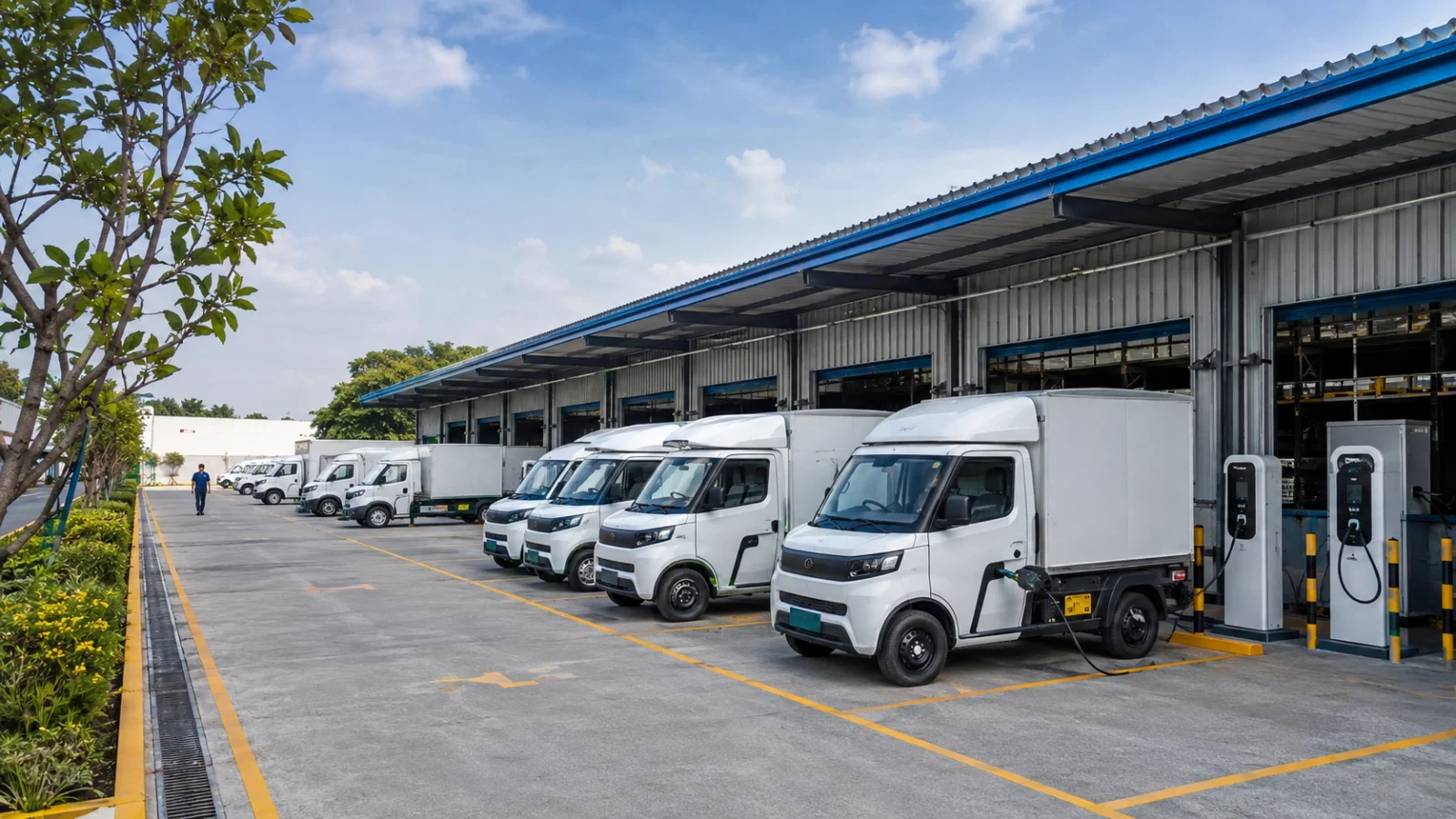
Logistics and commercial fleets may use depot charging, on-route charging or a combination of both depending on their operating pattern.
| Factor | Depot Charging | On-Route Charging |
|---|---|---|
| Typical location | Warehouse, logistics hub, parking yard or fleet depot | Highway, commercial corridor or strategic route location |
| Main use | Charging vehicles while parked between shifts | Recharging vehicles during active routes |
| Charging pattern | Planned and scheduled | Route-dependent |
| Vehicle dwell time | Usually longer | Usually shorter |
| Charger approach | AC, DC or a combination | Generally faster DC charging where required |
| Best suited for | Fleets returning regularly to a base | Fleets operating variable or long-distance routes |
Depot Charging
Depot charging works well for fleets that return to the same location after completing daily operations.
Delivery vans, company vehicles, taxis, buses and other commercial EVs can be charged during overnight parking, between shifts or during scheduled periods of inactivity.
Because vehicles may remain parked for several hours, charging can be planned according to departure priority and available electrical capacity.
On-Route Charging
Some fleets do not always return to the same depot between journeys.
Long-distance logistics vehicles, intercity fleets and vehicles operating on variable routes may require charging access during their journey.
Strategically located fast-charging infrastructure can support these vehicles by allowing them to recharge during planned stops and continue their route with less operational disruption.
Key Requirements of a Commercial Fleet Charging Station
Fleet charging infrastructure should be designed around real vehicle operations rather than simply installing the highest-capacity charger available.
Multiple Charging Points
Large fleets may need several vehicles charging simultaneously.
The number of charging points should therefore be planned according to fleet size, vehicle turnaround time and the number of vehicles expected to charge during peak periods.
Smart Load Management
Installing several chargers can create significant electrical demand.
Smart load management helps distribute available power across active chargers and can reduce the risk of exceeding the available electrical capacity of the site.
This becomes especially important at warehouses, industrial properties and commercial depots where EV chargers share power infrastructure with other business operations.
Charging Scheduling
Not every fleet vehicle needs to charge at the same time.
Vehicles can be prioritised according to their next departure time, battery requirement and operational schedule.
For example, a vehicle leaving early in the morning may receive charging priority over another vehicle that will remain parked until later in the day.
Monitoring and Fleet Analytics
Fleet operators need visibility into their charging infrastructure.
A charging-management platform can help operators monitor information such as:
- Charger status
- Active charging sessions
- Energy consumption
- Vehicle charging history
- Charger utilisation
- Charging costs
- Equipment faults or downtime
This information can help operations teams understand how charging infrastructure is being used and identify opportunities to improve scheduling and utilisation.
EarthtronEV Fleet Charging Solutions
EarthtronEV provides fleet charging infrastructure for logistics companies, commercial vehicle operators, delivery businesses and enterprise fleets.
The solution can be planned according to fleet size, vehicle type, site conditions, electrical capacity and operating schedule.
Site Survey and Charging Infrastructure Planning
A fleet charging project should begin with an assessment of the site.
Important factors include:
- Existing electrical infrastructure
- Available sanctioned load
- Parking layout
- Number and type of fleet vehicles
- Vehicle movement within the depot
- Required charging windows
- Cable routing and charger placement
- Future fleet-expansion requirements
The objective is to design charging infrastructure around actual fleet operations rather than applying the same setup to every location.
AC and DC Fleet Charging
Different fleet applications require different charging approaches.
Vehicles parked for longer periods may be suitable for AC charging, while fleets requiring faster turnaround can use DC fast charging.
A mixed charging setup may also be appropriate where different vehicle categories operate from the same location.
The final charger configuration should be selected according to vehicle compatibility, battery requirements, available charging time and site power capacity.
Smart Scheduling and Load Management
For multi-vehicle fleets, EarthtronEV’s charging infrastructure can support scheduled charging and load management.
This helps fleet operators distribute charging according to vehicle priorities while managing the electrical demand created by multiple chargers operating at the same site.
Charging Station Management System
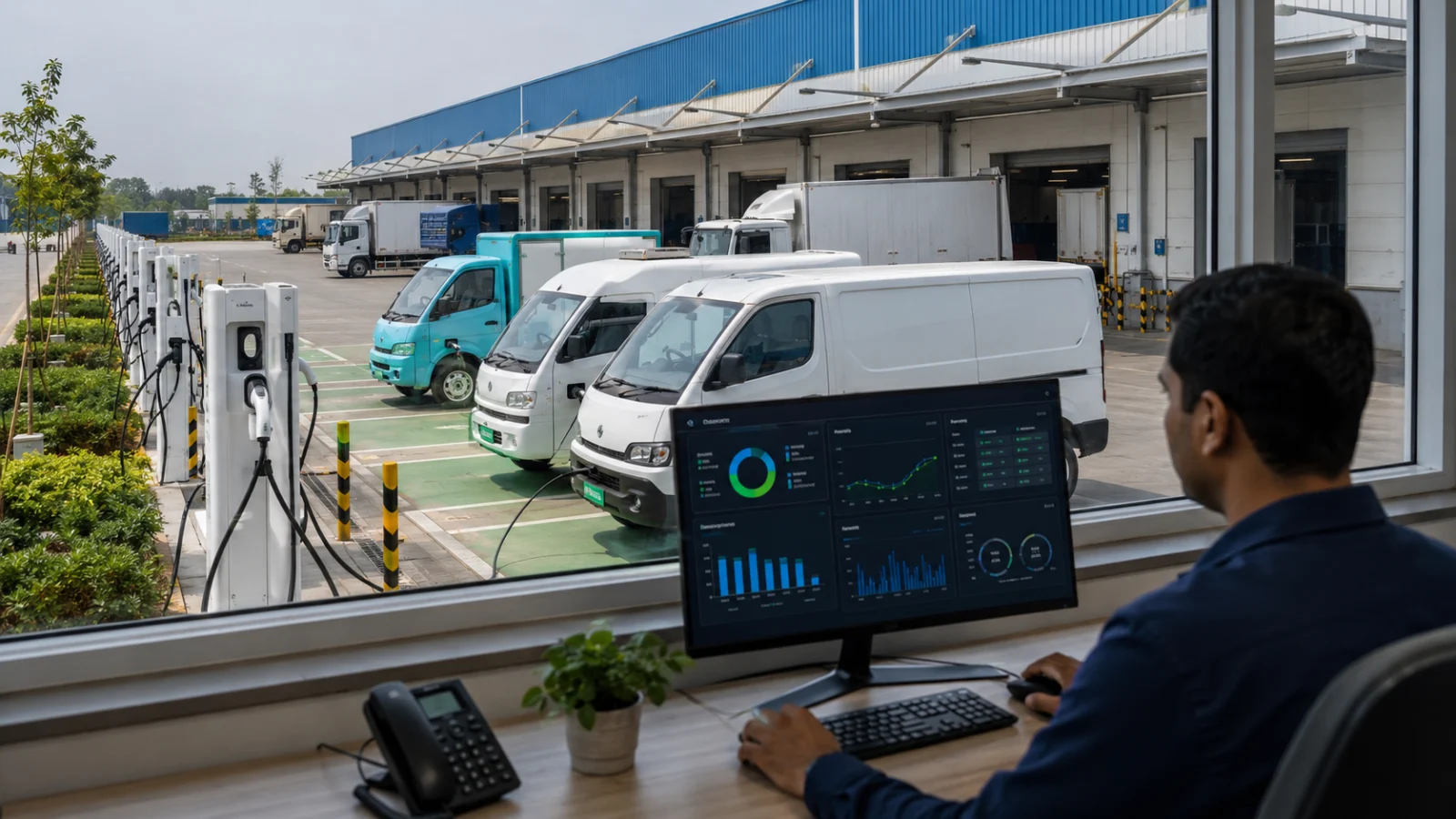
Fleet charging infrastructure can be monitored through a central charging-management system.
Operators can use the system to track charger status, charging sessions, energy usage and fleet charging activity from one interface.
Centralised monitoring becomes particularly useful for businesses operating multiple charging points or more than one fleet location.
Access Control
Charging access can be managed for authorised fleet vehicles and drivers.
Depending on the charging configuration, authentication methods such as RFID, mobile applications or QR-based access can help operators track individual charging sessions and manage authorised users.
Operations and Maintenance
Reliable charging infrastructure requires ongoing monitoring and maintenance.
EarthtronEV provides support covering installation, commissioning, preventive maintenance and technical assistance so fleet operators can focus on their core logistics and transportation activities.
24/7 Monitoring and Support
Commercial fleet operations may continue beyond standard business hours.
Continuous charger monitoring and technical support can help identify faults, support remote troubleshooting and reduce unnecessary charger downtime.
Fleet Charging for Commercial and Industrial Properties
Fleet charging is also relevant for commercial property owners, logistics parks, warehouses, manufacturing facilities and business campuses where electric commercial vehicles regularly operate.
Charging infrastructure can support:
- Company-owned EV fleets
- Delivery vehicles
- Logistics partners
- Employee fleet vehicles
- Contract transportation fleets
- Commercial EV visitors
For larger properties, charging infrastructure can be planned as part of the overall parking and electrical layout so that additional charging points can be added as EV demand increases.
Choosing the Right Charger for a Fleet
There is no single charger configuration that is suitable for every logistics fleet.
| Fleet/Application | Typical Charging Requirement |
|---|---|
| Electric two-wheelers and e-rickshaws | Longer-duration AC charging |
| Corporate passenger EVs | AC or DC depending on parking duration |
| Taxis and ride-hailing fleets | Faster charging between operating shifts |
| Delivery vans | Depot charging with scheduled AC/DC charging |
| Light commercial vehicles | DC charging where faster turnaround is required |
| Electric buses | High-capacity depot charging with planned schedules |
| Heavy commercial EVs | Higher-capacity charging based on vehicle and route requirements |
Actual charger compatibility should always be confirmed according to the vehicle’s supported connector, charging standard and maximum charging capacity.
Installing a charger with significantly more capacity than the fleet requires may increase infrastructure costs without providing equivalent operational value. At the same time, insufficient charging capacity can create queues and delay vehicle departures.
The charger setup should therefore be based on fleet utilisation rather than charger power alone.
What Should Fleet Operators Check Before Installation?
Before installing fleet EV charging infrastructure, businesses should evaluate:
Fleet Size and Future Expansion
A charging setup should support the current fleet while considering expected future EV additions.
Daily Vehicle Schedule
Understand when vehicles return, how long they remain parked and when they need to depart again.
Electrical Capacity
Available power should be assessed before finalising the number and capacity of chargers.
Parking and Vehicle Movement
Charging bays should allow vehicles to enter, charge and exit without obstructing normal fleet operations.
Charger Compatibility
The selected charger and connector must be compatible with the EVs operating in the fleet.
Monitoring Requirements
Larger fleets should consider central monitoring, access management, charging reports and vehicle-level usage tracking.
Maintenance and Technical Support
Commercial charging infrastructure should have a clear maintenance and support arrangement so equipment issues can be addressed without unnecessary operational delays.
Conclusion
EV charging stations for logistics and fleet operators require a different approach from individual or occasional public charging. Fleet operators need infrastructure that is planned around vehicle schedules, charging windows, electrical capacity, fleet size and daily operational requirements.
Depot charging can provide predictable charging for vehicles that regularly return to the same base, while on-route charging can support fleets operating longer or variable routes. Smart scheduling, load management, central monitoring and reliable maintenance become increasingly important as the number of electric vehicles in a fleet grows.
EarthtronEV supports fleet operators with end-to-end EV charging infrastructure, including site assessment, charger planning, AC and DC charging solutions, smart charging management, monitoring and ongoing technical support.
The right fleet charging setup should ultimately be based on actual vehicle usage, available power, operational schedules and future fleet growth. Careful planning at the beginning can help create charging infrastructure that remains practical and scalable as commercial EV adoption increases.
Planning to invest in EV charging? With an EV charging station franchise from EarthtronEV, you invest in the station while we handle site assessment, approvals, installation and operations.
Related Reading
- Electric Bus Depot Charging in India: Charger Capacity, Scheduling and Load Planning
- Battery Swapping vs EV Fast Charging: Which Is Better for India?
- L3 E-Rickshaw vs L5 Electric Three-Wheeler: Differences, Rules and Subsidies
- Smart EV Charging and Dynamic Load Management in India: How Stations Can Reduce Peak Electricity Costs
Learn more about EV charging for logistics and fleet operators.