The top 10 EV charging stations companies in India include Tata Power EZ Charge, Statiq, ChargeZone, Jio-bp pulse, Bolt.Earth, EarthtronEV, Kazam, Exicom, Zeon Charging and Ather Energy. These companies provide public charging networks, AC and DC charging infrastructure, business charging solutions and selected franchise or partnership opportunities for investors, property owners and fleet operators.
India’s growing electric vehicle market is creating demand for accessible charging infrastructure across highways, commercial properties, residential developments and fleet depots. However, EV charging companies differ considerably in their services, technology, network coverage and investment models.
Some companies specialise in operating public charging networks, while others manufacture charging equipment, provide management software or support businesses interested in setting up charging stations. This guide compares ten EV charging infrastructure companies in India, explains their business models and outlines the practical considerations involved in selecting a charging partner.
For readers comparing a full-service provider, explore EarthtronEV’s EV charging infrastructure solutions covering public charging, products and business services.
Top 10 EV Charging Companies in India at a Glance
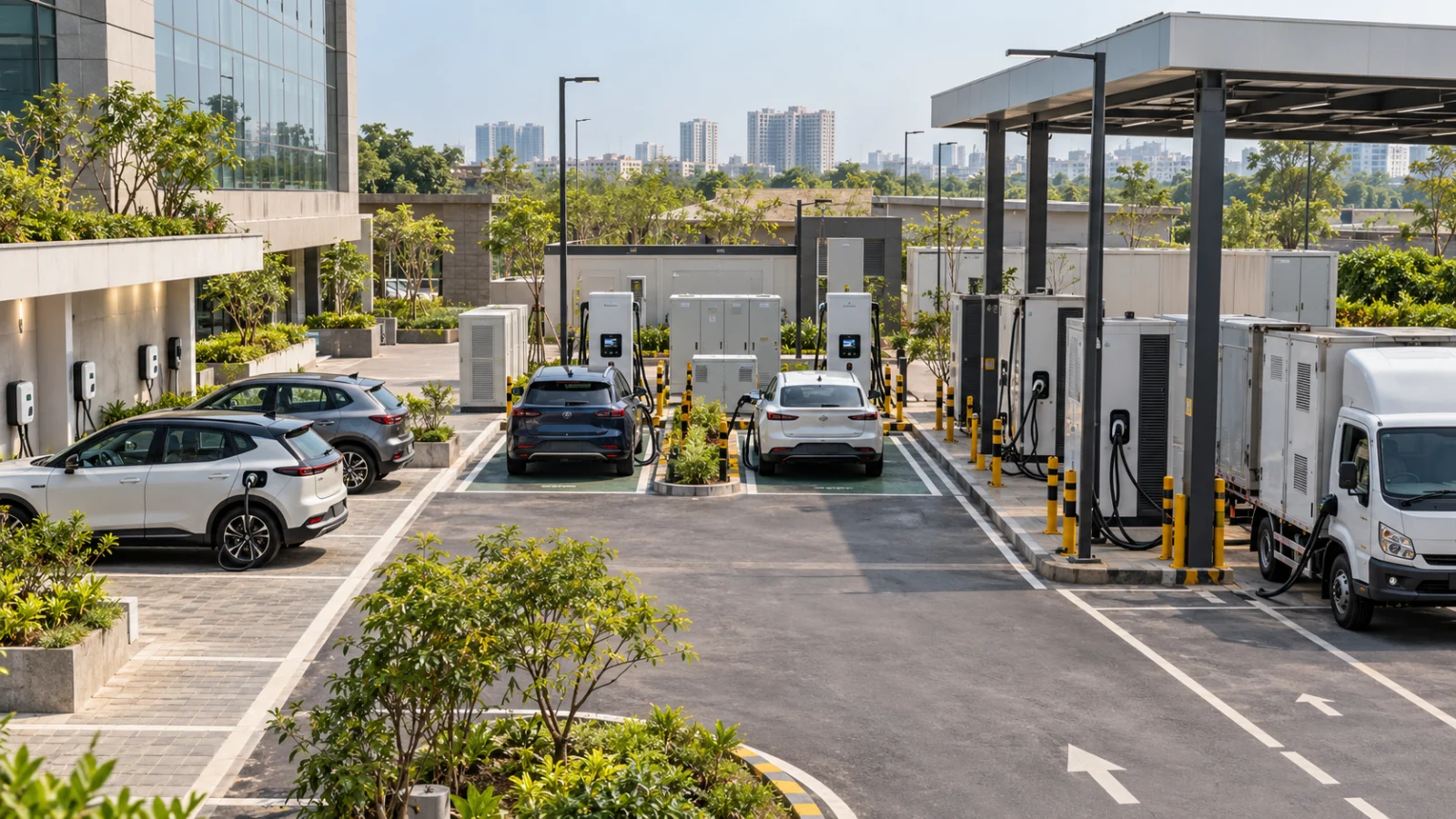
The following comparison highlights established public charging operators, technology providers and companies offering charging infrastructure services. The list is an editorial selection, not an official market-share or performance ranking.
| Company | Main solutions | Category | Best suited for |
| Tata Power EZ Charge | AC, DC, fleet, home charging | Network and solutions | Multi-segment infrastructure |
| Statiq | Public AC/DC, software | Network operator | Managed charging investment |
| ChargeZone | Fast charging, cloud software | Network operator | Highway and fleet charging |
| EarthtronEV | AC/DC, installation, CSMS | Infrastructure provider | Commercial/franchise projects |
| Jio-bp pulse | High-power DC charging | Network operator | High-power hubs |
| Bolt.Earth | AC/DC chargers, app, CMS | Hardware and network | Distributed charging |
| Kazam | Smart chargers, software | Hardware and software | Management and integration |
| Exicom | Home and DC fast chargers | Equipment provider | Hardware procurement |
| Zeon Charging | Public and destination charging | Network operator | Destination charging |
| Ather Energy | Two-wheeler charging | OEM-led network | Scooter charging |
Partnership terms are company-specific. A commercial partnership or site-host model does not necessarily constitute a conventional franchise.
Top 10 EV Charging Station Companies in India
1. Tata Power EZ Charge
Tata Power EZ Charge is one of India’s prominent EV charging infrastructure providers, offering solutions across public charging, home charging, commercial properties and fleet operations.
Its services combine charging infrastructure deployment with digital charging access and support for multiple customer segments. The company provides charging solutions for electric buses, workplaces, shopping malls, housing societies and commercial fleets.
Its EZ Charge platform allows users to locate charging points and manage charging sessions. Tata Power also promotes franchise and channel-partner programmes. Businesses should confirm local service availability, electrical infrastructure requirements, project quotations and commercial arrangements.
Best suited for: Businesses and fleet operators seeking an established charging network and integrated charging solutions.
2. Statiq
Statiq operates an EV charging network in India and provides charging infrastructure for public locations, commercial properties and investors interested in professionally managed stations.
Statiq’s published franchise programme uses a Franchise-Owned, Company-Operated (FOCO) arrangement. Investors fund and own infrastructure while the company supports assessment, installation, monitoring and operation.
The structure may appeal to investors who do not want to directly manage daily sessions or technical maintenance. Applicants should review asset ownership, revenue settlement, expected utilisation, operating expenses and contractual conditions.
Best suited for: Managed charging investors and property owners.
3. ChargeZone
ChargeZone focuses on high-speed public EV charging infrastructure, with services covering intercity charging, fleet electrification and technology-enabled station management.
Its public materials describe DC fast charging, AC charging and Charge Cloud, a platform for remote infrastructure monitoring. The company is relevant to highway charging, higher-utilisation hubs and fleets.
Charging operations and cloud-based management distinguish its offering. Prospective partners should request confirmation of available investment models rather than assume every station operator sells a standard franchise.
Best suited for: Highway projects, commercial fleets and high-power infrastructure.
4. EarthtronEV
EarthtronEV is an Indian EV charging infrastructure provider focused on highways, cities, commercial locations and electric vehicle fleets.
It markets AC/DC chargers, installation, charging station management software, commercial charging and partnerships. Its corporate materials also describe connected monitoring, billing tools and maintenance support.
The company advertises a FOCO franchise model and an approximately ₹10 lakh starting investment for a 40 kW DC setup. Investors should obtain site-specific quotations and independently review equipment, project references, performance claims and contract terms.
Best suited for: managed franchise investors, commercial property owners and fleet/highway charging.
EarthtronEV’s product portfolio includes AC smart EV chargers for longer-dwell parking environments and compatible vehicle types.
For applications requiring shorter charging sessions, see EarthtronEV’s DC fast charger range and confirm the site’s electrical feasibility.
Businesses requiring connected operations can review the EV charging station management software (CSMS) for monitoring, billing and station control.
Site URL: https://www.earthtronev.com/
Business Address: 108, Fbd One Corporate Park, Main Mathura Road, Faridabad – 121003
Phone no: +91 9810707983
5. Jio-bp pulse
Jio-bp Pulse operates high-speed EV charging infrastructure for passenger vehicles and commercial transport applications.
Its official website describes charging capacities of up to 480 kW and locations such as malls, hotels, airports and fuel stations, together with B2B solutions for offices, depots and commercial hubs.
Higher power output can help compatible vehicles reduce charging time, but a successful project also requires sufficient demand, grid capacity, utilisation and viable contract terms.
Best suited for: fleet operators, high-traffic destinations and high-power hubs.
6. Bolt.Earth
Bolt. Earth provides EV charging hardware, charging management software and access to a distributed charging network supporting multiple vehicle categories.
Its ecosystem includes smart chargers, an application and a management system for monitoring, payments and station operations. The company also advertises FOCO franchise and channel-partner opportunities.
Investors should distinguish infrastructure ownership from dealership, distribution and site hosting, as the required investment and responsibilities vary by arrangement.
Best suited for: Property owners, investors and businesses seeking hardware and managed options.
7. Kazam
Kazam provides smart charging equipment and energy management software for charging point operators, OEMs, fleet operators and enterprises.
Its software supports charger monitoring, charging records, tariffs, partner management and multi-brand integrations. Its emphasis on software interoperability can matter for networks operating equipment from several vendors.
Before purchase, confirm compatibility with actual charger models, software charges, integration scope and service-level agreements.
Best suited for: Operators and fleets managing connected charging infrastructure.
8. Exicom
Exicom specialises in power electronics and EV charging equipment for home, public and commercial applications.
Its portfolio includes residential charging and DC fast charging products, along with connected charger monitoring and diagnostics capabilities. It is particularly relevant to organisations purchasing hardware rather than a public charging franchise.
Buyers should verify connector standards, required power, compliance documents, servicing, warranties and compatibility with the intended management system.
Best suited for: Infrastructure developers, OEMs and charging equipment purchasers.
9. Zeon Charging
Zeon Charging operates public charging infrastructure and works with commercial destination properties.
Its approach connects charging sites with hotels, restaurants, retail and other locations where drivers spend time. App-based access can help visitors locate and use available stations.
Property owners should confirm whether a proposal uses leasing, hosting, infrastructure ownership or revenue sharing.
Best suited for: Hospitality locations, destination properties and EV users.
10. Ather Energy
Ather Energy operates Ather Grid, a public charging network focused on compatible electric two-wheelers.
Its charging infrastructure differs from electric-car charging networks because it is designed for scooter charging requirements. Ather has also described a Grid-host programme for commercial locations.
Hosting a company-operated scooter charger is not necessarily a franchise investment; confirm installation, operations, maintenance and equipment-ownership terms.
Best suited for: electric scooter users and commercial site hosts.
For office parking, visitor charging and commercial campuses, compare EarthtronEV’s corporate EV charging solutions alongside competing site proposals.
How to Choose the Best EV Charging Company in India
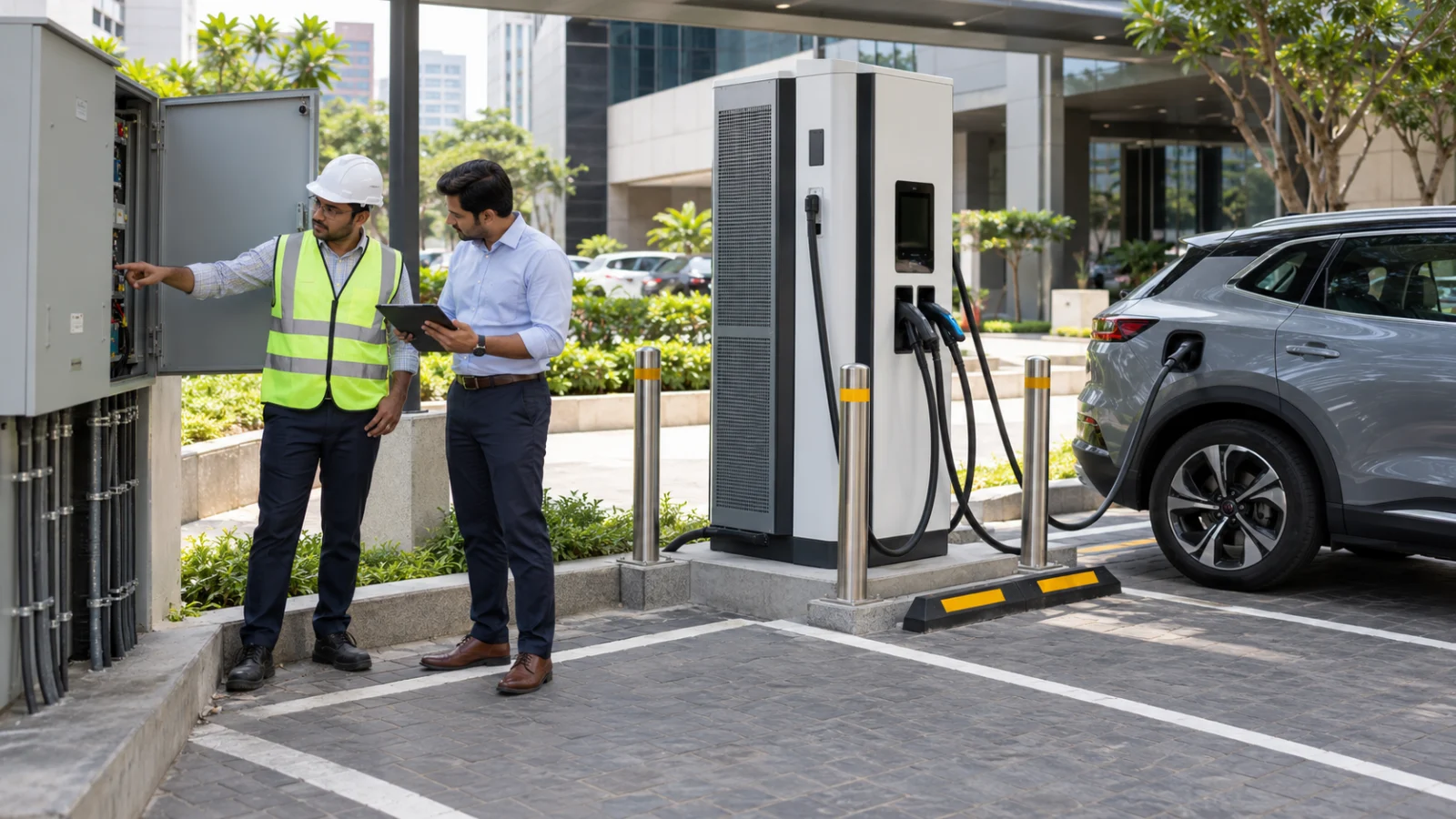
Choose a provider based on charging technology, equipment reliability, project execution, operating support and full commercial cost. The right charging system should match the site, expected EV traffic and long-term operating requirements.
Companies with dedicated vehicle operations can review fleet charging solutions when planning depot layouts and charging schedules.
Identify the Right Charging Technology
| Charging type | Typical application | Main consideration |
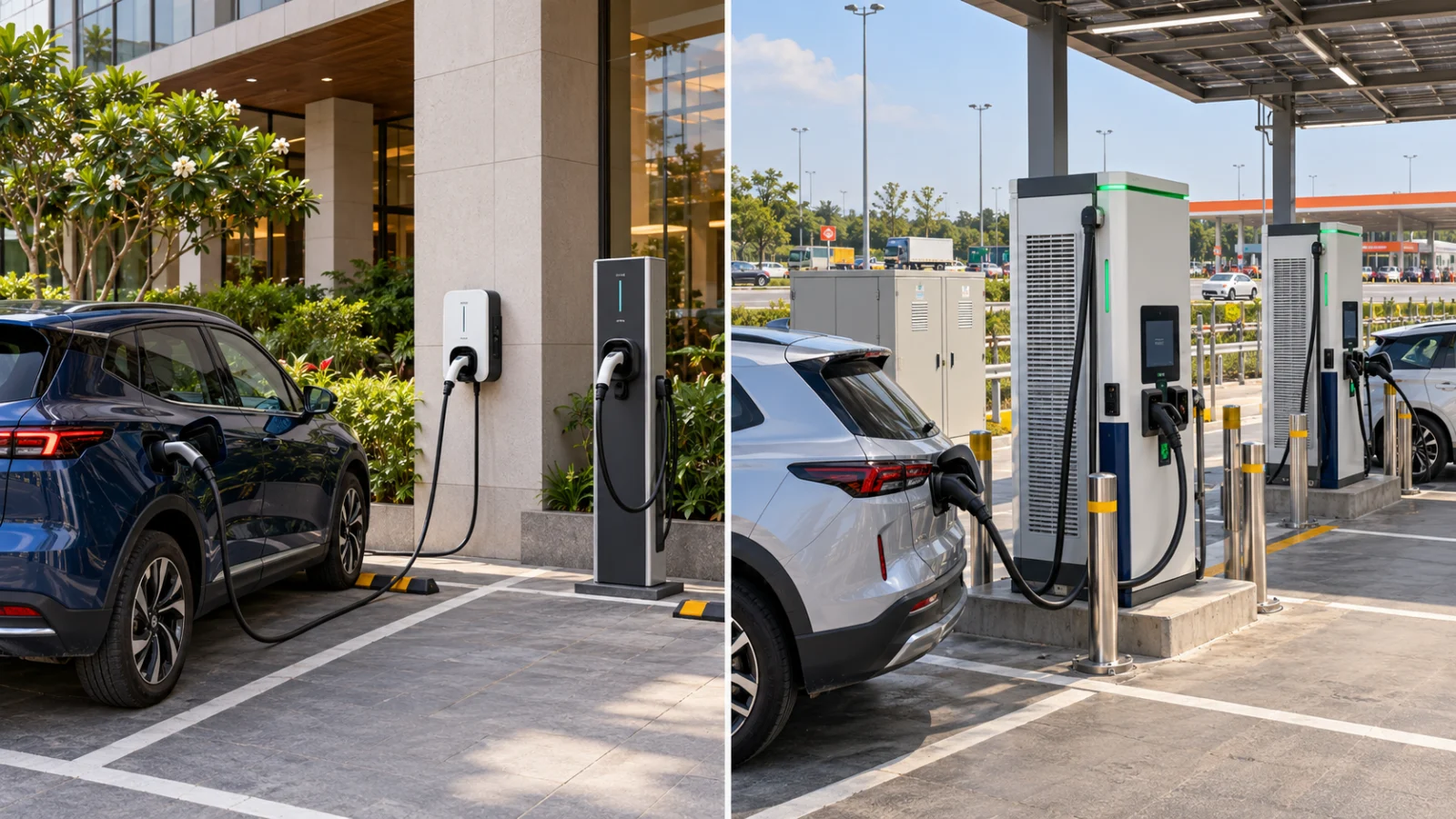
| 3.3–7.4 kW AC | Residential and extended parking | Vehicle compatibility and available load |
| 11–22 kW AC | Offices, hotels and parking | Onboard charger limitations |
| 30–60 kW DC | Commercial sites and fleets | Demand and electrical requirements |
| 120 kW+ DC | Highway and high-utilisation hubs | Power supply and investment |
Actual speed depends on vehicle charging limits, battery temperature and condition, and available charging power.
Evaluate Site and Electrical Feasibility
Assess sanctioned load, electrical connection, transformer requirements, cabling, parking layout and civil works before selecting equipment.
Check Equipment and Software Compatibility
Review connectors, vehicle categories, OCPP compatibility, remote monitoring, charging records, payments and integrations.
Review Maintenance and Operational Support
Ask about response times, spare-parts availability, preventive maintenance, downtime handling and support coverage.
Compare the Complete Commercial Proposal
Compare full installation cost, equipment ownership, software and energy costs, warranties, service terms and revenue sharing—not charger price alone.
For an explanation of investment packages and eligibility, see the EV charging station franchise in India page.
EV Charging Station Franchise Cost in India (2026)
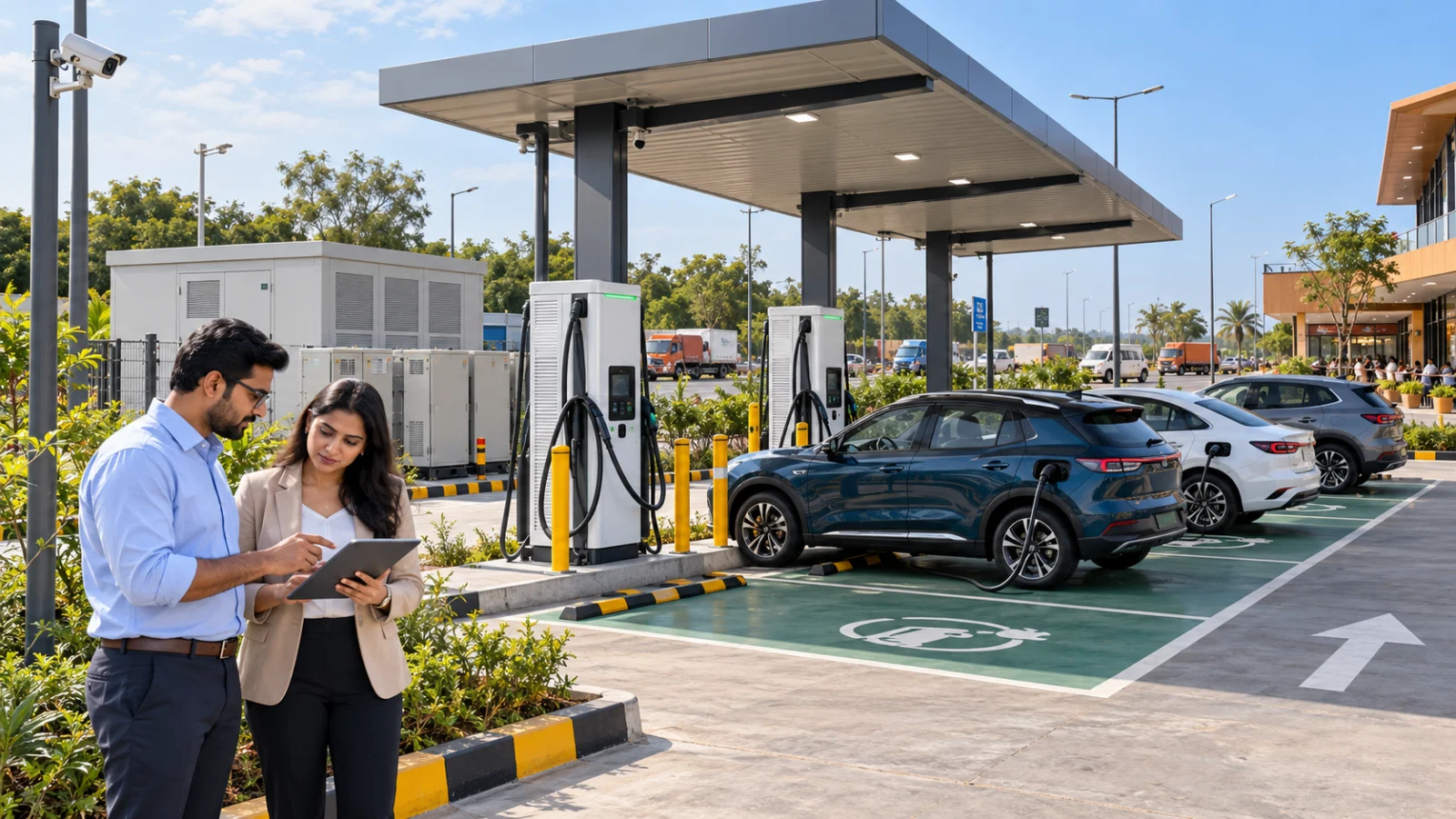
EV charging station franchise cost depends on capacity, electrical infrastructure, site conditions, equipment specifications and business model. A small commercial site and a multi-charger highway hub can have very different project budgets.
To model site-specific revenue assumptions, use the EV charging revenue calculator as an initial planning tool, not a guaranteed forecast.
EarthtronEV Franchise Investment Examples
| Charger capacity | Indicative setup cost | Typical application |
| 40 kW DC | ₹10–14 lakh | Small commercial locations |
| 60 kW DC | ₹14–20 lakh | Commercial/taxi hubs |
| 150 kW DC | ₹28–45 lakh | Highway and fleet charging |
| 180 kW DC | ₹40–55 lakh | Higher-power commercial sites |
| 240 kW DC | ₹55–75 lakh | High-traffic hubs |
| 360 kW DC | ₹80–95 lakh | Fleet and heavy-vehicle depots |
| 480 kW DC | ₹95 lakh–₹1 crore+ | Large high-power facilities |
These are company-advertised indicative ranges, not independently audited industry-wide prices. Scope, land, electricity upgrades, taxes and contractual exclusions may change totals.
What Is Included in Setup Costs?
The project budget may include charger hardware, connection and sanctioned load, transformer upgrades, cables, civil works, safety equipment, parking facilities, networking, software, testing and commissioning. Operating expenditure can include electricity, insurance, rent, servicing, staff and software fees. Charger-only pricing is not full turnkey project cost.
Is an EV Charging Franchise Profitable in India?
A charging business can earn revenue, but profitability is not guaranteed. Assess energy delivered, utilisation, tariffs, availability, electricity expenses, rent, maintenance and the investor’s contractual share of net cash flow. Request scenario-based projections before investing.
Further reading: EV Charging Franchise: Cost vs Revenue and Break-Even Timeline Explained
EV Charging Station Franchise Companies in India
EarthtronEV, Statiq and Bolt.Earth publicly advertise FOCO-style franchise programmes; Tata Power also promotes franchise opportunities. Other charging companies may offer equipment supply, commercial partnerships or location-host arrangements without a standard retail franchise.
FOCO, FOFO and COCO Business Models
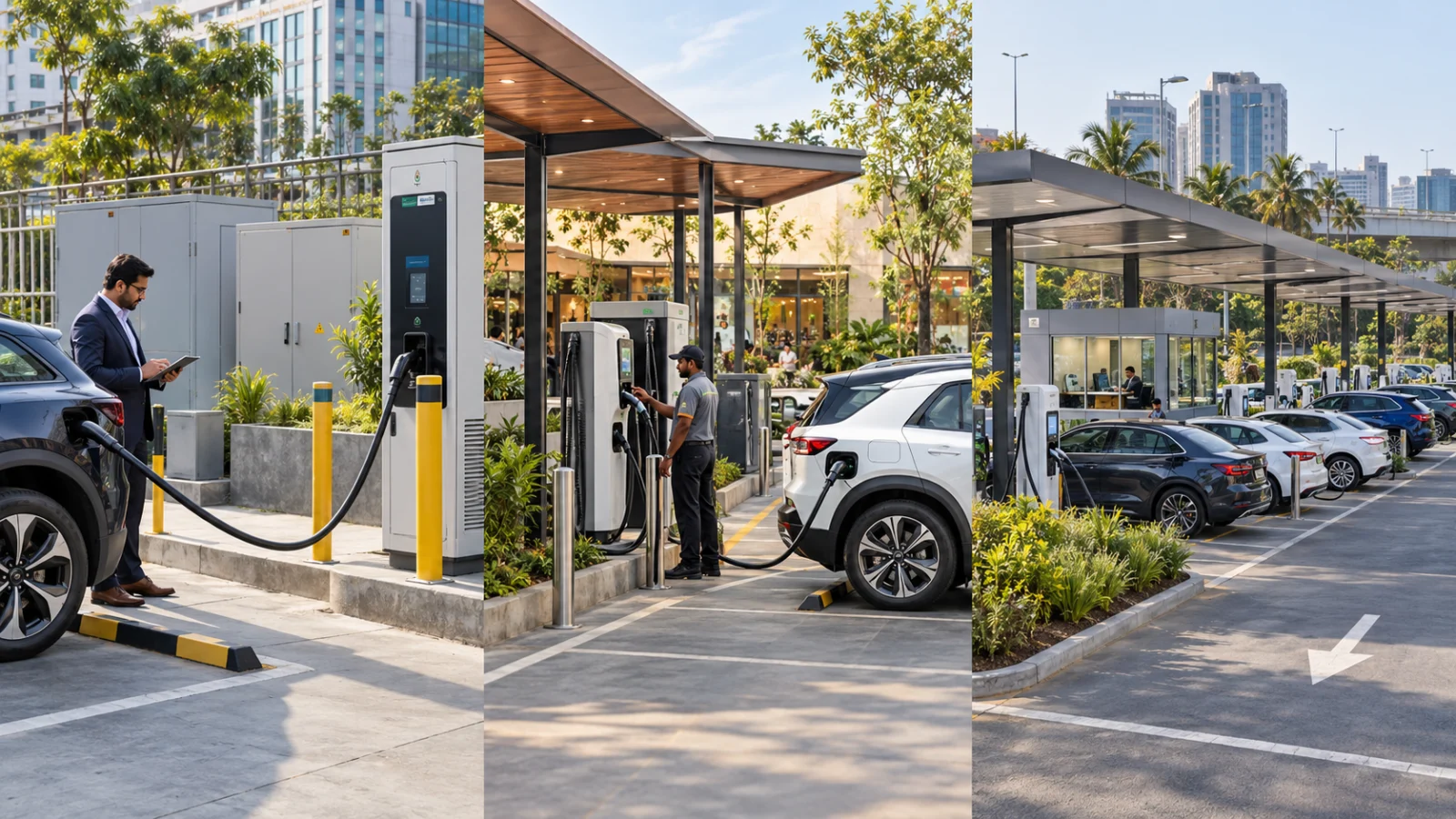
| Charging type | Typical application | Main consideration |
| 3.3–7.4 kW AC | Residential and extended parking | Vehicle compatibility and available load |
| 11–22 kW AC | Offices, hotels and parking | Onboard charger limitations |
| 30–60 kW DC | Commercial sites and fleets | Demand and electrical requirements |
| 120 kW+ DC | Highway and high-utilisation hubs | Power supply and investment |
Check ownership, electricity charges, support, revenue settlement, warranties, penalties, contract duration, and exit terms in writing.
For installation settings and site examples, explore commercial EV charging projects and review the highway EV charging station projects for motorway-oriented use cases.
Why Consider EarthtronEV for EV Charging Infrastructure?
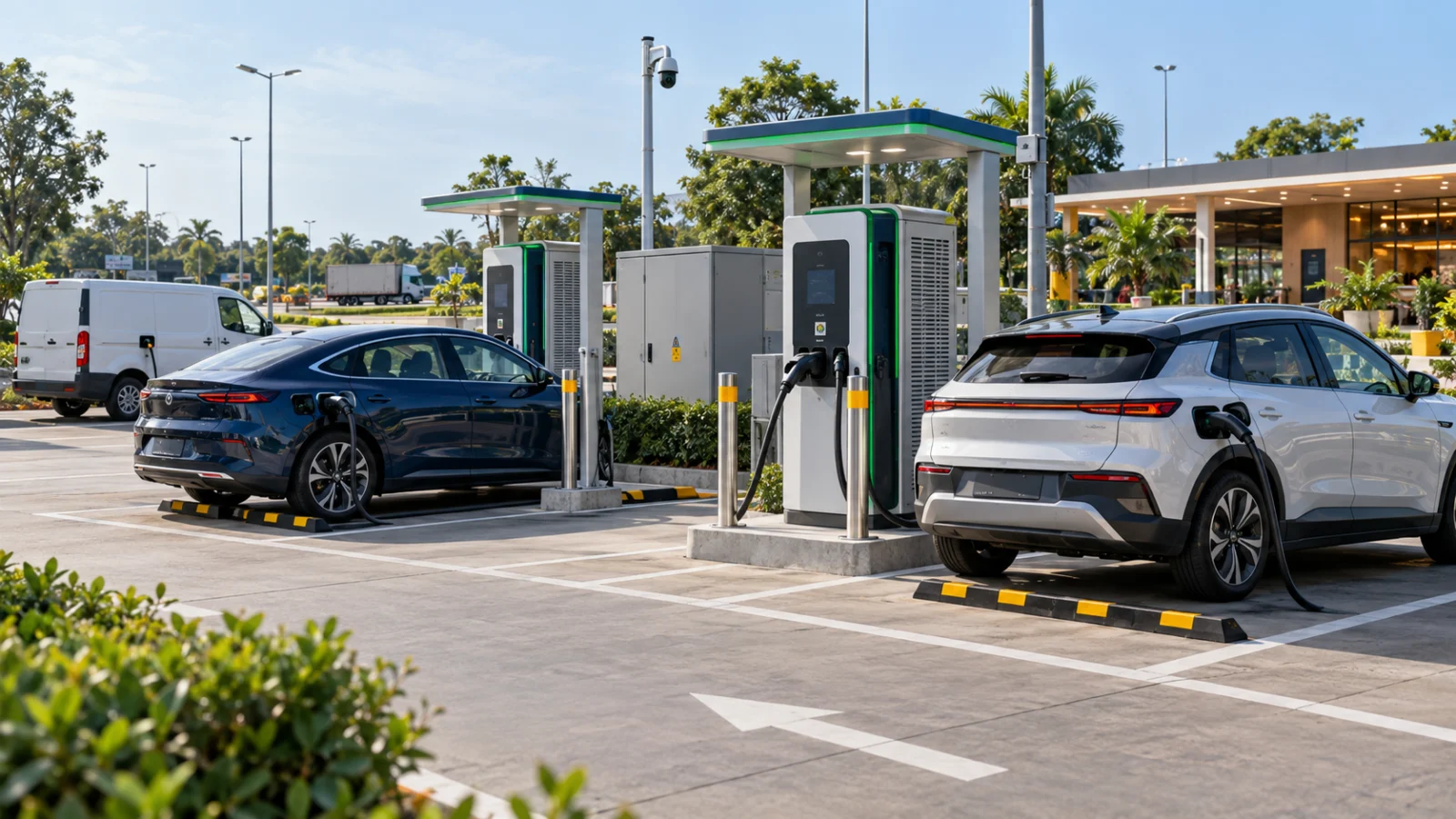
EarthtronEV positions its commercial offering around AC and DC charging solutions, charging infrastructure installation, fleet projects, software-led monitoring and managed franchise partnerships.
- AC/DC charging systems for offices, commercial parking and DC fast charging applications.
- Fleet and commercial project support including site planning and infrastructure deployment.
- Charging station management tools for billing, monitoring and analytics.
- FOCO franchise options with company-managed aspects of deployment and operation.
- Site assessment, electrical planning and operational support, subject to the final agreement.
Buyers should verify current equipment performance, certifications, installed-project references, service reach and investment terms before signing. Explore: https://www.earthtronev.com/ and https://www.earthtronev.com/business-inquiry/
Property owners and potential partners can submit their project requirements through EarthtronEV’s business enquiry page for a proposal aligned to their location and charging demand.
Conclusion
The top 10 EV charging stations companies in India address different parts of the electric mobility ecosystem. Tata Power, Statiq, ChargeZone and Jio-bp pulse are relevant to charging networks; Kazam and Exicom focus on technology and equipment; and EarthtronEV may be considered for commercial infrastructure and managed franchise options. Select a partner based on project feasibility, compatibility, maintenance and overall economics rather than branding alone.
Frequently Asked Questions
Which are the top EV charging companies in India?
Tata Power EZ Charge, Statiq, ChargeZone, Jio-bp pulse, Bolt.Earth, EarthtronEV, Kazam, Exicom, Zeon Charging and Ather Energy are among the companies supplying charging infrastructure or operating networks in India. Selection depends on the intended use.
Which company is best for an EV charging franchise in India?
There is no single best provider for all investors. Compare EarthtronEV, Statiq, Bolt.Earth and other verified programmes on investment, utilisation, ownership, operating support and contracts.
What is the minimum franchise investment?
No universal minimum exists. EarthtronEV advertises starting investment around ₹10 lakh for a 40 kW DC setup, subject to the site and final scope.
Can I install a charging station on commercial property?
Yes, subject to electrical feasibility, site access, local requirements, charging demand and the agreement with the provider.
Do charging stations require a separate licence?
In India, setting up EV charging stations has been described by the government as an unlicensed activity; applicable electrical, safety, connection and local compliance requirements still apply. Verify current regulations with responsible authorities.
What is the difference between AC and DC charging?
AC charging is commonly used where vehicles are parked longer; DC charging supports faster charging where the vehicle, battery and available power allow.
How long does it take to recover an investment?
There is no guaranteed payback period. It depends on capital cost, charger use, energy sales, operating expenses and contractual cash flows.