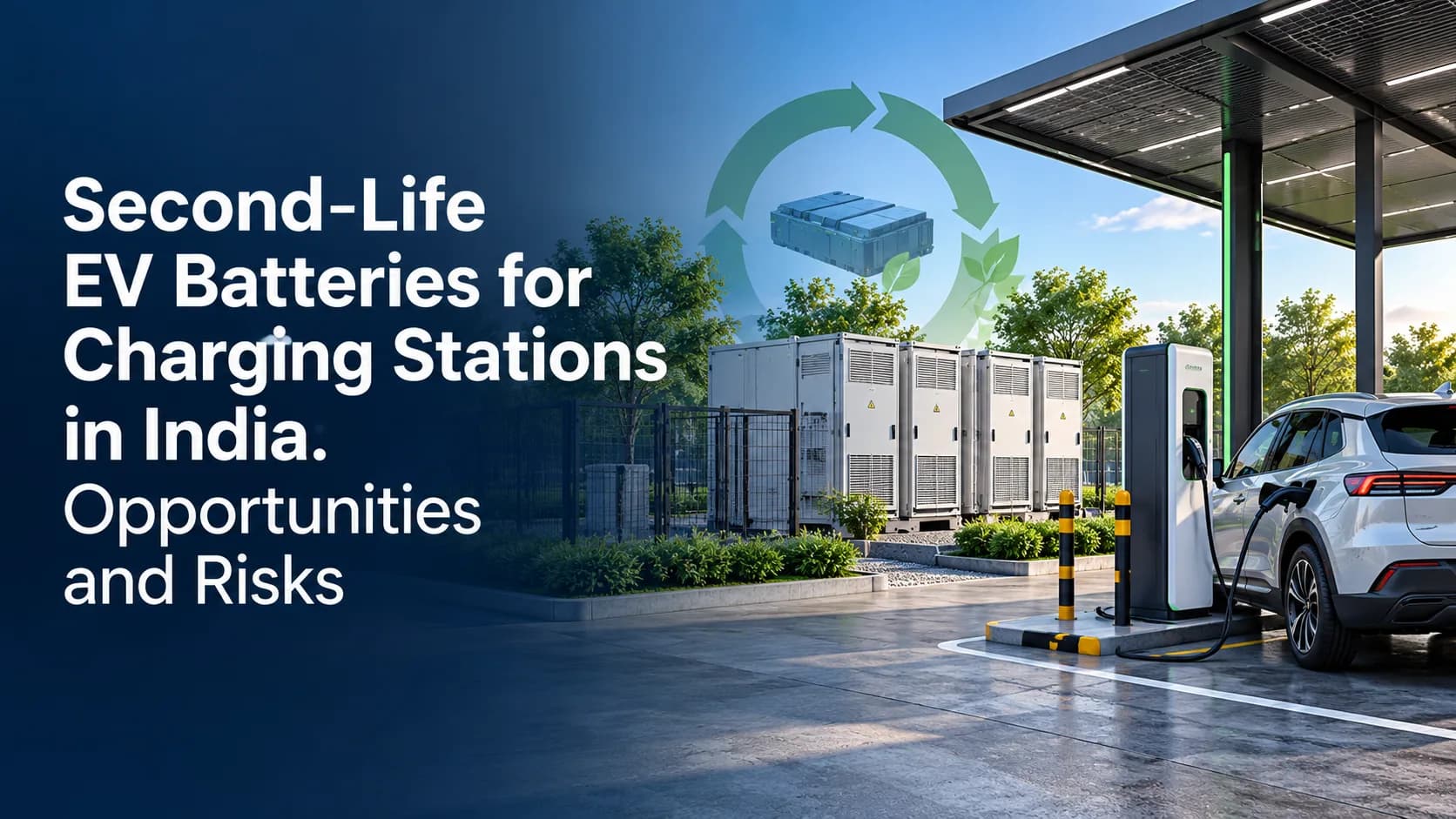
A battery that no longer meets an electric vehicle’s operating requirements may still have useful energy storage capacity. Instead of immediately recovering its materials through recycling, it may be possible to assess and repurpose it for a stationary application.
For EV charging stations, this creates an interesting opportunity: could batteries previously used in vehicles help supply energy to the next generation of EVs?
The answer depends on their condition, the charging station’s requirements and the cost of turning used batteries into a reliable storage system.
Second-life batteries can support charging infrastructure, but remaining capacity alone does not establish whether a battery is suitable. Testing, system integration, warranty terms and the intended operating schedule all matter.
What Are Second-Life EV Batteries?
Second-life EV batteries are batteries previously used in electric vehicles that are assessed and repurposed for another application.
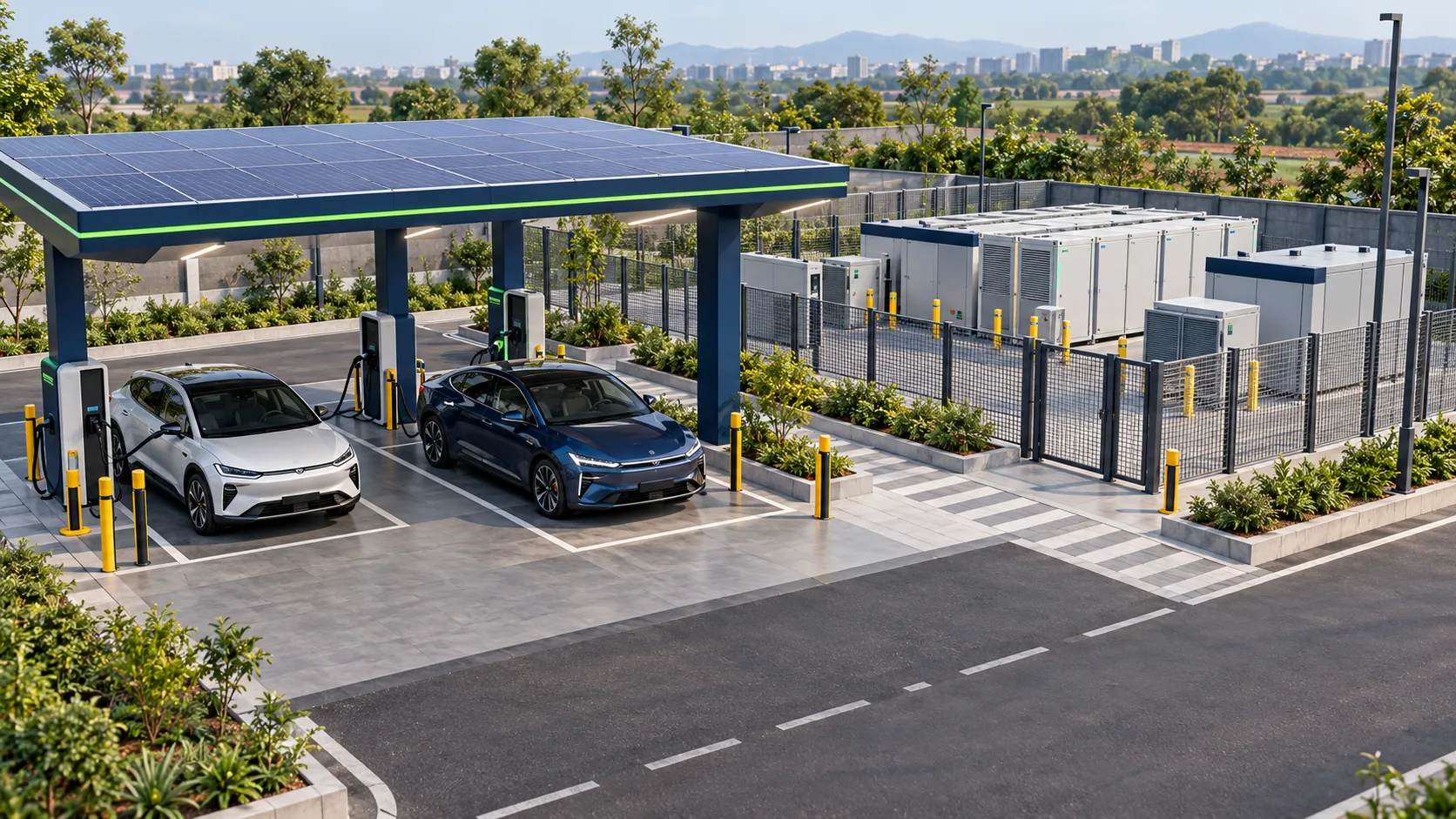
At a charging station, they would typically become part of a stationary battery energy storage system, or BESS. This system stores electricity and releases it when required.
Repurposing differs from recycling:
- Repurposing extends the useful service of suitable batteries or battery components.
- Recycling processes batteries to recover materials.
A second-life battery will still need an appropriate end-of-life route when it can no longer perform its new task.
The U.S. Department of Energy’s Alternative Fuels Data Center identifies stationary storage as a technically feasible second-use application. It also highlights the additional work involved, including testing, reassembly, integration and installation.
This means a used EV battery and a finished stationary storage product are very different purchases.
How Can Second-Life Batteries Support an EV Charging Station?
The battery’s role depends on the station’s energy demand and electricity supply.
Supporting Short Demand Peaks
Several vehicles arriving together can create a short period of high electricity demand.
A storage system can discharge during that period and recharge when demand falls, provided its power rating, available energy and controls support the requirement.
This may help manage site demand. Whether it reduces electricity costs depends on the applicable tariff and how the station operates.
Storing Solar Electricity
Where a charging site has solar generation, a battery can store some electricity for later use.
However, solar generation, charging demand and storage capacity must be evaluated together. A battery that is regularly full before midday or empty before the evening peak may be poorly matched to the site.
Providing Selected Backup Services
Storage may support certain loads during a power interruption if the electrical system is specifically designed for that function.
A grid-connected battery installation does not automatically provide backup power. Islanding capability, protection, controls and the required backup loads must be included in the design.
Buffering a Limited Electricity Connection
Storage can temporarily supplement a constrained grid connection. It cannot sustain a permanent energy shortfall.
If vehicles consume more energy than the grid and on-site generation can replenish over the operating period, the battery will eventually run down.
For related planning considerations, read EarthtronEV’s guide to DISCOM electricity connections for EV charging stations.
A Simple Example: Power and Energy Are Different
Imagine a charging site needs an additional 50 kW for 30 minutes during a busy period.
The energy required at the delivery point is:
50 kW × 0.5 hours = 25 kWh
The storage system must therefore deliver both:
- At least 50 kW of power during that period.
- At least 25 kWh of usable output energy.
Its required battery capacity will be higher once conversion losses, operating reserves and degradation allowances are considered.
A battery advertised as “100 kWh” does not automatically meet the requirement. Its permitted discharge power could be too low, or its usable capacity could differ substantially from its original vehicle rating.
This is an illustrative calculation, not a system specification. Actual sizing requires the site’s demand profile and equipment data.
Why State of Health Is Only the Starting Point
State of health, or SOH, describes battery condition relative to a reference condition. However, suppliers may calculate or report it differently.
A stated capacity percentage does not reveal every issue relevant to stationary operation.
Two batteries with similar measured capacity may have different internal resistance, temperature behaviour, fault histories or rates of further degradation.
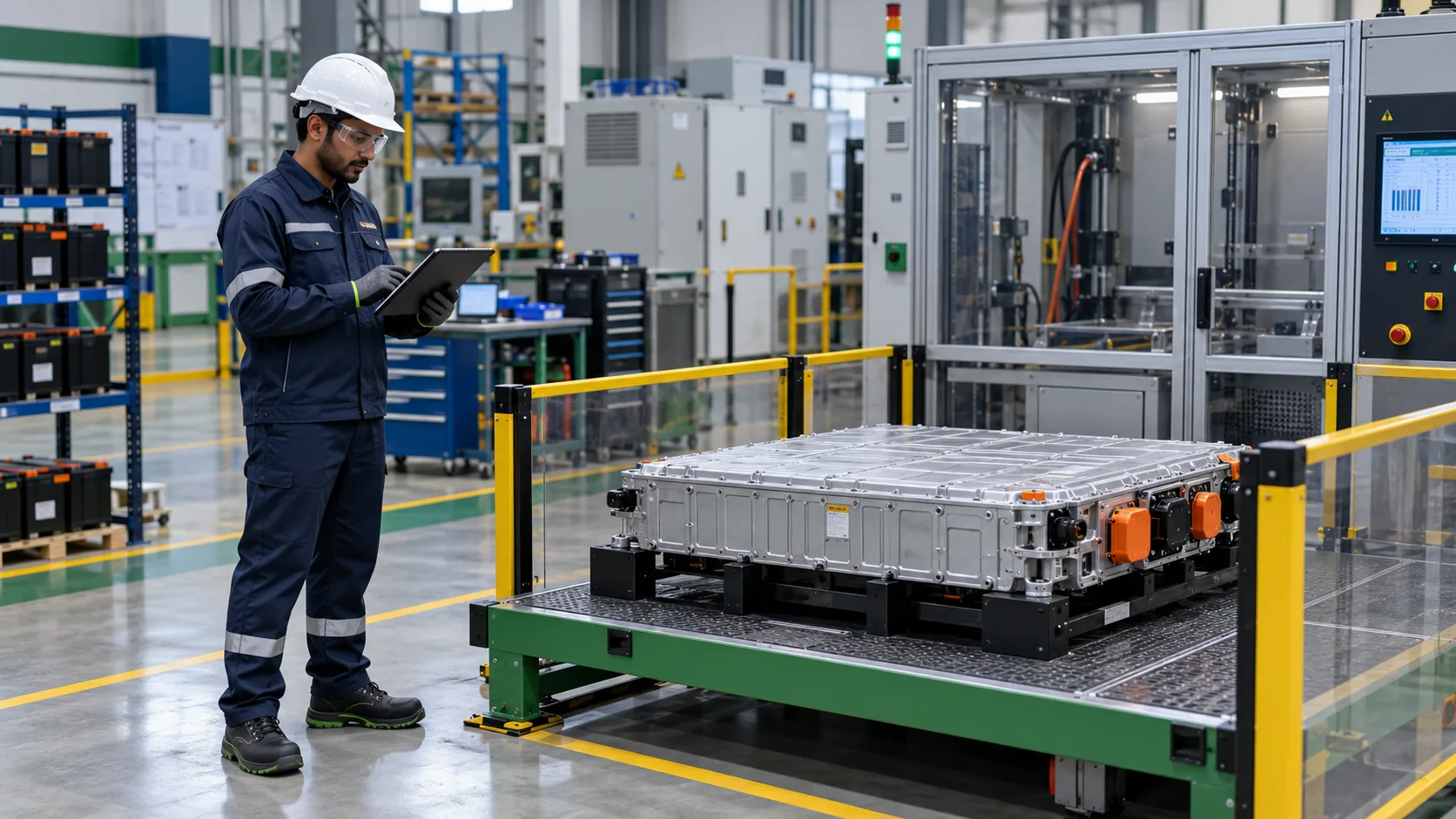
A technical assessment should examine:
- Measured usable capacity under defined test conditions.
- Permitted charging and discharging power.
- Variation between cells or modules.
- Insulation and electrical integrity.
- Available service and fault history.
- Evidence of physical damage or abnormal heat exposure.
- Compatibility with the proposed battery management system.
- Performance at the intended operating temperature.
UL Solutions’ discussion of second-life battery assessment emphasises individual evaluation because batteries experience different conditions during their first life.
The practical lesson is straightforward: purchase a documented storage capability, not just a claimed remaining-capacity percentage.
Testing the Battery Is Different From Evaluating the Complete System
A battery can pass an assessment and still be unsuitable for a particular installation.
The complete system includes the battery management system, power conversion equipment, cooling, enclosure, electrical protection and operating controls.
These components must function together across the expected duty cycle.
UL 1974 addresses the sorting and grading process for batteries intended for repurposing or remanufacturing. It should not be treated as a blanket approval of every finished storage installation or as proof of compliance with all Indian requirements.
Ask suppliers to identify exactly what their test reports or certifications cover: the repurposing process, particular battery components, the finished product or the installation.
For an Indian site, the design also needs to account for local ambient conditions, drainage, equipment access and the applicable electrical and fire requirements.
Are Second-Life Batteries Always Cheaper?
A lower battery purchase price does not guarantee a lower project cost.
The Department of Energy’s overview lists costs beyond acquiring used batteries, including transport, sorting, testing, remanufacturing, system integration and installation.
Operators should also evaluate ongoing maintenance, energy losses, replacement requirements and warranty support.
A Pacific Northwest National Laboratory study focused on second-life batteries at EV charging stations includes charging-station operation, dispatch strategies and battery degradation in its economic assessment framework.
That approach matters because the same battery can produce very different results at different sites.
| Comparison factor | What to request from suppliers |
|---|---|
| Usable energy | Guaranteed capacity at commissioning and under stated conditions |
| Output power | Continuous and short-duration ratings |
| Efficiency | Defined measurement boundary and operating conditions |
| Service life | Supported life assumptions for your duty cycle |
| Warranty | Capacity, throughput, operating limits and exclusions |
| Support | Response times, spare parts and replacement arrangements |
| Total cost | Installed cost plus expected operating and replacement costs |
Compare second-life storage against a new battery system and a baseline without storage. In some cases, charging schedules or dynamic load management may address the problem more economically.
Traceability and End-of-Life Planning in India
Battery sourcing should be documented from the beginning.
India’s CPCB battery waste management portal provides rules, registration information and guidance for producers, recyclers and refurbishers.
Project teams should verify which obligations apply to each participant in their supply chain rather than assume that a supplier’s general business registration covers battery refurbishment.
Procurement documents should identify the source of the batteries, the party responsible for refurbishment, the system integrator and the organisation handling eventual collection or recycling.
A useful commercial question is: Who takes responsibility if a module fails, the supplier stops operating or the system reaches the end of its useful life?
Clear ownership of these responsibilities is part of evaluating the product.
When Does a Second-Life System Deserve Further Evaluation?
A second-life proposal is worth investigating when the station has a defined storage requirement, a traceable battery supply and an integrator willing to guarantee measurable performance.
It becomes less convincing when the business case relies mainly on inexpensive used modules, uncertain battery history or an assumed service life without supporting evidence.
Before procurement, request a site-specific proposal covering:
- The problem storage is intended to solve.
- The charging-demand profile used for sizing.
- Battery test results and acceptance criteria.
- Guaranteed usable energy and power.
- Controls, protection and thermal management.
- Installed cost and lifecycle assumptions.
- Warranty and maintenance responsibilities.
- Collection and recycling arrangements.
EarthtronEV’s EV charging station equipment guide provides additional context for considering the wider station infrastructure.
Conclusion
Second-life EV batteries could give suitable vehicle batteries another useful role at charging stations in India. Potential applications include managing short demand peaks, storing solar electricity and supporting selected backup requirements.
Their value depends on verified condition, appropriate system design and the cost of delivering reliable energy over the project’s lifetime.
For station owners, the right starting point is a clearly defined storage requirement followed by a comparison of second-life batteries, new batteries and alternatives such as load management.
To discuss charging infrastructure requirements for your location, contact EarthtronEV.