Quick Answer
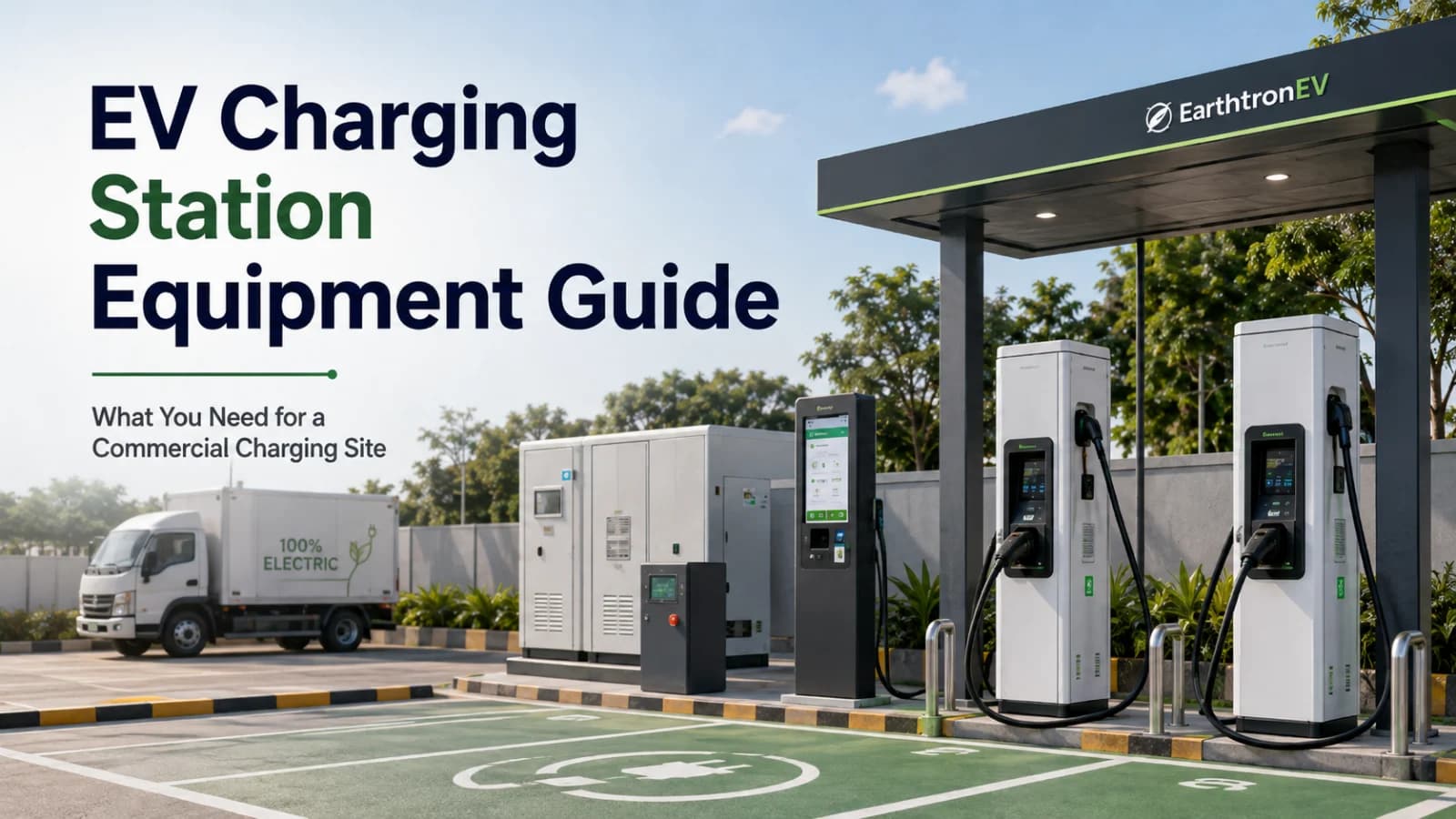
A commercial EV charging site needs a complete equipment ecosystem, not only charging guns and charger cabinets. Core equipment can include AC or DC chargers, connectors and cables, electrical distribution panels, metering, earthing and surge protection, networking hardware, charger-management software, payment or access systems, protective bollards, signage and supporting civil infrastructure.
The correct equipment mix depends on the location, expected vehicles, charging speed, number of bays, available electrical load and whether the site is public, private, fleet-focused or destination-based. Buying equipment before defining the use case is one of the easiest ways to create an inefficient charging site.
What counts as EV charging station equipment?
EV charging station equipment includes every component needed to deliver electricity safely from the site’s power source to the vehicle and to manage the charging session. The charger is the centrepiece, but it depends on upstream electrical equipment, physical protection, communication systems and a usable parking layout.
For a simple private installation, the equipment list may be short. A multi-bay commercial station is more complex because it must support repeated public use, remote monitoring, multiple simultaneous sessions, payment or authentication, fault response and safe vehicle circulation.
AC chargers
AC chargers deliver alternating current to the vehicle, where the onboard charger converts it for the battery. They are widely used at locations where vehicles remain parked for longer periods, such as offices, hotels, residential communities, campuses and destination properties.
Commercial AC chargers should be selected based on connector compatibility, output rating, mounting style, cable configuration, network capability and the type of user authentication required. For a managed commercial site, networked AC chargers are generally more useful than isolated units because the operator can monitor sessions and availability remotely.
DC fast chargers
DC fast chargers convert power before it reaches the vehicle and can deliver higher charging power directly to the battery system. They are suited to public charging hubs, highways, fleet sites and locations where users need shorter charging stops.
A DC charger is only one part of the fast-charging system. The site must also provide sufficient electrical supply, suitable distribution equipment, safe cable routing, vehicle protection and adequate space for users to manoeuvre. Operators should match charger power to the vehicles likely to use the location instead of selecting high power only for marketing value.
Charging connectors, cables and cable-management hardware
Connectors and cables are the components that users handle most often, so durability and ergonomics matter. The connector must be compatible with the target vehicles, and the cable should be long enough to reach common charging-port positions without lying across pedestrian paths or being stretched under tension.
Cable holsters, retractors or other management solutions can help keep charging areas organised. Damaged or poorly stored cables are both an operational and safety problem. Commercial equipment should therefore make it easy for users to return the connector to a protected position after charging.
Electrical distribution and protection equipment
Behind every charger is an electrical distribution system that controls how power is delivered. Depending on the site, this can include incoming switchgear, distribution panels, circuit protection, isolation devices, metering, transformers or other upstream equipment.
Protection equipment is essential because EV charging can involve sustained electrical loads. Correct cable sizing, over-current protection, fault protection, earthing and surge protection help protect users, vehicles and expensive charging equipment. These systems should be designed by qualified professionals for the actual site load and installation conditions.
Earthing and surge protection
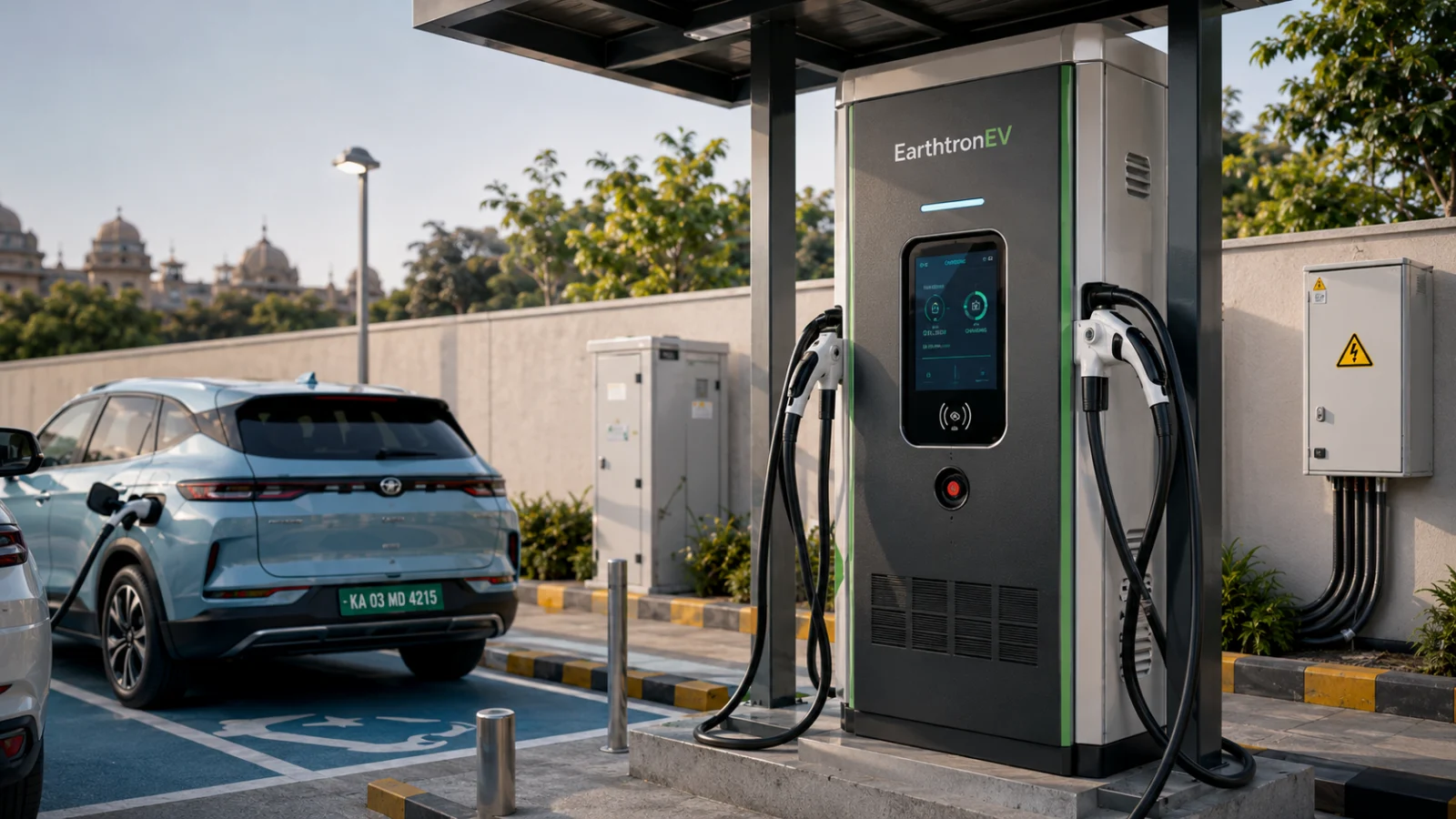
Earthing provides a safe path for fault current and is a core requirement for EV charging infrastructure. The charger, electrical cabinets and associated equipment must be connected to a properly designed earthing system appropriate for the site.
Surge protection helps reduce the risk of damage caused by transient electrical events. Because commercial chargers include sensitive power electronics and communication components, electrical protection should be treated as part of the core equipment design rather than an optional accessory.
Metering and energy-monitoring equipment
Commercial operators need to understand how much energy each site and charger is using. Metering can support billing, operational analysis, load management and reconciliation between the energy consumed by the site and the charging sessions recorded by the software platform.
In larger installations, energy monitoring can also reveal peak demand and help operators understand whether additional chargers can be added within the existing power envelope. Good metering turns the electrical system into an operational data source.
Charger management system and backend software
A networked charging station is managed through software as well as hardware. A charger management system can show charger status, start or stop sessions, configure tariffs, manage users, monitor faults and produce operational reports.
For multi-site operators, backend software is particularly important because technicians cannot physically inspect every charger continuously. Remote monitoring allows the operations team to see unavailable equipment, communication problems and session failures and to respond more quickly.
Networking and communication equipment
Chargers need dependable connectivity to communicate with the backend. Depending on the site, this may use wired internet, mobile connectivity or another approved communication method. The network design should provide a stable signal at the charger location and a practical recovery plan for interruptions.
Communication hardware should be protected from environmental exposure and unauthorised access. Where several chargers share a local network, the configuration should be documented so that future maintenance does not become dependent on a single technician’s memory.
Payment and user-authentication hardware
Public or commercial charging sites need a clear way to identify users and authorise sessions. Depending on the operating model, this can involve mobile applications, RFID, QR-based flows, account access or other payment and authentication methods.
The best user experience is simple and predictable. Users should be able to understand the price, start charging and end the session without unnecessary steps. Equipment and software must work together because a reliable charger can still create a poor experience if the authentication or payment flow fails.
Load management and smart power control
When multiple chargers operate at the same site, the total connected charging capacity can be higher than the power that should be drawn at one time. Load management can distribute available power between chargers according to site rules and current demand.
This can help operators use electrical capacity more efficiently and prepare for future expansion. However, load management should be designed with realistic user expectations. Aggressive power sharing that makes every charging session unexpectedly slow can reduce customer satisfaction even if it protects the site’s electrical limit.
Charger foundations, pedestals and mounting hardware
Commercial chargers need stable mounting and the correct clearances for operation and maintenance. Floor-mounted chargers may require reinforced foundations or dedicated plinths. Wall-mounted or pedestal-mounted equipment must use suitable structural support and weather-resistant installation methods.
The base design should also prevent water accumulation and protect cable entry points. A neat, well-finished foundation makes the site safer and reduces the chance of physical damage over time.
Bollards and impact protection
Chargers and electrical cabinets are often positioned close to moving vehicles, so physical protection is important. Bollards, wheel stops and protective barriers can reduce the risk of accidental vehicle impact while preserving access for users and maintenance teams.
Protection equipment should not make the charging bay difficult to use. The layout should balance equipment safety with cable reach, door opening and vehicle manoeuvring.
Signage, bay markings and wayfinding
Good charging infrastructure should be easy to recognise before the vehicle reaches the bay. Directional signage can guide drivers from the site entrance, while clear bay markings show where EV charging is permitted.
At the charger, simple operating instructions and support information help first-time users. Consistent wayfinding also improves traffic flow because drivers spend less time searching or reversing within the site.
Lighting, canopy and environmental protection
Charging stations are frequently used early in the morning, late at night and during poor weather. Adequate lighting improves safety and makes charger screens and connectors easier to use. A canopy can improve user comfort and protect equipment in suitable locations, although it must be designed around ventilation, electrical clearances and local site requirements.
Environmental planning should also consider heat, dust, rain, water drainage and exposure to direct sunlight. Equipment should be selected and installed for the conditions it will actually face.
Safety and emergency equipment
A commercial site needs a clear emergency approach. Depending on the charger and site design, this can include emergency-stop or isolation provisions, electrical warning labels, access control for electrical cabinets and other site-specific safety measures.
Safety equipment works best when it is visible, maintained and supported by procedures. Operators should know who can isolate equipment, how faults are reported and how the site is secured if a charger is damaged.
Optional equipment for larger commercial sites
Larger charging hubs may add equipment that improves operations or user experience. Examples can include digital information displays, queue-management systems, CCTV, access-control barriers, solar generation, energy storage or enhanced energy-management systems where these features fit the site economics.
Optional equipment should always solve a real problem. Adding technology without a clear operational purpose increases maintenance complexity and can raise cost without improving utilisation.
How to choose the right equipment mix for your site
The equipment list should begin with the use case. Identify the target vehicles, required charging speed, expected number of simultaneous sessions, user dwell time, available electrical capacity and the type of access required. Then select the charging and supporting equipment around those needs.
It is also important to plan for expansion. A site may begin with a small number of chargers but should reserve space, cable routes and electrical capacity strategy for future growth where practical. Scalable design can reduce the cost and disruption of adding new chargers later.
Commercial charging equipment checklist
A practical equipment checklist for a commercial site may include:
- AC chargers, DC fast chargers or a planned combination
- Compatible charging connectors and durable cable assemblies
- Electrical panels, switching and circuit protection
- Earthing and surge-protection systems
- Metering and energy-monitoring equipment
- Networking and communication hardware
- Charging-station management software
- Payment or user-authentication system
- Load-management capability where required
- Foundations, pedestals and mounting hardware
- Bollards, wheel stops and equipment protection
- EV bay markings, signage and wayfinding
- Lighting and weather protection where appropriate
- Safety labelling and emergency arrangements
- Maintenance access and spare-component planning
Conclusion
EV charging station equipment extends far beyond the charger itself. A reliable commercial site combines charging hardware with electrical distribution, protection systems, software, networking, physical safety equipment and a well-designed parking environment.
The correct equipment mix depends on how the location will be used. Operators should define the vehicle type, charging behaviour, electrical limits and commercial model before procurement. When the equipment stack is designed as one integrated system, the result is a charging site that is safer, easier to operate and better prepared for future expansion.
Prefer not to build and run a station yourself? With an EV charging station franchise from EarthtronEV, you invest in the station while we handle site assessment, approvals, installation and operations.
Related Reading
- EV Charging Station Installation in India: Complete Site-to-Commissioning Guide
- AC vs DC EV Chargers: Which One Is Best for Your EV Charging Station?
- Top EV Charger Manufacturers and Charging Companies in India (2026)
- EV Charging Station Setup Requirements in India
Learn more about DC fast chargers.