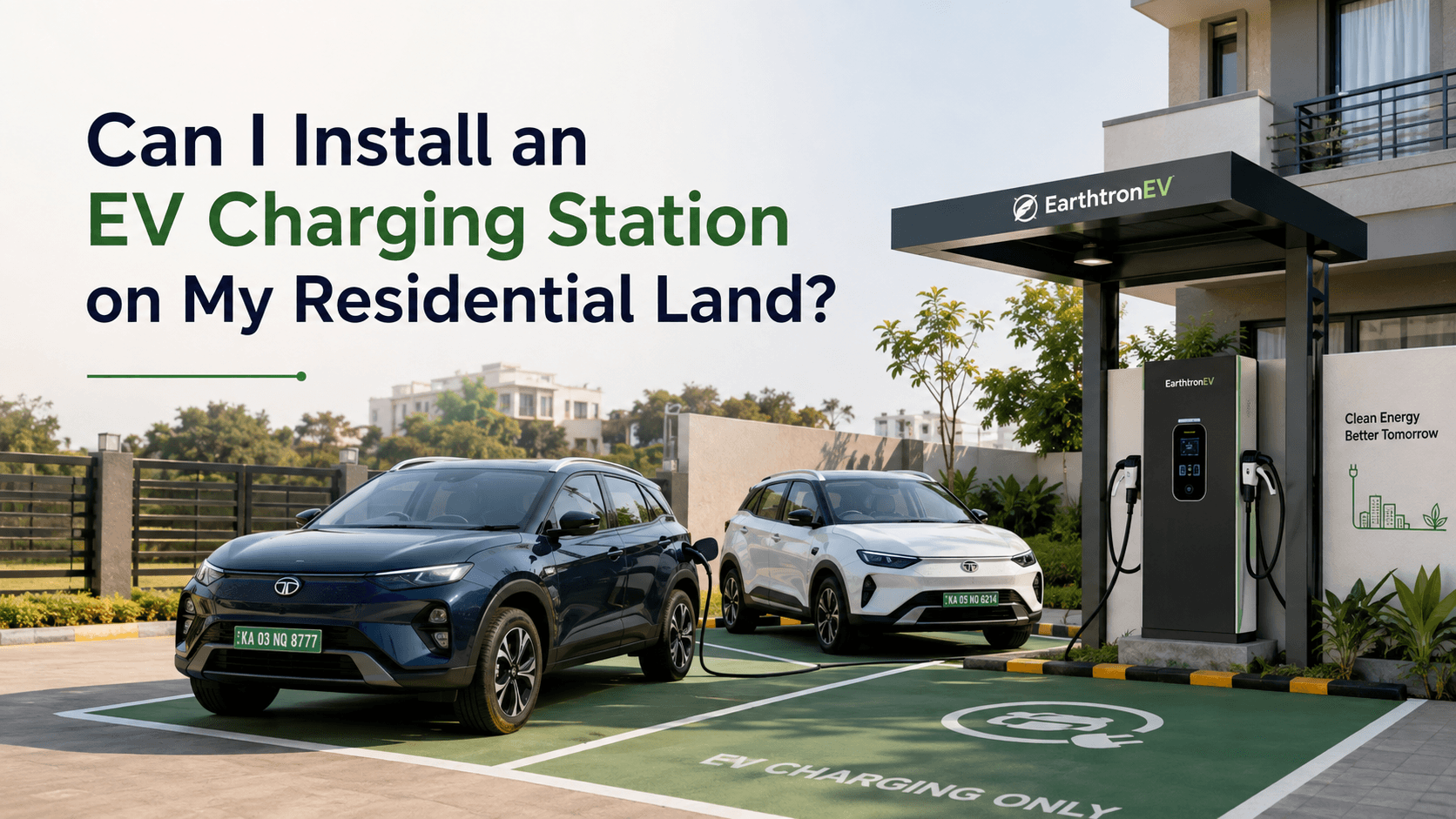
Quick Answer
Yes. Residential property can potentially support EV charging, but the correct setup depends on whether the requirement is private/home charging, society charging, or a publicly accessible commercial station. For an EarthtronEV franchise-style site, current published requirements indicate approximately 150 sq. ft. minimum, while the actual space and electrical load depend on charger type, parking layout, vehicle access, grid capacity, and applicable approvals. A standalone residential plot should therefore be assessed for site-specific feasibility rather than assumed to be automatically eligible.
Key facts covered in this guide:
- The difference between private/home charging and a public or commercial charging station
- Eligibility requirements for residential land and suitable residential-adjacent sites
- The full inquiry-to-installation process, step by step
- Location-partnership and franchise-investment pathways
- The main factors that affect cost, utilization, and earning potential
What Is an EV Charging Station Franchise on Residential Land?
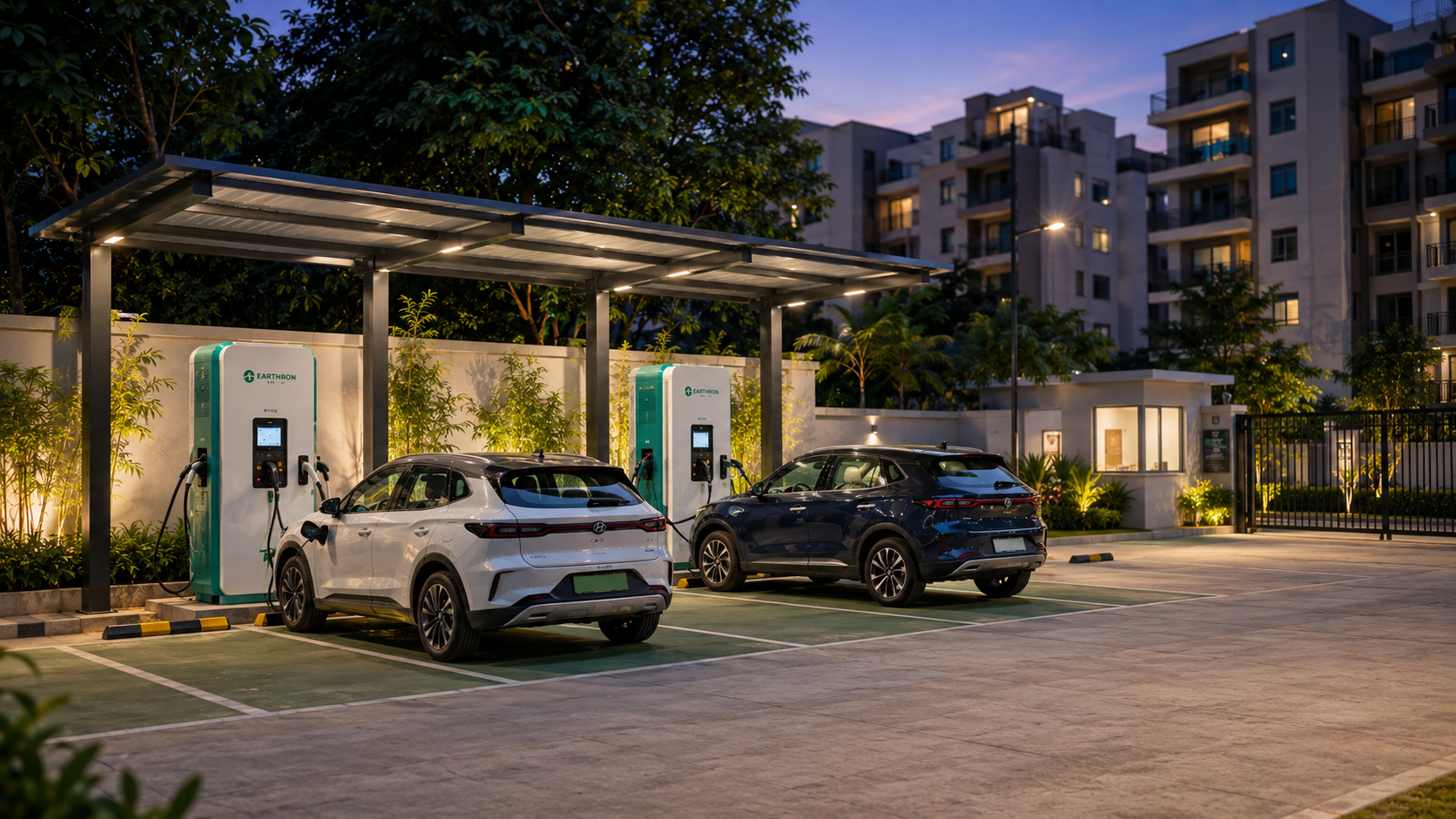
Installing a public or commercial EV charging station on residential land is different from installing a charger for personal home use. In a commercial setup, a suitable property may be evaluated for a location partnership or franchise arrangement in which charging equipment is installed for use by other EV drivers. The final commercial structure can involve lease, revenue-share, or franchise terms, while charger hardware, software, installation, operations, and maintenance responsibilities are defined in the approved proposal and signed agreement.
Is Residential Land Eligible for an EV Charging Station?
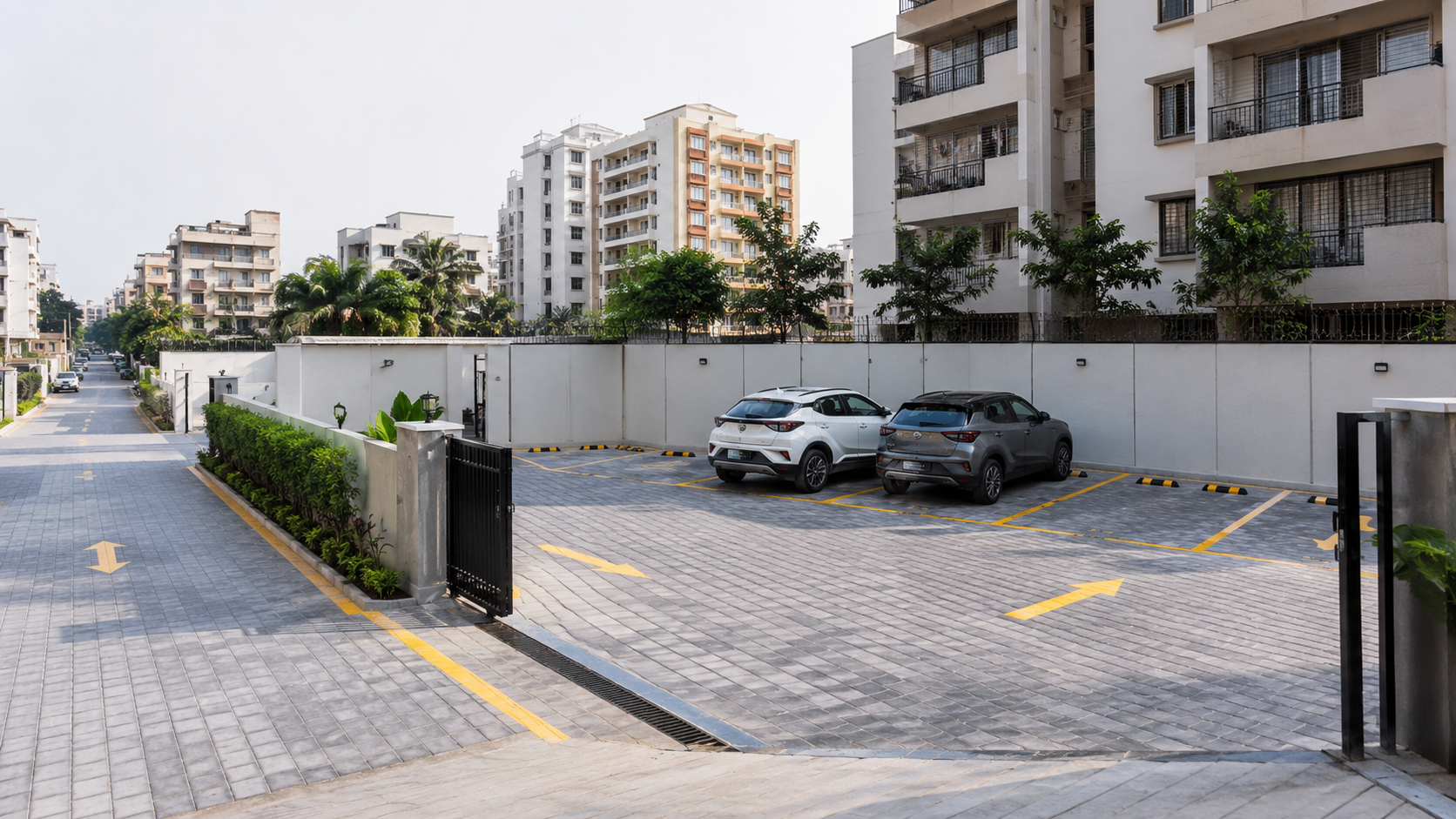
Short answer: Residential land can be considered, but eligibility is site-specific and should not be assumed from the land classification alone.
A residential plot, apartment compound, gated-society site, or residential-adjacent property may be suitable when vehicle access, parking, electrical capacity, local demand, and applicable land-use or society requirements support the proposed charging use. Strong candidate locations generally have one or more of the following characteristics:
- Direct or convenient access from a public road or well-used approach road
- Proximity to apartment complexes, gated colonies, housing societies, or other areas with regular EV movement
- Nearby daily-use destinations such as markets, offices, schools, transport points, or commercial clusters
- Enough safe parking and maneuvering space for vehicles to enter, charge, and exit without obstructing residential traffic
A site set back from the main road may still be considered if access, signage, parking, and the commercial use are practical and compliant. Final eligibility should be confirmed through a site-specific feasibility assessment.
Residential Land Eligibility Checklist
Use this checklist for an initial self-assessment before submitting the property for feasibility review:
- Approximately 150 sq. ft. minimum for an EarthtronEV franchise-style setup, with more space potentially required depending on charger configuration and parking layout
- Direct or practical vehicle access from a public or approach road
- A suitable electricity connection and sanctioned load, or the ability to obtain the electrical capacity required for the selected charger
- Clear ownership or lease documentation and no unresolved property dispute that would prevent installation
- Reasonable proximity to residential EV demand, commuter movement, fleet activity, or another repeat-use customer base
- No applicable land-use, municipal, society, RWA, or other restriction that would prevent the proposed public or commercial charging use
Meeting the checklist does not guarantee approval. Charger capacity, electrical upgrades, parking layout, local permissions, and the commercial model should be finalized only after the site has been evaluated.
What Does EarthronEV Evaluate During a Site Visit?
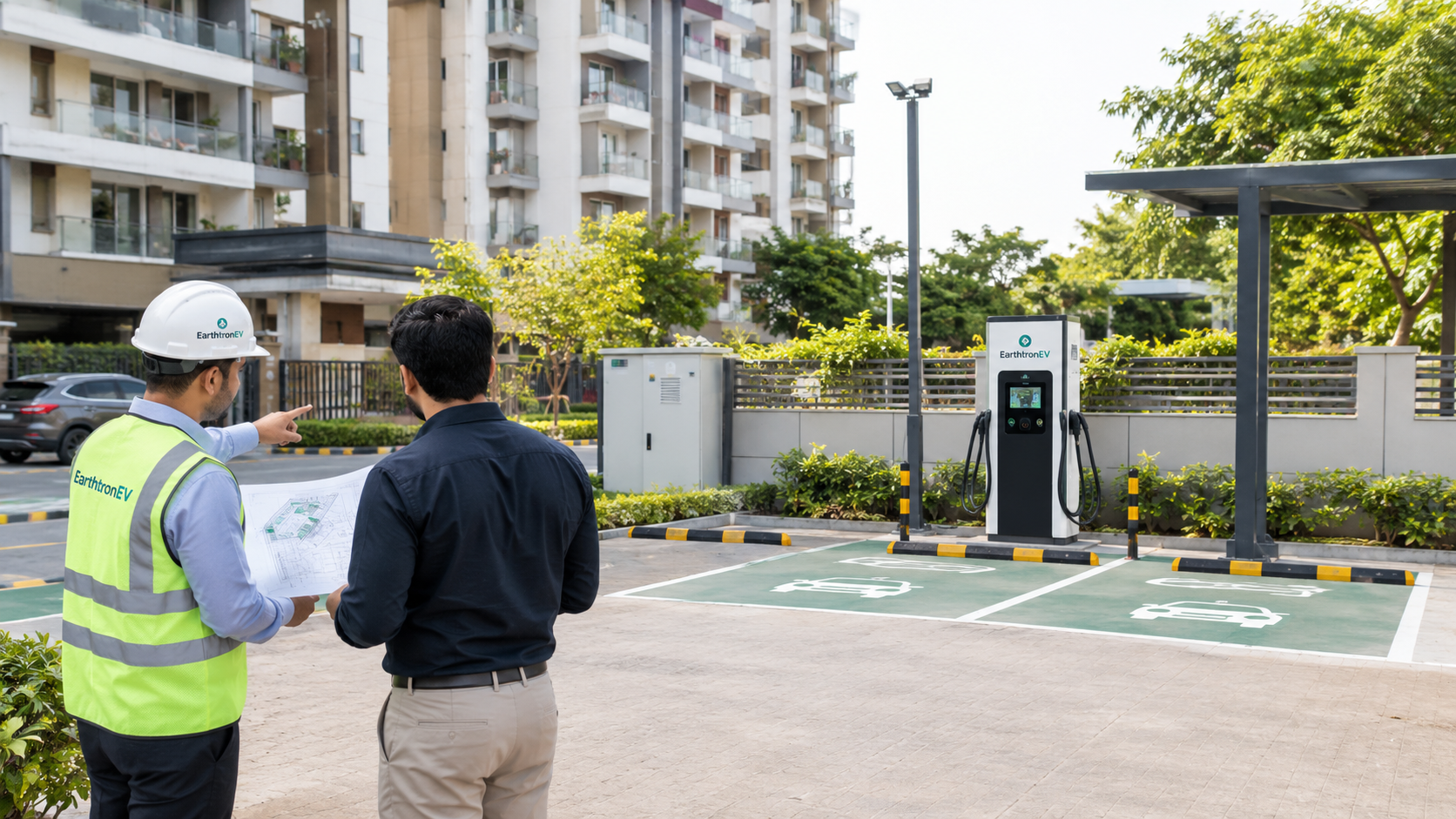
Electrical Load Capacity
The assessment determines the existing sanctioned load and whether the connection can support the proposed charger. Depending on charger type, the site may use an existing suitable connection or require a three-phase connection, load enhancement, transformer work, or other electrical upgrades.
Accessibility and Vehicle Movement
The assessment covers road access, turning space, parking layout, safe entry and exit, and whether charging vehicles can use the site without creating an obstruction or safety issue.
Footfall and Nearby Demand
A commercially viable station needs measurable nearby demand. Residential density, local EV ownership, fleet or delivery activity, commuter movement, nearby amenities, and competing charging options should all be considered.
Safety and Surface Conditions
The charging area should have a stable, preferably paved or paveable surface, adequate drainage, electrical safety clearances, lighting, and enough space for safe vehicle movement and parking.
How Do I Install an EV Charging Station on My Land? (Step-by-Step Process)
- Submit an inquiry – Share the property location, approximate available area, access details, and current electricity information.
- Initial site screening – EarthtronEV reviews vehicle access, surrounding demand, parking suitability, and basic electrical feasibility.
- Technical and commercial feasibility – The required charger capacity, sanctioned load, electrical upgrades, site layout, and suitable business model are assessed.
- Proposal and agreement – If the site is suitable, commercial terms, responsibilities, land-use rights, duration, and the proposed charger configuration are documented.
- Approvals and installation – Required electrical and site work is completed, followed by charger installation, safety checks, signage, and software integration.
- Commissioning and operations – The charger is tested, commissioned, connected to the required charging-management and payment systems, and made operational according to the agreed model.
- The final timeline depends on charger configuration, existing sanctioned load, DISCOM requirements, electrical or civil work, and any applicable local or society approvals.
What Does It Cost to Install a Charging Station on Residential Land?
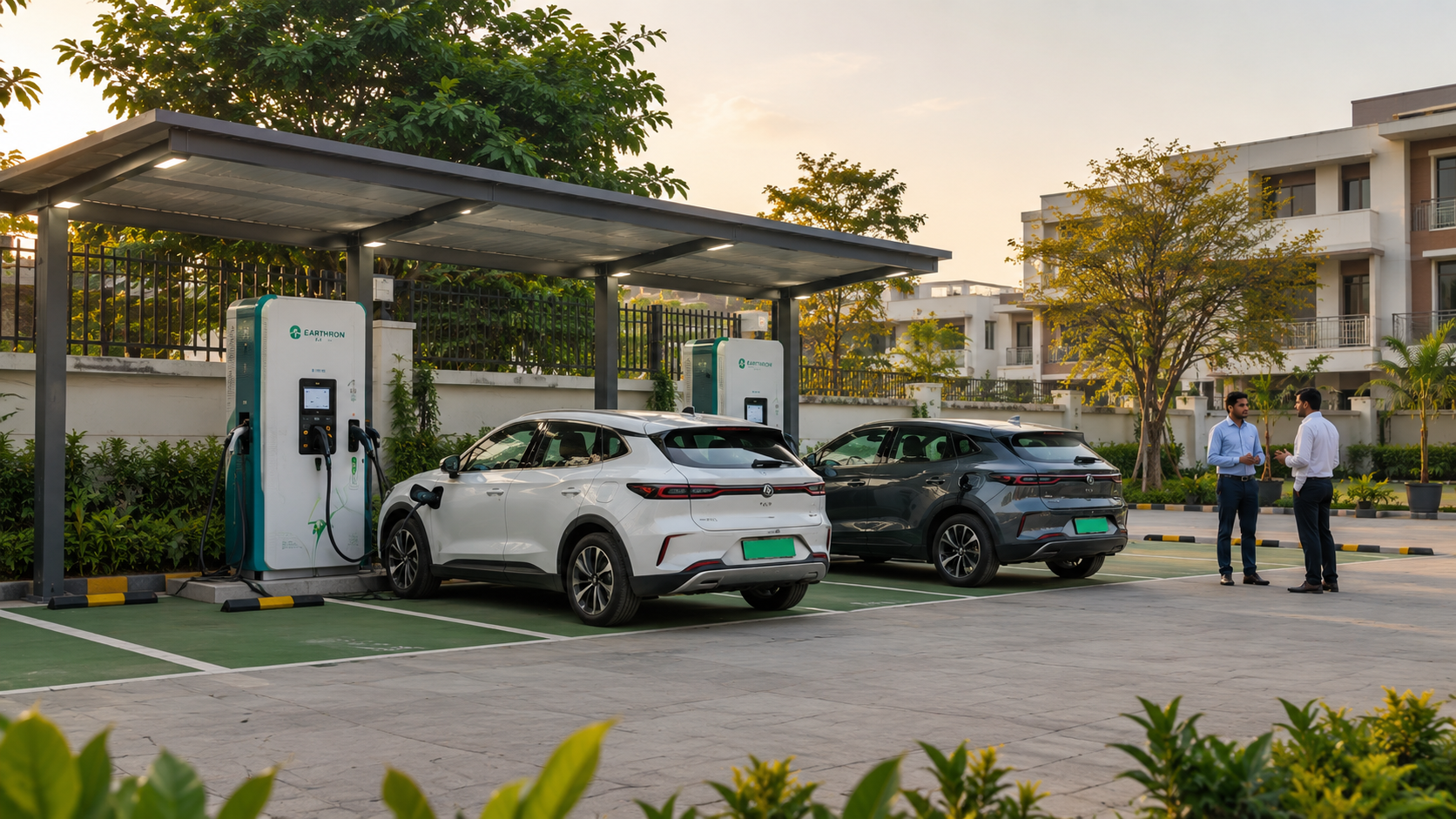
The cost depends primarily on the commercial model and the charger configuration. EarthtronEV currently presents location-partnership and franchise-investment opportunities as separate pathways, so landowners should first determine which structure applies to their site:
- Location partnership: A suitable site may be evaluated for a commercial arrangement such as a zero-CAPEX structure, revenue share, long-term lease, or another site-specific proposal. Availability and terms depend on EarthtronEV’s approval of the location and the final agreement.
- Franchise investment: EarthtronEV’s August 2026 franchise-cost guide states a minimum investment of about ₹10 lakh (40 kW DC setup). A 60 kW setup is listed at ₹18 lakh for complete installation including connection and setup, while a 120 kW setup is listed at ₹30 lakh. Electrical-infrastructure upgrades can increase the final site cost.
Standalone residential plots should not be assumed to qualify automatically for either model. The final site, land arrangement, investment, installation scope, maintenance responsibilities, operating commitments, and settlement terms should be confirmed in the approved proposal and signed agreement.
How Much Can a Residential EV Charging Station Earn?
Short answer: Earnings depend on the approved commercial model, actual station utilization, tariff, and site economics.
A location partner may receive fixed lease income, revenue share, or another agreed commercial payment, while a franchise investor’s return depends on charging revenue and the settlement structure defined in the franchise agreement. Higher-power DC chargers can deliver more energy in a shorter session, but they also require greater equipment and electrical infrastructure. Actual returns depend on utilization, energy sold, pricing, electricity cost, competition, and total project cost; they should not be estimated from charger power alone.
Do I Need Technical Knowledge to Run a Charging Station?
Short answer: No advanced technical background is normally required for a managed charging-station model.
EarthtronEV provides charging hardware, software, operational systems, and technical support within its approved business models. The landowner’s or franchise partner’s exact day-to-day responsibilities should be taken from the signed agreement, particularly for site access, cleanliness, maintenance coordination, staffing, electricity, and operating expenses.
Conclusion
Residential property can support EV charging, but a private home charger and a publicly accessible commercial charging station have different technical, commercial, and approval requirements. A viable site needs safe vehicle access, suitable parking space, sufficient electrical capacity, measurable local EV demand, and compliance with any applicable land-use, municipal, society, RWA, or DISCOM requirements.
For an EarthtronEV franchise-style setup, the company’s current published guidance indicates approximately 150 sq. ft. minimum, while the final charger capacity and total investment depend on the selected configuration and site infrastructure. Landowners considering a location partnership should also treat lease, revenue-share, or zero-CAPEX terms as site-specific rather than guaranteed for every residential plot.
The practical next step is a site-specific feasibility assessment that confirms access, available space, sanctioned electrical load, local demand, required upgrades, approvals, and the appropriate commercial model before any investment or long-term land commitment is made.