
EV Charging Franchise Cost in India 2026 : Complete Investment Breakdown
Starting an EV charging station franchise partner in India with Earthtron EV costs from about ₹10 lakh for a 40 kW DC setup, while a 60 kW setup costs ₹18 lakh, covering equipment, installation, and setup. Additional electrical infrastructure costs may vary depending on the location, charger type, power availability and site requirements.
Also, the final cost depends on charger output (60 KW or 120 KW), location, and existing electrical infrastructure. Here’s the complete breakdown.
Cost at a Glance
| Cost Component | Estimated Range |
| Minimum total investment | about ₹10 lakh (40 kW DC setup) |
| Land / space required | 150 sq ft minimum (owned or leased) |
| Land cost | Earthtron EV provides the location in eligible cases |
| Charging equipment (60 KW) | ₹18 lakh — complete installation, including connection and setup |
| Charging equipment (120 KW) | ₹30 lakh |
| Licensing & approvals | Handled by Earthtron EV |
| Ongoing operating cost to franchisee | ₹0 — covered by Earthtron EV |
Land & Space Cost

You need a minimum of 150 sq ft, owned or leased. The final space requirement will depend on the charger configuration, parking layout and supporting infrastructure.
Unlike most competing franchise models, Earthtron EV can identify and provide the location itself in eligible cases — meaning franchise partners don’t always need to source or purchase property upfront. If you already have suitable commercial space (office parking, mall frontage, housing society, fleet depot), that can be used instead, potentially reducing your total investment.
Equipment Cost by Charger Type
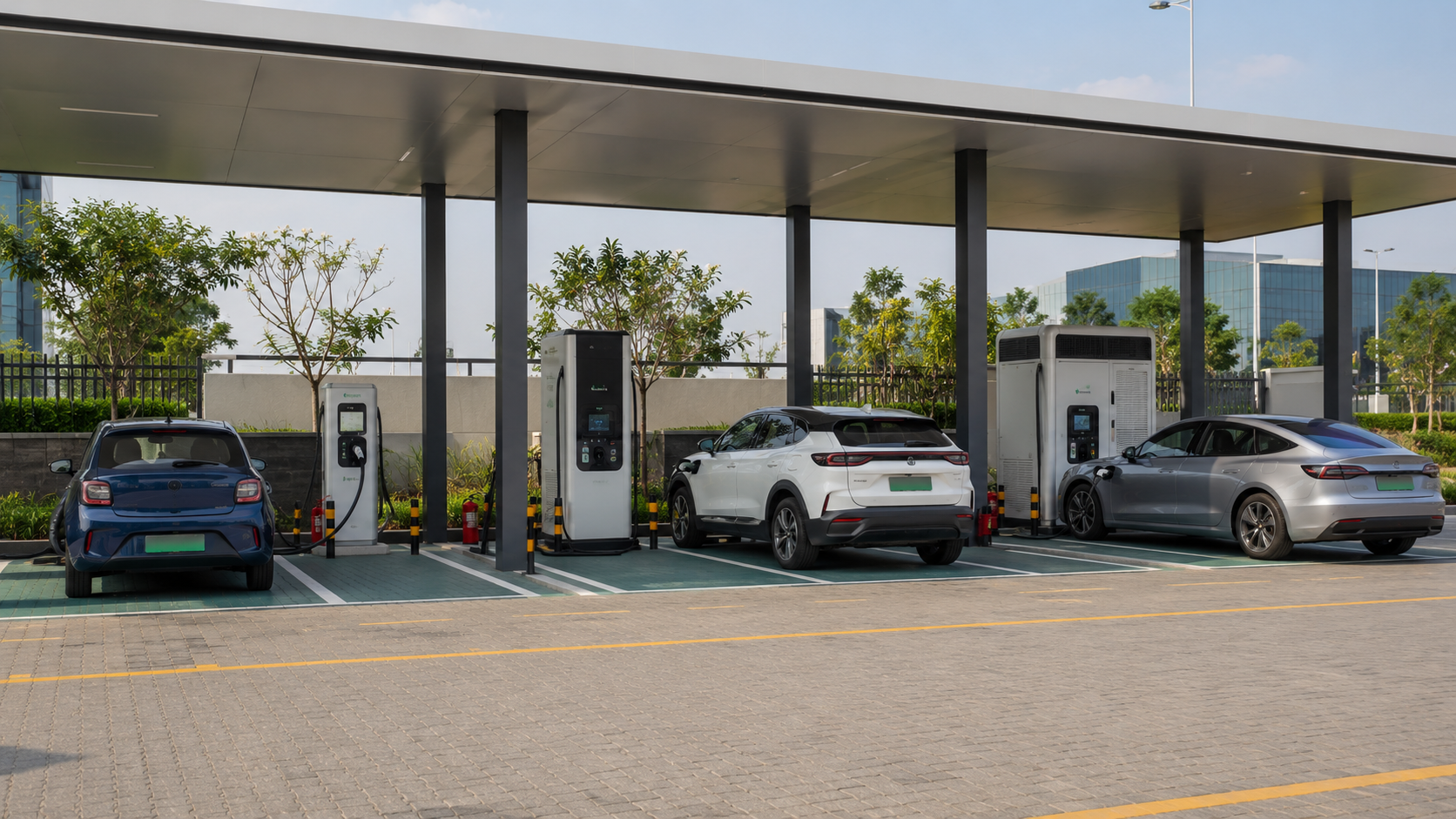
Equipment cost is the largest line item and scales with charging speed:
- 60 KW DC fast charger — suited for cars, lower footfall locations. Estimated cost: ₹18 lakh for complete installation, including the electrical connection and setup.
- 120 KW DC fast charger — suited for highway/high-traffic locations. Estimated cost: ₹30 lakh.
This includes the charger unit, canopy, signage/branding, security cameras, fire extinguishers, and network connectivity equipment.
Electrical Infrastructure Cost
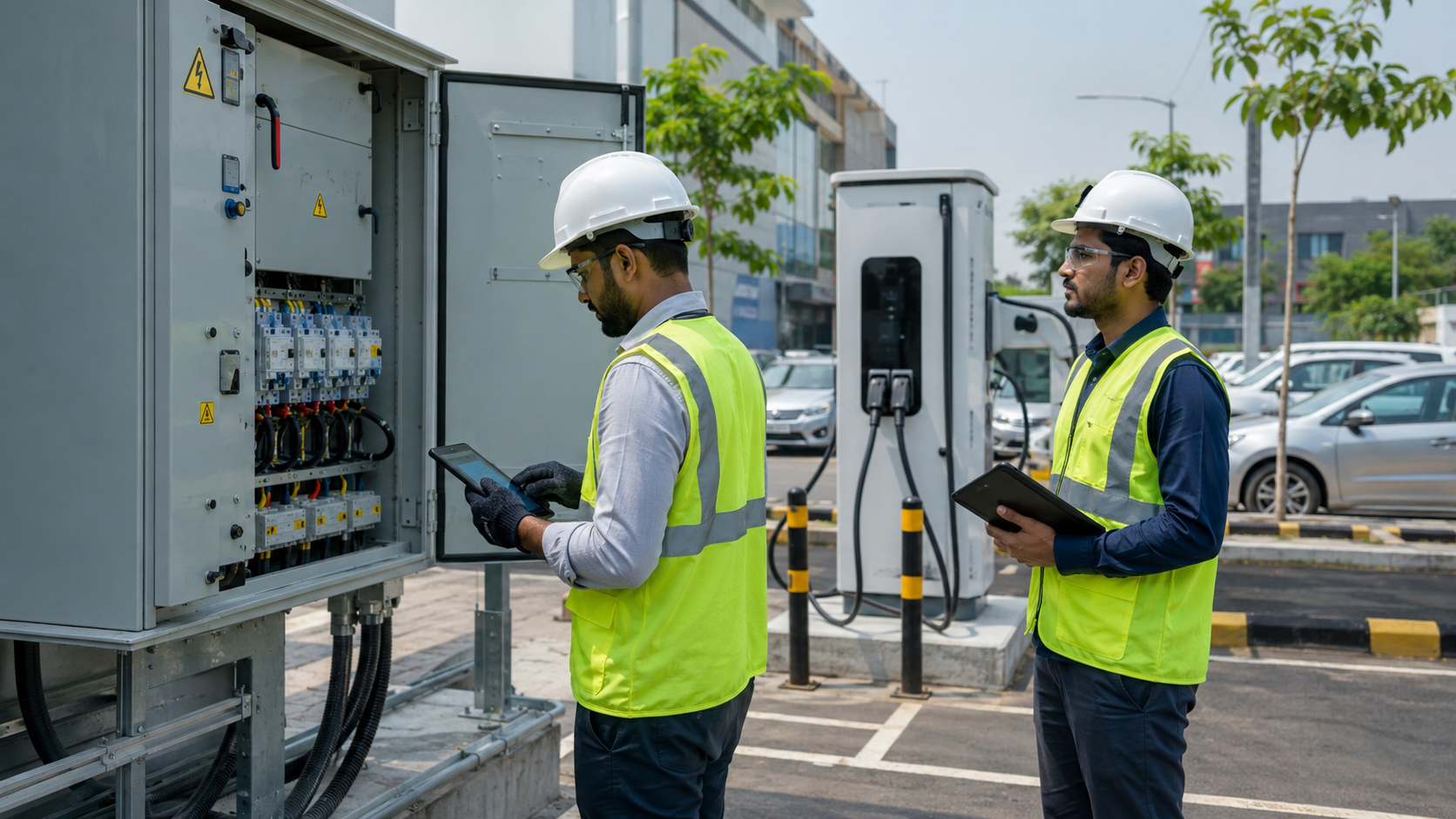
This is the most variable cost and depends on:
- Existing electrical load at the site
- Distance from the nearest substation/transformer
- Whether a dedicated transformer or load upgrade is required
For sites requiring a new connection, additional sanctioned load, transformer work or other infrastructure upgrades, the additional cost is determined after a site and electrical assessment.
Licensing, Approvals & Compliance Costs
Setting up an EV charging station in India requires approvals related to electrical safety, fire safety, and (depending on state) DISCOM clearance for load.
With Earthtron EV, this entire process is handled centrally — franchise partners do not need to independently manage licensing, which is one of the more complex and delay-prone parts of starting an EV charging station independently.
Hidden Costs to Watch For (Industry-Wide, Not Earthtron-Specific)
If evaluating any EV charging franchise, ask about these commonly overlooked costs:
- Ongoing maintenance and part replacement
- Payment gateway/transaction fees
- Insurance for equipment and site
- Marketing/customer acquisition cost
- Staff for site management (if not automated)
With Earthtron EV specifically: operating expenditure, marketing, and staffing are covered by Earthtron EV as part of the franchise model — franchise partners are not billed separately for these.
How Much Do You Need to Start an EV Charging Station?
Yes, in the Earthtron EV model — a 40 kW DC setup from about ₹10 lakh is the entry point, and the 60 kW setup costs ₹18 lakh, covering equipment and setup for a standard station where land is provided or already available.
Costs can rise above this baseline if:
- The site requires significant electrical infrastructure upgrades
- You opt for a higher-capacity charger (120 KW vs. 60 KW)
- You choose to purchase rather than lease the land yourself
Cost Comparison: Earthtron EV vs. Independent Setup
| Independent EV Station Setup | Earthtron EV Franchise | |
| Land | Buy/lease yourself | Provided by Earthtron EV (eligible sites) |
| Equipment sourcing | Negotiate directly with OEMs | Pre-negotiated, included |
| Licensing/approvals | Self-managed | Handled by Earthtron EV |
| Marketing | Self-funded | Covered by Earthtron EV |
| Staffing | Required | Not required |
| Estimated total investment | ₹20 lakh | From about ₹10 lakh |
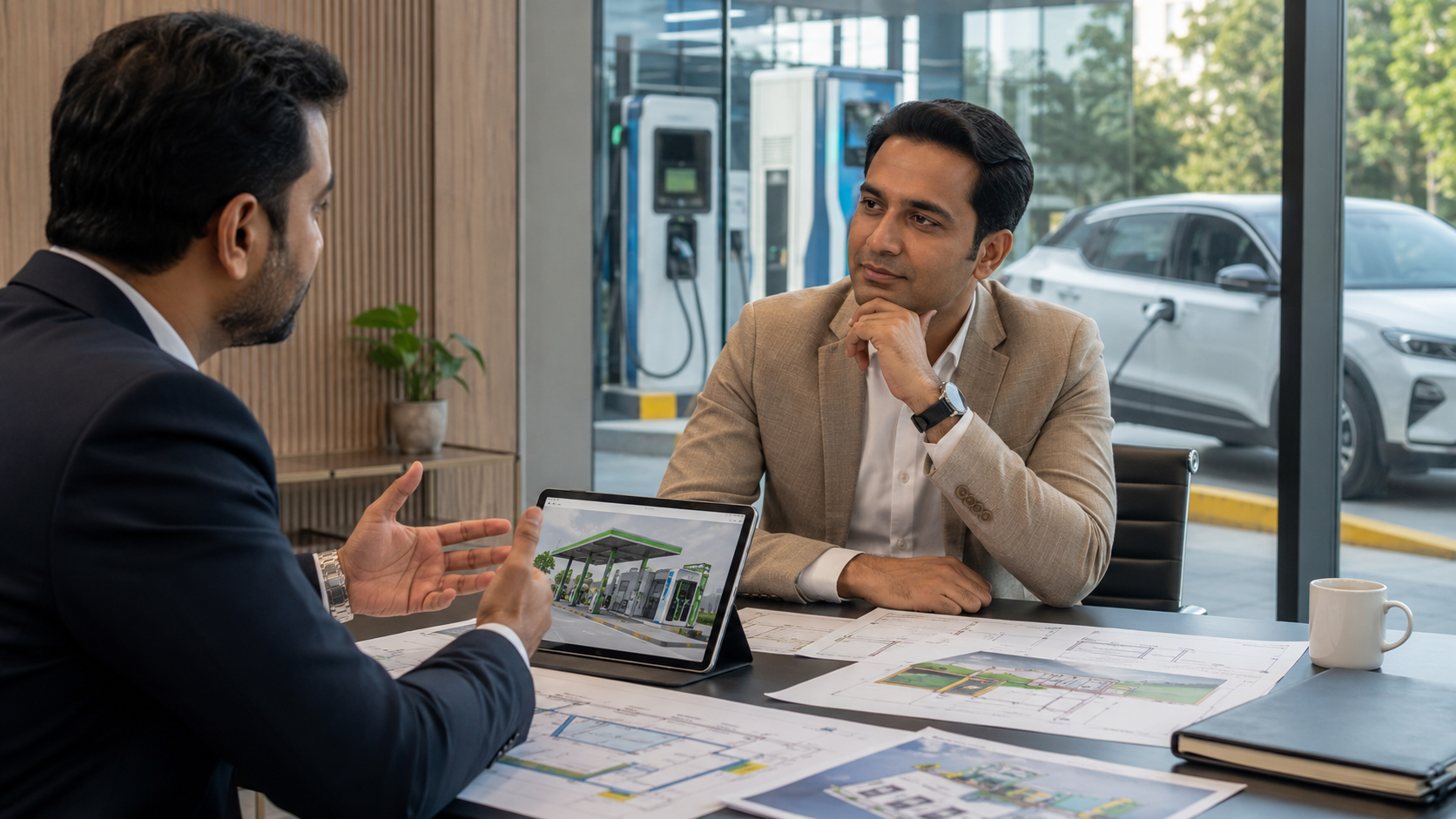
How Does an EV Charging Station Generate Revenue?
The revenue potential of an EV charging station depends on how frequently the charger is used and how much energy is delivered to vehicles.
Some of the main factors that influence charging-station revenue include:
- Charging sessions per day: More completed charging sessions generally increase energy sales and revenue.
- Energy delivered per session: Different vehicles require different amounts of energy, so the average kWh delivered per session affects total revenue.
- Charger utilization: A high-capacity charger generates value only when it is regularly used.
- Location: Highway corridors, commercial areas, fleet hubs and other high-demand locations can have very different charging patterns.
- Charger capacity: Higher-capacity DC chargers can serve vehicles faster, but the business case still depends on actual customer demand.
- Charger uptime: Equipment downtime directly reduces the number of charging sessions a station can complete.
For franchise partners, station revenue should not automatically be treated as personal income or profit. Actual franchisee earnings and settlement arrangements depend on the commercial terms agreed with the charging operator.
How to Estimate the Break-Even Period of an EV Charging Station
Break-even is the point at which the cumulative income generated by the investment has recovered the initial capital invested.
A simple way to understand it is:
Break-even period = Total initial investment ÷ Average annual net income
For example, an EV charging station with a higher initial investment may still recover its cost faster than a lower-cost station if it has significantly stronger utilization and charging demand.
This is why investment cost should never be evaluated independently from location and expected usage.
For an EarthtronEV franchise starting from the currently published investment levels (about ₹10 lakh for 40 kW, ₹18 lakh for 60 kW), the actual payback period will depend on factors such as station utilization, charger configuration, charging demand, location performance and the commercial settlement terms applicable to the franchise.
Rather than assuming a fixed break-even period for every station, investors should evaluate the expected performance of the proposed location before making an investment decision.
What Can Help an EV Charging Station Reach Break-Even Faster?
Several factors can improve the commercial performance of a charging station:
Strong Charger Utilization
A charger that completes more charging sessions each day is generally more productive than a high-capacity charger that remains unused for long periods.
Suitable Location
Locations with consistent EV movement, such as major highways, commercial areas, workplaces and fleet-heavy zones, may provide stronger utilization when the site matches local charging demand.
Reliable Charger Uptime
Every period of unexpected charger downtime can reduce charging sessions and potential revenue. Reliable hardware, monitoring and timely maintenance therefore play an important role in station performance.
Correct Charger Capacity
Installing significantly more charging capacity than the location currently requires can increase capital investment without creating equivalent demand. Charger capacity should be matched with expected vehicle traffic, dwell time and charging requirements.
Growing Local EV Demand
A location where EV ownership and commercial fleet activity are increasing can experience stronger utilization as the local charging market develops.
What Can Extend the Break-Even Timeline?
The payback period may become longer when:
- Charger utilization remains below projections
- The selected site receives limited EV traffic
- Additional electrical infrastructure upgrades increase the initial investment
- Equipment downtime reduces charging availability
- Charger capacity is significantly higher than local demand
- Local EV adoption grows more slowly than expected
- The commercial settlement structure differs from initial assumptions
For this reason, investors should evaluate both the upfront cost and expected station performance rather than selecting a charging opportunity based only on the lowest investment amount.
Track Performance After the Station Goes Live
Break-even projections should also be reviewed against actual operating data after installation.
Important indicators include charger utilization, energy delivered, revenue per charger, charging-session success rate, electricity costs, charger uptime and contribution margin.
For a detailed explanation of these metrics, read our guide on EV Charging Station Analytics: 10 KPIs Every Operator and Franchisee Should Track.
Conclusion
Starting an EV charging station franchise in India can be a practical opportunity for entrepreneurs looking to participate in the country’s growing EV infrastructure market. With Earthtron EV, the minimum investment starts from about ₹10 lakh for a 40 kW setup, with a standard 60 KW charging setup at ₹18 lakh, including connection and installation. A 120 KW charging station is available for locations that require higher charging capacity.
The final investment can vary depending on the selected charger capacity, location, available electrical infrastructure, power requirements, and any additional site upgrades needed. A minimum space of approximately 150 sq. ft. is required, while Earthtron EV can also help provide suitable locations in eligible cases.
By handling key areas such as charging equipment, installation, licensing and approvals, operations, marketing, and ongoing station management, Earthtron EV offers a structured franchise model that reduces many of the operational responsibilities involved in setting up an EV charging station independently.
Cost is only one part of the investment decision. Expected charger utilization, charging demand, uptime and the time required to recover the initial investment should also be considered when evaluating the commercial viability of an EV charging station.
For prospective franchise partners, the most important step is to evaluate the location, expected charging demand, power availability, and suitable charger capacity before finalizing the investment.
Related Reading
- EV Charging Franchise: Cost vs Revenue and Break-Even Timeline Explained
- Best EV Charger Franchise Opportunities for Small Investors in India (2026)
- Top Questions to Ask Before Buying an EV Charging Franchise in India (2026 Guide)
- EV Charging Station Business in India (2026): Costs, Revenue and Profitability
Learn more about EV charging revenue calculator.