Quick Answer
Tier 2 and Tier 3 cities are emerging as important EV charging franchise markets as EV adoption expands beyond India’s largest metros. Smaller-city demand is being driven by electric two- and three-wheelers, delivery fleets, intercity mobility, and growing passenger-EV ownership, while charging coverage remains uneven by city and corridor. For franchise partners, lower site costs in many locations, improving charging infrastructure, and national programs such as PM E-DRIVE can create attractive opportunities—but viability still depends on local EV density, grid capacity, charger configuration, and site selection.
Why Tier 2 and Tier 3 Cities Are India’s Next EV Charging Growth Zone
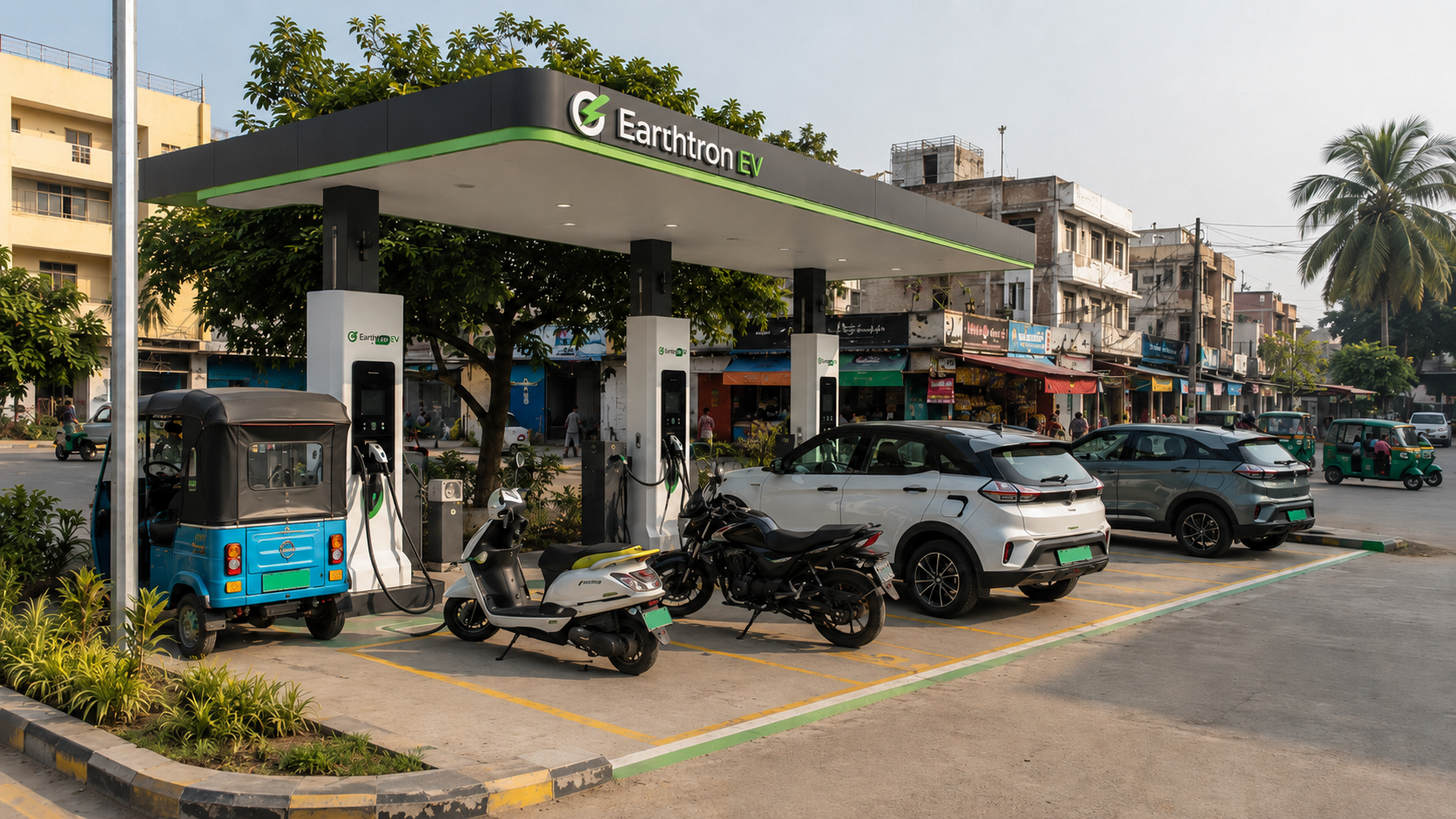
India’s electric vehicle transition is no longer limited to metropolitan markets. Research on India’s EV adoption shows strong momentum in Tier 2 cities, while Tier 3 markets remain at an earlier stage but show promising potential. Shorter commutes, easier access to home charging, and demand from electric two-wheelers and three-wheelers are helping broaden adoption beyond the largest metros. For a franchise investor, the opportunity is not simply that a smaller city may offer a lower-cost site; it is finding locations where measurable EV demand is growing faster than dependable public charging access.
Official Bureau of Energy Efficiency data reported 26,367 public charging stations nationwide as of 1 April 2025, including 4,625 in Tier 2 cities and 12,040 in Tier 3 cities. That shows charging infrastructure is already expanding beyond metros, but availability still varies significantly by state, city, highway corridor, and vehicle mix. The addressable opportunity for a franchise partner is therefore local: busy corridors, fleet clusters, transport nodes, and commercial areas where charging demand can be demonstrated rather than assuming every Tier 2 or Tier 3 market is underserved.
What Makes a Tier 2/3 Charging Franchise Different From a Metro Franchise
A smaller-city charging franchise should be designed around local demand instead of copying a metro charging hub. Charger capacity, parking layout, customer mix, and expected dwell time should all be validated before investment. A few structural differences franchise partners should plan around:
- Electric two-wheelers, three-wheelers, delivery vehicles, and intercity mobility can play a larger role in smaller-city demand, so charger selection should follow the actual vehicle mix instead of assuming every site needs an all-fast-charger setup.
- Land and rental costs can be lower than in major metros, but prime highway, market, or transport-hub locations may still command a premium. Compare total site economics rather than choosing a location only because the rent is inexpensive.
- Demand may be spread across private cars, e-rickshaws, delivery fleets, intercity cabs, and other commercial users. A site with repeat fleet or business demand can provide a more stable utilization base than relying only on occasional walk-in charging.
- Site quality should be judged by vehicle flow, safe access, parking availability, visibility, nearby amenities, and expected dwell time. In smaller markets, the right site is usually more important than simply installing the highest-power charger.
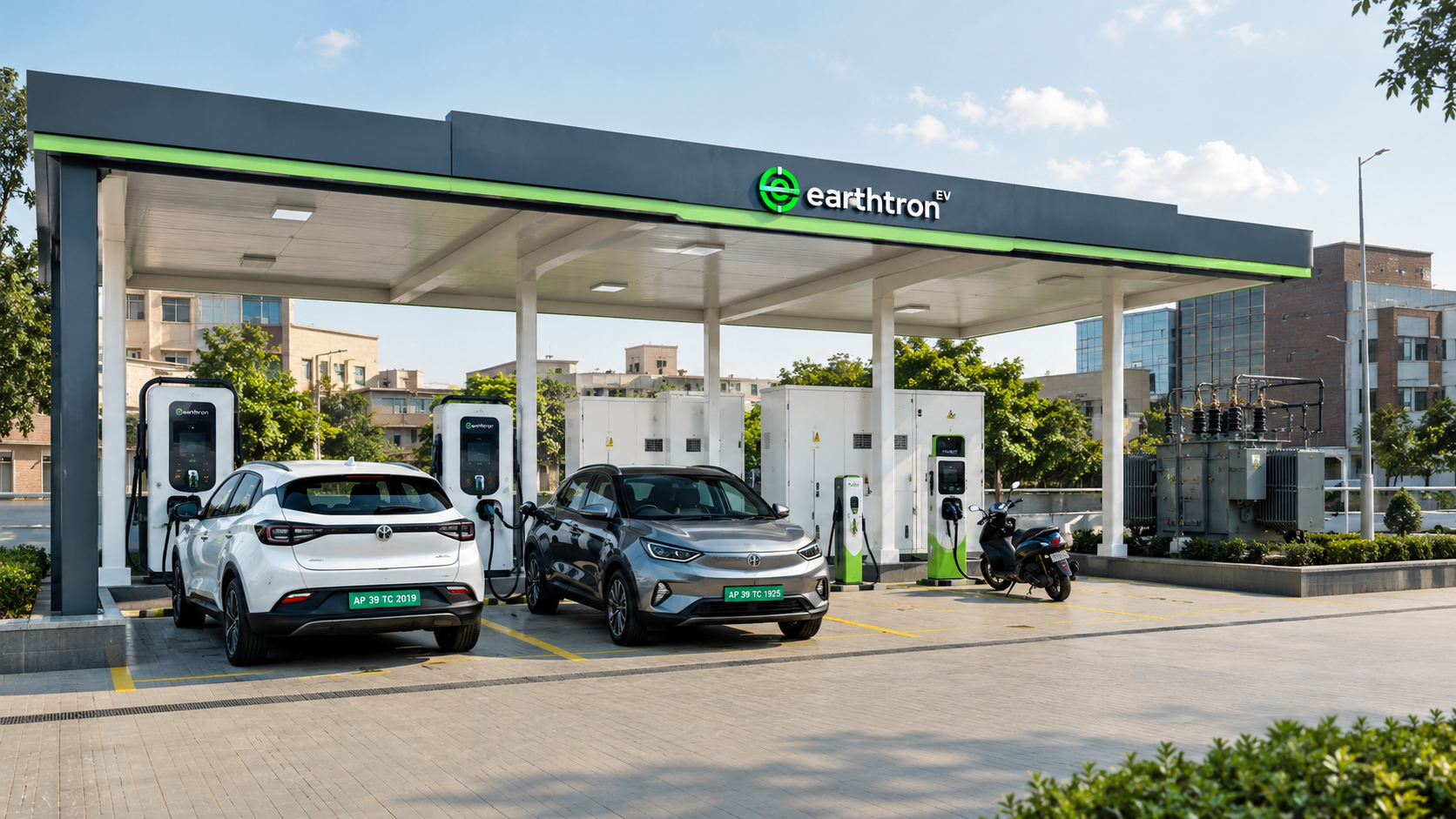
- Grid capacity and transformer availability can vary considerably, making an electricity-load and connection assessment an essential part of due diligence before finalizing charger capacity or the station layout.
Where the Demand Is Coming From
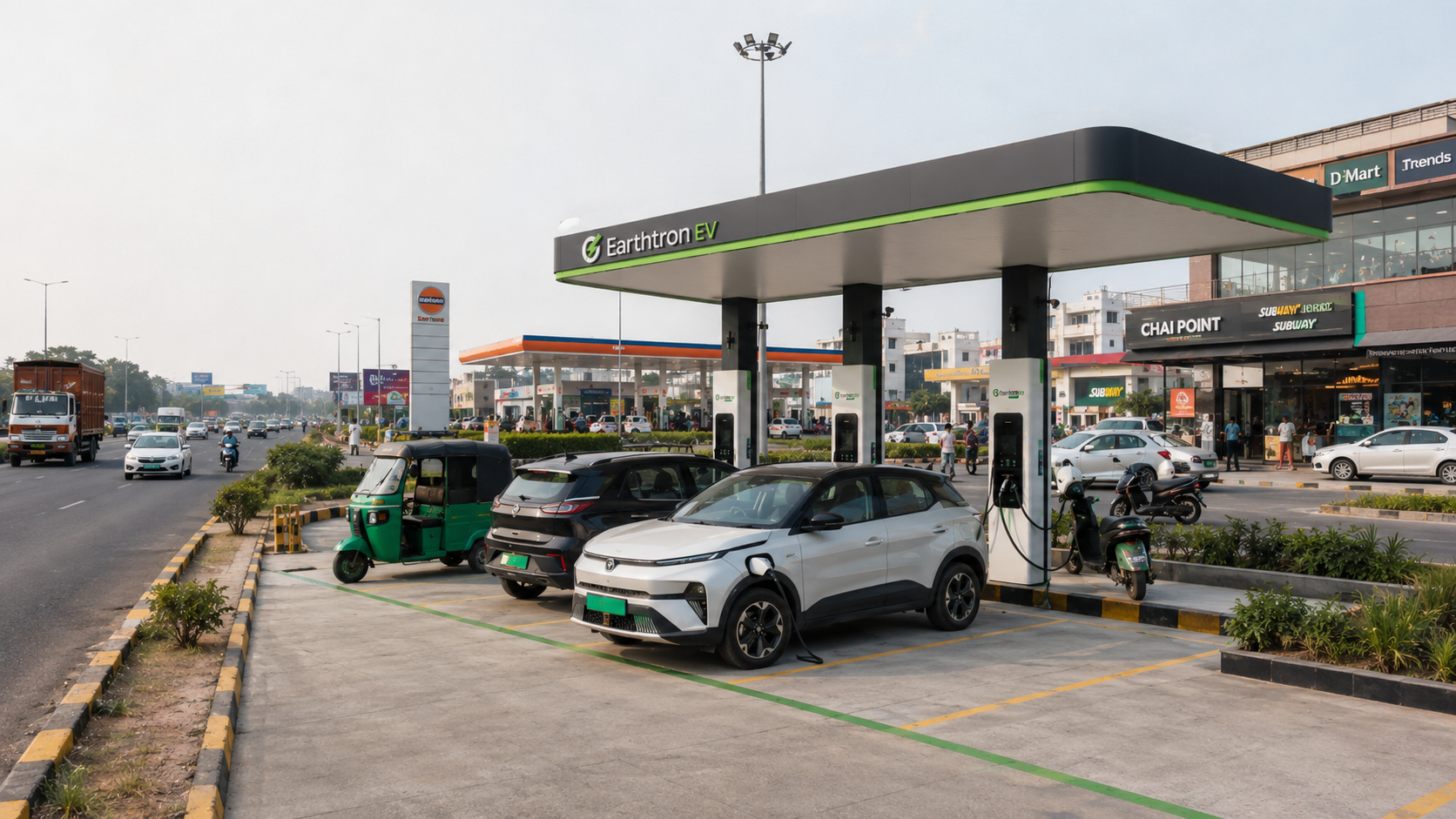
Government planning benchmarks provide a useful framework for identifying charging gaps. The Ministry of Power’s 2024 charging-infrastructure guidelines call for at least one charging station within a 1 km x 1 km grid in urban areas and one station every 20 kilometers on highways, expressways, and major roads. For long-range EVs and heavy-duty vehicles, fast-charging infrastructure is also planned at wider intervals on designated routes. For a franchise partner scouting a Tier 2 or Tier 3 city, this points to several practical site categories:
- National and state highway service roads, bypasses, toll-plaza areas, and wayside amenities near the city
- Fuel retail outlets and petrol-pump forecourts where EV charging can be safely co-located
- Bus stands, intercity taxi points, logistics hubs, fleet depots, and delivery-vehicle parking areas
- Shopping complexes, multiplexes, market areas, and other commercial locations with repeat daily footfall
- Industrial areas, satellite towns, and business clusters where regular commercial or fleet charging demand can be validated
Government Support Making Tier 2/3 Expansion Easier
Policy support remains an important tailwind for charging-infrastructure expansion. The PM E-DRIVE scheme includes an allocation of ₹2,000 crore for EV public charging infrastructure across India, including urban, rural, and Tier 2 markets. However, the subsidy mechanism should not be treated as an automatic cash benefit for an individual franchise investor. Under the current operational framework, proposals are routed through eligible government entities and appointed nodal agencies, while private Charge Point Operators can participate in approved deployments.
BEE revised its benchmark charger costs in October 2025, including ₹3.40 lakh for a 60 kW CCS-II charger and ₹5.00 lakh for a 120 kW CCS-II charger. These figures are benchmark values used for subsidy calculations, not retail installation prices or guaranteed reimbursements to franchise owners. Upstream-infrastructure support is assessed separately using DISCOM demand notes and eligible costs. Franchise partners should therefore evaluate a site using EarthtronEV’s location-specific commercial quote and treat any subsidy support as category-, location-, and approval-dependent.
Franchise Investment Snapshot for Smaller Cities
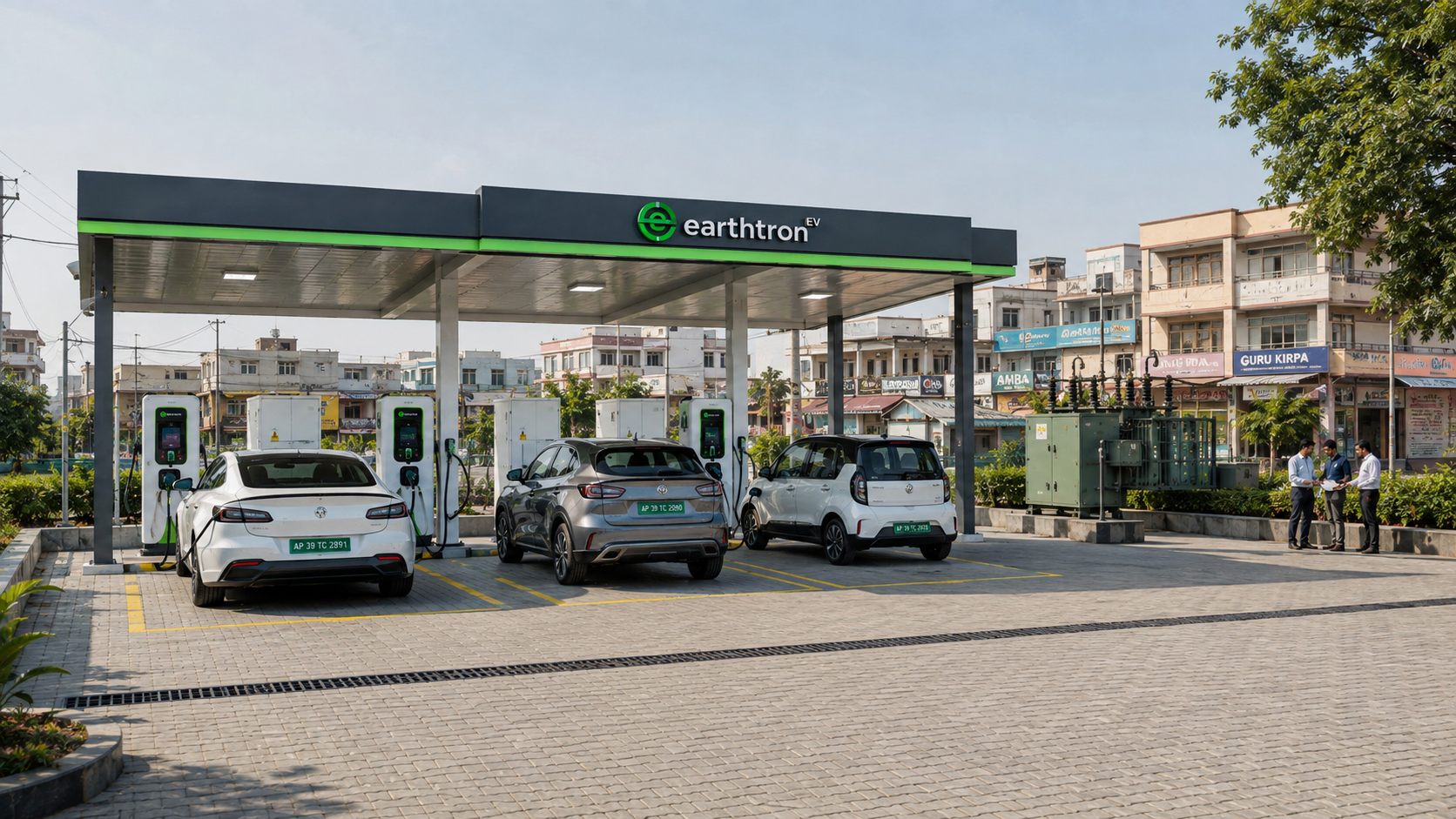
For an investor, the most important question is the total site-specific cost rather than a generic industry average. EarthtronEV’s August 2026 franchise-cost guide currently states the following commercial starting points:
- Minimum total franchise investment starts from about ₹10 lakh (40 kW DC setup), with final cost depending on charger capacity, site conditions, power availability, and any electrical-infrastructure upgrades required.
- A 60 kW DC fast-charging setup is listed at ₹18 lakh for complete installation, including connection and setup, while a 120 kW configuration is listed at ₹30 lakh.
- A minimum area of approximately 150 square feet is required. The space may be owned or leased, and EarthtronEV states that it can identify or provide a suitable location in eligible cases.
- EarthtronEV’s current franchise model includes support for equipment installation, licensing and approvals, marketing, station operations, automated billing, and settlements. Current published terms also state that operating expenditure, marketing, and staffing are covered by EarthtronEV.
Electrical infrastructure can still change the final investment materially, especially where a site needs a transformer, cabling, load enhancement, or other connection work. Prospective partners should request a location-specific cost breakdown and review the final franchise agreement for settlement terms, maintenance responsibilities, land arrangements, renewals, and any operating-cost commitments before investing.
Is an EV Charging Franchise Suitable for Small Investors?
For smaller investors entering the EV charging sector, the business model can be just as important as the location or charger capacity. A self-operated charging station may offer greater control, but it also requires the investor to manage location selection, installation, electricity connections, maintenance, customer support, marketing and day-to-day operations.
A franchise-owned, operator-supported model can reduce that operational burden by allowing the investor to participate in EV charging infrastructure without managing every aspect of the station independently.
What Small Investors Should Look for in an EV Charging Franchise
Before investing, evaluate the franchise model on the following factors:
- Location responsibility: Confirm whether the investor needs to identify and negotiate the site or whether location assistance is provided.
- Operational responsibility: Understand who manages charging operations, customer support, monitoring and day-to-day station activities.
- Maintenance: Check who is responsible for preventive maintenance, equipment faults and charger downtime.
- Electrical infrastructure: Confirm whether transformer upgrades, cabling, sanctioned-load enhancement or other electrical work may create additional costs.
- Billing and settlements: Understand how charging revenue is recorded, how settlements are calculated and how frequently they are processed.
- Performance visibility: Investors should be able to understand station utilization, charging activity and operational performance.
- Agreement terms: Land arrangements, operating responsibilities, maintenance coverage, settlement terms and renewal conditions should be clearly documented before investment.
Self-Operated vs Operator-Supported EV Charging Model
| Factor | Self-Owned & Operated Station | Franchise / Operator-Supported Model |
|---|---|---|
| Site selection | Investor | May include operator support |
| Installation coordination | Investor | Operator-supported |
| Daily operations | Investor | Primarily operator-managed |
| Maintenance responsibility | Investor | Depends on franchise agreement |
| Marketing | Investor | May be operator-supported |
| Billing management | Investor | Can be automated |
| Investor involvement | High | Lower |
| Best suited for | Hands-on operators | Investors seeking lower operational involvement |
For first-time or smaller investors, lower operational involvement can be useful, but it should not replace proper due diligence. The quality of the location, local EV demand, charger utilization, power availability and final commercial agreement remain important factors in determining whether a charging station is financially viable.
Risks and Realities to Plan For
Smaller-city expansion carries real advantages, but it is not risk-free, and a credible franchise decision should account for the following:
- Utilization can take time to build in markets where EV penetration is still developing, so early revenue should not be projected from city population alone.
- Grid power availability and transformer capacity can limit the charger rating at some sites and may require coordination with the local electricity distribution company.
- Charging discovery, payment, and interoperability are improving across India, but users can still encounter differences between charging networks, applications, and payment experiences.
- Government subsidy approval is location- and category-dependent and is routed through eligible entities and nodal agencies; a private franchise investor should not include an unapproved subsidy as guaranteed project income.
- Site selection has an outsized effect on returns. A lower-cost site with weak vehicle flow can perform worse than a more expensive location with reliable fleet, highway, commercial, or repeat local demand.
Why EarthtronEV for Tier 2/3 Expansion
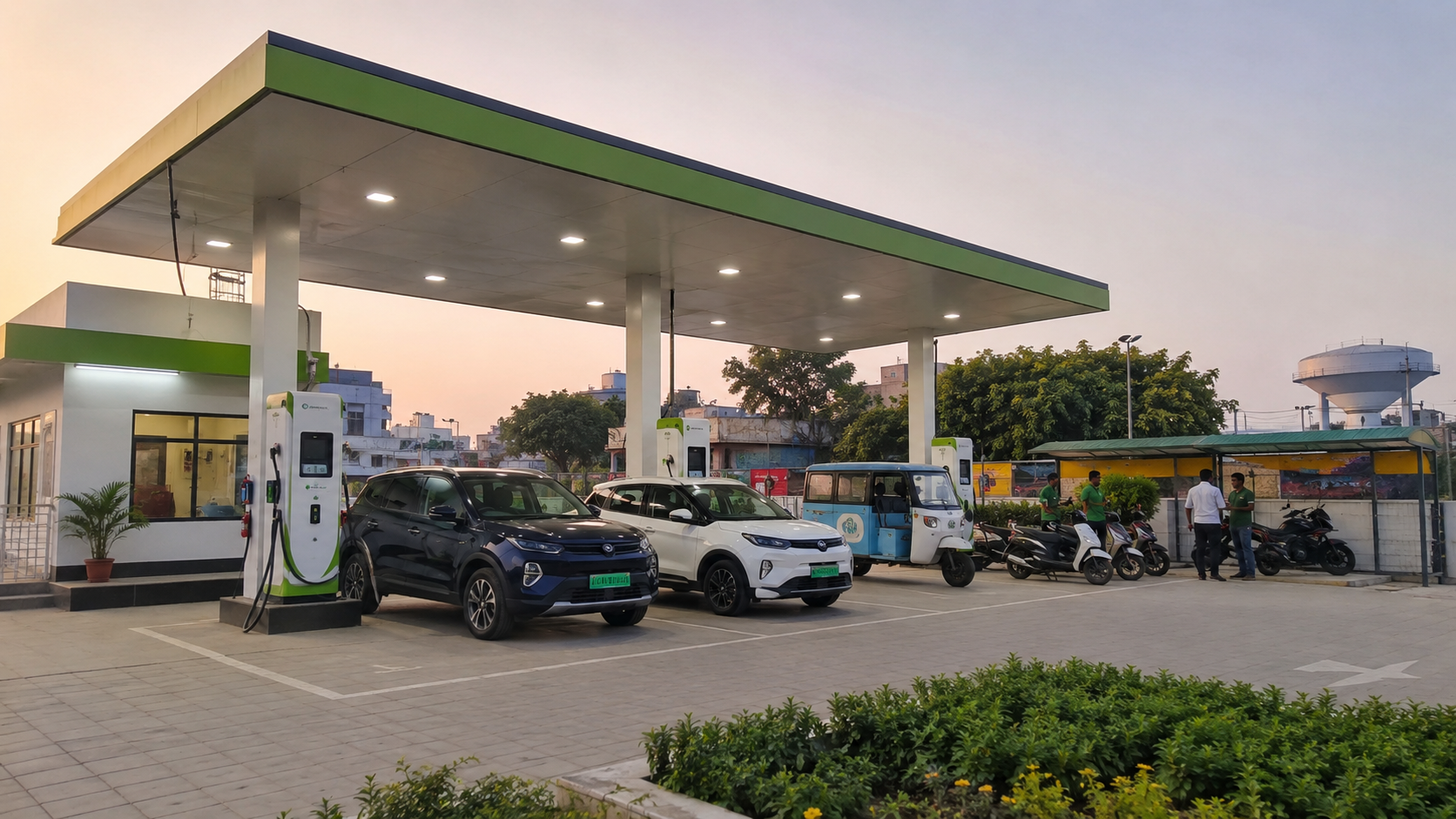
EarthtronEV’s current franchise model is designed to reduce the operational burden on individual investors. In eligible cases, the company can support location or land identification and lists equipment installation, approval support, marketing, station operations, automated billing, and bank settlements as part of its model. Final responsibilities, land terms, settlement structure, maintenance coverage, and any zero-operating-expenditure commitment should be confirmed in the signed franchise agreement for the selected site.
Conclusion
Tier 2 and Tier 3 cities are becoming increasingly important to India’s EV charging network as electric mobility expands beyond the largest metropolitan markets. For franchise investors, the opportunity is strongest where growing EV adoption is matched by repeat traffic, suitable grid capacity, convenient site access, and limited dependable charging options.
However, the success of an EV charging franchise depends less on whether a city is classified as Tier 2 or Tier 3 and more on the quality of the individual location. Vehicle movement, local EV density, fleet demand, charger configuration, electricity infrastructure, competition, and total project cost should all be assessed before making an investment decision.
For smaller or first-time investors, an operator-supported franchise structure can reduce the operational burden, but investment decisions should still be based on site-specific demand, infrastructure requirements and clearly documented commercial terms.
With EarthtronEV’s current franchise model starting from about ₹10 lakh (40 kW DC setup), prospective partners can explore opportunities across suitable smaller-city markets while receiving support for areas such as site identification, installation, approvals, station operations, billing, and settlements. The final investment and commercial viability should always be evaluated through a location-specific assessment before proceeding with a franchise.
Related Reading
- Best Locations for EV Charging Station Investment in India: Highway vs City vs Residential
- Best EV Charger Franchise Opportunities for Small Investors in India (2026)
- The EV Boom: Why Charging Infrastructure Demand Is Skyrocketing
- Highway EV Charging Hubs: The Next Big Opportunity in India’s Electric Mobility Future